
 Search

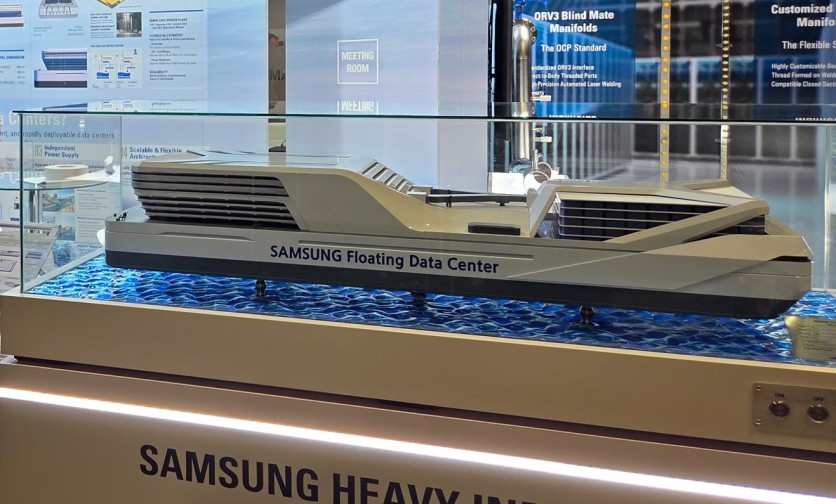
Samsung Heavy Industries - Floating Data Center Samsung Heavy Industry
Samsung Heavy Industries signed three commercial agreements in four days last week — capping a sprint from design certification to full market-entry positioning — as the South Korean shipbuilder moved to establish itself as the lead builder in the emerging floating data center market. The deals cover project development and investment, regulatory certification, economic feasibility analysis, and AI server technology validation — the four pillars required to take an offshore data center from an approved concept design to a paying customer.
The most consequential agreement came June 2 at Posidonia 2026, the world's largest shipping exhibition, held in Athens. There, Samsung Heavy signed a three-party memorandum of understanding with Greek shipowner Capital Clean Energy Carriers Corp and British classification society Lloyd's Register. Under the joint development project, Samsung handles technology and construction, Capital leads site origination and investment, and Lloyd's Register covers regulatory standards and certification. A separate memorandum of understanding with Lloyd's Register Advisory, the society's consulting arm, covers economic feasibility and North American market analysis. One day earlier, on June 1, Samsung signed a joint development agreement with Supermicro, a U.S.-based AI server specialist, at the Innovate APAC 2026 technology exhibition in Taipei.
The agreements build on a milestone from late April 2026, when Samsung obtained Approval in Principle for a 50-megawatt floating data center concept from two classification societies — the American Bureau of Shipping and Lloyd's Register — at Data Center World in Washington, D.C. That certification confirmed the design's structural integrity, safety systems, and onboard power integration against class rules. With the technical feasibility now established, the Posidonia agreements mark the company's pivot from design to deployment.
Why Land-Based Data Center Construction Invites a Maritime Alternative
A conventional large-scale data center takes three to six years from planning to commissioning, according to industry figures. The sequential process — site selection, permitting, power infrastructure, construction — creates bottlenecks at every stage. Samsung's floating data center design uses standardized shipbuilding processes in which design, manufacturing, and equipment installation proceed concurrently rather than in sequence, a method the company says reduces delivery timelines significantly compared to land-based construction. Industry figures suggest comparable floating facilities can come online in roughly one to two years.
The pressure driving that demand is acute. According to credit rating agency Moody's, investment in high-performance AI data center infrastructure for generative AI applications could reach up to $3 trillion by 2030. Securing land near population centers, obtaining grid interconnection, and arranging cooling infrastructure has become the central constraint on that build-out.
How Seawater Cooling Works: The Physics Behind Offshore AI Infrastructure
The engineering case for an offshore data center rests on a single physical fact: a cubic meter of water holds approximately 3,400 times the thermal capacity of a cubic meter of air. That ratio is why conventional data centers — which cool server racks with chilled air — spend up to 40 percent of their total energy on cooling systems. Moving the facility onto water eliminates the need for mechanical refrigeration.
In Samsung's design, seawater is pumped through a closed-loop heat exchanger system. Unlike evaporative cooling, in which freshwater is vaporized to remove heat and lost to the atmosphere, the seawater remains inside sealed pipes, absorbs heat from the server infrastructure, and returns to the ocean without making contact with any IT equipment. That closed-loop architecture prevents salt from contaminating the servers while delivering the passive heat-transfer efficiency of the surrounding ocean. Industry estimates suggest seawater passive cooling can reduce cooling energy consumption by 40 to 60 percent compared to conventional mechanical systems.
The design also integrates an onboard power generation system, reducing dependence on shore-side grid connections. For hyperscale AI deployments in land-constrained or grid-constrained coastal markets, that combination — no freshwater consumption, sharply reduced cooling energy, and reduced grid reliance — addresses the three constraints that most frequently delay or block land-based data center projects.
The Marine Engineering Problem: AI Servers Were Not Built for the Ocean
Moving AI infrastructure offshore introduces a set of engineering challenges that do not exist in a land-based facility. Offshore environments expose precision AI servers to vibration, inclination, high-salinity air, and rapid humidity fluctuations — all of which can shorten server lifespan and destabilize operations.
The Samsung-Supermicro joint development agreement addresses this directly. Samsung is developing positioning control systems and salt-and-humidity barrier technologies suited to a marine platform; Supermicro, whose AI server platforms are already deployed in hyperscale data centers on land, is conducting operational verification of AI server infrastructure specifically in river and marine environments. That division of responsibility — Samsung on the vessel, Supermicro on the server — reflects how novel the problem is: no commercial AI server vendor has previously validated its hardware for sustained offshore operation at this scale.
Sam Kanner, co-founder and CEO of Aikido Technologies, has publicly flagged a related unknown: how IT equipment behaves under the low-frequency motions of a floating platform, noting that standard vibration ratings for IT hardware cover high-frequency shocks and drops, not the low-frequency platform and wave periods that characterize an offshore deployment. Sean Farney, vice president of data center strategy at JLL, has noted that the marine form factor introduces operational maintenance complexity that the industry is not yet experienced with.
Samsung's Strategy: Build the Entire Supply Chain Before the Orders Come
Samsung Heavy Industries CEO and Vice Chairman Choi Sung-an described the floating data center as a market of opportunity for the shipbuilding and shipping industries and said the company aims to enter proactively through global cooperation. The Posidonia week illustrates that strategy: by signing agreements covering project sourcing (Capital), certification (Lloyd's Register), market analysis (LR Advisory), and server technology (Supermicro) within a single week, Samsung is assembling the commercial infrastructure before a single vessel enters construction.
That sequencing is deliberate. A data center project developer needs a certified design, a willing shipbuilder, a path through maritime regulations, and hardware that works at sea. Samsung now has agreements covering all four. The remaining gap — an actual customer contract for a named deployment — has not been publicly announced.
The field is not empty. Nautilus Data Technologies has operated a 6.5-megawatt floating data center at the Port of Stockton, California since 2021 — the first operational commercial facility of its kind, reporting a power usage effectiveness of 1.15 with no cooling towers and no water consumption. Singapore's Keppel Data Centres has a floating data center project in development. Japan's Mitsui OSK Lines and Hitachi are planning a ship-conversion project targeting a 2027 deployment. Samsung's 50-megawatt certified design is among the largest proposed capacities in the field.
What Does This Mean for AI Infrastructure Buyers and Operators?
For enterprise customers and cloud operators planning infrastructure capacity beyond 2027, Samsung's partnerships signal that floating data centers are moving from engineering curiosity to vendor-supported commercial product. The availability of an AiP-certified design — reviewed by two major classification societies — combined with a named investment partner and a marine-hardened AI server collaboration removes the three arguments most commonly used to defer floating data center evaluation: the design is unproven, there is no regulatory pathway, and AI hardware does not work at sea.
The remaining questions are practical: what will a 50-megawatt floating unit cost to build, what is the lead time from contract to commissioning, and which coastal markets will Samsung and Capital target first? None of those figures have been publicly released. Infrastructure planners considering floating capacity should treat the current phase as market-entry positioning, not near-term purchasing opportunity.
Frequently Asked Questions
How does a floating data center cool its servers?
Floating data centers use seawater as a cooling medium instead of mechanical refrigeration. Seawater is pumped through a closed-loop heat exchanger — remaining in sealed pipes that absorb heat from the server infrastructure and return the warmed water to the ocean without contact with IT equipment. This eliminates freshwater consumption and can reduce cooling energy use by 40 to 60 percent compared to conventional air-cooled systems.
What is Samsung Heavy Industries building, and how big is it?
Samsung Heavy Industries has received Approval in Principle for a 50-megawatt floating data center concept — certified by the American Bureau of Shipping and Lloyd's Register against maritime class rules. The design uses standardized shipbuilding processes to allow concurrent design, manufacturing, and equipment integration, targeting a shorter construction timeline than land-based facilities.
Are floating data centers commercially available yet?
Not at full commercial scale. The world's first operational floating data center, Nautilus Data Technologies' Stockton 1 facility in California, has been running since 2021 at 6.5 megawatts. Samsung Heavy's 50-megawatt design has passed the concept-design certification stage and now has commercial development and investment partners, but no customer contract for a completed vessel has been publicly announced.
What are the engineering risks of running AI servers at sea?
Offshore environments expose AI servers to vibration, tilt, high-salinity air, and rapid humidity fluctuations — conditions that can shorten hardware lifespan and destabilize operations. Samsung's joint development agreement with Supermicro is specifically designed to address these failure modes, with Samsung developing positioning control and salt-humidity barrier systems while Supermicro validates server operating conditions in marine environments.

-
 C114 Communication Network
 -
 Communication Home
