
 Search

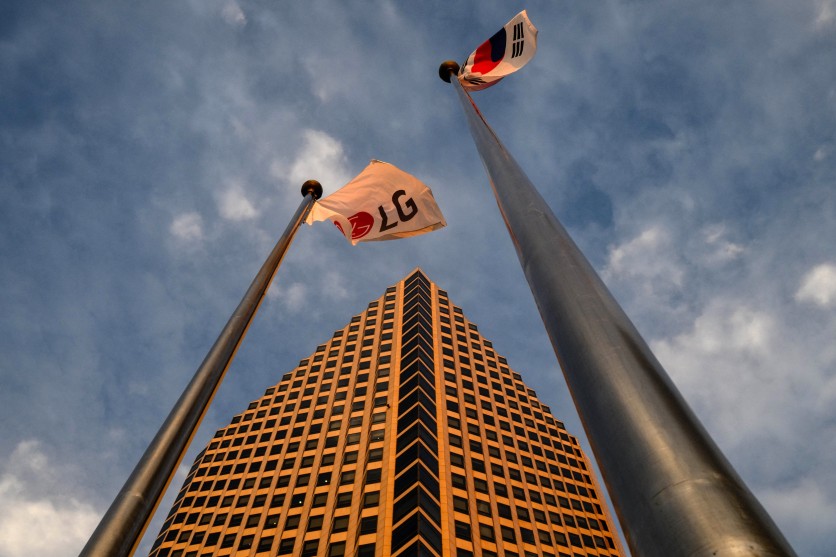
The national flag of South Korea (R) and the company flag of LG flutter in the wind outside one of the LG Group's Twin Tower buildings in Seoul on September 9, 2025. Hundreds of South Koreans were arrested last week at a Hyundai-LG battery plant being built in the southern state of Georgia, with images of workers chained and handcuffed alarming investors, as Seoul issued a strong rebuke. ANTHONY WALLACE/AFP via Getty Images
LG Chem will invest 15 trillion won ($9.8 billion) in R&D through 2035 to remake itself into a high-value materials company, shifting away from petrochemicals as profitability there weakens amid global oversupply. CEO Kim Dong-chun announced the plan at a company town hall on June 22, naming semiconductors, mobility, robotics, and cancer therapeutics as core future businesses.
The logic underneath is a margin escape. Petrochemicals — long LG Chem's base — is a commodity business where producers compete on price, and a global glut has crushed profitability with no quick recovery in sight. So the company is spending to climb its own value chain: out of the bulk chemicals cracked from crude, and up into the tiny, high-margin materials that physically hold an AI chip together, where the competition is on technology rather than price.
Where the Money Goes
About 70% of the spending will go to semiconductor and mobility/robotics materials. The company set up a new business-development organization reporting directly to the CEO this month and will pursue M&A alongside organic growth. In semiconductors, LG Chem will build out advanced packaging materials, aiming to grow its electronic-materials business to a 2 trillion won scale by 2030, roughly double its current level. The company has also set a goal of reaching a double-digit operating margin by 2030.
Why a Chemical Company Wants to Make Chip Materials
The target makes sense once you see where chip performance now comes from. As shrinking transistors stops delivering the old speed gains, chipmakers increasingly boost performance by packaging — stitching several chips, or "chiplets," tightly together into one module instead of building a single large chip. That stitching is a materials problem, and a brutally demanding one: the silicon and the substrate beneath it expand at different rates when heated, so a package built from the wrong materials warps and cracks the microscopic connections inside.
LG Chem's target products are the materials that solve this. Its lineup includes a photo-imageable dielectric (PID) that forms the ultra-fine insulating circuit patterns linking chip to substrate, die-attach film (DAF) that bonds chips while managing heat and stress, copper-clad laminate (CCL) that gives the substrate its structure, and next-generation glass substrates that stay flatter than today's organic ones. These are sold by the gram, not the ton, and they compete on precision rather than price — the opposite of petrochemicals. That is the whole logic of the pivot: the same company that cracks crude into plastics is trying to move up into the handful of materials an AI chip physically cannot work without.
Read more: Semiconductor Substrate Warpage Has a New Korean Fix: Viacore and Aqlaser Target Glass
Selling Solutions, Not Just Materials
The business model is changing too. Rather than simply supplying materials, LG Chem aims to become an integrated-solutions company that co-designs the performance and manufacturing of customers' products. That shift matters commercially: a vendor that merely ships a material competes on price and can be swapped out, but a partner whose materials are baked into a customer's chip design from the start is far harder to displace — the lock-in that makes these businesses durable. It is the same reason LG Chem frames the move as building "technological barriers" through joint development.
Read more: Intel Hires Former SK hynix CEO Seok-Hee Lee to Lead Its Foundry Packaging Push
Robots and Cancer Drugs
The other growth pillars extend the same idea. In mobility and robotics, LG Chem will expand beyond EV materials into robot structural materials and precision drive-and-bonding materials — the physical components a humanoid's moving joints require — again leaning on joint development with customers to build a defensible position. For cancer drugs, it will strengthen its pipeline through global clinical trials and partnerships, and use technology transfers and M&A to push toward commercialization.
"We will concentrate our capabilities on future growth pillars centered on semiconductors, mobility, robotics, and cancer drugs, and make a leap as a technologically strong company," Kim said. The plan is the signature strategy of a CEO who spent three decades in LG Chem's materials units before taking the top job late last year — a bet that the company can remake what it sells, and how it sells it, faster than its old business erodes.
Frequently Asked Questions
What is LG Chem investing in?
LG Chem will invest 15 trillion won ($9.8 billion) in research and development through 2035 to transform from a petrochemical-centered company into a high-value advanced-materials company. About 70% of the spending will go to materials for semiconductors, mobility, and robotics, with cancer therapeutics as a fourth pillar. The company aims to grow its electronic-materials business to a 2 trillion won scale by 2030 and has set a goal of reaching a double-digit operating margin by 2030.
Why is LG Chem moving away from petrochemicals?
Petrochemicals is a commodity business in which producers largely compete on price, and a prolonged global oversupply has sharply eroded its profitability with no quick recovery expected. To improve margins and reduce its reliance on a struggling business, LG Chem is shifting toward high-value-added materials that compete on technology rather than price — and where deep collaboration with customers creates durable competitive barriers. The company has been restructuring its portfolio in this direction for several years.
What are advanced packaging materials?
Advanced packaging materials are the specialized substances used to combine multiple chips, or chiplets, into a single high-performance module — increasingly the main way chipmakers boost performance as traditional transistor shrinking slows. They include photo-imageable dielectric (PID), which forms ultra-fine circuit patterns connecting chips to substrates; die-attach film (DAF), which bonds chips while managing heat and stress; copper-clad laminate (CCL), which provides the substrate's structure; and glass substrates, a next-generation option that resists the warping that can crack the tiny connections inside a package. LG Chem is targeting all of these.
Who is leading LG Chem's transformation?
The strategy is led by CEO Kim Dong-chun, who became LG Chem's chief executive in late 2025. He spent roughly three decades in the company's semiconductor and electronic-materials units and previously headed its advanced-materials division, making the pivot into high-value materials his signature initiative. Under his leadership, LG Chem established a new business-development organization reporting directly to the CEO to accelerate the strategy, and plans to pursue mergers and acquisitions alongside in-house development.

-
 C114 Communication Network
 -
 Communication Home
