
 Search

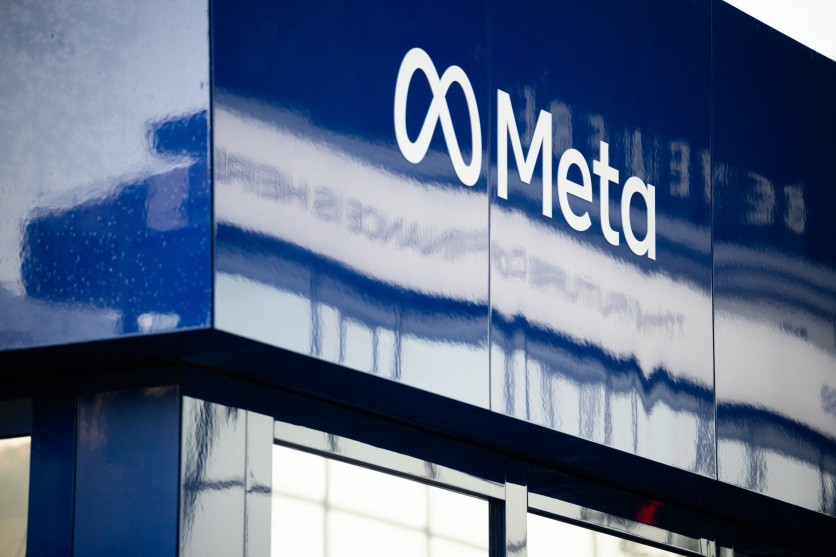
A view of the Meta building is seen during the World Economic Forum Annual Meeting 2026 in Davos Switzerland 2026/01/20 Laurent Hou/Getty Images
Mark Zuckerberg has directed a team at Meta to build a standalone prediction market app called Arena, internal company documents obtained by NPR show — and its most consequential design choice is not the play-money mechanic or the AI-generated questions. It is who decides whether a predicted event actually happened. That arbiter will be Meta's Llama, the company's own large language model, making binary yes-or-no judgments in near-real time on markets involving elections, sports, geopolitics, and anything else trending on the internet. No human reviews the call. No challenge window exists to dispute it.
That design is not a minor technical detail. Every major prediction market platform operating today — Kalshi and Polymarket, which together processed more than $130 billion in trades through the first half of 2026 — uses human reviewers or decentralized oracle networks with explicit dispute mechanisms to resolve the question of what happened. Meta is proposing to replace that structure with a single corporate AI at a scale those competitors cannot approach: more than 3.56 billion people use at least one Meta app every day.
How Arena Works
Internal documents describe an app that would deliver a daily allotment of virtual "play money" to each user, who then bets on yes-or-no outcomes drawn from trending news. Llama automatically generates the questions, recommends personalized markets to each user — functioning like an algorithmic feed, but for forecasts rather than content — and resolves each market in near-real time once the underlying event occurs.
The app would be standalone, separate from Facebook and Instagram, though those platforms could direct users toward it. The codenames "Antwerp" and "FBForecast" appear in the internal documents alongside "Arena." No launch date has been set, and Meta insiders told the New York Times the app could be shelved before it ever reaches users. Meta declined to comment.
The virtual-currency design is not an accident. Gaming lawyer Daniel Wallach, who monitors the prediction market industry closely, told NPR that launching without real-money wagering gives Meta room to seek regulatory licenses while the contested legal landscape stabilizes. "We're clearly in legal limbo," Wallach said, citing the more than 30 pending lawsuits over prediction market legality. "And we might not have a clear answer for another year or two."
Why AI Resolution Is a Structural Departure
Prediction markets have a fundamental technical problem known as the oracle problem: a market contract can only pay out reliably if something external to the contract itself can confirm what actually happened. The approach Polymarket uses — where a proposer posts the outcome with a financial bond, a two-hour challenge window opens for disputes, and contested outcomes escalate to a decentralized community vote — and the human review committees Kalshi employs exist specifically to solve this problem with accountability and recourse built in.
Llama's architecture does not include those safeguards by design. As a transformer-based, autoregressive language model built on a mixture-of-experts architecture, Llama generates outputs by predicting the most statistically probable next token — not by querying a verified truth source. Researchers in 2026 describe LLM hallucination as a structural property of probabilistic generation, not a fixable bug in any individual model. The failure modes most dangerous for market resolution — temporal errors on recent events, confident assertions about ambiguous outcomes, and misattribution of facts — are precisely the cases that human challenge windows exist to catch.
At the scale of 3.56 billion daily active users, a single wrong resolution from Llama would propagate to an audience orders of magnitude larger than anything Polymarket or Kalshi has ever reached. What distinguishes Arena from all prior entrants is not the play-money mechanic: it is the combination of LLM resolution with Meta's distribution reach and the structural absence of an appeals mechanism.
Read more: Schwab and Cboe Confirm S&P 500 Binary Options for 47 Million Retail Accounts
Meta Has Tried This Before — and the Reason It Failed Matters Now
This is not Meta's first prediction market. The company launched an app called Forecast in 2020, allowing users to make crowdsourced guesses about global events during the early months of the COVID-19 pandemic. It shut down two years later. The internal documents NPR reviewed name the specific reason: the "operational cost of manual question curation." Human editors reviewing and writing every question was not economically sustainable. Arena is explicitly described in those documents as a "rebuild" of Forecast — with Llama's automated generation replacing the human editorial work that made Forecast too expensive.
That context reframes what Llama is doing in Arena. The AI is not primarily a resolution mechanism chosen because it is accurate — it is a cost solution to the specific failure that killed Meta's first attempt. The question is whether the cost it introduces in return, the replacement of human dispute windows with probabilistic AI verdicts, is one that users, regulators, and the broader information ecosystem will accept.
Regulatory and Political Landscape
Meta is entering a market at precisely the moment its structure is being contested in federal courts and state legislatures. The Commodity Futures Trading Commission filed its ninth state lawsuit on June 23, 2026 — the same day the Arena story broke — against Kentucky, which had moved to shut down Polymarket, Kalshi, Coinbase, Robinhood, and Webull and impose a 14.25% excise tax. Senator Richard Blumenthal, Democrat of Connecticut, responded to the Arena reports with a direct statement: "Meta copied slot machines to addict kids to Instagram. Now Zuckerberg is turning his company into a prediction market. Meta's business model is profiting from addiction." Blumenthal is pushing the Prediction Markets Security and Integrity Act alongside the Kids Online Safety Act.
At the federal level, the CFTC published a proposed rule on June 10, 2026, with a public comment period closing July 27, 2026, defining which categories of event contracts are permissible. Arena's play-money launch sidesteps CFTC jurisdiction for now, but any future transition to real-money wagering would land the app squarely inside the regulatory battle that has already generated more than 30 lawsuits.
Political scientist Matthew Motta of Boston University, who studies the social and economic effects of legalized gambling, documented the election manipulation risk that prediction markets carry broadly: "You could have candidates using the prediction markets not just to make a quick buck — but to potentially manipulate the outcome of elections." His concern applies with additional force to a platform that relies on AI resolution, because the manipulation incentive becomes not just trading against market prices but flooding the information environment to steer Llama's judgment.
Business Case Against a Trust Deficit
The market Meta is entering grew from $50 billion in total trades during 2025 to more than $130 billion in just the first half of 2026. Analysts at Bernstein have projected the sector could reach $1 trillion in annual trading volume by the end of the decade. For a company whose advertising-dependent business already reaches billions of users, a transaction-fee model layered on top of that distribution is strategically obvious.
But a Forrester survey published June 25, 2026 found that more than half of respondents — 56% — said they do not trust Meta with a prediction market product, and roughly a third said Meta's involvement makes them less likely to try the app than they would be with any other operator. Those figures exist against the backdrop of a March 2026 New Mexico jury ordering Meta to pay $372 million for consumer protection violations, and a Los Angeles jury in the same month finding Meta liable in a civil suit over user mental health harm.
The competitive reaction in financial markets was measured. DraftKings dropped more than 2% following the first reports. Flutter Entertainment, the parent company of FanDuel, fell nearly 2% before recovering. A Jefferies analyst characterized Meta's entry as a manageable competitive threat for incumbents — but analysts and competitors who have dismissed Meta's distribution capabilities at their peril are numerous.
Can a $130B Market Absorb an AI Truth Arbiter?
The $1 trillion projection for prediction markets rests on an assumption that participants trust the resolution mechanism. Oracle-based platforms like Polymarket have spent years building dispute infrastructure precisely because that trust is not automatic — even small populations of wrong resolutions erode the epistemic credibility that makes prediction markets valuable as information aggregators. Meta's proposal to replace that infrastructure with Llama invites a test that no prediction market has run at Meta's scale: whether users will accept an AI's verdict on what happened in the world when that verdict determines who wins and who loses.
The app's virtual-currency design limits the immediate financial stakes. But Llama resolving who was right about an election, a Federal Reserve decision, or a military operation is not a small question even when the prize is play money. At 3.56 billion daily active users, the aggregate effect on how people understand what is true is the largest externality from Arena that the coverage so far has left unnamed.
Frequently Asked Questions
What is Meta's Arena prediction market app?
Arena is a standalone smartphone app that Mark Zuckerberg has directed a team at Meta to build, according to internal documents obtained by NPR. Users receive a daily allotment of virtual play money to bet on yes-or-no questions about real-world events across politics, sports, entertainment, and world affairs. The app uses Meta's Llama large language model to generate questions from trending news, recommend personalized markets, and resolve whether predicted events occurred. Meta has not announced a launch date and insiders say the project could be shelved before release.
How is Meta's prediction market app different from Kalshi and Polymarket?
The most significant difference is the resolution mechanism. Polymarket uses UMA's Optimistic Oracle, which includes a two-hour human challenge window and community dispute voting before any outcome becomes final. Kalshi employs human review committees. Meta's Arena would use Llama alone, with no human challenge window — a structural departure from every existing approach. Arena also uses play money at launch, while Kalshi and Polymarket involve real financial stakes.
What is prediction market manipulation risk, and does it apply to Arena?
In existing prediction markets, the documented risks include insider trading on non-public information and coordinated capital placement to move prices. Arena introduces an additional category: because Llama resolves whether events occurred, users have an incentive to flood the information environment with content designed to steer the AI's judgment toward a particular outcome. This manipulation vector does not exist on platforms where human committees or decentralized oracles verify outcomes against verifiable source data.
What happened to Meta Forecast, the earlier prediction app?
Meta launched Forecast in 2020 as a crowdsourced prediction platform during the COVID-19 pandemic and shut it down in 2022. Internal documents obtained by NPR identify the reason: the "operational cost of manual question curation." Human editors reviewing and writing questions was not economically sustainable. Arena is explicitly described in those documents as a rebuild of Forecast, with Llama's automated generation replacing the human editorial work.

-
 C114 Communication Network
 -
 Communication Home
