
 Search

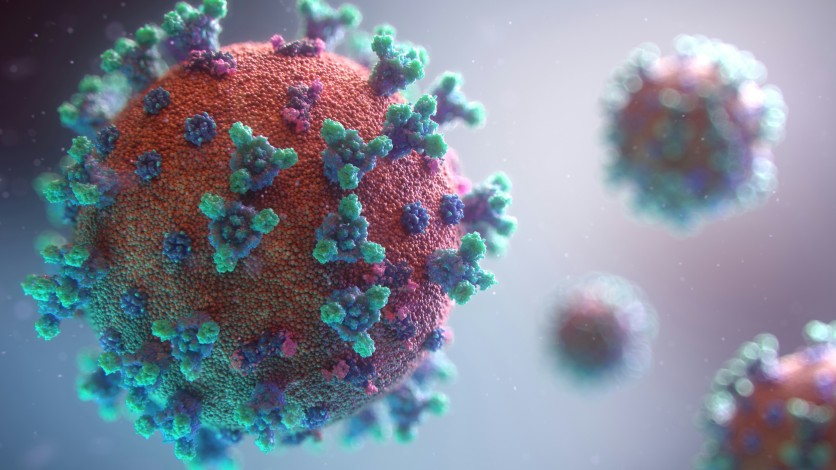
Unsplash
For the first time in history, a vaccine whose active ingredient was designed entirely by artificial intelligence has cleared human safety testing — and its target is not a single coronavirus strain, but an entire viral family spanning hundreds of known pathogens and an unknown number that have not yet emerged from their bat reservoirs.
Researchers at the University of Cambridge and biotech spinout DIOSynVax (DVX) Ltd announced in early June that their pan-sarbecovirus vaccine candidate, called pEVAC-PS, completed Phase I human trials with a clean safety record across all four dose levels tested. The results, published in the Journal of Infection, cover 39 healthy volunteers enrolled between December 2021 and September 2023 at National Institute for Health and Care Research (NIHR) facilities in Southampton and Cambridge. In a follow-up interview published today, Prof. Jonathan Heeney told reporters that his team is already adapting its AI tools for a new generation of influenza and Ebola-family vaccine candidates, signaling that the coronavirus trial marks the beginning of a broader platform strategy rather than a single-product milestone.
Read more: UK Rolls Out Trial For Needle-Free COVID-19 Vaccine For 'Wide Ranging Protection Against Coronavirus Variants
Why Vaccine-Strain Mismatch Keeps Killing People
Every flu season, and every time a new coronavirus variant surges, vaccine developers face the same structural problem: the strain the world immunized against last year is no longer the one circulating today. For COVID-19, that gap between circulating variant and available vaccine stretched into years during the Omicron era. Scientists call this vaccine-strain mismatch, and it is the core engineering failure that the DIOSynVax platform was built to eliminate.
The conventional approach to vaccine design starts with an antigen — a molecular fragment of the target virus — taken directly from a circulating strain. When that strain mutates or an entirely new relative spills over from animals, the antigen no longer matches, and the immune response it trained may be weakened or useless. For a viral family like the sarbecoviruses, which harbor hundreds of relatives in bat populations across Asia, Europe, and Africa and have already produced two global emergencies (SARS in 2003 and COVID-19 beginning in 2019), that mismatch risk is not theoretical — it is the established pattern.
How an AI Built a Vaccine Antigen From Scratch
The DIOSynVax platform — whose name expands to Digitally Immune Optimised Synthetic Vaccines — works by inverting the conventional vaccine design process. Rather than starting from a circulating strain, the team fed the entire available database of sarbecovirus genetic sequences gathered by global animal surveillance programs into a machine learning system. The algorithm's task was not to find what is different about each strain, but to identify what remains the same across all of them: the conserved structural features present in SARS-CoV-2, SARS-CoV-1, and the hundreds of bat coronaviruses that have not yet infected humans in large numbers.
The output is a synthetic protein target — what the team calls a "super-antigen" — that does not correspond to any single real-world coronavirus strain, but instead captures the molecular fingerprint shared across the entire Sarbecovirus subgenus. The immune system, trained against this composite, encounters recognizable features in any member of the family it subsequently meets.
In the human trial, pEVAC-PS was formulated as a DNA vaccine — a plasmid-based construct that instructs the body's own cells to produce the AI-designed antigen. This platform choice carries real-world consequences: DNA vaccines are more thermostable than the mRNA vaccines used in COVID-19 immunization campaigns, require less demanding cold-chain logistics, and are compatible with a broader range of delivery mechanisms. In this trial, the delivery method was the PharmaJet Tropis device, a needle-free system that delivers the vaccine through a high-pressure microfluidic jet to the skin rather than via a syringe. That device has WHO prequalification and CE Mark certification for intradermal nucleic acid vaccine delivery.
Participants received two doses of pEVAC-PS — at Day 0 and Day 28 — in one of four escalating dose groups (0.2 mg, 0.4 mg, 0.8 mg, and 1.2 mg). An independent safety monitoring committee cleared each escalation step before the next group was enrolled. No serious adverse events were recorded at any dose level.
A Promising Signal, With Caveats
The vaccine triggered measurable immune responses not only against SARS-CoV-2 and the original SARS virus, but also against related bat coronaviruses that have never caused widespread human illness. That cross-reactive response — reaching beyond strains the volunteers had previously encountered — is precisely the proof-of-concept the team was seeking.
The researchers used peptide microarray analysis to identify where in the viral proteins the vaccine was directing the immune response. The results showed antibody binding to conserved receptor-binding domain (RBD) epitopes — specific structural regions that are shared across the sarbecovirus family and are associated with broadly protective immunity through Fc-mediated immune mechanisms, not just direct neutralization. This matters because Fc-mediated responses engage a broader set of immune functions, including cellular immunity, which can contribute to protection even when neutralizing antibody levels are low.
However, the overall immune response was, in the researchers' own characterization, modest and variable. The paper explicitly acknowledges methodological constraints that limit how far the Phase I data can be pushed: the trial used a non-standard in-house ELISA measurement approach and lacked a comparator vaccine, making it difficult to benchmark antibody responses against established correlates of protection. More consequentially, volunteers were recruited during successive waves of Omicron infections and COVID-19 booster campaigns, from December 2021 through September 2023 — meaning most participants entered the study already carrying substantial coronavirus immunity from infection, vaccination, or both. That pre-existing immune background likely competed with or obscured the vaccine's specific contribution.
This is not an incidental limitation. DNA vaccines as a platform class have historically shown weaker immune responses in humans than in animal models, a challenge the field has not fully solved. The pre-exposure confound in this trial is an additional layer on top of that baseline platform difficulty. Whether a Phase II efficacy trial can overcome it remains the central unanswered question.
Marc Boubnovski, a senior AI Scientist at Novo Nordisk, told Medical News Today that the trial "did not yet show the strong, broad immune response you would want before calling it a protective universal coronavirus vaccine," while acknowledging it showed evidence of directing immunity toward conserved sarbecovirus regions. Monica Gandhi, MD, MPH, an infectious disease specialist and professor of medicine at the University of California San Francisco, added that virtually every adult alive has now been exposed to SARS-CoV-2 through infection or vaccination, making clean measurement of a new vaccine's additive contribution genuinely difficult — a challenge that will follow any future trial in this field.
Several DIOSynVax Employees Are Study Co-Authors
Multiple authors of the Journal of Infection paper are employees or shareholders of DIOSynVax Ltd, a conflict of interest disclosed in the paper itself. The research was funded primarily by Innovate UK, a UK government innovation agency. The trial was sponsored by University Hospital Southampton NHS Foundation Trust and conducted at two NIHR-accredited Clinical Research Facilities.
Why the Platform Matters Beyond Coronaviruses
The significance of pEVAC-PS extends well past what it might eventually do for the next coronavirus pandemic. DIOSynVax has applied the same computational antigen design pipeline to other viral families. Published research from the group demonstrates a pan-H5 avian influenza vaccine candidate — using the same machine learning approach to generate an antigen spanning all 12 tested H5 clades — that in mice elicited potent neutralizing antibodies against every tested strain including those that emerged after the antigen was designed.
Prof. Saul Faust, the coronavirus trial's chief investigator from the University of Southampton, has framed the ultimate goal as pre-emptive immunization: building vaccines against threat categories before they spill over, not after. "Viruses like Influenza, Coronaviruses and the Ebola group are evolving continuously and by the time vaccines are rolled out, they may be poorly matched," he said in the Cambridge press release. "If we can develop and clinically advance this new class of vaccines before a virus outbreak begins, millions of lives could be saved, lockdowns avoided and the economy preserved."
Prof. Heeney, in today's follow-up interview, described pandemic influenza as his most pressing next concern, noting that it is "one of the trickier viruses" and that a more advanced generation of AI tools is now being applied to build a "powerful platform" capable of working faster with more data. "This, I hope, is the start of a whole new era of vaccine manufacturing," he said.
What a Phase II Trial Must Prove
The Phase I data establishes that pEVAC-PS is safe and that it can focus the immune system on shared sarbecovirus features. That is the necessary foundation, but it is not efficacy. According to Medical News Today, a second trial enrolling approximately 200 participants is currently underway to assess how effectively the vaccine generates protective immune responses in a broader and more diverse population.
The researchers are also exploring whether the antigen is compatible with alternative delivery platforms, including mRNA carriers and adjuvanted protein formulations, which may address some of the immunogenicity limitations that are inherent in the DNA vaccine format. The ultimate practical test will come when immune responses generated in Phase II are compared against a defined protective threshold — something Phase I data cannot provide.
Frequently Asked Questions
What is a pan-sarbecovirus vaccine, and how is it different from a COVID-19 vaccine?
A COVID-19 vaccine targets the spike protein of SARS-CoV-2 — the specific virus responsible for the 2019 pandemic — and must be periodically updated as the virus mutates. A pan-sarbecovirus vaccine instead targets molecular features shared by the entire Sarbecovirus subgenus, which includes SARS-CoV-2, the original SARS virus, and hundreds of bat coronaviruses that have not yet infected humans in large numbers. The goal is a single vaccine that remains protective as the virus mutates and that provides some degree of protection against related viruses that have not yet emerged in humans.
How does AI design a vaccine?
The DIOSynVax platform uses machine learning to analyze the full available database of sarbecovirus genetic sequences — collected from global animal surveillance programs — and identify structural features that remain stable across all known members of the viral family. Those conserved features are used to synthesize an artificial antigen: a molecular target that does not exist in any real-world virus but captures what all sarbecoviruses have in common. This "super-antigen" is the active ingredient in pEVAC-PS. When the immune system is trained against it, it can recognize molecular patterns shared by any member of the sarbecovirus family.
Why were the immune responses in the trial described as modest?
Two factors complicated the measurement. First, the trial enrolled participants during active COVID-19 booster campaigns and Omicron waves, meaning most volunteers already had strong coronavirus immunity before receiving pEVAC-PS — making it difficult to isolate the vaccine's specific contribution from their background immunity. Second, DNA vaccines as a platform class have historically shown weaker immune responses in humans than in animal studies, a long-standing challenge the field has not fully resolved. The Phase II trial is designed to assess immune responses in a larger, more diverse population under conditions that may allow cleaner interpretation.
Is a universal coronavirus vaccine close to being available?
No. The pEVAC-PS trial established safety and provided early evidence that the AI-designed antigen can direct the immune system toward conserved sarbecovirus features. It was not designed to measure whether the vaccine prevents infection, and the immune responses observed were modest. A Phase II efficacy trial is the next required step, and from there a successful candidate would still need Phase III trials before regulatory approval and public availability. If this platform succeeds, the timeline to a licensed universal coronavirus vaccine is measured in years.

-
 C114 Communication Network
 -
 Communication Home
