
 Search

Postmarketos.org
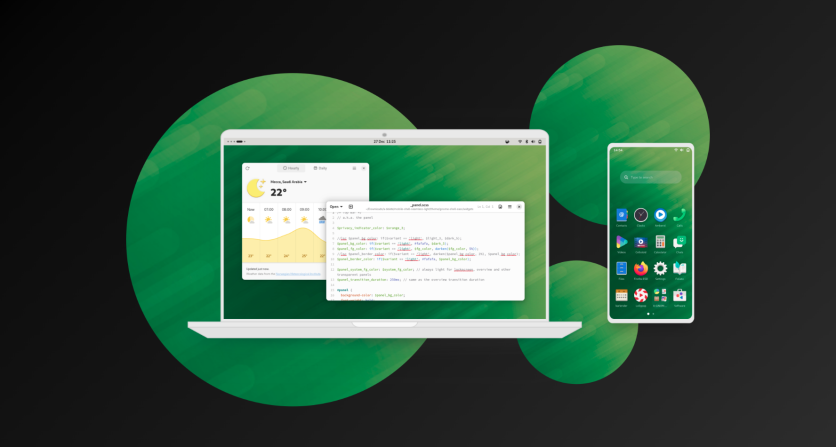
The open-source project that keeps old smartphones running with a full Linux stack released postmarketOS 26.06 on June 21, delivering its biggest six-month update yet for owners of Android devices that manufacturers abandoned years ago. Built on Alpine Linux 3.24, the "Alpen Avocado" release ships GNOME 50, a switch from a custom boot splash to the widely-used Plymouth system, and a ModemManager upgrade that brings emergency cell broadcast support to Linux phones for the first time — all while expanding the supported hardware catalog to 254 devices in its testing category.
The practical reader question the release answers is direct: if you have an old Pixel 3A, OnePlus 6, Samsung Galaxy S9, or Xiaomi Poco F1 sitting in a drawer, postmarketOS now offers a more polished path to reviving it as a full Linux device than any prior release.
Why Your Old Phone Still Has a Software Life
Most smartphones stop receiving security updates two to four years after release, but the hardware rarely fails. The result is hundreds of millions of devices worldwide that are fully functional but exposed to unpatched vulnerabilities — the primary reason most users discard them, according to industry analysts who track device replacement cycles.
postmarketOS addresses this by replacing the Android stack entirely with Alpine Linux, running the upstream Linux kernel rather than the vendor-specific fork that shipped with the phone. When a manufacturer's downstream kernel goes unsupported, it is frozen at the last update and never patched again. The mainline Linux kernel, by contrast, continues to receive security fixes through the normal kernel release process for as long as kernel maintainers support the hardware — which, for well-established ARM SoC platforms, can extend for well over a decade.
This distinction matters to the reader in a concrete way: a device running postmarketOS on the mainline kernel is a device that continues to receive security patches. A device running a downstream Android fork is not, regardless of how many third-party custom ROMs it supports.
The caveat is important and the project states it clearly: not all 254 devices in the v26.06 testing category are running the mainline kernel. Many still depend partly on vendor-specific kernel forks while their drivers are gradually upstreamed. The project's device wiki page lists each device's kernel status. For the community-tier devices — Fairphone 4, OnePlus 6 and 6T, PinePhone, PinePhone Pro, and others — mainline or near-mainline kernel support is a documented requirement for that tier designation.
A New Name, Explained
Previous postmarketOS releases used titles in the style of the television series Friends — "The One With…" followed by a distinctive feature. The v26.06 release abandons that scheme in favor of an alliterative pairing: the winning community wallpaper name ("Alpen," a reference to Alpine Linux) combined with a fruit. The wallpaper, created by contributor dikasp, received 285 of 557 community votes.
The project explained the practical reason for the change: because postmarketOS releases are time-based snapshots of the upstream Alpine Linux Edge branch rather than feature-targeted milestones, a given six-month cycle may not have a single defining development worth naming. Labeling a release "The One Where The Saga Continues, Part II" communicates nothing useful to a reader deciding whether to upgrade.
Plymouth Replaces a Custom Boot Splash — and Why That Matters
The most architecturally significant change for anyone who cares about the project's long-term direction is the replacement of postmarketOS's custom pbsplash boot splash with Plymouth, the boot-time I/O system used by most major Linux distributions.
Plymouth is more than a splash screen. It runs from the initramfs — the initial RAM filesystem loaded before the root partition mounts — and serves as a boot-time I/O multiplexer, handling the kernel modesetting (KMS) handoff from the bootloader to the display and serializing any messages or prompts that need to reach the user before the main desktop starts.
Replacing a custom one-off solution with Plymouth means postmarketOS inherits a well-maintained, widely-deployed component rather than maintaining its own boot graphics stack indefinitely. The user-facing gains are concrete: pressing Escape (or the power button on phones) now surfaces the raw boot log for debugging, the splash screen can finally rotate correctly on devices where the screen orientation was inverted during boot, and devices with working vibration motors now vibrate on startup as part of a broader effort to improve accessibility.
Updated Software Stack: GNOME 50, Phosh, KDE, and systemd
GNOME 50 replaces GNOME 49 from the previous v25.12 release for desktop users. The mobile variant remains on GNOME 48, with fixes for a crash and a busy-looping issue in certain scenarios. The postmarketOS team noted that upstreaming the full mobile adaptation of GNOME remains a long-running project — significant pieces, including a new gesture framework, have already landed in upstream GNOME, but substantial work remains and additional contributors are needed.
KDE Plasma Mobile 6.6.5 replaces version 6.5.6. Plasma Bigscreen, a large-screen interface designed for TV use, returns to the postmarketOS repository after being disabled since v24.06 due to incompatibilities with the Plasma 6 update. Plasma desktop now uses plasma-login-manager instead of SDDM for the systemd variant; using OpenRC with Plasma is no longer recommended and will be disabled in a future release.
Phosh 0.55.0 jumps from 0.51.0. The update completes a migration from postmarketOS's custom tinydm display manager to greetd and phrog, which is what the Phosh upstream project recommends — a reduction in the custom code the postmarketOS team must maintain. The team also consolidated settings by pulling the relevant functionality from the postmarketOS tweaks application directly into Phosh Mobile Settings, reducing the number of separate settings apps on a default Phosh installation.
Sxmo holds at version 1.18.1.
systemd advances from version 257 to 261, bringing improved compatibility with new Wayland protocols and better power management for supported hardware.
What Is Cell Broadcast Support and Why Does It Matter?
The ModemManager upgrade in v26.06 adds cell broadcast support — a detail easy to miss in a feature list but consequential for anyone using a Linux phone as a primary device.
Cell broadcast is the 3GPP cellular standard that governments use to push emergency alerts directly to all devices on a network in a geographic area, without the device needing an internet connection or a specific app. In the United States this is the Wireless Emergency Alert system; in Europe it is EU-Alert. Because cell broadcasts are delivered at the modem layer rather than through an operating system's push notification infrastructure, they previously bypassed Linux phones entirely — a user running postmarketOS would not receive an Amber Alert, a weather emergency, or a government public safety message.
The ModemManager upgrade changes that for devices with compatible modems, making postmarketOS a more viable option for anyone who relies on their phone as a communications tool rather than purely as a development or hobbyist device.
sudo-rs and a Security Architecture Note
New postmarketOS 26.06 installations now default to sudo-rs instead of doas for privilege escalation. sudo-rs is a Rust-language reimplementation of the sudo utility developed by the Trifecta Tech Foundation and funded by the Internet Security Research Group's Prossimo project. The original sudo is written in C and has a documented history of memory-safety vulnerabilities — the most significant recent one, CVE-2021-3156 (Baron Samedit), allowed local privilege escalation and was discovered by security firm Qualys in 2021.
Rewriting the utility in Rust eliminates an entire class of memory-safety bugs by design. The choice also reflects a broader pattern across the Linux ecosystem of replacing security-critical C utilities with Rust equivalents where the maintenance burden of the original is disproportionate to the gain.
Device Support and Demotions
The v26.06 community tier includes: Fairphone 4, Google Pixel 3A and 3A XL, OnePlus 6 and 6T, PINE64 PinePhone and PinePhone Pro, Purism Librem 5, Samsung Galaxy S9, Xiaomi Poco F1, Nokia N900, Lenovo ThinkPad X13s, PINE64 PineNote (new this cycle), and various Google Chromebook families. Five devices were moved from community to testing because their kernels had grown too old or lost active maintainers: the ASUS MeMO Pad 7, Microsoft Surface RT, NVIDIA Tegra ARMv7, Samsung Chromebook, and Xiaomi Mi Pad 5 Pro. The project has announced that devices in the testing category with no active maintainers will eventually be moved to an archived state.
What postmarketOS Cannot Yet Do
postmarketOS is explicitly not ready for users expecting Android or iOS levels of polish. The project's own state page describes it as software intended for power users. Key limitations:
Camera support is absent or degraded on most supported devices — few handsets have fully upstreamed camera image signal processor drivers. Banking apps that rely on Google Play Services device attestation do not work unless running inside a Waydroid Android container with microG, and compatibility varies by bank and country. Battery life on devices with incomplete power management kernel support can drain faster than the same hardware running Android, because the device may fail to enter deep sleep states correctly.
For users willing to accept these constraints, postmarketOS functions well as a server, kiosk device, or privacy-focused secondary phone.
What Comes Next
The project is actively developing Duranium, an initiative aimed at improving reliability through immutable system design and more predictable update behavior. Hardware CI infrastructure — automated testing of postmarketOS builds on physical devices — is expanding. Work toward the first device earning the "main" category designation (the highest tier, currently empty) is ongoing.
Community members can connect with postmarketOS developers at three upcoming events: FOSSY 2026 in Vancouver, Canada (August 6–9), FrOSCon in Sankt Augustin, Germany (August 15–17), and the postmarketOS and Alpine Linux Conference in Aachen, Germany (September 25–27).
postmarketOS v26.06 is available now at postmarketos.org/install. Users upgrading from v25.12 can follow the upgrade guide on the project wiki.
Frequently Asked Questions
What phones are supported by postmarketOS 26.06?
The v26.06 testing category covers 254 devices, ranging from the Fairphone 4 and Google Pixel 3A to the Samsung Galaxy S9, Nokia N900, OnePlus 6, and PINE64 PinePhone. The community tier — which requires active maintainers, a near-mainline kernel, and documented working phone functionality — includes approximately 40 devices. The full list with per-feature compatibility status is available at wiki.postmarketos.org/wiki/Devices.
Can postmarketOS replace Android as a daily driver?
Not for most users yet. The project explicitly describes itself as software for power users and Linux enthusiasts. Camera support is absent or degraded on most devices; banking apps that require Google Play attestation do not work natively; and battery life depends heavily on how completely the device's power management has been implemented in the kernel. postmarketOS functions well as a privacy-focused secondary phone, a server, or a kiosk device. The project is actively working toward broader daily-driver viability through its Duranium reliability initiative and Hardware CI infrastructure.
What is the difference between mainline-kernel and downstream-kernel devices in postmarketOS?
When a manufacturer ships an Android phone, they produce a heavily modified Linux kernel fork containing proprietary drivers for that specific hardware. When the manufacturer ends support, that kernel is frozen and never updated. postmarketOS's goal is to use the upstream mainline Linux kernel instead — where security patches flow continuously through the normal kernel release process. A device running on a near-mainline kernel receives ongoing security fixes indefinitely; a device still on a vendor fork does not. The device wiki page for each supported handset notes its kernel status, which is the single most important factor for users who care about long-term security.
What is cell broadcast and why does its addition matter?
Cell broadcast is the cellular-network standard that governments use to push emergency alerts — Amber Alerts, severe weather warnings, public safety messages — directly to mobile devices in a geographic area without requiring an internet connection or an app. Because it operates at the modem level rather than through an operating system's notification stack, Linux phones previously missed these alerts entirely. The ModemManager upgrade in postmarketOS 26.06 adds cell broadcast support for compatible modems, making Linux phones eligible to receive government emergency notifications for the first time.

-
 C114 Communication Network
 -
 Communication Home
