
 Search

Bond
For decades, professional personal security was reserved for heads of state, Fortune 500 executives, celebrities, and the ultra-wealthy. Everyone else was left relying on location-sharing apps, emergency hotlines, and the hope that help would arrive in time.
Doron Kempel believes that the model no longer works.
As CEO of Bond and a former elite special operations commander, Kempel has spent years building what he describes as the world's first scalable preventative personal security platform, combining AI systems, live human security agents, and real-world emergency coordination into a service designed to help stop dangerous situations before they escalate.
I sat down with Kempel to discuss why he believes consumer safety technology often creates a false sense of security, why preventative protection matters far more than passive tracking, and why AI-powered personal security may soon become as commonplace for families as home security systems and cybersecurity software.
Most families today rely on location-sharing apps for peace of mind. Why do you believe that approach often fails when something actually goes wrong?
DK: Consumer-grade apps help us feel better, but typically can't help remediate a situation. Let's start with our children. Location-sharing apps allow us to know where our children are. However, let's assume that our child is not where he is supposed to be and is not answering our call. We are 30 minutes away from where the child is. What now? This is not a 911 situation since we don't have proof of an emergency. By the way, there are 6,000 911 centers in the US, and we may not even be calling the right one, the one next to where our child is. How do we now help our child?
These location trackers do a good job of showing us where children are, but they don't help us resolve the situation. There is no way to administer help to our children. Principally, security is a domain of expertise. Just like we would not perform a dental procedure at home by ourselves, we should seek professional-grade personal security and safety that can help us 24/7/365, can look after our children, as well as look after us, before a situation becomes an emergency.
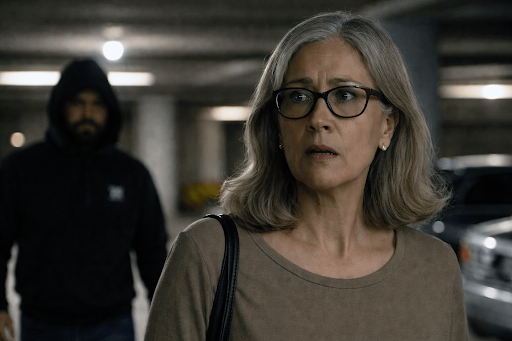
Here is another example: we and our children are often in situations where we feel uncomfortable or unsafe, but the situation is not yet a 911 emergency. Say we are walking alone at night, or we are alone in the presence of a stranger. We are in a ride-sharing vehicle, receiving a delivery while alone at home, or working as lone workers such as salespeople, brokers, home-care nurses, drivers, and others engaging with strangers. We are often worried, but it is not an emergency, so we don't call 911. However, should a stranger suddenly become hostile, we are unlikely to complete a 911 call. This is what we call the Personal Security Paradox: Too Early, until it is Too Late to complete a 911 call.
There are no consumer-grade apps or services that resolve this security gap and paradox.
You've said many consumer safety apps create a false sense of security rather than real protection. What are families missing when they rely only on tracking technology?
DK: What is required is a professional-grade service that actively and preventively looks after family members when they wish to be looked after. It can detect risks, and it can protect and orchestrate help.
Now, let's break this down into four key requirements and capabilities. First, the security or protection concept should be preventative and not reactive. It is proven that when we are attacked, we cannot complete a 911 call. It is typically too late. We need to be looked after electronically, via AI, but also with 24/7 professional security agents who can be on a video call with us within five seconds. They should be able to calm us down, provide company when we don't want to be alone, and provide guidance. They should be trained in de-escalation and deterrence, and they need direct connections to all 6,000 911 centers in the US and to be known by 911, so when they call the correct 911 center near us, they receive an immediate response and can orchestrate help.
Second, in addition to the 24/7 security agents, there should be a sufficiently rich set of electronic and AI-powered services that allow us to ask to be "looked after." Such services should detect in real time that something is anomalous and trigger security agents to engage and check on members.
Third, the security agents need to operate from command centers, and they themselves need to be trained and monitored in real time in order to ensure quality of service.
Fourth, the service should promise top-notch data security and privacy capabilities. Data should not be sold or shared other than when orchestrating a response.
Lastly, just like you would check what doctor is going to operate on your child, you should choose a security company that combines deep, proven security expertise with proven technological innovation.
This is not a music app or a social media app.
Bond originally built its security infrastructure for companies like Apple, Walmart, Disney, and Verizon. Why did you decide it was important to bring that same level of protection to ordinary consumers and families?
DK: Bond's original and current mission is to democratize personal security. To enhance personal security for all. We invested over $100 million in order to establish the first and only AI-powered preventative personal security platform, and already in 2019 offered it to consumers and institutions as part of our beta testing.
It was commercially correct to start by offering the service to institutions: the most sophisticated and demanding corporations in the world, government agencies, affluent families, cities, and universities across the world. Now, it is commercially correct to offer it directly to consumers, which is more expensive since educating consumers about a new paradigm is an elaborate and demanding endeavor.
In other words, it has always been the intention, mission, and strategy to offer the service to all, but to do so in an economically responsible fashion.
Historically, professional personal security has been associated with executives, celebrities, and wealthy individuals. Why do you believe everyday families increasingly need access to these kinds of services too?
DK: Personal security has traditionally been something that only executives, celebrities, and government officials could afford. The rest of us have access to national security, campus security, and federal security, but that is not personal individual security.
When I evaluated the feasibility of Bond, it became clear to me that we had reached a point where, technologically and operationally, it was feasible to accomplish such a vision. This could not have been possible 10 years ago.
We have made it effective, affordable, and privacy-preserving for anyone to have personal security. That's revolutionary. Our challenge is to educate the market about the profound difference and value that Bond delivers.
A lot of parents assume "knowing where my child is" equals safety. Why do you believe preventative protection matters far more than passive location sharing?
DK: Knowing where the child is creates great peace-of-mind value, which we believe is important. We offer such capabilities, of course. That's not difficult to do.
However, that does not really enhance the security of the child. If the child does not respond and is 10 to 30 minutes away, we can't help them. Calling 911 is impractical since they are flooded with over 240 million calls per year, and they are not designed or staffed to go check on all children who don't respond to their parents.
What is required is a service that can look after children, detect risks and anomalies, and take steps to help them. First, a personal security agent who is by their side and can guide them, deter or de-escalate a situation with would-be attackers, orchestrate assistance from first responders, and even send a car to pick them up.
By the way, it is not obvious to the untrained mind how we can deter or de-escalate simply by being on video on the smartphone screen of our members. This has to do with the professional depth and breadth of Bond. It includes understanding the profile of a typical attacker: male, opportunistic, wishing to stay alive and free, and therefore selective about targets and keenly aware of, and eager to avoid, cameras and witnesses.
Once you understand this reality, you can understand how a Bond professionally trained and certified Personal Security Agent, on video with you or your child, can interact with a stranger and politely and assertively give him a diplomatic way out of the situation. This is proven and saves lives.
Bond describes itself as a "preventative personal security" platform. What does that actually mean in practice for an average family using the service day to day?
DK: It means a few things. First, it is the only way to enhance personal security short of getting a bodyguard for $100 per hour. Consumer-grade apps make you feel better, but can't protect you or your family. They are not even registered security companies.
Second, it specifically implies that Bond can look after you whenever you wish to be looked after while preserving your privacy. We work for you. Bond can detect risks and anomalies, engage, and remediate a situation.
Third, delivering the Bond service requires immense investments in technological innovation and operational excellence, including personal security agents and collaboration with first responders and other service providers.
Fourth, a preventative approach is the correct approach in healthcare, safety, and security.
Fifth, it means that Bond has made it affordable for any family to offer Bond to all family members, including children and senior citizens. We are built to scale.
Sixth, any responsible person should try it for free. Go to our website at www.OurBond.com/DTC and try it out for free. If you cannot afford the service for your family members, we'll find a solution for you and effectively handle situations where someone is alone and facing an assailant.
One of the biggest assumptions consumers make is that professional security services are financially out of reach. How important was affordability in Bond's push into the consumer market?
DK: Democratizing personal security, making personal security available for all, necessitates affordability as a characteristic of the service. This was a major design tenet and one of the core distinguishing characteristics of Bond.
Other companies cannot afford to offer 24/7/365 professional personal security agents within seconds at the price Bond does, or at the level of reliability and scalability that Bond offers.
We're seeing AI enter nearly every aspect of family life and consumer technology. How do you believe AI-powered personal security will change the way ordinary people think about safety over the next few years?
DK: AI makes it possible for us to deliver professional-grade security to millions of people at affordable rates. However, what members want is a personal human touch. In other words, Bond Personal Security Agents are the ones interacting with and protecting members, while AI and other technologies enable the scalable, reliable, and affordable human touch.
AI allows for massive scalability to look after millions of people and detect anomalies. AI allows us to manage interaction and collaboration among our agents, members, and first responders with great precision and reliability.
Bond combines AI technology with live human agents and real-world emergency coordination. Why is human involvement still critical when families face stressful or dangerous situations?
DK: Human involvement is required because our members want human interaction when they feel unsafe, and because first responders are human and expect humans to interact with them.
In my mind, a degree of human interaction will continue to be required in the future, but members and first responders will accept more machines at the touchpoint over time.
Do you believe we are approaching a future where preventative personal security becomes as normal for families as home security systems, cybersecurity software, or health insurance? Why now?
DK: Preventative personal security is now possible, which implies that it will soon become the standard employees, students, parents, and society expect. It is arriving now because it has only now become feasible.
In other words, advances in technology are enabling changes to our lives. What Bond is offering today was not feasible 10 years ago.
Brendan Blowers is a writer and journalist whose work has appeared in Haute Living, International Business Times, TechTimes, Haute Residence, TOWN, Vocal, and elsewhere. His work spans culture, lifestyle, technology, business, architecture, creativity, and leadership.

-
 C114 Communication Network
 -
 Communication Home
