
 Search

gettyimages.com
Ray-Ban Meta AI glasses — the ones that look like normal sunglasses but answer questions out loud, snap photos on command, and now, in the $799 display model, project information directly into the lens — nearly doubled in revenue during Q2 2026. That is not a rounding error or a small-base effect. It is what happens when a product category crosses from early-adopter curiosity into mass-market demand. (Exchange rate as of July 28, 2026; all EUR-to-USD conversions are approximate.)
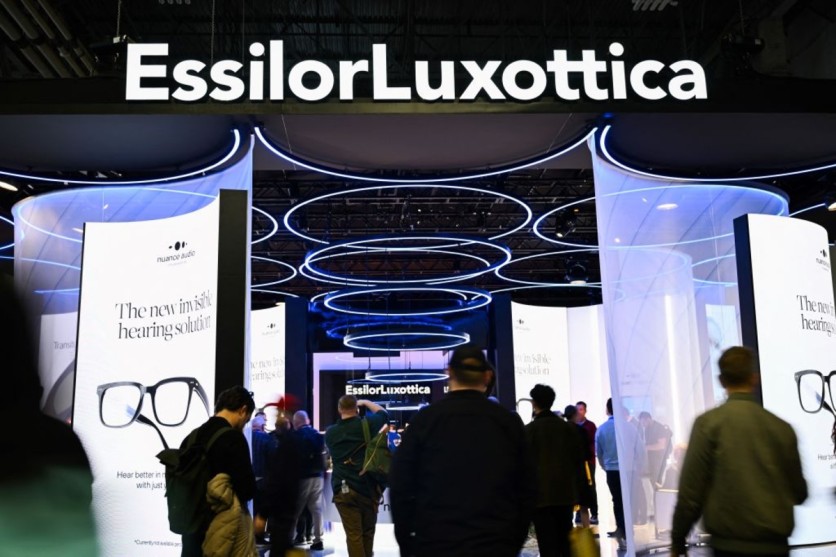
EssilorLuxottica, the Franco-Italian eyewear giant that manufactures the Ray-Ban and Oakley lines in partnership with Meta Platforms, on Tuesday reported first-half 2026 revenue of €14.8 billion (approximately $16.8 billion USD), up 9.7% at constant exchange rates versus the same period a year earlier. Second-quarter growth came in at 8.7%. Adjusted operating profit rose 15% at constant currency, pushing the adjusted operating margin to 18.9% — an 80-basis-point gain. Free cash flow hit €1.07 billion (approximately $1.21 billion USD) for the half, the strongest first-half figure in five years and more than €100 million (approximately $114 million USD) above the prior year's first-half result.
AI glasses are driving the growth. EssilorLuxottica sold more than 7 million pairs of Ray-Ban and Oakley Meta glasses in full-year 2025 — more than triple the roughly 2 million units it had sold across all of 2023 and 2024 combined. The acceleration has continued into 2026, with the AI glasses segment posting near-doubling growth in Q2.
Read more: Samsung Galaxy Glasses Land in a Market That Just Banned Smart Glasses From Courts
AI Glasses Almost Doubled Revenue in Q2 as Production Races Toward Scale
The Ray-Ban Meta line now spans a wide price range, from the camera-and-speaker-only second-generation model at $379 up to the flagship Meta Ray-Ban Display at $799, which adds a color in-lens heads-up display and gesture controls via a companion wristband. The display model has been supply-constrained since launch — Meta and EssilorLuxottica have been working to lift production orders as demand outpaced inventory — and broader international rollout was underway as of the Q2 results.
Oakley Meta models have expanded the product line's appeal into the performance sports segment beyond its lifestyle-focused Ray-Ban origins.
According to retail analytics firm Circana, revenue in the smart glasses segment surged 233% to $436 million over the 12 months through May 2026, with Meta-EssilorLuxottica products dominating the category. IDC's Q1 2026 tracker data puts Meta's market share at 69.2% — a dominant position that its closest new challenger, Samsung Galaxy Glasses (which arrived at Galaxy Unpacked on July 22), will be trying to erode this fall.
Meta and EssilorLuxottica are in discussions about scaling annual production capacity toward 20 million units — a figure that would represent nearly tripling 2025 shipment volumes. Making that scale a reality depends on solving an engineering problem that has limited the entire AR and display glasses category for years.
What Is a Waveguide, and Why Is EssilorLuxottica Betting on Making Its Own?
The $799 Meta Ray-Ban Display works because of a component called a waveguide: a precision glass substrate that takes light generated by a tiny LCoS (liquid crystal on silicon) microdisplay, couples it into the lens, propagates it through the lens via a series of precisely positioned partially reflective mirrors, and then emits it directly into the wearer's field of view — all while remaining transparent enough that the wearer can still see the real world through the lens. iFixit's teardown analysis of the Ray-Ban Display confirmed this architecture in detail.
The waveguide in the current Meta Ray-Ban Display was designed by Lumus (an Israeli optics company) and manufactured by SCHOTT (a German specialty glass maker) using geometric reflective waveguide technology. Geometric waveguides are the industry's preferred architecture for consumer smart glasses: they are far brighter than competing diffractive waveguide designs (up to 10 times more luminance-efficient per Lumus's published data at CES 2026), usable outdoors, and do not suffer from the color-distortion "rainbow effect" that plagues diffractive alternatives. The current Ray-Ban Display delivers a 20-degree field of view; Lumus's next-generation Z-30 raises that to 30 degrees at 30% lighter weight and 40% thinner profile, while the forthcoming ZOE waveguide aims for a field of view exceeding 70 degrees.
The manufacturing problem is straightforward to describe and hard to solve. Producing a waveguide requires depositing precise thin films onto a glass substrate, cutting it with CNC machines, and polishing it to optical tolerances — a complex, high-precision process with low yields at scale, as supply chain data from TrendForce confirms. SCHOTT spent years building a dedicated new factory and announced mass-production capability the day before Meta launched the Ray-Ban Display glasses. Yet production volumes remain constrained. When Meta lifted its initial waveguide orders by 87.5% — to roughly 150,000 units — it immediately created supply bottlenecks that delayed the product's international rollout.
Applied Materials, the Santa Clara, California company that makes the deposition, etch, and process-control equipment used to manufacture virtually every advanced semiconductor chip and display in the world, is precisely the kind of partner that could change this equation. Its machines already apply thin-film processes to precision substrates for the semiconductor and flat-panel display industries — the same category of materials engineering that waveguide manufacturing requires, at a level of throughput and yield control that specialty optical glass makers have not achieved at consumer volumes.
On June 16, 2026, EssilorLuxottica and Applied Materials announced a long-term joint development agreement to build "scalable optical platforms" for next-generation AR and AI-powered smart eyewear, with a dedicated collaboration lab established at Applied Materials' Silicon Valley campus. Gary Dickerson, President and CEO of Applied Materials, framed the strategic rationale: "Designing, building and scaling next-generation smart glasses will require deep collaboration across the technology ecosystem."
What the partnership signals, beyond its stated R&D goals, is that EssilorLuxottica is building capacity to develop and eventually own key elements of the waveguide manufacturing stack — rather than depending indefinitely on third-party specialty suppliers whose production capacity cannot scale fast enough to meet 20-million-unit ambitions. It is a supply-chain independence move as much as a technology development play.
Myopia Management Confirms Its Role as a Second Growth Engine
AI glasses are not the only structural growth driver in EssilorLuxottica's H1 2026 results. The company's myopia management portfolio posted 24% revenue growth in Q2, following 26% growth in Q1 — making it one of the most consistent contributors to the company's overall performance across two consecutive quarters.
Myopia, or nearsightedness, affects approximately 40% of the US population, and the National Eye Institute projects that more than half of the world's population may become myopic by 2050. The condition is rising in prevalence fastest among children and adolescents — particularly in East Asian markets where rates already exceed 70–80% of the young population — creating sustained demand for pediatric vision management. High myopia, when uncorrected or poorly managed, raises the risk of retinal detachment, glaucoma, and macular degeneration later in life.
EssilorLuxottica's Stellest lens addresses this through its HALT (Highly Aspherical Lenslet Target) design: a 9 mm central zone for normal vision correction surrounded by more than 1,000 concentric lenslets that create "peripheral myopic defocus" — a light-management signal the eye appears to interpret as an instruction to slow axial elongation. In clinical trials over six years, Stellest slowed myopia progression by 57% and slowed axial elongation; over two years the efficacy figure reached 71%. The FDA authorized Stellest for US children aged 6 to 12 in September 2025, making it the first FDA-cleared spectacle lens specifically indicated for slowing myopia progression.
The financial pattern suggests EssilorLuxottica's dual-growth-engine thesis — AI wearables paired with medical-grade pediatric optometry — is working as designed.
Regional Performance: No Single Market Is Carrying the Results
H1 2026 growth was broadly distributed across EssilorLuxottica's global footprint. North America, the group's largest single market, posted high-single-digit growth in Q2 after 12.5% constant-currency growth in Q1. Europe, the Middle East, and Africa (EMEA) and Latin America also recorded high-single-digit gains in Q2, while Asia-Pacific delivered double-digit growth — a region the company has been investing in through store expansion and professional partnerships.
Retail comparable-store sales increased 8.0% in Q2, with optical and sun banners contributing equally — a sign that the AI glasses boom is lifting foot traffic across the group's roughly 20,000 stores worldwide, which include LensCrafters, Sunglass Hut, Vision Express, and roughly 2,000 newly added stores in Thailand through the Top Charoen acquisition.
What Readers Need to Know Before the Competition Heats Up This Fall
The market EssilorLuxottica dominates is about to get crowded. Google at its I/O conference in May unveiled AI audio glasses to be produced by Warby Parker and Gentle Monster, both powered by Gemini 2.5 Pro and Android XR, with Samsung handling hardware engineering. Samsung's Galaxy Glasses — the product form of that platform — arrived on July 22, five days before EssilorLuxottica's earnings, without a display, running Gemini via Android XR. Both Google's Warby Parker and Gentle Monster models are expected to launch "this autumn" in select markets.
The competitive landscape raises a question for buyers: wait or act? For readers considering AI glasses right now, the current Ray-Ban and Oakley Meta lineup represents a proven product at a price range ($299 to $799 depending on model and whether display capability is desired) with three years of software iteration and broad retail availability. Google's competing products arrive without a head start on the specific form of ambient assistance that Meta's platform has been refining since 2023, and at a price point (leaked estimates: $379–$499 for Samsung Galaxy Glasses) that suggests they will not compete on price either.
Regulatory headwinds are worth noting. New York banned smart glasses from all 1,240 state courts effective July 20, 2026. A class-action lawsuit in the United States and a formal investigation in the United Kingdom have also been opened targeting ambient-recording concerns in the smart glasses category. These are category-level concerns that apply to Google's and Samsung's products as much as to EssilorLuxottica's, but readers who work in regulated environments — law, healthcare, finance — should factor location-specific access restrictions into their purchasing decisions.
Read more: Google Brings Android XR Glasses to I/O 2026 as Smart Glasses Face a Privacy Reckoning
EssilorLuxottica Looks to H2 with a Full Product Pipeline
EssilorLuxottica's management expressed confidence in delivering continued revenue and adjusted operating profit growth for the remainder of 2026. The company highlighted a strong product innovation pipeline — including new lens brands and a second-generation Nuance Audio hearing-enhancement glasses platform — as H2 catalysts. Management also expects currency tailwinds as USD/EUR trends shift, which would provide an additional boost to reported (current-exchange-rate) revenue figures.
The Applied Materials collaboration meanwhile sets the longer-term roadmap. A company that began as a prescription lens manufacturer is now co-engineering the optical deposition and materials science infrastructure needed to make display glasses manufacturable at consumer volumes. Whether that partnership accelerates the transition from today's audio-and-camera AI glasses to true everyday AR — and whether it does so before competitors reach comparable optical capabilities — is the defining engineering question in consumer wearables for the next several years.
Frequently Asked Questions
How many Ray-Ban Meta AI glasses has EssilorLuxottica sold, and how fast is the category growing?
EssilorLuxottica sold more than 7 million pairs of Ray-Ban and Oakley Meta AI glasses in full-year 2025, more than tripling the combined total for 2023 and 2024. In Q2 2026 alone, AI glasses revenue nearly doubled year over year. The broader smart glasses segment grew 233% in revenue to $436 million in the 12 months through May 2026, according to Circana, with Meta-EssilorLuxottica products commanding roughly 69% market share per IDC's Q1 2026 data.
What is a waveguide, and why does it matter for AI glasses?
A waveguide is the precision glass component that makes in-lens display capability possible in smart glasses. It receives light from a tiny projector built into the frame, guides it through the lens via a series of angled partial mirrors, and emits it into the wearer's field of view — all while remaining transparent. The current generation (used in the $799 Meta Ray-Ban Display, made by Lumus and SCHOTT) delivers a 20-degree field of view. The manufacturing challenge is producing these components in millions-per-year quantities with acceptable yields, which requires semiconductor-grade thin-film deposition equipment — exactly what Applied Materials builds. The EssilorLuxottica–Applied Materials partnership is aimed at solving this bottleneck.
Why did EssilorLuxottica partner with Applied Materials for waveguide development instead of simply ordering more from SCHOTT or Lumus?
The immediate supply constraint is instructive: when Meta lifted its Ray-Ban Display waveguide orders from approximately 80,000 to 150,000 units, the supply chain immediately struggled to keep pace. SCHOTT and Lumus have done the pioneering work of proving that geometric reflective waveguides can be manufactured at all at consumer scale — but specialty optical glass companies are not built for semiconductor-volume production throughput. Applied Materials' core business is exactly the deposition, etch, and process-control equipment used to build things at semiconductor scale. The partnership gives EssilorLuxottica a path toward in-house or joint-venture waveguide manufacturing capability that does not depend on third-party specialty suppliers whose capacity cannot ramp quickly enough to support 20-million-unit annual production targets.
Should readers buy AI glasses now, or wait for the next generation?
That depends on what "next generation" means to you. If you want audio-and-camera AI glasses with a voice assistant, live translation, and a familiar form factor, the current Ray-Ban Meta lineup ($379 and up) is a proven, well-distributed product with three years of software refinement. The Google/Samsung/Warby Parker alternatives arrive this fall at similar price points but without that head start. If you want true AR display capability — images and information overlaid on your real-world view in a glasses-sized package — the current Meta Ray-Ban Display ($799) is the only consumer product that delivers this today, with a 20-degree heads-up display; full-field AR at a normal glasses form factor remains at least two to three years from commercial scale.

-
 C114 Communication Network
 -
 Communication Home
