
 Search

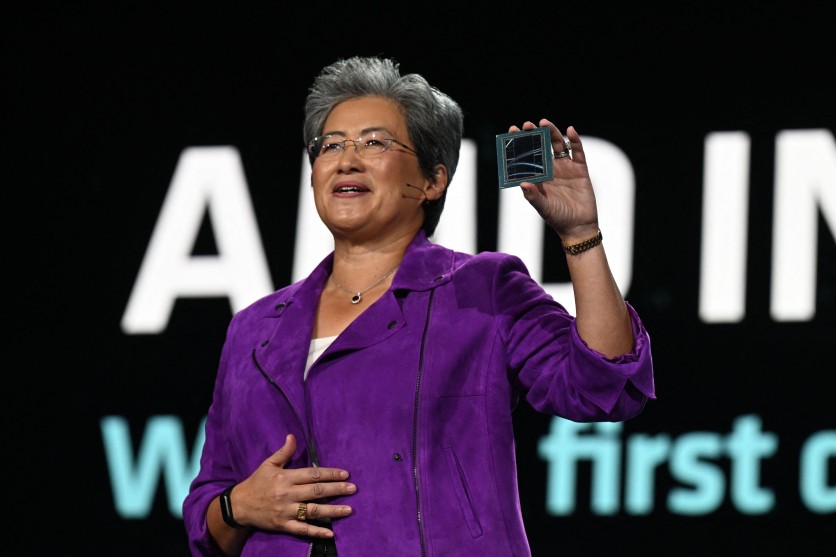
AMD Chair and CEO Lisa Su speaks at the AMD Keynote address, during the Consumer Electronics Show (CES) on January 4, 2023 in Las Vegas, Nevada. - Su announced the AMD Instinct MI300, the world's first integrated data center CPU + GPU. ROBYN BECK/AFP via Getty Images
AMD and Core Scientific (NASDAQ: CORZ) announced a 15-year infrastructure partnership on Tuesday worth more than $14 billion in base contracted revenue, giving AMD reserved access to approximately 530 megawatts of U.S. AI data center capacity across five sites and the option to expand that footprint to 2.5 gigawatts — a bet that the AI arms race is no longer just a chip competition, but a race to lock up power, land, and purpose-built infrastructure before rivals do.
The deal, announced alongside Core Scientific's second-quarter 2026 earnings, is one of the largest infrastructure commitments AMD has made in its history, and it arrives less than a week after the company used its Advancing AI 2026 conference in San Francisco to unveil the Instinct MI455X GPU, the EPYC "Venice" server processor, and Helios — its first rack-scale AI platform.
AI Compute Has Become a Real Estate Problem
For most of AI's recent history, the race for supremacy could be reduced to a single question: whose chips are faster? AMD's partnership with Core Scientific signals that the battlefield has expanded. Power capacity, physical land in the right grid jurisdictions, and long-term contractual access to AI-ready infrastructure have become strategic assets in their own right — ones that can be locked up years before a rival can replicate them.
"AI deployments are accelerating rapidly, and bringing that compute online requires trusted infrastructure partners with the scale and power to support the next era of AI," said Mathew Hein, AMD's senior vice president and chief strategy officer of corporate development.
Under the deal's initial tranche, Core Scientific will deliver approximately 530 megawatts across five campuses. AMD holds direct triple-net leases covering roughly 380 megawatts at Pecos and Hunt County, Texas, and Muskogee, Oklahoma. An additional approximately 150 megawatts at Auburn, Alabama, and Dalton, Georgia will support an unnamed Neocloud customer, with AMD providing full credit support throughout the entire 15-year lease term. The deal also gives AMD reservation rights for up to 1.9 gigawatts of additional future capacity through late 2028, extending the total potential footprint to 2.5 gigawatts.
The first AMD megawatts at Core Scientific's Pecos facility are expected to come online in the first half of 2027. Roughly half of the 530-megawatt commitment — approximately 265 megawatts — is expected to be delivered by the end of 2027, with the balance following in 2028, according to Core Scientific's earnings call.
As part of the agreement, AMD received market-priced warrants to purchase up to 30 million shares of Core Scientific common stock, with approximately 6.5 million vesting immediately, and additional warrants tied to megawatt-delivery milestones.
How Does AMD's Rack-Scale Helios Platform Compare to Nvidia's Vera Rubin?
The deal is designed to deploy AMD's MI455X GPU and Helios rack-scale platform — two products AMD unveiled on July 22–23 at Advancing AI 2026 — at a scale that requires dedicated, purpose-built infrastructure, AMD said at the conference.
A single Helios rack integrates 72 Instinct MI455X GPUs built on AMD's CDNA 5 architecture, alongside 18 sixth-generation EPYC "Venice" CPUs, Pensando networking, and the ROCm open-source software stack. At rack scale, the system delivers up to 2.9 exaFLOPS of FP4 compute and 1.4 exaFLOPS of FP8, backed by 31 terabytes of HBM4 memory and 1.67 petabytes-per-second of aggregate memory bandwidth. Each MI455X accelerator individually packs 432 gigabytes of HBM4 and delivers approximately 40 petaFLOPS of FP4 compute.
AMD claims Helios delivers 15% more FP4 compute, 50% more HBM memory capacity, and 50% more scale-out bandwidth than Nvidia's competing Vera Rubin NVL72 rack system. The comparison is real but incomplete: Helios draws approximately 140 kilowatts per rack compared to roughly 190 to 230 kilowatts for Nvidia's Vera Rubin NVL72, a difference that favors AMD on power density — but AMD's UALink-over-Ethernet interconnect, used for GPU-to-GPU communication within the rack, depends on third-party switching silicon from companies including Astera Labs and Enfabrica that is not yet broadly available as of mid-2026.
One commitment buyers should understand before signing: the MI455X's HBM4 memory uses a 2,048-bit routing interposer that is physically incompatible with Nvidia's HBM3e-based platforms. Choosing Helios means the GPU infrastructure cannot be reused on Nvidia hardware — a full system replacement would be required to switch vendors.
Read more: AMD Advancing AI 2026 Opens With Zen 6 Venice, Helios, and Open AI Rack Bet
What $14 Billion Buys — and What It Cannot
Here is the largest implication the deal's headline numbers obscure: locking in 530 megawatts of physical infrastructure does not automatically produce 530 megawatts of paying customers. AMD's infrastructure commitment is ultimately only as valuable as its software ecosystem's ability to attract and retain developers who will choose AMD hardware over Nvidia for their most demanding workloads.
Nvidia commands approximately 80–88% of the AI accelerator market by revenue as of mid-2026, with estimates from Bloomberg Intelligence, TrendForce, and IDC placing the range there. That dominance is not primarily about hardware — it is about CUDA, Nvidia's parallel computing platform, which has accumulated more than 18 years of investment, 4 million-plus active developers, and deep integration into every major AI framework. Libraries like cuDNN, TensorRT-LLM, and FlashAttention 3 have no full ROCm equivalents as of mid-2026.
AMD's ROCm software platform has made significant progress. ROCm 7.2.4, the stable release as of May 2026, achieved first-class PyTorch support, and for standard inference workloads using PyTorch and vLLM, AMD's Instinct MI355X and MI455X hardware reaches approximately 90–95% of Nvidia H100 throughput. The training gap is larger — AMD's rocBLAS and MIOpen libraries still trail Nvidia's cuDNN and Tensor Core optimizations by roughly 20–30% on fine-tuning workloads, according to independent analysis.
To address the software gap directly, AMD struck a separate deal at Advancing AI 2026: a partnership with Anthropic that deploys up to 2 gigawatts of MI450 Series GPUs in Helios systems and includes a multiyear engineering collaboration in which Anthropic's Claude models will help optimize workloads for AMD hardware and accelerate ROCm development. AMD committed to a strategic equity investment of up to $5 billion in Anthropic as part of that arrangement.
In practice, the trajectory is clear even if the endpoint is not yet reached. AMD's "OneROCm" initiative aims to create a unified software stack across its entire processor portfolio, and the Anthropic engineering collaboration represents an unusual attempt to use AI itself to close the CUDA gap. Whether the Core Scientific infrastructure capacity fills on schedule will depend substantially on how quickly that effort matures.
Read more: AMD Bets $5 Billion on Anthropic to Fix the One Thing Holding Back Its AI Chips
Core Scientific's Bitcoin Exit, by the Numbers
For Core Scientific, the AMD deal is the most significant confirmation yet of a business transformation that began in earnest in 2024. The company, which once operated primarily as a Bitcoin mining operator, reported second-quarter 2026 total revenue of $164.2 million — up 109% from $78.6 million in the second quarter of 2025. Colocation revenue drove the growth: $136.7 million in the second quarter of 2026 versus $10.6 million in the same period a year earlier, representing 83% of total revenue.
By mid-July, Core Scientific was billing customers for 437 megawatts of capacity, equivalent to approximately $635 million in average annualized colocation GAAP revenue. Combined with its pre-existing CoreWeave contracts covering approximately 590 megawatts, the company now holds approximately 1.1 gigawatts of total leased customer power capacity representing more than $24 billion in potential contracted revenue.
"We are proud to establish a strategic relationship with AMD and support the continued deployment of its next-generation products," said Core Scientific CEO Adam Sullivan.
The financial profile of the transformation is visible but not yet without friction. Core Scientific reported a GAAP net loss of approximately $1.2 billion in the second quarter, driven primarily by non-cash charges tied to its $3.3 billion Senior Secured Notes offering and warrant accounting. The company also repaid a $1 billion term loan during the quarter and spent $233 million acquiring the Hunt County, Texas site — all funded ahead of the AMD contract commitments. Capital expenditures reached $797.5 million in the second quarter, up from $389.2 million in the first quarter, as the company advances construction at five expansion campuses.
How Wall Street Is Reading the Numbers
Markets reacted with caution rather than celebration. Core Scientific shares initially jumped as much as 10% in premarket trading following the announcement, then fell approximately 3% in intraday trading to around $20.09, as investors shifted focus from the deal's headline revenue figure to the multi-year construction timeline and capital requirements it implies, according to the earnings call transcript.
The divergence between analyst views on Core Scientific reflects genuine uncertainty about execution. Keefe, Bruyette & Woods analyst Stephen Glagola downgraded the stock to Market Perform from Outperform on July 27, lowering his price target to $25 from $28, citing elevated execution risk heading into the second half of 2026 and noting that Core Scientific had gone approximately 17 months without signing a new colocation lease before this deal. BTIG maintained a Buy rating and raised its price target to $38 ahead of earnings, and Loop Capital maintained a $40 target, reflecting the divergence in views on whether Core Scientific can deliver on its ambitious construction schedule.
AMD's shares were also lower on the day, falling approximately 4–5%, consistent with a broader selloff across chipmakers rather than a reaction specific to this deal.
The capital commitment is real and cannot be walked back easily. Core Scientific management noted that the deal structure — backed by AMD's credit for the Neocloud sites — provided strong confidence in financing the build-out, citing AMD's credit quality as a key enabler for the Senior Secured Notes offering, according to the earnings call.
What Investors and Enterprise Buyers Should Know
AMD estimates the AI infrastructure market could reach $2 trillion by 2030. That projection sets the context for a deal that, at $14 billion in base contracted revenue over 15 years, represents AMD locking in a meaningful but still modest share of a rapidly growing market — assuming the hardware deployment, the software ecosystem, and the customer pipeline all arrive on schedule.
For enterprise buyers currently evaluating AI infrastructure vendors, the deal's practical implications are most visible in two dimensions. First, AMD is now committing infrastructure access to cloud providers, model builders, and enterprises deploying AMD solutions — customers who would otherwise need to navigate the power and permitting constraints that have choked data center buildouts industry-wide. Second, AMD's 15-year triple-net lease structure functions as a real estate commitment: it guarantees Core Scientific long-duration revenue certainty while binding AMD to infrastructure whose utilization depends on its software ecosystem's continued maturation.
For Nvidia, the deal is a data point in a competitive landscape that is clearly shifting. Nvidia still commands roughly three-quarters of data center AI accelerator revenue, and its CUDA platform's training workload dominance remains intact. But AMD's accumulating infrastructure commitments — OpenAI (6 gigawatts), Anthropic (2 gigawatts), Microsoft Azure (Helios deployment confirmed July 20, 2026), and now Core Scientific (530 megawatts with a 2.5 gigawatt option) — represent a credible alternative supply chain that hyperscalers and enterprise customers are actively building alongside Nvidia, not instead of it.
Whether the AMD–Core Scientific partnership reshapes AMD's share of the AI infrastructure market depends on execution at every level: hardware delivery at Pecos beginning in the first half of 2027, ROCm software maturation, and customer adoption of AMD silicon for workloads where CUDA alternatives previously had no credible answer. The infrastructure is being locked in. The software still has ground to close.
Frequently Asked Questions
What exactly does AMD's deal with Core Scientific involve?
AMD and Core Scientific signed 15-year triple-net leases covering approximately 530 megawatts of U.S. AI data center capacity across five campuses in Texas, Oklahoma, Alabama, and Georgia. AMD holds direct leases on roughly 380 megawatts and provides credit support for another approximately 150 megawatts operated by an unnamed Neocloud customer. The deal includes more than $14 billion in base contracted revenue with 2.5% annual escalators, warrants for AMD to purchase up to 30 million Core Scientific shares, and reservation rights for AMD to lock in up to an additional 1.9 gigawatts of capacity through late 2028, as detailed in the official partnership press release.
How does AMD's Helios rack platform compare to Nvidia's current offering?
AMD's Helios rack packs 72 Instinct MI455X GPUs delivering 2.9 exaFLOPS of FP4 compute and 31 terabytes of HBM4 memory per rack. AMD claims Helios delivers 15% more FP4 compute, 50% more HBM memory, and 50% more scale-out bandwidth than Nvidia's Vera Rubin NVL72. On paper, Helios has more memory and comparable compute. In practice, Nvidia's CUDA software ecosystem, which has 18-plus years of investment and 4 million-plus developers, still outperforms AMD's ROCm by roughly 20–30% on training workloads and lacks full equivalent libraries for frameworks like TensorRT-LLM. For standard inference using PyTorch and vLLM, ROCm now reaches approximately 90–95% of H100 throughput.
Why does AMD need to lock up physical data center space when it sells chips?
Because power, land, and AI-ready infrastructure have become as constrained as silicon supply. A chip buyer who cannot find a suitable facility to put the chips in cannot complete a deployment. By pre-committing to 530 megawatts across five U.S. sites, AMD can offer enterprise customers, model builders, and cloud providers a specific, geographically located path to deploying AMD AI solutions — removing a real barrier that has slowed AI infrastructure buildouts industry-wide. The 15-year lease structure also creates long-duration revenue certainty for Core Scientific that justified the company's aggressive capital spending ahead of contracts.
Does AMD's ROCm software actually work for real AI workloads in 2026?
For inference workloads using PyTorch and vLLM — the most common production AI serving stack — ROCm reached production-ready status in 2026 and delivers approximately 90–95% of Nvidia H100 throughput on comparable AMD hardware. The gaps are real but narrowing: training workloads that depend on Nvidia-specific libraries like TensorRT-LLM, FlashAttention 3, or NCCL multi-GPU collectives have no full ROCm equivalents yet, producing a roughly 20–30% performance disadvantage on those workloads. AMD's multiyear engineering partnership with Anthropic — in which Claude models are being used to accelerate ROCm development — is the company's most concrete answer to the question of how fast it can close that gap, as described in the AMD-Anthropic partnership announcement.

-
 C114 Communication Network
 -
 Communication Home
