
 Search

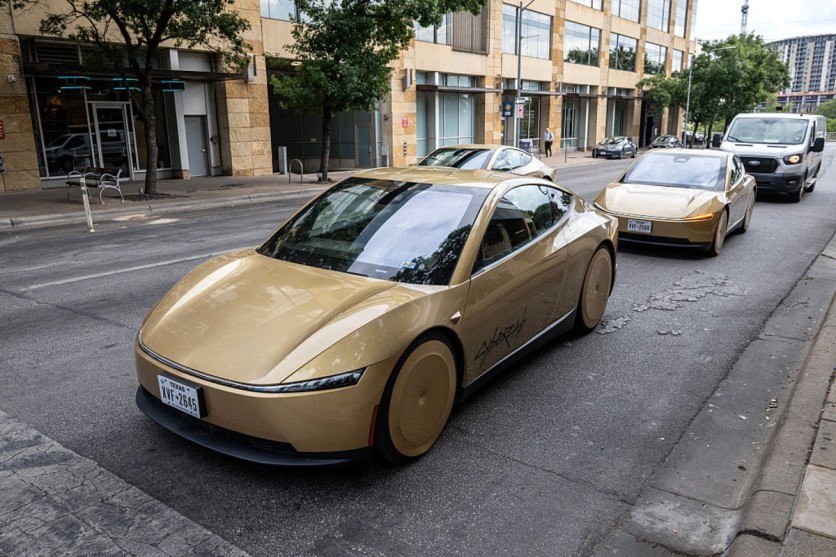
A couple of Tesla's "Cybercab" ride in downtown Austin, Texas, on September 3, 2026. Tesla is launching the "Cybercab" which is a taxi with no steering wheel or pedals, designed purely for autonomy. RONALDO SCHEMIDT/AFP via Getty Images
Hours after Tesla put its first Cybercab on Austin streets on September 3, 2026, federal regulators announced a formal investigation into whether the vehicle has any legal right to be on them at all — a challenge that, if it follows the precedent set by the only directly comparable case, could hold up Tesla's autonomous fleet for years and force a costly detour through the exact regulatory process the company gambled it could skip. NHTSA's federal audit query AQ26002 covers an estimated 1,000 Cybercab vehicles.
The US National Highway Traffic Safety Administration opened the probe on September 3, 2026. The investigation does not target a specific crash or defect. It targets something more fundamental: the technical and legal basis on which Tesla certified that its vehicle complies with federal safety rules — standards that assume a human driver sits behind a steering wheel, reaches a brake pedal, and checks side mirrors. The Cybercab has none of those things.
When Amazon's Zoox faced the identical question in 2022 — it had also tried to self-certify a purpose-built, steering-wheel-free robotaxi under the standard federal compliance process — NHTSA opened the same type of audit. Zoox spent the next four years navigating federal scrutiny, recalling its entire 105-vehicle fleet, filing for the formal Part 555 exemption process from eight separate safety standards, and finally receiving commercial clearance on July 30, 2026.
Tesla's situation is not identical to Zoox's. But the mechanism is.
Tesla's Certification Bet — and What NHTSA Is Now Examining
Under US law, automakers self-certify their vehicles as compliant with Federal Motor Vehicle Safety Standards — the same pathway used by every Toyota Camry and Ford F-150 on American roads. No federal agency pre-approves vehicles. NHTSA investigates after the fact.
The Cybercab's production specifications make the standard self-certification pathway legally fraught. FMVSS No. 111 governs rearview and side-view mirrors. FMVSS No. 124 covers accelerator control systems. FMVSS No. 135 covers light vehicle brake systems. FMVSS Nos. 203 and 204 address impact protection and rearward displacement of the steering control system. The Cybercab has none of the components these standards govern.
Tesla's answer, according to VP of Vehicle Engineering Lars Moravy, was to self-certify the Cybercab as fully compliant with all applicable FMVSS — and to determine that certain standards are simply inapplicable to a vehicle built without the controls they regulate. This is not an exemption request — it is a legal determination that the standards in question do not apply at all.
NHTSA's AQ26002 is, at its core, a demand that Tesla show its work on that determination. According to NHTSA's official AQ26002 filing, the agency will consider "the extent to which Tesla's certification depended on determinations that certain FMVSS are inapplicable to the Cybercab."
NHTSA Administrator Jonathan Morrison issued a statement: "NHTSA fully supports the safe development and deployment of automated vehicles. But as the federal regulator, we need to ensure that all of our laws are followed."
Tesla told the agency it plans to gradually expand commercial deployment to additional vehicles and locations. The probe does not currently ground the fleet or prohibit Tesla from operating the service. An audit query is an investigative step, not an enforcement action.
What the Zoox Precedent Actually Shows
The Zoox timeline is the only directly relevant precedent for what Tesla now faces, because Zoox is the only company to have previously attempted to commercially deploy a purpose-built, steering-wheel-free robotaxi in the United States.
In 2022, Zoox attempted to self-certify its VH6 robotaxi — a rectangular, four-seat, bidirectional vehicle with no traditional driver controls — under standard federal rules, arguing, as Tesla does now, that the relevant FMVSS requirements simply did not apply to a vehicle of this design. NHTSA opened audit query AQ23001 and challenged that determination.
What followed was not a swift resolution. Zoox pivoted from self-certification to the formal Part 555 exemption process under 49 CFR Part 555 — the alternative pathway that allows a manufacturer to petition for a temporary exemption from specific FMVSS, capped at 2,500 vehicles per year.
NHTSA closed the Zoox self-certification inquiry in August 2025, delivering a list of requirements Zoox had to fulfill. Zoox received preliminary approval to demonstrate its technology. It then filed for a temporary Part 555 exemption from eight Federal Motor Vehicle Safety Standards. Commercial deployment clearance arrived July 30 — allowing Zoox to charge fares, subject to a 2,500-vehicle annual cap, enhanced crash reporting requirements, and ongoing federal oversight NHTSA said it could tighten if safety issues emerged.
Just weeks before that clearance, Zoox had recalled its entire 105-vehicle fleet after a software issue caused one robotaxi to struggle navigating heavy smoke.
The reason Tesla's gamble is structurally different from Zoox's, according to automotive industry analysts, is scale. The 2,500-vehicle cap built into Part 555 is not viable for a company that intends to deploy tens of thousands of Cybercabs. Tesla's scale-over-cap rationale was a deliberate choice to avoid that cap — not a conclusion about legal technicality.
Tesla has not filed for a Part 555 exemption and has not said it intends to.
What Comes Next for Cybercab Riders and Investors
For the 420 autonomous vehicles in Texas as of Friday morning — including 45 Cybercabs — the immediate practical impact of AQ26002 is limited. The probe is investigative, not punitive. Tesla's Robotaxi app service continued to accept bookings after the NHTSA announcement was made public Friday morning.
But the audit's potential outcomes matter for investors and for anyone evaluating Tesla's autonomous vehicle roadmap. If NHTSA determines that Tesla's self-certification was technically valid — that certain FMVSS genuinely are inapplicable to a vehicle designed without the controls they regulate — the probe closes and Tesla's approach becomes a regulatory template. Every future manufacturer of purpose-built autonomous vehicles could potentially use the same inapplicability argument, effectively rendering the Part 555 exemption process optional for the industry.
If NHTSA determines that Tesla's self-certification was improper — that certain FMVSS do apply and that Tesla was required to either comply or seek an exemption — the consequences could range from required vehicle modifications and recalls to a mandatory pivot to the Part 555 process. At 2,500 vehicles per year under Part 555, Tesla's ambition to scale Cybercab production to tens of thousands of units annually would be blocked by federal law until either Congress changes the cap or NHTSA rewrites the rules.
NHTSA has signaled it is already rewriting the rules. The agency acknowledged Friday that it is actively updating FMVSS provisions related to manual controls, and said it "looks forward to finishing these critical updates and removing unnecessary barriers to American AV innovation in the coming months." The Trump administration's Department of Transportation separately proposed in June 2026 to remove the brake pedal requirement for autonomously driven vehicles.
If those rule changes are finalized before NHTSA completes its AQ26002 investigation, some of the standards Tesla is accused of misapplying may no longer exist — potentially resolving the probe by eliminating its legal basis. NHTSA has not set a public timeline for either development.
Tesla's Parallel Federal Exposure
AQ26002 is not Tesla's only active federal safety inquiry. In March 2026, NHTSA escalated the FSD probe to the Engineering Analysis phase — the last investigative step before the agency can seek a recall — covering approximately 3.2 million vehicles including the Model S, Model X, Model 3, Model Y, and Cybertruck. That probe focuses on FSD's ability to detect and respond to low-visibility driving conditions — glare, heavy fog, airborne dust — following nine suspected crash incidents including one fatality.
The Cybercab's AQ26002 is legally distinct from the FSD Engineering Analysis: one concerns the vehicle's right to be on the road at all, while the other concerns software behavior during operation. But together they represent simultaneous regulatory pressure on both the hardware foundation and the software architecture of Tesla's autonomous vehicle strategy. The Cybercab runs a separate software branch — FSD v15 — rather than the consumer FSD version covered by EA26002. The two probes, however, share a common vulnerability: both concern camera-only perception architecture and the specific question of whether vision-only systems can reliably handle the full range of real-world conditions public roads present.
Global Autonomous Race Intensifies
The regulatory confrontation arrived as competition in the global autonomous vehicle market accelerated on multiple fronts. On August 5, 2026, Transport for London granted licences to up to 15 of Wayve's autonomous Ford Mustang Mach-E vehicles, allowing supervised passenger trials in the UK capital in partnership with Uber. Under TfL rules, every Wayve trial vehicle carries a trained, licensed private-hire driver onboard — the trips are supervised, not fully driverless. More than 100,000 Londoners signed up for access to Wayve rides after the licensing announcement. Wayve's AI Driver system uses cameras and radar, built around a mapless architecture designed to navigate dynamically without pre-built HD maps.
Waymo, operating approximately 3,500 driverless vehicles across 11 US metropolitan areas and completing roughly 500,000 paid rides per week, has accumulated more than 220 million autonomous miles — a scale Tesla's current Robotaxi fleet, which had logged approximately 380,000 unsupervised miles as of late July, has not approached.
Tesla's Cybercab, with its Austin service area and a service concentration that remains limited to a single city, is at an earlier commercial stage than either Waymo or Zoox — and it now carries additional regulatory uncertainty that its competitors have already resolved through the formal Part 555 pathway Zoox completed on July 30.
Read more: Tesla Cleared Its Own Cybercab for Tonight's Rides: Texas Didn't Ask Anyone Else
Does NHTSA's Probe Ground the Cybercab Fleet?
No — at least not yet. An Open Audit Query is an information-gathering step. NHTSA uses it to examine the technical and legal basis of a manufacturer's certification decisions. The agency has not found Tesla's self-certification improper, and no enforcement action has been taken. Tesla's commercial Robotaxi service operated normally after the probe was announced Friday morning, with rides available through the app in Austin and the other cities where the service has previously expanded.
The probe's outcome will determine what comes next. NHTSA can close the query with no action, close it with requests Tesla must fulfill (the path the Zoox AQ eventually took before the formal exemption process began), or escalate — potentially requiring Tesla to apply for a formal Part 555 exemption, to halt production of the current Cybercab design, or to modify vehicles already in service. Each of those outcomes carries significantly different implications for Tesla's production timeline and its investor narrative.
Tesla did not respond to requests for comment on the probe.
Read more: Tesla's 'Zero At-Fault' Robotaxi Record Rests on Unverified Self-Reports
Frequently Asked Questions
What is NHTSA actually investigating about the Tesla Cybercab?
NHTSA opened audit query AQ26002 to examine the process and technical data Tesla used when it self-certified the Cybercab as compliant with all applicable Federal Motor Vehicle Safety Standards. The agency is specifically interested in the extent to which Tesla's certification relied on determinations that certain FMVSS are simply inapplicable to the Cybercab — because those standards were written around human driver controls (steering wheel, brake pedal, accelerator, mirrors) that the Cybercab does not have. NHTSA has not found a violation; it is asking Tesla to show the legal and technical reasoning behind its conclusions. The full AQ26002 filing is publicly available on NHTSA's website.
What happened to Zoox when it tried the same self-certification approach, and could the same thing happen to Tesla?
In 2022, Zoox attempted to self-certify its purpose-built, steering-wheel-free robotaxi under standard federal rules — the same approach Tesla has taken with the Cybercab. NHTSA opened an identical audit query (AQ23001) and challenged Zoox's determination. Zoox ultimately abandoned the self-certification path and filed for a formal Part 555 temporary exemption from eight separate FMVSS. Final commercial clearance arrived July 30, 2026 — approximately four years of federal scrutiny after the initial attempt. The Part 555 exemption limits Zoox to 2,500 vehicles per year. Tesla has not filed for a Part 555 exemption. Whether the same process unfolds for Tesla depends on how NHTSA evaluates the specific technical and legal basis of Tesla's self-certification — a determination the agency has not yet made.
What does the NHTSA probe mean for the entire autonomous vehicle industry?
The stakes of AQ26002 extend well beyond Tesla's specific fleet. Tesla's "inapplicability" argument — that FMVSS standards written for human-driver controls simply do not apply to vehicles designed without those controls — has never been formally adjudicated by NHTSA. If the agency upholds it, every future manufacturer of purpose-built autonomous vehicles could potentially use the same argument to bypass the Part 555 process, effectively eliminating the 2,500-vehicle annual production cap for the industry. If NHTSA rejects it, Tesla and any future AV manufacturer of a purpose-built autonomous vehicle without human controls would be required to seek formal exemptions — keeping the 2,500-vehicle cap as a binding ceiling on fleet growth until Congress changes the law or NHTSA finalizes the proposed rule changes already in progress. The scale rationale behind Tesla's choice to self-certify rather than seek an exemption is detailed in industry analysis.
Can riders use the Tesla Cybercab right now, and is it safe?
Tesla's Robotaxi app continued accepting bookings after Friday's NHTSA announcement. The probe does not currently prohibit commercial service. The Cybercab runs FSD v15 — a software branch being developed specifically for Tesla's Robotaxi fleet, separate from the consumer FSD system under NHTSA's Engineering Analysis probe EA26002. Tesla VP of AI Software Ashok Elluswamy confirmed at the company's Q2 2026 earnings call that FSD v15 was running on the Robotaxi fleet in early builds — and that approximately 40 percent of the seven planned improvement tracks for v15 had been completed at that time. The vehicle uses a camera-only perception system with no lidar and no radar. Whether the AQ26002 investigation ultimately affects the fleet's operational status depends on NHTSA's findings, which the agency has not put on a public timeline.

-
 C114 Communication Network
 -
 Communication Home
