
 Search


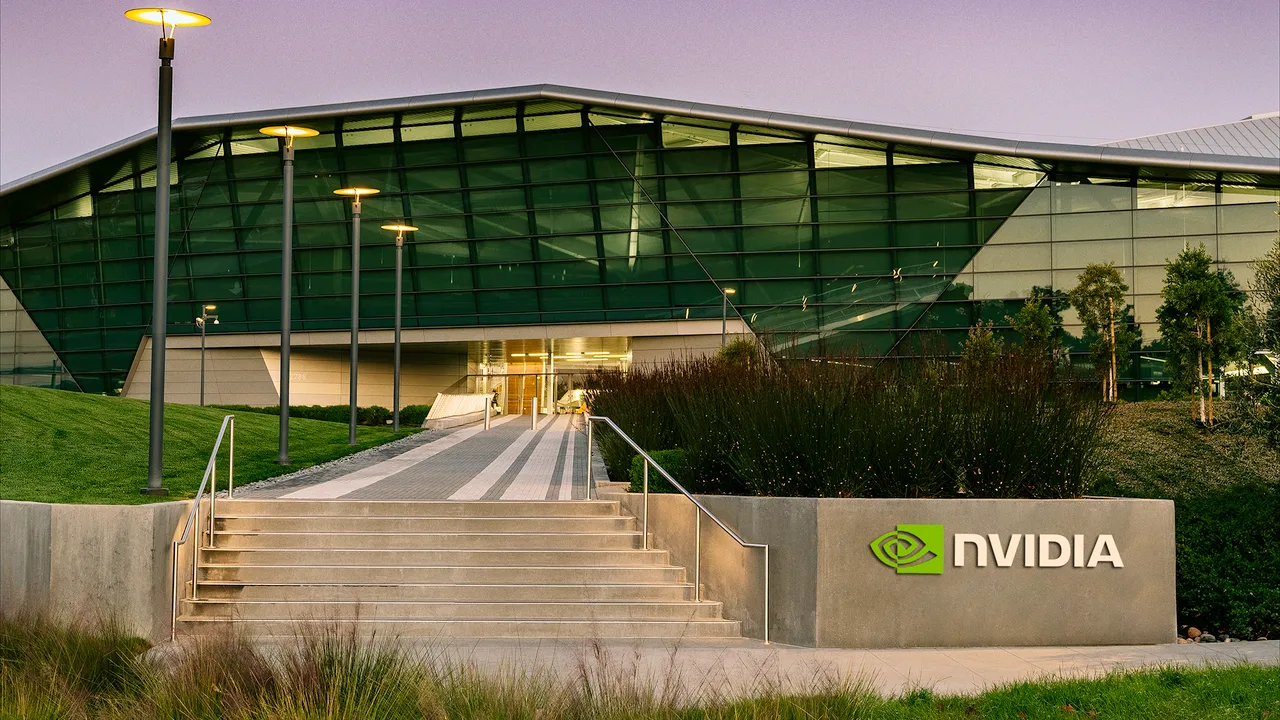
(Source: Nvidia)
The Tempodrom in Berlin may have seemed a fitting environment for Nvidia's most recent GPU Technology Conference (GTC), where the world's most highly valued company evangelizes about its chips. Just a kilometer from the venue stands Checkpoint Charlie, the best-known crossing in the Berlin Wall. In 1989, that was famously smashed to bits amid the political earthquake then sweeping the region. Nvidia is having an equally seismic effect on industries including telecom.
Originally designed for games, its graphics processing unit (the GPU in GTC) technology serendipitously turned out to be good for training AI's large language models. Their ability to do massive parallel processing – many calculations at once – gave GPUs an advantage over older central processing units (CPUs) made primarily by Intel. Cue a shift in data center investments that has hurt the ailing Intel, whose net loss surged to $15.1 billion for the first half of 2026, from $3.9 billion a year before. Nvidia, of course, has been flying.
Its GPU assault on the telecom sector threatens to be similarly disruptive for the makers of custom silicon used in 5G and forthcoming 6G networks. Through a stock-boosting $1 billion investment in Nokia, it has persuaded the Finnish vendor to stop developing custom silicon for the radio access network (RAN) and instead design software that runs on GPUs. Nvidia's chips would go inside the baseband units responsible for RAN compute. But it has its eye on putting GPUs into radio units, as well.
Why stop there? The tangle of fixed networks that has spread across cities carries a much higher volume of Internet traffic. The ubiquity of Wi-Fi in many countries means even mobile devices are heavily reliant on fiber. Cabinets and central offices look more suitable than mast sites for repurposing as small AI data centers. And just like the RAN, any fixed broadband network relies on chips for computing needs.
Quivering Quillion
Nvidia is also firmly ensconced within the world's largest developer of fixed access network (FAN) products outside China. Besides making RAN products at its mobile infrastructure (MI) business group, Nokia supplies the passive optical network systems that numerous telcos use to provide fiber broadband services. In its optical line terminals (OLTs) – the boxes at the telco end of any fiber link to customer premises – Nokia's Quillion chipsets function as the equivalent of custom silicon in the RAN.
After previous growth, Nokia's broadband business is struggling, too. Of the six units housed within Nokia's MI and network infrastructure (NI) groups, fixed networks was the worst performing for the recent third quarter. Revenues dropped 22% year-over-year, to €386 million (US$432 million). OLT business was stable, said the company, implying sales of the optical network terminals (ONTs) found at customer premises were down. While Nokia's priority is now the more profitable OLT business, overall declines at the fixed network unit are squeezing NI's margins.
But an AI-FAN move that exactly mirrors the AI-RAN strategy does not appear to be an option. Whatever Nokia might think – and it has had nothing to say publicly on the matter – Nvidia has effectively demurred, insisting fixed access is "fundamentally different" from mobile.
"Wireless RAN is computationally very demanding, [and] involves highly parallel, compute-intensive signal processing (MIMO [multiple-input, multiple-output], beamforming, channel estimation, interference cancellation), making it naturally suited for GPU acceleration," said an Nvidia spokesperson by email. "Fixed access primarily involves deterministic functions such as framing, multiplexing, FEC [forward error correction], and packet scheduling, which are already highly optimized in dedicated silicon."
Nevertheless, Ericsson would undoubtedly apply the same argument to the RAN, insisting its custom silicon is highly optimized for all the necessary tasks, including those in the physical (PHY) layer (often called Layer 1) – the most demanding category of functions. Intriguingly, its trials of GPUs have focused on using them to support only FEC, described as a "deterministic" function by Nvidia, besides non-RAN workloads. All other functions in this virtual RAN scenario would run on a CPU.
It is not as though Nokia and industry groups haven't explored the use of general-purpose processors rather than custom silicon in the fixed network, either. Years ago, as part of what it called the Open Broadband Initiative, the Broadband Forum standards body tried putting some of the OLT functionality into a virtualized software layer, said Stefaan Vanhastel, the vice president of marketing and innovation for Nokia's fixed networks business, last year. It did not make much progress because switching from customized equipment to general-purpose hardware, and hosting real-time functionality in the cloud, was too difficult, he explained.
Fixed might hold the key
At the time, of course, general-purpose meant Intel's CPUs. The label has more recently been seized by Jensen Huang, Nvidia's CEO, to describe GPUs that can be deployed for many different tasks – from gaming to AI to RAN compute. But using a GPU to run fixed network functions would not make sense to Nvidia.
"AI-RAN benefits from consolidating signal processing and AI workloads on a common, programmable accelerated computing platform," said the company's spokesperson. "In fixed access, the incremental value of accelerating the underlying transport functions is less compelling, given the efficiency of existing implementations."
Broad agreement comes from Dean Bubley, the founder of Disruptive Analysis. The FAN appears far less complicated than the RAN, he told Light Reading. There is, for instance, no fixed-line equivalent of beamforming, a clever technique that guides mobile signals directly to user devices instead of more wastefully blanketing entire zones.
None of this means that Nvidia sees no telecom opportunity outside the RAN. Leaving dedicated silicon in place, the company still believes its technologies could hold attractions in a fixed-line setting. "GPU-accelerated AI can add substantial value through intelligent bandwidth allocation, traffic prediction, network optimization, and autonomous operations," said its spokesperson. "DPUs also present opportunities in virtualized broadband gateways, security, and programmable networking."
The update is interesting given Vanhastel's earlier remarks. A virtualized broadband gateway would conceivably replace some of the OLT functionality with software running on common, off-the-shelf servers. Nvidia's reference to a DPU, meanwhile, describes a data processing unit, a chip that would handle specific networking, storage and security functions. Nvidia offers them under the BlueField brand, and they already form a part of its AI-RAN offer alongside its CPUs, based on Arm architecture, and GPUs.
"The opportunity is not necessarily to replicate AI-RAN (PHY acceleration) in fixed networks, but to bring AI and accelerated computing to the areas (higher up in the communication stack) where they create the greatest differentiation and economic value," said Nvidia's spokesperson.
The company's telecom-focused press release after the Berlin GTC was all about turning networks into "distributed intelligence platforms." Why a company now reporting quarterly revenues of almost $100 billion would be interested in a RAN market generating only $35 billion in annual product sales, and a fraction of that from silicon, still mystifies many experts. The much bigger opportunity for Nvidia is clearly in transforming many thousands of telco facilities into AI data centers. But a mobile site makes for an unlikely choice of location. The answer might be found in fixed.

-
 C114 Communication Network
-
 Communication Home
