
 Search

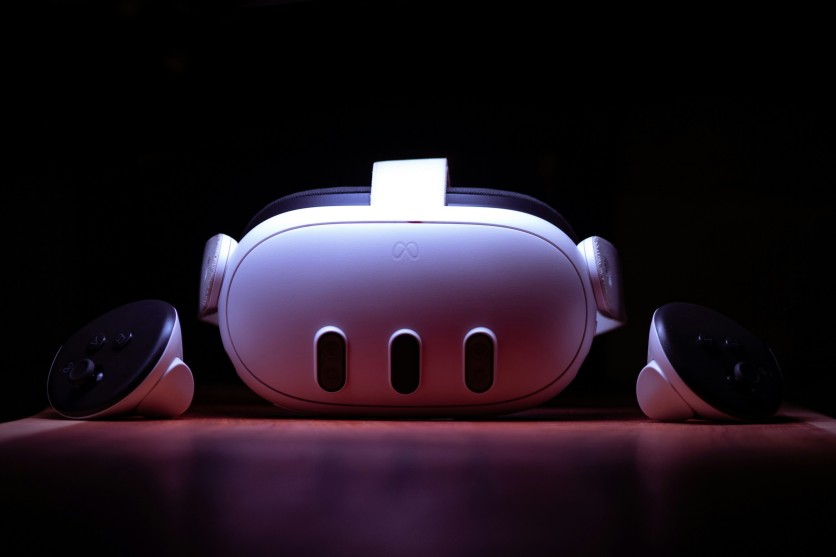
Noah Klassen/Unsplash.com
Quest firmware that ships on every Meta headset today quietly contains the onboarding video for a headset Meta has not yet announced — and that footage is now public. On July 29, 2026, X user ToastConcern discovered screenshots of Meta's unreleased Phoenix headset embedded inside Quest's operating system firmware. Fellow researcher NoriDoesVR went further and successfully triggered the device's full new-user-experience setup flow on a modified headset, capturing the complete video. What the footage confirms is more significant than any render or prototype impression that has come before: Phoenix is real, its design is set, and its onboarding sequence is baked into firmware already running on millions of Quest headsets — less than two months before Meta's Connect conference on September 23–24.
Phoenix Design Confirmed: What the Setup Video Shows
The NUX footage — intentionally blurred by Meta to obscure fine detail — still reveals the device's core design commitments with unusual clarity. According to Road to VR's reporting on the firmware leak, Phoenix is a slim, glasses-like headset with independent lens adjustment for each eye's interpupillary distance, removable nose clips for individual fit, and built-in eye and hand tracking as the only input methods. There are no controllers in the setup flow. The calibration sequence for eye tracking and hand fit is the centerpiece of the onboarding — consistent with a device whose entire interaction paradigm depends on gaze-and-pinch rather than physical buttons.
The leaked imagery closely matches a concept sketch published in January 2026 by prolific VR data miner Luna, who reported seeing physical development units at the time. That the NUX assets now match Luna's render in structure and proportion lends credibility to both sources.
Read more: Meta Quest 2027 and Next-Gen AR Glasses Leak: Exclusive Details from Prototypes
How Phoenix Is Engineered to Be This Thin
The compute puck is the device's most structurally significant design choice, and its presence is not incidental to Phoenix's slim form — it is the engineering precondition for it.
Phoenix's head unit is reported to weigh under 110 grams (3.9 ounces) — roughly the weight of a pair of Ray-Ban Meta smart glasses, and less than one-fifth of the 515-gram (18.0-ounce) Meta Quest 3. Achieving that weight while maintaining display quality requires a specific chain of engineering decisions that each depend on the previous one.
The optical stack relies on pancake lenses, a folded-optic technology that bounces light between polarizing films and quarter-wave plates to compress the distance between display and eye from roughly 40 millimeters (1.6 inches) in traditional Fresnel designs to around 17–21 millimeters (0.7–0.8 inches). That compression is why Phoenix can be as thin as it appears in the leaked images. The trade-off is light efficiency: pancake lenses transmit only 10–25% of display brightness to the eye, which means the displays must be correspondingly brighter to compensate — and brighter displays require more power and generate more heat.
Micro-OLED displays address part of this problem. Reports from March 2026 indicate Phoenix is expected to use micro-OLED panels at 2,560 × 2,560 pixels per eye — Meta's first non-LCD headset since the original Oculus Quest in 2019. Micro-OLEDs produce their own light at the pixel level rather than requiring a backlight, which enables higher brightness at lower power than LCD. But even with that advantage, the combination of pancake optics and high-resolution display creates thermal and power demands the head unit cannot sustainably carry on its own.
That is where the compute puck resolves the system. By relocating the processor, RAM, and battery to a separate unit clipped to a belt or waistband and connected via USB-C cable, Meta removes the weight and thermal output of those components from the head entirely. The head unit carries only the optics, displays, and sensors. Meta CTO Andrew Bosworth explained the engineering logic behind a wired puck in an earlier discussion of the design direction: "Wireless compute pucks just really don't solve the problem. If you're wireless, they still have a battery on the headset, which is a major driver of weight," he said, noting that a wired connection also avoids the bandwidth constraint of a radio link. Phoenix uses a wired tether precisely because a wireless approach would force a battery back onto the headset and restore much of the weight the puck was meant to eliminate.
Eye tracking ties the system together. IR sensors in the head unit track where the user is looking moment to moment, enabling foveated rendering — a technique that renders full-resolution graphics only in the roughly 5-degree zone where the eye is actually focused, while reducing resolution in the periphery. This cuts GPU workload by 30–50%, which matters directly for a device whose processor sits in a puck connected by cable rather than fused to the display. Foveated rendering compensates for the inherent bandwidth and latency constraints of the tethered connection by reducing what needs to be computed in the first place.
In other words: pancake optics enable the slim form but require bright displays; micro-OLED enables bright displays at lower power but still generates heat; the compute puck removes heat and weight from the head unit; and eye tracking combined with foveated rendering make the puck-tethered compute architecture viable at high display resolution. These are not independent design choices — they are an engineering system, and the compute puck is its keystone.
How Phoenix Differs from Everything Meta Has Shipped Before
Meta's headset lineup has always operated within the standalone paradigm: a single device with compute, battery, sensors, and display fused into one unit. Phoenix breaks from that entirely.
The Quest 3 — currently Meta's best-selling headset — runs a Snapdragon XR2 Gen 2 chip with 8GB of RAM inside a pancake-lens headset priced at $499 that weighs around 515 grams (18.0 ounces). It supports hand tracking but ships with controllers and uses them by default. Phoenix's controller-free paradigm and split-compute design place it in a different product category entirely, not a successor to Quest 3 for gaming but a complement to it targeting productivity, seated mixed reality, and extended wear.
The closer historical comparison is the Quest Pro, and that comparison cuts both ways. Quest Pro launched in October 2022 at $1,499, included eye tracking and color passthrough, and targeted professionals and enterprise users — the same segment Phoenix aims at. Meta cut the price to $999 in March 2023 and discontinued the device in January 2025 after roughly 27 months on the market. The failure traced to three overlapping problems: the price was too high to attract volume; the software ecosystem never developed applications that justified the hardware's unique capabilities; and Meta launched controllers alongside the eye-tracking system rather than committing to controller-free as Phoenix appears to do.
Phoenix addresses the ergonomic criticism directly — the Quest Pro, like all self-contained VR headsets, placed thermal and weight load on the user's face for extended sessions. But addressing ergonomics does not automatically address the software ecosystem problem. For Phoenix to succeed where Quest Pro failed, the platform needs a library of applications that are specifically designed for seated productivity and gaze-driven interaction, available at or before launch. That software challenge is separate from the hardware achievement the firmware leak represents.
The Apple Vision Pro ($3,499) is the other incumbent in this space. Vision Pro moves its battery to an external tether but keeps all compute — Apple's M2 and R1 chips — inside the headset, accepting the resulting weight of 600–650 grams (21–23 ounces). Phoenix's reported sub-110-gram (3.9-ounce) head unit represents a fundamentally different weight distribution strategy: move the brain entirely out of the glasses, pay the cable-management cost, and gain a head unit that weighs roughly one-sixth as much.
What Embedding NUX Assets in Firmware Signals
The mechanism of this leak carries its own editorial significance. Phoenix's onboarding assets are not sitting in a development repository or a pre-production test build — they are in Quest's shipping firmware, deployed to every Quest headset receiving OS updates today. Companies do not embed device setup flows into production firmware for devices that are years away from release. The presence of NUX assets in shipping firmware suggests Meta is preparing its software infrastructure for a near-term announcement, even if commercial launch remains targeted for the first half of 2027.
Luna and Samulia identified the first hardware imagery of Phoenix — a low-resolution rear view and a front silhouette — in Quest firmware in February 2026. Today's NUX video represents a substantial escalation in what has leaked: where the February images showed only the device's physical outline, the setup flow shows how Meta intends users to interact with it, which interaction modes it treats as primary, and what calibration the device requires before first use. That is not hardware description — it is product philosophy.
Will Meta Announce Phoenix at Connect?
Meta Connect 2026 is scheduled for September 23–24 at Meta's Menlo Park campus, with an evening keynote and developer sessions. Meta's official save-the-date describes the event as covering "the latest in VR, wearables, metaverse, and AI."
Alongside Phoenix, Meta CEO Mark Zuckerberg has already teased what appears to be a new pair of smart glasses as part of the event's promotional material — a product category where Meta has substantial commercial momentum, with Ray-Ban Meta glasses selling over 7 million units in 2025. Industry analysts expect smart glasses to anchor the keynote's opening segment, with VR hardware appearing as a secondary announcement or tease.
Meta CTO Andrew Bosworth addressed questions about the company's VR commitment in a recent Instagram AMA: "We continue to invest quite a bit there. So, stay tuned for Connect and we'll have more to share then."
Whether Phoenix receives a formal product announcement with pricing and availability, or a preview without commitment, is an open question. The commercial launch remains targeted for the first half of 2027, not 2026. But the presence of NUX assets in current shipping firmware, combined with Bosworth's explicit Connect pointer, makes some form of Phoenix presence at the event likely.
Component Costs Add Pressure to Price
The price picture has grown more complicated since earlier reporting. A Wall Street Journal report indicated Meta had been targeting a price under $1,000 for Phoenix. Since that report was published, RAM and storage costs have risen markedly, and Qualcomm has raised prices on its XR chipsets — the same cost pressures affecting nearly every premium XR device currently in development. Phoenix is reportedly built around a Snapdragon XR2 Gen 3 chip with 12GB or more of RAM. Those component choices were priced in a different market environment than the one Meta faces today.
What the final retail price will be remains unknown. What is clear is that the sub-$1,000 aspiration, already ambitious given the device's hardware complexity, now faces component headwinds that were not factored into earlier roadmap discussions.
Can Meta Win the Market It Already Lost Once?
The Quest Pro precedent is worth sitting with. Meta launched a premium, productivity-focused VR headset in 2022, took a critical reception, cut the price significantly within five months, and discontinued the product two years later. The lessons Meta drew from that experience appear to have shaped Phoenix's design priorities substantially: the tethered compute puck addresses the Quest Pro's front-heavy ergonomics; the controller-free paradigm commits fully to the gaze-and-pinch interaction model that Quest Pro only partially implemented; and the glasses-like form factor signals an intention that users will actually want to put this on their faces, not just tolerate wearing it.
Whether those design improvements translate into commercial success depends on factors the firmware leak does not reveal: what the software ecosystem looks like at launch, what the device actually costs, and whether the gaze-and-pinch experience is polished enough to replace controllers as the primary interaction mode for productivity use cases. All of those questions will receive at least partial answers at Meta Connect 2026 — if not final ones.
Frequently Asked Questions
What is the Meta Phoenix VR headset, and how is it different from the Quest 3?
Phoenix is an unannounced mixed-reality headset from Meta that takes a fundamentally different architectural approach from the standalone Quest line. Where Quest 3 integrates its processor, RAM, and battery into the headset itself, Phoenix moves all of that compute to a separate unit — a "compute puck" worn on the belt or in a pocket and connected via USB-C cable. The result is a head unit that reportedly weighs under 110 grams (3.9 ounces), compared to Quest 3's 515 grams (18.0 ounces). Phoenix also eliminates controllers entirely, relying instead on eye tracking and hand tracking for all interaction. It is aimed at productivity and seated mixed-reality use rather than gaming.
How does the tethered compute puck actually work, and why does Phoenix need one?
The puck houses the device's processor, RAM, battery, and thermal management hardware, connected to the slim head unit via a wired cable. Meta chose a wired rather than wireless connection deliberately — Meta CTO Andrew Bosworth has noted that a wireless puck would require putting a battery back inside the headset (to power the radio), restoring much of the weight the puck was meant to eliminate. The deeper engineering reason for the puck is optical: Phoenix's pancake lenses require bright displays to compensate for their inherent low light efficiency, bright displays demand more processing power and generate more heat, and moving that heat-generating compute off the user's head is the only way to keep the glasses-like form factor thermally viable.
What happened at Meta Connect 2026, and will Phoenix be announced there?
Meta Connect 2026 is scheduled for September 23–24 at Meta's Menlo Park campus — it has not yet taken place. Based on the presence of Phoenix's onboarding video in current shipping Quest firmware and Meta CTO Bosworth's explicit "stay tuned for Connect" comment, industry analysts widely expect some form of Phoenix preview or announcement at the event. Whether that means a formal product reveal with pricing and release date, or a more limited teaser with a 2027 commercial launch still on the horizon, remains to be seen.
Should I wait for Phoenix rather than buying a VR headset now?
Phoenix is currently targeting a commercial launch in the first half of 2027, and no price has been confirmed — though earlier reports suggested Meta was aiming for under $1,000, a figure now under pressure from rising component costs. If you need a VR headset for gaming today, Quest 3 remains Meta's flagship. If your priority is a lightweight, productivity-focused mixed-reality device with a no-controller paradigm, Phoenix addresses that use case more directly than anything currently available — but it requires waiting at minimum until 2027, and possibly longer if Meta's hardware roadmap shifts again.

-
 C114 Communication Network
 -
 Communication Home
