
 Search

Apple.com
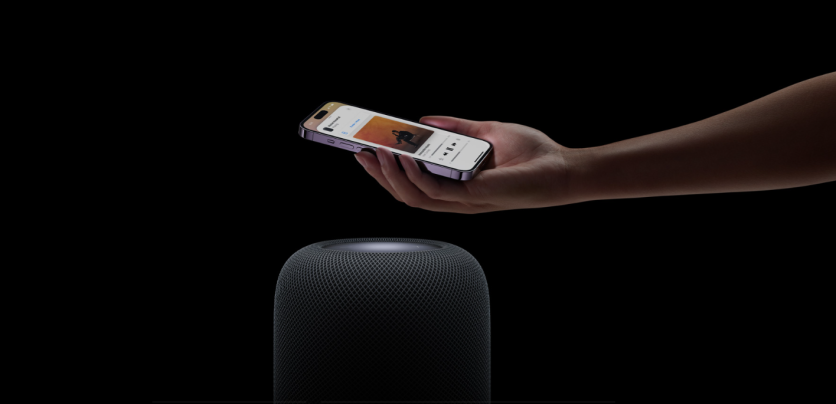
Apple is preparing to ship its first HomePod mini hardware refresh in six years this fall, and the upgrade is less about audio than about the limits of what a speaker-sized chip can do with generative AI. Bloomberg's Mark Gurman reported on July 28, 2026 that both the new HomePod mini and a redesigned Apple TV 4K are "nearly ready to launch," with Apple timing both devices to the general release of iOS 27 — and the revamped Siri it carries — expected in September. For HomePod mini buyers, the question worth answering before pulling out a credit card is not whether the update is real. It is real, it is confirmed, and it is coming soon. The question is what the new chip can actually do — and what it cannot.
After Six Years, Apple's Smallest Speaker Gets a New Brain
The refreshed HomePod mini is expected to arrive with Apple's S9 chip, the same silicon that powers the Apple Watch Series 9, replacing the S5 chip that has been inside the current model since its October 2020 debut. The S9 represents a genuine step forward within the Apple Watch chip family: its Neural Engine grows from two cores on the S5 to four cores on the S9 — double the dedicated AI processing hardware, built on TSMC's 4nm manufacturing process versus the S5's older 7nm node. That improvement will translate to faster Siri response times for everyday tasks — setting timers, playing music, toggling HomeKit accessories — which the chip handles locally without touching the internet.
The device is also expected to gain Apple's in-house N1 networking chip, the same wireless silicon introduced in the iPhone 17 family. The N1 brings Wi-Fi 7 support with Multi-Link Operation, the ability to maintain simultaneous connections on multiple wireless bands for lower latency on congested home networks. It also integrates Thread (the 802.15.4 mesh protocol that underpins Matter) directly into the chip, removing the need for a separate Thread border router when using HomePod mini as a HomeKit hub. The current HomePod mini required either an Apple TV or HomePod nearby to serve as the Thread hub for smart home accessories; the new N1 would make the mini itself a fully capable Thread gateway.
Outside the internals, Apple appears to be taking a deliberately conservative approach to the exterior. The rounded spherical design that has defined HomePod mini since 2020 is expected to carry over unchanged. Pricing will remain at $129 — the price Apple reset the current model to in June 2026. A red color option has been internally tested, which would expand the current lineup of Space Gray, White, Yellow, Orange, and Blue.
What the S9 Chip Can and Cannot Do With Apple Intelligence
Here is where expectations need calibrating. The S9 is a much better chip than the S5, but it is not the chip Apple requires for on-device Apple Intelligence. That designation belongs to the A17 Pro — a 3nm processor with a 16-core Neural Engine rated at 35 trillion operations per second and 8GB of dedicated RAM. Apple's minimum hardware bar for running its language models locally is the A17 Pro, driven by both the compute ceiling and the memory requirement. The S9's 4-core Neural Engine and the compact memory budget of the Apple Watch System-in-Package design fall well short of that bar. As 9to5Mac's analysis noted ahead of the launch, the S9 chip "most definitely cannot run Apple's models locally, so any new Apple Intelligence features on HomePod mini would likely be reliant on cloud streaming."
What that means in practice: every AI request that goes beyond a basic local command — a conversational Siri query, a personal-context lookup, a multi-step task — will route off the device to Apple's servers. Apple calls this infrastructure Private Cloud Compute, and its privacy architecture is real: Apple states that "when Siri uses Private Cloud Compute, a user's data is not stored or made accessible to Apple, and Private Cloud Compute only uses their data to fulfill the request." The heaviest reasoning queries go further still — at WWDC 2026, Apple revealed that Siri's most complex requests now route to Google Cloud, running on Nvidia Blackwell B200 GPUs, via a custom 1.2-trillion-parameter Gemini model that Apple has licensed and integrated into its three-tier pipeline. Queries are tokenized and anonymized at each handoff, so neither Apple staff nor Google can link requests to individual users, Apple says.
This cloud dependency is not a temporary limitation pending a future software fix. It is a structural consequence of using a Watch-class chip in a speaker. The S9 will not gain the ability to run Apple Intelligence locally through a software update. A HomePod mini buyer this fall is choosing a device whose AI capabilities are permanently tethered to an internet connection, in ways that a new Apple TV 4K — powered by the A17 Pro with 8GB of RAM — will not be. The Apple TV that ships alongside the HomePod mini this fall will be the first Apple TV capable of running Apple Intelligence on-device, without routing requests through any server.
That gap matters to anyone evaluating what "AI-powered" means for a home device. For music playback, HomeKit control, timers, and intercom features, the HomePod mini's cloud dependency will be functionally invisible — those tasks run locally on S9. For the conversational, context-aware Siri that Apple has been building toward since WWDC 2024, the device's ceiling is set by what Apple's servers can deliver at the speed of a home Wi-Fi connection.
Read more: Apple WWDC 2026: Siri Rebuilt on Gemini, homeOS Previewed in Cook Farewell Keynote
Apple's Larger Smart Home Strategy: Mini as a Satellite
The HomePod mini refresh does not stand alone. It is the smallest piece of a coordinated Apple home hardware wave that includes a new Apple TV 4K and, more ambitiously, an entirely new product category: the Apple Home Hub. Two variants are in development. The first, codenamed J490, takes the form of a 7-inch-square display mounted on a half-dome speaker base — physically similar to Amazon's Echo Show family. The second, codenamed J491, is designed to attach to a magnetic wall-mount system, similar in concept to MagSafe. Apple's vision is for multiple Home Hub units distributed throughout a home rather than a single central device.
The Hub will run homeOS, the dedicated Apple smart home operating system previewed at WWDC 2026, built on a foundation of tvOS, watchOS, and iOS elements. Unlike HomePod mini, the Hub will ship with an A18 chip — making it capable of full on-device Apple Intelligence, local facial recognition, and presence detection that adjusts the interface as a user approaches or moves away from the screen. Confirmed features include FaceTime calls, intercom across multiple Home Hub units, home security monitoring, HomeKit accessory management, personal calendar display, and photo gallery access. The Hub is targeted for release between October 2026 and early 2027, according to Gurman's reporting.
In this context, the HomePod mini's role becomes clearer. It is not meant to compete with the Home Hub or to be the most capable Apple AI device in the room — that job belongs to the Hub and, for streaming-first households, the Apple TV 4K. HomePod mini is a speaker-first, Siri-assisted satellite node in a multi-device ecosystem: positioned where screens and set-top boxes do not make sense, priced at $129 to make multi-room deployment practical.
Should Current Owners Wait or Buy Now?
The Gurman report's editorial recommendation, echoed across Apple-focused analysis from 9to5Mac and Gadget Hacks, is consistent: do not buy the current HomePod mini now if the new model's fall availability fits your timeline. The current model runs the S5 chip — an Apple Watch Series 5 processor first introduced in 2019 — on TSMC's 7nm process, with a 2-core Neural Engine that predates Apple's current neural architecture by two full generations. Its Siri implementation predates conversational Apple Intelligence entirely. As Memeburn noted in its June 2026 coverage, "the HomePod mini's S5 chip is showing its age with sluggish Siri responses."
The new model will offer meaningfully better everyday Siri performance, faster HomeKit command execution, Wi-Fi 7 connectivity, and Thread hub capability out of the box. For buyers already in Apple's ecosystem who want a compact, room-filling speaker with Siri at its center, the fall refresh is the right moment to buy into the category. For buyers who need the most capable AI processing available in a home device, the Apple TV 4K — or, once released, the Home Hub — is the product that delivers it.
Read more: Mac Buyers Face 18-Month Pro Chip Gap as Apple Skips M6 Pro for M7 AI Push
Why Did the HomePod mini Take Six Years?
The delay was not hardware. Apple's own engineers had the HomePod mini refresh ready months ago. The bottleneck was Siri. Apple announced its revamped, context-aware Siri at WWDC 2024 with a promised delivery "in the coming year." It did not arrive. Internal reporting from Bloomberg's May 2025 investigation and The Information described a development process defined by strategic pivots — Apple reportedly cycled through multiple AI architectures, including a plan to build separate small and large language models, before settling on the three-tier system it ultimately shipped. Engineers left the company. Leadership restructuring followed. The personalized Siri that Apple had demoed arrived roughly 18 months behind schedule, only beginning to roll out in 2026. That delay cost Apple the HomePod mini and Apple TV product cycle it had planned, and it forced consumers who had been holding on purchasing decisions to wait out an unusually long gap — six years for HomePod mini, four years for Apple TV 4K.
The silver lining is that the software delay appears to be behind Apple. iOS 27, iPadOS 27, and macOS 27 are currently in developer and public beta with Siri AI available for testing, and general release is expected in September alongside the new hardware.
Frequently Asked Questions
Can the new HomePod mini run Apple Intelligence without an internet connection?
No. The S9 chip in the refreshed HomePod mini has a four-core Neural Engine — double its predecessor — but it cannot run Apple's language models locally. Apple Intelligence on HomePod mini will rely on Private Cloud Compute, Apple's privacy-preserving cloud inference architecture, and for the most complex requests, on Google's Gemini model running on Google Cloud. Simple tasks like timers, alarms, music playback, and HomeKit commands will continue to run locally on-device. Any conversational Siri feature requires an internet connection.
What is the practical difference between the new HomePod mini and the new Apple TV 4K for AI?
The new Apple TV 4K will ship with an A17 Pro chip and 8GB of RAM — Apple's minimum hardware threshold for running Apple Intelligence locally, without an internet connection. The HomePod mini's S9 chip and the memory constraints of its Watch-class SiP architecture put it below that threshold permanently. For everyday Siri tasks, the gap is invisible. For the most capable Apple Intelligence features, the Apple TV 4K delivers them on-device; the HomePod mini routes them to Apple's cloud.
Should I buy a HomePod mini now or wait for the new model?
Wait if you can. The current model's S5 chip is a 2019-vintage design on a 7nm process with a two-core Neural Engine, and it predates Apple Intelligence entirely. The new model arriving this fall will bring meaningfully faster Siri performance, Wi-Fi 7 connectivity, Thread hub capability for Matter devices, and improved audio — all at the same $129 price. If the fall timeline works for you, the new HomePod mini is the right time to enter or re-enter the product line.
What is the Apple Home Hub, and how does it differ from HomePod mini?
The Apple Home Hub is an all-new product expected between October 2026 and early 2027. It combines a HomePod-like speaker with a 7-inch display, facial recognition, and Apple's A18 chip, which is capable of running Apple Intelligence fully on-device. It will run homeOS — Apple's dedicated smart home operating system — and serve as the primary AI hub for a connected home. HomePod mini, by contrast, is a speaker-first device positioned as a satellite node in a room where a screen is not needed. At $129, the mini is designed to make multi-room audio and Siri coverage affordable; the Hub is the flagship AI command center.

-
 C114 Communication Network
 -
 Communication Home
