
 Search

Samsung.com
Seven years of Galaxy foldables produced seven generations of the same consumer complaint: the crease. Samsung did not solve it by redesigning the hinge. It solved it — or claims to — by rebuilding the display stack itself, replacing polymer film with titanium components thin enough to fold a thousand times daily and stiff enough to prevent stress from concentrating at the fold line. Two days before Galaxy Unpacked in London, the full engineering case has arrived alongside a near-complete spec picture of the Galaxy Z Fold 8 Wide, Samsung's first foldable designed around a 4:3 inner display, as detailed in Samsung's official Flex Titanium announcement.
The timing matters to anyone watching the calendar. Galaxy Unpacked takes place on July 22, 2026, at 9 a.m. ET in London — the moment Samsung's reservation credit converts to a real pre-order, and the moment when trade-in promotions, historically the most reliable way to lower an effective purchase price, typically open and close within days.
Whether Flex Titanium's engineering represents a genuine category-level breakthrough or a well-marketed materials upgrade will become clear when independent reviewers run their own tests after Unpacked. What is already clear, from Samsung's official documentation and hands-on previews by journalists who visited Samsung Display's South Korea headquarters, is that the change is structural rather than cosmetic — and that it arrives with meaningful gaps in the published spec sheet.
Read more: Samsung Unpacked July 22: Flex Titanium, Passport Fold, and a Flip That May Never Return
Flex Titanium Targets the Root Cause, Not Just the Symptom
Every foldable smartphone crease has the same origin: stress that accumulates across every layer of the display stack — the ultra-thin glass, the OLED panel, the adhesive, and the support film beneath — and concentrates at the fold axis with each opening cycle. Hinge engineering has always been the category's primary lever for managing that stress. Samsung is now pulling a different lever.
Flex Titanium integrates two distinct titanium-based components into the display structure below the OLED panel, as described in Samsung's Flex Titanium press release. The first is a titanium-alloy film that replaces the conventional polymer film directly beneath the OLED. Samsung says this film delivers 20 times greater mechanical stiffness than the polymer it replaces, while a precision rolling process keeps it at roughly one-third the thickness of a human hair — thin enough to fold without cracking, as confirmed by HotHardware's independent analysis.
Below the alloy film sits a titanium plate whose folding zone uses micro-patterned laser-drilled holes — what Samsung calls a "lattice structure" — to remain flexible at the hinge while staying rigid everywhere else. That rigidity enables the plate to bond more tightly with the display module, eliminating the air gaps between the display module and its adhesive layer that have historically allowed the panel to deform under stress, per Samsung's Flex Titanium press release.
"By introducing sophisticated micro-patterned holes to the folding section of the titanium plate, we have successfully secured flexibility with robust durability," said Kyung-Jin Yoo, EVP and Head of Mobile Display Product Development Team, Samsung Display, in the company's official announcement.
Prominent Samsung hardware analyst Ice Universe framed the shift in terms that reflect what the Wikipedia record on foldable smartphones describes as the category's long-standing structural debate: the crease has never been purely a hinge problem. It is a display-stack problem that hinge engineering could manage but not eliminate. "For the first time," Ice Universe wrote after the announcement, "Samsung has redesigned the underlying structure of the OLED display stack, instead of focusing only on improving the hinge. That marks a major shift in the direction of foldable display technology."
The correct comparison is to ultra-thin glass, which Samsung introduced in the Galaxy Z Flip in 2020 and which represented the equivalent shift in glass material strategy. Flex Titanium is to the support structure what UTG was to the cover material: it changes the category's foundational architecture, not just the surface.
Whether that architecture holds across tens of thousands of real-world folding cycles is still unknown. Samsung has not published a fold-cycle durability specification for Flex Titanium. The Galaxy Z Fold 7 carried a 500,000-fold rating on its display. Samsung's Unpacked presentation on July 22 is expected to address longevity, but as of the day before the event, that figure remains unpublished, as noted in 9to5Google's coverage of the announcement.
Wide Form Factor Makes a Different Bet on Usability
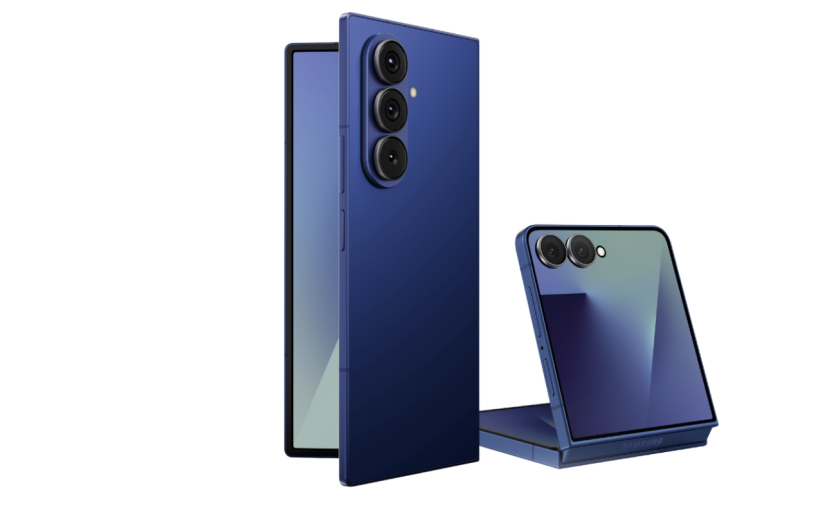
The Galaxy Z Fold 8 (Wide) is a rethink of the book-style foldable's proportions, not an incremental update. Where Galaxy Fold phones have used a tall, narrow silhouette since 2019, the Z Fold 8 Wide adopts a 4:3 inner display aspect ratio — meaning when open, it is wider than it is tall, placing it in the orientation most familiar from tablets and the original iPad, according to SamMobile's specifications report.
Leaked specifications confirmed by multiple independent sources put the inner display at 7.6 inches with a resolution of 2,448 × 1,848 pixels on a Dynamic AMOLED 2X panel running up to 120Hz. The cover display is 5.5 inches at a 16:10 aspect ratio with 1,248 × 1,972 pixels — dramatically wider than prior Galaxy Fold cover screens, per GSMArena's full specifications report. When unfolded, the device measures 123.9 × 161.4 × 4.5mm, making it 4.5mm thick — among the slimmest foldables Samsung has shipped. Folded dimensions are 123.9 × 81.9 × 9.7mm. Weight is confirmed at approximately 201 grams, per Android Central's specifications report.
These proportions position the Z Fold 8 Wide directly against the anticipated form factor of Apple's foldable iPhone, which multiple supply-chain sources have placed in the same 4:3 landscape orientation with a ~7.8-inch inner display and an expected announcement in September 2026, according to MacRumors' foldable iPhone guide.
Read more: Galaxy Z Fold 8 Starts at $1,899: Memory Shortage Makes Waiting Cost More
What the Spec Sheet Confirms — and What It Quietly Omits
Leaked specifications, corroborated by multiple independent sources including SamMobile, GSMArena, AndroidAuthority, and AndroidCentral, give a near-complete picture of the hardware as of two days before Unpacked, per GSMArena's leak report.
Processor and memory: The Snapdragon 8 Elite Gen 5 for Galaxy runs the show — the same chip as the Galaxy S26 Ultra, produced on TSMC's 3nm process and bin-tested at Samsung's request to validate higher operating frequencies. RAM is 12GB for 256GB and 512GB storage tiers, stepping up to 16GB on the 1TB configuration. All tiers use LPDDR5X memory and UFS 4.0 storage, per Android Authority's full specifications leak.
Cameras: The Z Fold 8 Wide drops to a dual rear camera system — a 50MP primary (f/1.8) and a 50MP ultrawide (f/1.9) — surrendering the telephoto lens that appeared on prior models. Two 10MP selfie cameras (one per display, f/2.2) round out the imaging hardware. This is the explicit trade Samsung made to hit 4.5mm unfolded thickness and 201g weight, per SamMobile's camera specifications report.
Battery and charging: A 4,800mAh battery pairs with 45W wired fast charging — an upgrade from prior generations — and wireless charging. That cell is certified to retain at least 80% of its initial capacity after 1,200 charge cycles, per EPREL database entries confirmed by Android Authority's battery specifications report. For reference, conventional flagship smartphones typically carry 1,500 to 2,000 cycle ratings in comparable testing frameworks. That gap is worth noting for buyers planning to keep the device several years.
Water resistance: IP48 certification — water resistance to 1.5 meters for 30 minutes, per GSMArena's leak report. This is meaningfully weaker than IP68, the standard on Samsung's Galaxy S26 Ultra and most competing non-foldable flagships, which are rated for 6-meter depth. IP48 also means limited protection against fine particulates (the "4" dust rating). Buyers spending $1,899 should note that the Z Fold 8 Wide's ingress protection is not at the level of its price tier in the conventional smartphone market.
Expected colors: Graphite, Cream, and Lavender with a Pistachio colorway exclusive to Samsung's online store, per GSMArena's color options report.
Starting price: Multiple independent leakers place the US starting price at $1,899 for the 256GB configuration, with official pricing confirmed July 22 at Unpacked, per PhoneArena's pricing report.
How the Z Fold 8 Wide Differs From the Z Fold 8 Ultra
The Galaxy Z Fold 8 Ultra is the second device in Samsung's expanded 2026 foldable lineup, and understanding what it keeps clarifies what the Wide traded away. The Ultra retains the taller, narrower Fold form factor at a nearly square 3:2 inner aspect ratio on an 8-inch screen. It adds a triple rear camera system headlined by a 200MP primary, a 50MP ultrawide, and a 10MP telephoto with 3× optical zoom, matching the Galaxy S26 Ultra's camera tier for the first time in the Fold line's history. Its battery grows to approximately 5,000mAh, per SamMobile's specifications report. Pricing leaks put the Ultra's US starting price between $1,999 and $2,099 — sources conflict on the precise figure — making it the more expensive option.
The product logic: the Wide is the usability redesign; the Ultra is the imaging flagship. Whether that segmentation maps clearly to buyer decisions depends on whether Samsung markets the distinction explicitly.
Does Samsung Actually Have Two Months on Apple?
Samsung's Unpacked on July 22 positions it roughly eight weeks ahead of Apple's anticipated foldable announcement in September 2026. That head start is not purely symbolic. Pre-order trade-in credit for prior-generation Samsung phones has historically offered $400 to $700 in promotional trade-in value — incentives typically available only in the pre-order window immediately following Unpacked.
Reports from multiple supply-chain analysts, including JPMorgan and Ming-Chi Kuo, place Apple's foldable iPhone at a $2,000 to $2,500 starting price, per MacRumors' foldable iPhone guide. Apple and Samsung are using structurally different approaches to crease reduction: Samsung confirmed Flex Titanium for the Z Fold 8 series, while Apple's device is expected to use a different internal architecture for its display stack, as reported by PhoneArena in January 2026. The real-world crease comparison between the two will not be available until both devices are in hand.
Counterpoint Research projected in March 2026 that global foldable smartphone shipments will grow 20% year-over-year in 2026, driven substantially by Apple's expected category entry, as covered in a TechTimes report on Galaxy Z Fold 8 production. Apple's entry does not diminish Samsung's advantage — seven generations of foldable manufacturing experience, and now a structural display innovation — but it sets a price and performance ceiling buyers will be able to compare in detail as early as September.
What Flex Titanium Still Has to Prove
Samsung's official claims for Flex Titanium are: reduced crease visibility, improved durability, improved bonding stability. What Samsung has not yet published is a fold-cycle durability rating — the single most important long-term performance specification for a device that will be opened and closed hundreds of times a day over several years, as highlighted in 9to5Google's coverage of the announcement.
The Galaxy Z Fold 7 carried a 500,000-fold rating. If Flex Titanium's structural changes reduce crease by redistributing stress more evenly across the display layers, it stands to reason that the same fold count produces less cumulative deformation. But "stands to reason" is not a specification. Samsung will likely address this at Unpacked. If the fold-cycle figure improves, it is the most consequential long-term durability claim Samsung can make. If it does not improve or is not published, that omission is itself informative.
Tom's Guide's Mark Spoonauer, who visited Samsung Display's headquarters ahead of the announcement, described the crease as dramatically reduced in hands-on viewing — "almost didn't believe my eyes" — on real-world demo units. What remains to be seen is whether a near-invisible crease at launch remains near-invisible after a year of real-world use at the kind of fold rates typical of daily users.
Frequently Asked Questions
What specifically does Flex Titanium change in the Galaxy Z Fold 8 display?
Flex Titanium replaces the conventional polymer film beneath the OLED panel with a titanium-alloy film that is 20 times stiffer, while adding a micro-patterned titanium plate below it that uses laser-drilled holes in the fold zone to remain flexible while eliminating air gaps. The air gaps are where prior-generation displays deformed under folding stress. The result, Samsung claims, is a crease that is far less visible. The fold-cycle durability specification for this new structure has not yet been published.
Is the Galaxy Z Fold 8 Wide waterproof?
The Galaxy Z Fold 8 Wide carries an IP48 certification, which means it is protected against water immersion to 1.5 meters for 30 minutes and against limited dust ingress. It is not IP68-rated, which is the standard on Samsung's conventional flagships like the Galaxy S26 Ultra and requires testing at 6-meter depth. Buyers paying $1,899 should factor this gap into their durability expectations.
What is the difference between the Galaxy Z Fold 8 Wide and the Galaxy Z Fold 8 Ultra?
The Z Fold 8 Wide uses a 4:3 inner display aspect ratio — wider than tall when open, closer to a landscape tablet — paired with a dual rear camera system (50MP primary + 50MP ultrawide) and a 4,800mAh battery. The Z Fold 8 Ultra retains the traditional taller 3:2 Fold proportions with an 8-inch inner display, a triple-camera system with 200MP primary and 3× telephoto, and a 5,000mAh battery. The Ultra is expected to start approximately $100 to $200 higher than the Wide.
Should I buy the Galaxy Z Fold 8 Wide now or wait for Apple's foldable iPhone?
Neither phone has been officially compared side by side. Samsung's Z Fold 8 Wide is confirmed for July 22 with pricing announced at Unpacked. Apple's foldable is expected in September 2026 at a starting price above $2,000. Pre-order trade-in promotions for the Z Fold 8 Wide are expected to open July 22 and are typically the most favorable window for discount-stacking. If the trade-in value of your current phone is high, the Samsung pre-order window has a time cost. If you are platform-agnostic, September is a reasonable wait.

-
 C114 Communication Network
 -
 Communication Home
