
 Search

Honor.com
Spain's historic 1-0 victory over Argentina in the 2026 FIFA World Cup Final at MetLife Stadium on Sunday was supposed to be a story about football. It became something else too — a live product demonstration, broadcast to over a billion viewers, for a smartphone that has not yet hit store shelves.
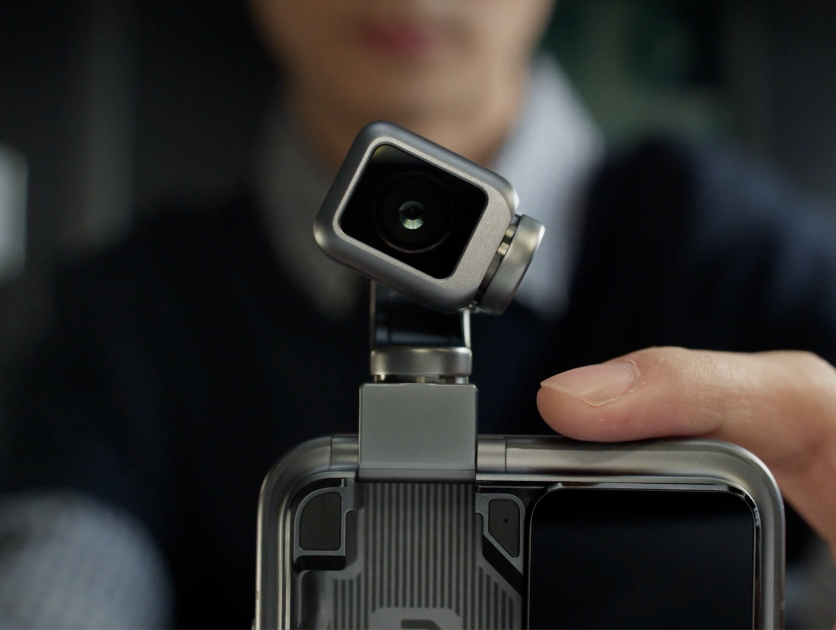
Eric García, Spain's starting center-back, was spotted during the post-match pitch celebrations wielding an unusual device: the Honor Robot Phone, an unreleased flagship whose defining feature — a motorized, titanium-alloy camera arm that physically extends from the chassis in about 0.8 seconds — was on full display as he filmed teammates and video-called friends in the confetti-soaked chaos after the final whistle. Within hours, Honor had posted the footage to its Reddit community under the caption "When you just won the World Cup but you also need to test out the new HONOR 'RobotPhone' camera rig."
That caption, with its cheerful self-awareness, told the whole story. This was not an accidental sighting. It was a product launch strategy.
Read more: Honor Unveils Magic V6 Foldable and 'Robot Phone' at MWC to Stand Out From Samsung and Apple
How Did a World Cup Winner End Up With an Unreleased Phone?
García is not a long-established Honor ambassador. His selection for Spain's 2026 squad was itself notable — his first major tournament appearance since Qatar 2022. The Robot Phone, which has not been released for purchase anywhere, was almost certainly provided to him as part of a promotional arrangement in advance of the match: the kind of player-level deal that falls outside FIFA's official stadium sponsorship jurisdiction and operates entirely in what analysts call the "lifestyle" marketing category.
The sighting was corroborated independently by leaker @IceUniverse on X before Honor's own social posts surfaced, and was covered by Notebookcheck, Huawei Central, Gadget Pilipinas, and multiple other tech outlets within hours of the final whistle.
The timing is not coincidental. Just two days before the final, on July 18, Honor had officially debuted the Robot Phone at WAIC 2026 — the World Artificial Intelligence Conference in Shanghai — and opened pre-orders in China. Honor CEO Li Jian confirmed at WAIC that the device would launch in China in August. García's celebration footage gave that announcement something no press release can manufacture: a genuine, unscripted-looking real-world demo, in conditions that would break any conventional smartphone camera's stabilization system, on the biggest sporting stage in the world.
What the Robot Phone Actually Does — and Why It Matters
The Robot Phone is not, at its core, a novelty. The engineering decision behind it responds to a real problem in mobile video.
For the past decade, the smartphone camera race has been dominated by computational photography — the approach used by Apple, Google, and Samsung, in which fixed lenses and sensors capture raw data that is then processed by increasingly powerful software to compensate for motion, low light, and distance. The system works remarkably well. But it has a fundamental constraint: software can only improve what the sensor captured. If the original footage is badly shaken or poorly framed, the best post-processing pipeline in the industry can only partially correct it.
Honor's answer is a 4DoF (four-degree-of-freedom) mechanical gimbal integrated directly into the phone body. The "4DoF" distinction matters. Standard three-axis gimbals — the kind used in DJI consumer stabilizers and earlier camera rigs — correct for rotation in three planes: pitch (nodding), roll (tilting side to side), and yaw (panning left and right). A 4DoF system adds a fourth axis of control: the ability to physically translate the camera module in space — to move it, not just rotate it. That is the same core principle used in the professional DJI Ronin 4D cinema rig; Honor's achievement is miniaturizing it to fit inside a pocket-sized device, using a custom micro-motor that is approximately 70% smaller than anything currently used in consumer electronics.
The arm is built from titanium alloy, extends in roughly 0.8 seconds when activated by a palm gesture, and delivers CIPA 5.5-level stabilization — the highest tier in the industry's standard measurement — with claimed 96% compensation for walking-motion shake. When idle, it retracts flush with the chassis.
The primary camera mounted on the arm is a 200MP sensor with an f/1.6 aperture and a 23mm-equivalent focal length. A 50MP ultra-wide and a second 200MP periscope telephoto complete the triple-camera setup. Honor has partnered with ARRI — the German cinema camera manufacturer behind the ALEXA system, which holds 20 Scientific and Technical Awards from the Academy of Motion Picture Arts and Sciences — to bring professional color science to the imaging pipeline. That partnership delivers ARRI's LogC color encoding and support for DaVinci Resolve LUTs: a workflow that previously required a purpose-built cinema camera costing tens of thousands of dollars.
Under the hood: a Qualcomm Snapdragon 8 Elite Gen 5 processor, a 6.3-inch 1.5K flat display with ultra-thin bezels, a 6,000 mAh battery, and 120W fast wired charging.
Mechanical vs. Computational: What Makes the Robot Phone Different
This hardware-first philosophy is not the direction Apple, Google, or Samsung has taken. All three rely on fixed optical systems and invest their differentiation budget in image-processing software — computational HDR, AI night mode, software-driven optical zoom simulation — rather than physical movement of the sensor itself.
Honor's bet is that the ceiling of computational photography has been reached, and that the next meaningful quality leap in mobile video requires the camera to physically move. García's footage from the World Cup pitch — reportedly smooth and polished despite the chaos of a championship celebration — was a real-world argument for that position.
Whether Honor's hardware-first approach outperforms Samsung's Galaxy S-series AI processing or Apple's ProRes video pipeline in systematic testing will only be determined when reviewers get their hands on a shipping unit. The Robot Phone's ARRI LogC workflow targets professional video creators rather than casual users; its YOYO AI assistant — which can handle multistep background tasks like adjusting display settings, setting alarms, and booking a ride from a single voice command — is designed to make the hardware feel less like a gadget and more like a production tool.
Honor's Ambitions, and the Limits on Where This Phone Can Go
The Robot Phone is the first commercial product under Honor's Alpha Strategy, a three-phase roadmap announced in March 2025 to transform the company from a smartphone manufacturer into what it describes as an "AI terminal ecosystem company."
Honor was sold off by Huawei in November 2020 specifically to escape the US government sanctions that had cut Huawei off from American chips and the Android operating system. The divestiture worked: Honor regained access to Qualcomm processors and Google Mobile Services, and has grown substantially in Chinese and European markets. But a CSIS analysis noted that Beijing acted as "investor of first resort" in the Honor transaction and retains informal levers of control over nominally independent Chinese companies — the kind of structural relationship that the company's stated independence does not fully sever.
That context matters for buyers outside China. Honor is subject to China's National Intelligence Law (2017), Article 7 of which requires all organizations and citizens to support, assist, and cooperate with national intelligence work. The law applies regardless of where a company's servers are located or what its privacy policy states. China's Cybersecurity Law, significantly amended in January 2026, and the Data Security Law (2021) add additional government-access provisions applicable to companies operating under Chinese jurisdiction.
The Robot Phone's YOYO AI will collect voice data, behavioral data, and camera data — including facial recognition and object-tracking data — as part of its core functionality. No independent security audit of the device exists yet, because it has not been commercially released. Buyers in markets where it does eventually become available should treat these legal obligations as a fixed condition of the product's jurisdiction of origin, not a contestable claim.
For US buyers: the question is moot for now. The Robot Phone launches in China in August, and existing US market restrictions on Honor products mean it is not coming to American consumers.
In a smartphone market contracting nearly 14% in 2026, a device that can claim a World Cup-winning moment as its product video — and back it up with genuinely new hardware — is making a credible argument that it belongs in the conversation alongside the brands that have dominated the flagship tier for the past decade.
Frequently Asked Questions
What is the Honor Robot Phone, and what makes it different from a standard flagship?
The Honor Robot Phone is a flagship smartphone built around a 4DoF (four-degree-of-freedom) titanium-alloy mechanical gimbal that physically extends a 200MP camera module from the chassis in about 0.8 seconds. Unlike Apple, Google, and Samsung's approach — which relies on computational photography to digitally correct footage after capture — the Robot Phone physically moves the sensor to deliver stabilized video before any software processing begins. It is the first consumer smartphone to miniaturize the 4-axis stabilization concept used in professional cinema rigs like the DJI Ronin 4D.
When does the Honor Robot Phone launch, and can US buyers get one?
Honor confirmed at WAIC 2026 on July 18 that the device will launch in China in August 2026, with pre-orders now open on Honor Mall and JD.com through August 31. No global launch date or pricing has been announced. The Robot Phone is not coming to the United States — existing US market restrictions on Honor products block its availability there.
How does the 4DoF gimbal work, and why does it matter for video quality?
Standard three-axis gimbals correct for camera rotation in three planes (pitch, roll, yaw). A 4DoF system adds a fourth axis: physical translation, meaning the camera module can actually reposition in 3D space rather than simply rotating. This produces genuinely different footage from what EIS (electronic image stabilization) or OIS (optical image stabilization) can deliver, because it corrects the raw capture rather than digitally processing a shaky input. The system achieves CIPA 5.5-level stabilization — the highest industry certification — and compensates for 96% of walking-motion shake.
Should buyers outside China be aware of any privacy or data considerations?
Yes. Honor is headquartered in Shenzhen and operates under Chinese law, including the National Intelligence Law (2017), which requires all organizations and citizens to cooperate with government intelligence work on demand. The Cybersecurity Law (amended January 2026) and Data Security Law (2021) add further government-access provisions. The Robot Phone's YOYO AI and camera systems will collect voice, behavioral, and biometric data as part of their core function. No independent security audit of the device currently exists. These legal obligations are structural features of any company under Chinese jurisdiction and apply regardless of the company's stated privacy policy or server locations.

-
 C114 Communication Network
 -
 Communication Home
