
 Search

Samsung.com
Samsung arrives in London on Tuesday with the most structurally ambitious single-day launch it has ever attempted: three foldable smartphones at once, a titanium-reinforced display architecture that directly attacks foldables' most persistent flaw, and the commercial debut of AI smart glasses that have been in development for more than a year. For buyers who have been watching the foldable category, Tuesday is when the decision becomes concrete. For buyers who have been waiting for a reason to leave the category behind, Tuesday is when that reasoning needs an update.
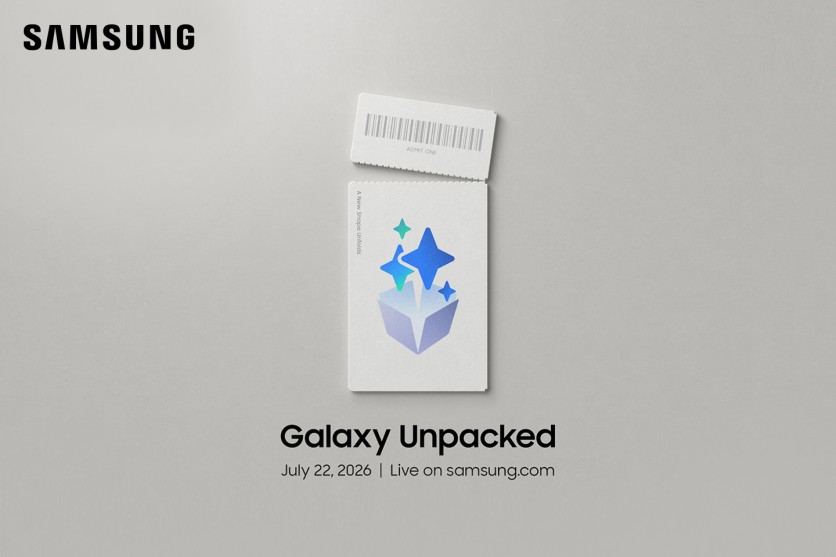
Galaxy Unpacked begins at 9:00 a.m. ET / 2:00 p.m. BST on July 22 and will stream live at Samsung.com, Samsung Newsroom, and the Samsung YouTube channel, per Samsung's official Unpacked invitation. The event marks Samsung's first launch in the United Kingdom in 14 years — the last being the Galaxy S3 launch at Earls Court on May 3, 2012.
Samsung Rebuilds the Fold From the Outside In
The defining move of Unpacked 2026 is a form factor split that Samsung has never attempted before. Instead of one book-style foldable, there will be two — and they disagree about what a foldable phone should feel like when it is closed.
The Galaxy Z Fold 8 adopts a shorter, wider "passport" shape that reorients how the device functions as a closed phone. The cover screen expands to 5.5 inches at a 16:10 aspect ratio — wide enough for two-thumb typing without the awkward stretching that made prior Fold cover screens feel like a compromise, as shown in official renders of the Fold 8. The inner display runs 7.6 inches at a 4:3 ratio, opening like a compact tablet rather than the near-square canvas of previous generations. The Galaxy Z Fold 8's physical dimensions place it at 9.7mm folded and 4.5mm unfolded, weighing approximately 200 grams. A Snapdragon 8 Elite Gen 5 processor (3nm, in Samsung's highest-binned "for Galaxy" configuration) powers the hardware alongside 12GB of RAM. The Galaxy Z Fold 8's battery capacity climbs to 4,800 mAh — the first increase in the Fold line's battery capacity in five years.
The Galaxy Z Fold 8 Ultra is, by contrast, familiar by design. It retains the tall book-style silhouette that Fold owners have used since 2019 and is expected to ship with the Fold 8 Ultra's camera and battery specs indicating a 200-megapixel main camera, a 5,000 mAh battery, and a 45-watt wired charging speed. The Ultra is the continuation of the Fold line that existing users know; the standard Fold 8 is the bet on where the category goes next.
Samsung has restructured its component orders to prioritize production of the passport-shaped model: supply chain reporting places the production targets for the Fold 8 at approximately 2.8 million units, surpassing both the Ultra and the Flip 8 in volume.
The proportions of the Fold 8 are not accidental. Apple's anticipated foldable iPhone is widely expected to arrive in September 2026 as a book-style device with a similar wider, shorter 4:3 inner display at a starting price of $2,000 or more. Samsung's July 22 date positions its passport Fold on retail shelves roughly two months before Apple's expected announcement. Europe is Samsung's most competitive premium foldable market, and the choice of London is a deliberate signal of where the battle is being fought.
Flex Titanium: What Actually Changed Inside the Hinge
Samsung officially unveiled Flex Titanium on July 15, five days before Unpacked, in Samsung's July 15 Flex Titanium announcement from Seoul that named the technology's specific architecture for the first time.
The technology integrates two titanium-based components directly into the display panel structure: a titanium-alloy film and a titanium plate. Flex Titanium's titanium-alloy film is approximately one-third the thickness of a human hair but roughly 20 times stiffer than the polymer film it replaces; the titanium plate sits beneath the OLED layer to provide structural rigidity at the fold point. The combination is meant to reduce the visible crease — the single most common complaint from seven generations of foldable owners — while allowing the device to remain thin. Samsung describes the architecture as built on seven generations of foldable engineering, though the company has not published independent test data on crease reduction percentages. Real-world confirmation will have to wait for hands-on reviews after the July 22 announcement.
Flex Titanium will debut across the Galaxy Z Fold 8, Fold 8 Ultra, and Flip 8. It is the architecture change, not the passport form factor, that is likely to define whether the 2026 generation converts the buyers who have been skeptical of foldables in everyday use.
One detail worth noting: Samsung Display's exclusive OLED supply agreement with Apple runs for three years, covering foldable panels for Apple's anticipated first foldable iPhone, with mass production beginning at Samsung's Asan and Vietnam facilities in June 2026. The screens inside the device Samsung is trying to preempt are, for now, being made by Samsung.
Read more: Samsung Unpacked July 22: Flex Titanium, Passport Fold, and a Flip That May Never Return
Galaxy Z Flip 8: The Most Refined Clamshell Samsung Has Built — and Perhaps the Last
The Galaxy Z Flip 8 is the most incremental device in the Unpacked lineup, and the most consequential if two independent leakers have read Samsung's roadmap correctly.
The hardware changes are real but modest. The Galaxy Z Flip 8's physical specs indicate the chassis slims to approximately 13.2mm folded — a reduction from the Flip 7 — and the weight drops to roughly 180 grams, down about eight grams. The hinge has been redesigned to reduce the crease that has defined the Flip line since 2020, and Flex Titanium's titanium-alloy film architecture carries over from the Fold lineup. RAM stands at 12GB across 256GB and 512GB configurations; there is no 1TB option. Chip allocation splits regionally: Snapdragon 8 Elite Gen 5 for units sold in the United States, Canada, Australia, Japan, and South Africa; Exynos 2600 for European and South Korean models.
What makes the Flip 8 difficult to evaluate in isolation is what may come after it — which appears to be nothing. A Weibo tipster raised the possibility in May 2026 that Samsung was not actively developing the Flip 9; X tipster @fireuniverse8 corroborated that claim via independent leaker reports in late June; and leaker Ice Universe, whose Samsung predictions have proved reliable over multiple generations, stated in Ice Universe's July 9 post that the Flip 8 is "likely to be Samsung's last small folding product." Samsung has not confirmed any of this, and "likely" is not "confirmed." But the absence of supplier orders for Flip 9 components, combined with Samsung's production volumes for 2026 prioritizing the Fold 8 passport model over the Flip 8, gives the rumor structural texture beyond the typical pre-launch speculation.
If the Flip 8 is the final clamshell, it would make it the second major Samsung smartphone line retired in the recent era, after the Galaxy Note. On the competitive side, Motorola's Razr line would stand as the only remaining premium clamshell alternative in Western markets if Samsung exits the category.
Galaxy Glasses: Gemini on Your Face, the Computation in Your Pocket
The device generating the most anticipation at Unpacked may not be a phone. Samsung's Galaxy Glasses — co-designed with eyewear brands Gentle Monster and Warby Parker — run Google's Android XR platform with Gemini AI built in, and were formally previewed at Google I/O 2026 preview of Galaxy Glasses on May 19 and 20.
The first commercially available version is audio-only: no display, no AR overlay. The glasses use an Android XR companion-device architecture in which the frames handle audio output, camera input, and microphone input while the paired smartphone handles the computation — offloading processing via Bluetooth and Wi-Fi. Features include Gemini voice assistant for turn-by-turn navigation, real-time speech translation, on-the-fly text translation of what the camera sees, photo and video capture, and notification summaries — without removing the phone from a pocket.
Both Gentle Monster and Warby Parker have confirmed prescription lens support at launch, with Warby Parker specifically supporting a broad range of prescriptions and lens types. Reported hardware includes a Snapdragon AR1-class processor and Galaxy Glasses' reported starting price in the range of $379 to $499, though Samsung has not confirmed either figure. Google's fall 2026 commercial launch confirmation indicated the first Intelligent Eyewear collections will reach customers in fall 2026. Samsung is expected to share additional details — and possibly a specific release window — at Tuesday's event.
The direct competitor is Meta's Ray-Ban smart glasses, which start at $299, have sold more than seven million pairs, and are manufactured under a partnership with EssilorLuxottica extended for the next decade. Galaxy Glasses' core advantage is the ecosystem: Gemini is multimodal and multilingual, integrates natively with Google Maps, and Galaxy Glasses' iOS and Android compatibility is confirmed at a basic level — though deeper Samsung ecosystem features require an Android device.
Galaxy Watch Ultra 2 and Galaxy Watch 9: Wrist Computing Gets a Genuine Chip Upgrade
The Galaxy Watch Ultra 2 arrives with the first significant chip architecture change in Samsung's flagship watch line in several years. Qualcomm and Samsung's MWC 2026 partnership announcement confirmed at MWC 2026 in March that the next Galaxy Watch would use Qualcomm's new Snapdragon Wear Elite processor, with Samsung's InKang Song going on record at the same event to confirm the partnership.
The Snapdragon Wear Elite is built on a 3nm process with one Cortex-A78C performance core clocked at 2.11 GHz and four Cortex-A55 efficiency cores at 1.96 GHz. Snapdragon Wear Elite performance benchmarks show significantly higher single-core and GPU performance compared to the Exynos W1000 chip it replaces in the watch lineup. Qualcomm designed the chip with an on-device AI subsystem capable of running models with up to two billion parameters — which translates to Gemini features executing on the watch itself rather than routing through the cloud.
The Galaxy Watch Ultra 2's 800 mAh battery represents a roughly 35% increase over the original Ultra's 590 mAh, and the display is rated at 5,000 nits peak brightness. Water resistance is rated at 10 ATM. The Galaxy Watch Ultra 2's expected $699 price matches the original Ultra's launch price. Samsung has also confirmed the Galaxy Watch 9 will appear at Unpacked, though detailed specifications remain scarce ahead of the announcement.
Note on European chip allocation: Regional reports suggest the Galaxy Watch Ultra 2 in Europe may use an Exynos chip rather than the Snapdragon Wear Elite, paralleling Samsung's existing split for Galaxy S and Z Fold devices. Samsung has not confirmed this split, and it remains unresolved ahead of Tuesday's event.
What's Driving the Price — and Why Waiting Won't Help
Every device Samsung is expected to announce Tuesday will cost more than its predecessor. Leaked UK pricing places the Galaxy Z Fold 8 at approximately £1,699 for the 256GB configuration and the Galaxy Z Fold 8 Ultra at roughly £1,899 — increases of £100 or more year-on-year. In the United States, leaks from Seoul Economic Daily cited by TechTimes place the Fold 8 at $1,899 and the Fold 8 Ultra at $2,099.
The cause is not a Samsung pricing decision in isolation. Memory's rising share of smartphone component costs more than doubled between Q3 2025 and Q1 2026, rising from roughly 11% to 26% of the bill of materials, driven by AI data center demand redirecting semiconductor wafer capacity toward high-bandwidth memory for Nvidia and other AI chip customers. Counterpoint Research's memory cost findings have placed DRAM and NAND costs for a single $800 smartphone at approximately $291 — roughly 4.6 times the figure from early 2025. Samsung is not alone: multiple major technology companies have publicly cited the memory cost environment when adjusting product pricing.
For buyers on the fence: analysts covering the memory market have not identified a relief timeline before late 2027, meaning the next-generation Fold 9 is unlikely to cost less. Pre-orders are expected to open immediately after Unpacked on July 22, with retail availability anticipated around August 7.
Read more: Samsung Unpacked July 22 in London: Foldables, Glasses, and Rising Prices
How to Watch
Galaxy Unpacked streams free on samsung.com, Samsung Newsroom, and the Samsung YouTube channel beginning at 9:00 a.m. ET / 2:00 p.m. BST on Tuesday, July 22, per Samsung's Unpacked livestream.
Frequently Asked Questions
What will Samsung announce at Galaxy Unpacked on July 22?
Samsung is expected to announce three foldable smartphones (Galaxy Z Fold 8 in a new wider form factor, Galaxy Z Fold 8 Ultra in the traditional tall format, and Galaxy Z Flip 8), Galaxy Glasses running Android XR and Gemini AI, and two smartwatches (Galaxy Watch Ultra 2 and Galaxy Watch 9). Flex Titanium, a new titanium-reinforced foldable display architecture designed to reduce the visible crease, will debut across the new devices. Pre-orders are expected to open the same day, with retail availability around August 7.
Is the Galaxy Z Flip 8 really Samsung's last clamshell foldable?
Samsung has not confirmed this. Three independent leakers — a Weibo post from May 2026, X tipster @fireuniverse8 in late June, and high-reliability leaker Ice Universe on July 9 — have all stated the Flip 8 is likely or probably Samsung's last clamshell foldable. The absence of supplier orders for Flip 9 components lends credibility to the claim, as does Samsung's production volume shift heavily favoring the Fold 8 (passport model) over the Flip 8. Treat it as a credible rumor, not a confirmed fact, until Samsung addresses it.
How do Galaxy Glasses compare to Meta's Ray-Ban smart glasses?
Both use a companion-device architecture where the glasses handle audio and camera while the paired phone handles computation. Meta Ray-Bans start at $299, have sold more than seven million units, and carry Meta AI as their assistant. Galaxy Glasses are expected to launch at $379 to $499 (unconfirmed) and carry Google's Gemini AI on Android XR — giving them a deeper integration with Google Maps, multilingual translation, and the Android/Samsung ecosystem. If the reported dual-camera design proves accurate, Galaxy Glasses may give Gemini more visual context than the single-camera Ray-Ban Meta glasses. Galaxy Glasses are confirmed to work with both Android and iOS for core features; deeper Samsung features require an Android device.
Why are Samsung's 2026 foldables more expensive than last year's models?
The price increase is primarily driven by a global DRAM and NAND flash shortage, not a step-change in features. AI data center demand for high-bandwidth memory has redirected semiconductor wafer capacity away from conventional mobile DRAM production, causing memory's share of smartphone component costs to more than double since mid-2025. Memory market analysts do not project meaningful price relief before late 2027, which means the Galaxy Z Fold 9 is also unlikely to be cheaper. If cost is a priority, Samsung dropped $500 off the Galaxy Z Fold 7 as recently as last week.

-
 C114 Communication Network
 -
 Communication Home
