
 Search

Samsung.com
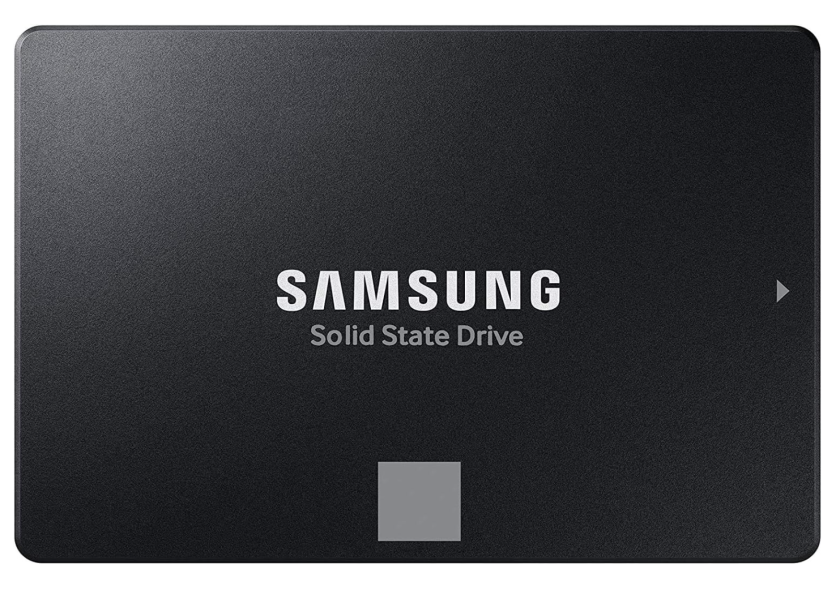
The 870 EVO was selling for around $99.99 in July 2023 — near its tracked all-time Amazon low. Today, the same Samsung 2TB SATA drive lists for roughly $476 to $490 on Amazon — not because Samsung changed the product, but because artificial intelligence consumed the global supply of NAND flash memory. Contract prices for NAND flash — the core component inside every SSD — surged sharply in Q1 2026, and analysts at TrendForce projected a further 70–75% jump for Q2. Over three consecutive quarters spanning Q4 2025 through Q2 2026, NAND prices multiplied approximately 4.2 to 4.5 times, driven by AI data centers consuming factory capacity that once supplied consumer drives. That market reality is the context any buyer needs before evaluating whether the 870 EVO makes sense in their storage setup right now.
Against that backdrop, the 870 EVO remains a genuine workhorse for a specific type of buyer: anyone with a laptop or desktop that only has a 2.5-inch SATA bay, anyone populating a NAS array, or anyone adding large secondary storage where an M.2 slot isn't available. For those use cases, the 870 EVO's combination of proven MKX controller reliability, 1,200 TBW rated endurance, and Samsung's five-year limited warranty makes it one of the most defensible SATA drives on the market today — not because the price is historically cheap (it isn't), but because the underlying drive remains technically sound.
Note on the price claim in prior coverage: A TechTimes draft cited a $399.99 sale price for the Samsung 870 EVO 2TB. Research conducted for this article could not verify that figure from any independently accessible source. Micro Center currently lists the 2TB at $749.99 for in-store pickup, while Amazon's tracked price sits in the $476–$490 range. The $399.99 figure found at Micro Center corresponds to the 1TB variant, not the 2TB. Readers should verify current prices directly before purchasing; SSD pricing in the current NAND up-cycle fluctuates week to week.
Read more: NVMe vs SATA SSD: Real-World Storage Speed Comparison and Upgrade Guide
Why Are SSD Prices So High Right Now?
The short answer is AI. Samsung, SK hynix, Kioxia, and Micron — the four manufacturers who supply the vast majority of the world's NAND flash — shifted production capacity toward high-margin enterprise NAND for AI training clusters beginning in mid-2024. Consumer drives compete for whatever capacity remains after data centers take priority. Kingston Technology noted in December 2025 that NAND wafer pricing had climbed 246% year-over-year, with 70% of that increase concentrated in the prior 60 days. One storage market analysis calculated that combining Q4 2025, Q1 2026, and Q2 2026 increases yields a 4.2 to 4.5 times multiplier on contract NAND prices — meaning every SSD on sale today costs dramatically more per gigabyte than it did 18 months ago.
For the 870 EVO specifically, that trajectory looks like this: the 2TB hit a tracked all-time Amazon low of around $99.99 in July 2023. By early 2026, tracked prices had climbed to the $476–$500 range on Amazon and Best Buy. The Pangoly price tracker recorded the drive hitting a momentary peak above $1,400 in early June 2026 before settling back. The industry consensus from multiple analyst firms places the first meaningful consumer SSD price relief no earlier than 2027.
What Charge-Trap V-NAND and TurboWrite Actually Mean
The "V-NAND" in Samsung's drive name refers to vertical NAND — a three-dimensional cell structure that Samsung first commercialized in 2013. Where older planar NAND arranged cells in a single layer and hit physical limits as cell sizes shrank, V-NAND stacks cells vertically by drilling cylindrical channel holes through alternating oxide and nitride layers. Each intersection between a channel hole and a conductive word-line layer becomes a memory cell. A hole passing through 128 layers creates 128 cells in a column narrower than a human hair. Rather than trapping electrons in a floating-gate pocket (the older approach, which became unreliable at high layer counts), V-NAND uses charge trap flash (CTF), which stores electrons in a silicon-nitride dielectric layer that is more electrically stable at tight geometries.
Samsung markets the 870 EVO as "3-bit MLC V-NAND," which requires a quick translation: by the conventional industry definition, a cell storing three bits of data per cell is TLC — triple-level cell. The "MLC" label in Samsung's marketing is used to distinguish the EVO line from the QVO line, which uses four-bit (QLC) cells, not to imply the two-bit MLC endurance characteristics that enterprise drives carry. In practice, the 870 EVO's rated endurance of 1,200 TBW on the 2TB is consistent with quality TLC — stronger than budget QLC drives, but not in the same tier as genuine two-bit MLC enterprise SSDs.
The MKX controller manages two related mechanisms that shape the drive's write behavior. The first is wear leveling, which distributes write operations evenly across all cells so no single area wears out disproportionately. The second is TurboWrite, an intelligent SLC buffer that temporarily writes incoming data as single-bit (fastest) and then rewrites it as three-bit during idle periods. When the SLC buffer is available, sequential write speeds approach the SATA III ceiling per Samsung's official specifications. Under sustained heavy writes — the kind that fill and exhaust the buffer — write performance drops to the native three-bit cell speed, which is noticeably slower. For most consumer use cases (large file transfers, video saves, backups), the buffer refills quickly enough that the slowdown is brief.
Is SATA Still the Right Interface in 2026?
For a new system built from scratch with a modern motherboard, the answer from virtually every independent storage analyst is the same: use NVMe for your primary drive. The SATA III interface runs the AHCI command protocol — a specification designed for spinning hard drives with a single command queue supporting 32 entries. NVMe was built specifically for solid-state storage, supports 65,535 queues each holding 65,536 commands, and rides directly on PCIe lanes. A PCIe 5.0 NVMe drive in 2026 reads sequentially at up to 14,800 MB/s. The 870 EVO maxes out at 560 MB/s — a 26x gap on the spec sheet.
In real-world use, that gap compresses dramatically. Independent benchmarks from 2026 show Windows 11 boot times running roughly three seconds faster on NVMe than on a SATA SSD, and game level loads coming in 20–35% faster. For opening a browser, a productivity app, or streaming a 4K video from local storage, the difference between SATA and a mid-range NVMe is indistinguishable in normal use.
Where SATA and the 870 EVO remain the right answer: any laptop or desktop with no available M.2 slot, any NAS enclosure running SATA bays, any secondary storage role where a system already has its fast NVMe primary drive and needs bulk capacity. For a 2TB drive used to store a video library, a photo archive, a Steam library of older games, or a NAS shared across a home network, the SATA speed ceiling is simply irrelevant — the bottleneck will be the network or the display pipeline, not the drive's 560 MB/s ceiling.
Who Should Buy Samsung 870 EVO Right Now
The buyers who get the most out of the 870 EVO in July 2026 fall into three scenarios.
The first is the laptop upgrader with a 2.5-inch SATA bay and a spinning hard drive that is slowing the machine down. Swapping a mechanical drive for any modern SATA SSD produces the most dramatic speed improvement a laptop can receive short of adding RAM. The 870 EVO's AES 256-bit hardware encryption — built into the MKX controller and compatible with BitLocker and TCG/Opal without any performance penalty — makes it the sensible choice if the machine handles sensitive files.
The second is the NAS builder. Network-attached storage enclosures typically use SATA bays, and NAS workloads — sequential reads and writes at relatively moderate queue depths — are exactly the use case where the 870 EVO's sustained performance profile and 1,200 TBW endurance deliver value. Per Micro Center's product specs, the drive draws only 2.1 watts during reads and 3.0 watts during writes, making power efficiency a meaningful advantage in an always-on appliance.
The third is the PC builder needing bulk secondary storage. A system with a fast NVMe primary drive and a 2TB 870 EVO as secondary handles the mixed-access workload well: games, editing assets, and large media files live on the SATA drive; the operating system and active project files stay on the NVMe.
Read more: Best High-Capacity SSDs for Gaming, Editing, and Creative Work in 2026
What Samsung Magician Does That Rivals Don't
Every Samsung 870 EVO ships with Magician, a first-party management utility that stands out for a specific reason: it can run the drive's PSID Revert function without needing a bootable environment, which matters for drives that are encrypted or have locked themselves out after a failed encryption setup. For everyday users, Samsung Magician provides drive health monitoring, performance benchmarking that runs directly against the drive in use, and firmware update management. Competing drives in the same price range — including the WD Blue SA510 and Crucial MX500 — do not offer first-party software with equivalent depth.
Current Price Context and Buying Advice
As of publication, the Samsung 870 EVO 2TB is available in the $476–$750 range depending on retailer — Micro Center carries it at $749.99 for in-store pickup, while Amazon's tracked price sits around $476–$490. Both figures are sharply higher than the sub-$100 range the 2TB hit during the 2022–2023 SSD price trough, before AI demand absorbed NAND production capacity across the industry.
Industry analysts do not project meaningful consumer SSD price relief until 2027 at the earliest. If your storage upgrade is not time-sensitive, waiting carries legitimate logic: a return toward $150–$200 for the 2TB is plausible in 18–24 months if the supply cycle eases as expected. If your system needs storage now — because a drive has failed, because a spinning hard drive is causing real pain, or because NAS capacity is exhausted — the 870 EVO at its current Amazon price represents a well-supported, fully proven drive from a manufacturer with the deepest SSD track record in the market.
Frequently Asked Questions
Is the Samsung 870 EVO still worth buying in 2026?
For buyers with a system that has an open 2.5-inch SATA bay, or for NAS builds that require SATA drives, the 870 EVO remains one of the most technically sound options in the market. Its MKX controller, 1,200 TBW endurance rating, and five-year warranty are all unchanged from its 2021 launch. The calculus has changed on price: the drive that sold for around $99.99 in mid-2023 now lists for $476–$490 on Amazon due to an AI-driven NAND supply crisis, not any change in the product. For a system with available M.2 slots, a comparably priced NVMe drive will deliver meaningfully better performance.
What is the real difference between SATA and NVMe for everyday use?
On paper, a PCIe 5.0 NVMe drive is more than 26 times faster sequentially than the 870 EVO's 560 MB/s ceiling. In practice, that gap collapses for typical workloads. Independent 2026 benchmarks show Windows 11 boot times roughly three seconds faster on NVMe, and game load times 20–35% faster — not the 26x improvement suggested by spec sheets alone. For web browsing, email, and productivity apps, both interfaces feel identical. The NVMe advantage shows up consistently in professional workloads involving continuous large-file movement: 4K video editing, large software compilations, or simultaneous multi-track audio recording.
Why are SSD prices so much higher in 2026 than in 2023?
Artificial intelligence infrastructure built at scale by cloud providers consumed NAND flash production capacity that previously supplied consumer drives. NAND flash contract prices surged sharply in Q1 2026 and were projected to climb another 70–75% in Q2, for a combined multiplier of roughly 4.2 to 4.5 times compared to mid-2024 levels. Kingston reported in late 2025 that NAND wafer pricing was already up 246% year-over-year. The industry consensus from analysts including TrendForce places the first meaningful consumer SSD price relief in 2027, not earlier.
Is Samsung's "3-bit MLC V-NAND" actually MLC?
Not by the conventional definition used by the rest of the industry. Standard nomenclature defines MLC as multi-level cell with two bits per cell. Three bits per cell is TLC — triple-level cell — by every other manufacturer's naming convention. Samsung uses "MLC" in its EVO marketing to distinguish the EVO line from the QVO line, which uses four-bit (QLC) cells. The 870 EVO's 1,200 TBW endurance rating and performance characteristics are consistent with high-quality TLC, not with the higher-endurance two-bit MLC found in enterprise drives. The drive's endurance is genuine and competitive for its class; the label is a Samsung-specific naming choice.

-
 C114 Communication Network
 -
 Communication Home
