
 Search

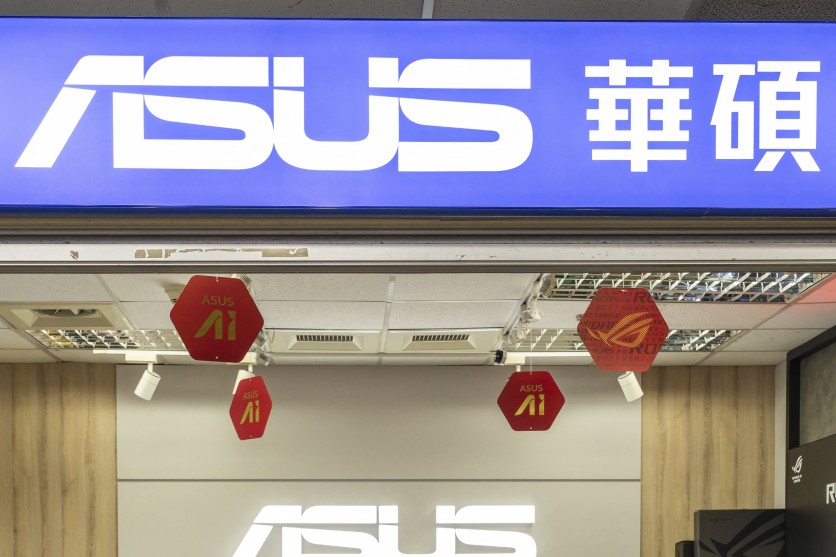
Indoor image of an Asus store entrance with illuminated signage and promotional hanging displays in Taipei Taiwan on 14 November 2025. The scene shows branding elements related to electronics and computer hardware retail. Jimmy Beunardeau
The worst of the current PC price surge may be cresting — though it is nowhere near over. ASUS Systems Business General Manager Liao Yi-hsiang told Taiwan's Economic Daily News this week that PC prices in Taiwan will continue rising in the third quarter of 2026, but the next increase should land within single digits — a marked deceleration from the double-digit hikes that have added roughly 30% to PC prices since the end of last year. For consumers who have been watching laptop and desktop prices climb for six straight months, that guidance represents the clearest signal yet from a major original equipment manufacturer that the rate of increase is finally approaching a ceiling.
The context matters: ASUS is not saying prices are falling. It is saying prices will rise less fast. But in a market where DRAM contract prices surged roughly 90–95% in a single quarter earlier this year, even a slowdown to single digits qualifies as a structural shift in the pricing environment.
What Drove Prices Up 30% in Six Months
ASUS adjusted prices in both the first and second quarters of 2026 in Taiwan, citing rising costs for memory (DRAM), central processors, and solid-state drives. The cumulative impact has been severe: compared to year-end 2025, ASUS PC prices in Taiwan have risen approximately 30%, according to Liao's own statement. A separate Commercial Times report citing industry data puts the expected Q3 increase at around 5%, which would push the total gain from Q4 2025 through Q3 2026 to roughly 35%.
Two forces are now working against further large increases. First, memory and storage component prices have shown some modest softening after months of relentless gains. Second — and more candidly — consumer resistance has become an active constraint on ASUS's pricing decisions. Liao noted that a further large increase could exceed what the market is able to absorb.
ASUS co-CEO S.Y. Hsu has previously cited research firm forecasts that global PC unit shipments could fall 10–15% this year as elevated prices suppress demand. Despite that headwind, ASUS posted a 25% year-over-year jump in PC revenue during the first quarter of 2026, with premium and high-value products — gaming systems, commercial machines, and higher-margin models — accounting for approximately 60% of that figure. As fewer buyers purchase entry-level machines, the revenue mix shifts upward and overall revenue holds even as unit volumes contract.
Read more: Micron Earnings 2026: Record Margins Confirm the AI Memory Tax on Your Next PC
Why AI Infrastructure Is Billing PC Buyers
The root cause of the current pricing cycle is not a component shortage in the traditional sense. It is a deliberate manufacturing reallocation driven by the economics of artificial intelligence.
Samsung Electronics, SK Hynix, and Micron Technology — the three companies that together supply virtually all of the world's DRAM — have systematically diverted their limited fabrication capacity toward high-bandwidth memory, the specialized chip used inside AI accelerators such as Nvidia's GPU server platforms. The structural reason is blunt: producing one gigabyte of high-bandwidth memory requires roughly three times the wafer capacity of producing one gigabyte of standard DDR5. Every wafer the Big Three redirect toward AI accelerators is a wafer removed from the consumer DRAM supply chain.
The packaging constraint compounds this. High-bandwidth memory stacks eight to twelve DRAM dies vertically, connecting them with thousands of copper through-silicon vias before bonding the entire assembly to an interposer beside the compute chip. That process — known as CoWoS (Chip-on-Wafer-on-Substrate) — requires advanced packaging infrastructure that is itself capacity-constrained. Even when DRAM wafer output grows, the assembly bottleneck limits how much finished high-bandwidth memory can ship — and because the packaging lines serving AI customers are unavailable for consumer DRAM, the constraint is structural rather than addressable through simple production increases.
IDC described this reallocation as potentially permanent rather than cyclical — a zero-sum game in which every wafer sent to an AI data center is a wafer denied to a consumer laptop. The three major suppliers have rational incentives to maintain this configuration: high-bandwidth memory commands premium margins that consumer DRAM cannot match.
The Broader Industry Response
ASUS is not alone in navigating this landscape. Lenovo, the world's largest PC maker by shipment volume, is reportedly preparing another round of price increases beginning in July, following a similar adjustment in March. Acer Chairman Jason Chen stated that while the pace of component price inflation is slowing, there are currently no signs of actual price declines, and he expects PC demand to remain under pressure through the second half of 2026.
ASUS's guidance applies specifically to Taiwan's market. Pricing in the United States, Europe, and other regions reflects its own supply contracts, import costs, and competitive dynamics, and the company has not issued comparable Q3 guidance for those markets. That said, Taiwan is the center of global PC manufacturing, and executive statements from Taipei typically have visibility into component pricing that reaches market more quickly than equivalent signals elsewhere. When a company of ASUS's scale publicly acknowledges that consumer pushback has become a binding constraint on its pricing, that signal tends to travel.
Why the Ceiling Is Still Years Away
The deceleration in ASUS's price increase rate is real — and it is not the same as relief. Several structural realities remain in place.
Gartner projects that combined DRAM and SSD prices will rise 130% by the end of 2026, lifting average PC prices approximately 17% compared to 2025 levels and pushing the sub-$500 entry-level PC segment toward extinction by 2028 as memory costs eat into razor-thin margins on low-cost hardware. IDC Vice President Jean-Philippe Bouchard stated in June 2026 that the organization does not expect any relief from the memory shortage before the end of 2027. TrendForce projects no meaningful new fabrication capacity coming online before late 2027 at the earliest — and much of that capacity, when it arrives, is already earmarked for AI memory rather than consumer DDR5.
Memory now accounts for approximately 35% of the total cost to build a PC — a figure HP CEO Karen Parkhill disclosed during the company's first-quarter 2026 earnings call, up from 15–18% the prior quarter. At that level of component cost concentration, there is no engineering or pricing workaround available to OEMs other than raising prices or cutting specifications. Lenovo, Dell, and HP have each taken that path in parallel.
The near-term picture for buyers is this: a Q3 increase near 5% is genuinely less painful than what came before, but it is still an increase on top of 30% that has already accumulated. A buyer purchasing a PC in Q3 2026 will pay approximately 35% more for equivalent hardware than they would have paid at the end of last year — and the Gartner and IDC forecasts suggest prices will not retrace meaningfully before 2027 or 2028.
Read more: DRAM Prices Reach All-Time High at $20: Q2 Increase Slows as PC Deals Close
What Buyers Can Do Right Now
For consumers who have been deferring a purchase in hopes of prices falling, waiting is unlikely to be rewarded within any near-term window. The structural cause of this pricing cycle — AI infrastructure demand permanently reallocating semiconductor capacity away from consumer DRAM — will not resolve until new fabs come online or AI memory demand moderates. Neither outcome has a confirmed near-term timeline. If a hardware purchase is necessary in the next six to twelve months, buying sooner rather than later has been the consistent recommendation from analysts tracking this cycle.
If waiting is possible through late 2027 or 2028, the data supports patience. That is when new manufacturing capacity from Samsung, SK Hynix, and Micron is projected to reach volume production — and when, for the first time in this cycle, supply growth may begin to outpace AI demand and consumer DRAM prices could start to normalize.
Frequently Asked Questions
Why are PC prices rising so much in 2026?
The primary cause is a structural reallocation of semiconductor manufacturing capacity. Samsung, SK Hynix, and Micron — the three companies that produce virtually all of the world's DRAM — have diverted their fabrication lines toward high-bandwidth memory used in AI accelerators. Because producing one gigabyte of high-bandwidth memory requires roughly three times the wafer capacity of standard DDR5, AI's effective drain on the memory supply chain is far larger than its share of shipped memory volume. That leaves less capacity for the consumer DRAM and NAND flash that go into laptops, desktops, and smartphones — driving prices higher.
When will PC prices go back down?
Industry analysts including IDC and TrendForce do not project meaningful relief before late 2027 at the earliest. New fabrication capacity from the major memory manufacturers is not expected to reach volume production before that date, and much of that capacity is already committed to AI memory applications. Gartner projects combined DRAM and SSD prices will rise approximately 130% by the end of 2026 before any normalization trend begins.
Does ASUS's single-digit price guidance apply to the US market?
No. ASUS's Q3 2026 pricing guidance is specific to the Taiwan market. The company has not issued comparable forward guidance for the United States, Europe, or other regions. Pricing in those markets reflects its own supply contracts, import costs, and competitive dynamics. The underlying component cost pressures are global, however, and Taiwan-sourced signals from major OEMs tend to foreshadow global pricing trends.
How much have PC prices risen in 2026, and what does it mean for ASUS laptop prices?
ASUS's Taiwan lineup has risen approximately 30% compared to end-2025 levels through the second quarter of 2026, with a further approximately 5% increase expected in Q3. That puts the cumulative gain at roughly 35% for anyone comparing current Taiwan pricing to year-end 2025. Gartner projects average PC prices globally will be approximately 17% higher by the end of 2026 compared to 2025 levels. The sub-$500 entry-level PC segment, which Gartner senior analyst Ranjit Atwal described as becoming nonviable at current memory cost levels, is projected to effectively disappear by 2028.

-
 C114 Communication Network
 -
 Communication Home
