
 Search

Air conditioning has always been about staying comfortable. But in 2026, people want more from their cooling systems. They want units that run quietly, use less electricity, and work with their phones and smart home setups. Cozeware has been building toward exactly that. Their three mini split series, the Enduring, Visio, and E-Save, each cover a different type of home setup while sharing the same commitment to energy efficiency and smart control. This article breaks down each one so you know what you're actually getting.
What All Three Series Have in Common
Before getting into the differences, it helps to understand the shared foundation across Cozeware's lineup. All three models run at 12,000 BTU with a 20 SEER2 efficiency rating, use R32 refrigerant, cover up to 750 square feet, and connect to the Cozeware app, Google Assistant, and Alexa. Every unit also comes with a 5-year full parts warranty and a 7-year warranty specifically on the compressor, a standout perk, as compressor replacement is the costliest AC repair.
The 20 SEER2 rating also deserves a moment. SEER2 replaced the older SEER standard with a stricter test that better reflects real installation conditions. Federal minimum efficiency requirements vary by U.S. region, but a 20 SEER2 rating sits well above any regional baseline. That gap shows up directly on monthly electricity bills compared to what a minimum-efficiency unit would cost to run.
Why R32 Refrigerant Is Worth Noting
Most budget mini splits still ship with R410A refrigerant, which is less efficient and has a higher environmental impact. Cozeware uses R32 across the board. R32 moves heat more effectively per unit of charge, so the compressor doesn't have to work as hard during long cooling cycles. All units come pre-charged, so there's no guessing about whether the system has enough refrigerant from the start.
Cozeware Enduring Series: A Solid Entry Point for Standard Home Setups
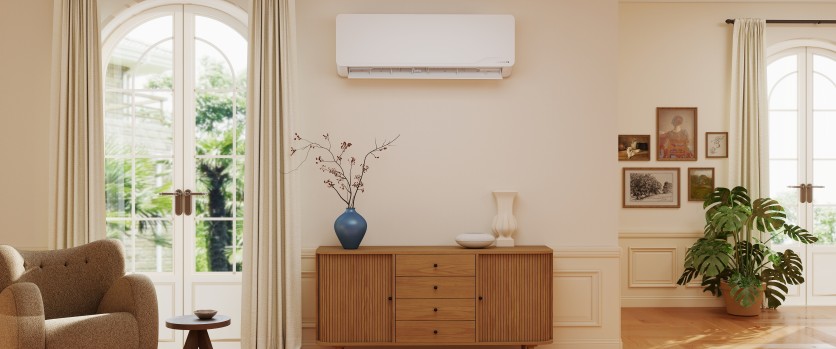
The Enduring Series runs on 115V, which is the standard residential voltage in most American homes. That means most buyers can install it without any electrical work beyond a dedicated circuit. It's listed at $620 before discounts, and it covers the core needs without adding features people may not use.
The 4D airflow system pushes air in multiple directions rather than straight ahead, which helps even out the temperature across the whole room. The system also includes intelligent anti-freezing protection that adjusts operation automatically when outdoor temperatures fall low enough to risk coil icing. This protection is rarely listed on standard spec sheets but genuinely matters in colder months.
Cozeware
Performance Numbers Worth Knowing
The Enduring Series runs at 31 dB in sleep mode. A quiet library sits around 40 dB, and a whispered conversation is close to 30 dB. The Enduring lands right in that range, which means it won't be the thing keeping you up at night. Efficiency ratings come in at 20 SEER2 for cooling and 8.5 HSPF2 for heating, with Cozeware estimating 30 to 45 percent lower energy use compared to lower-rated systems.
Here's a look at the key specs at a glance:
- Voltage: 115V (no electrical upgrade needed for most homes)
- Coverage: 750 sq. ft.
- Cooling efficiency: 20 SEER2
- Heating efficiency: 8.5 HSPF2
- Sleep mode noise: 31 dB
- Operating range: 5°F to 125°F
- Warranty: 5-year parts, 7-year compressor
The Enduring Series is a good fit for bedrooms, living rooms, home offices, and smaller apartments. Buyers looking to get started with Smart Home Cooling can use promo code TECH20 at checkout for 20% off. Note that the code is non-stackable and cannot be combined with any other offers or promotions.
Cozeware Visio Series: More Power for Garages, Workshops, and Larger Rooms
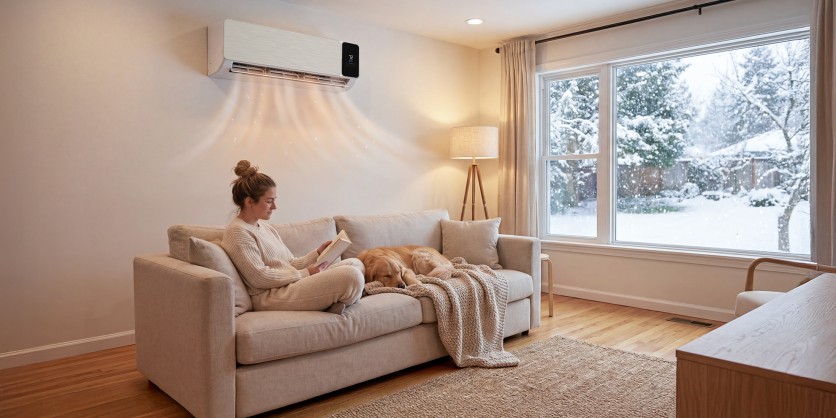
The Visio Series steps into a different category. It runs on 230V, which is the kind of setup already common in garages, workshops, and detached structures. Spaces like these tend to build heat faster and hold it longer, so a system that can handle a heavier electrical load and tougher conditions makes practical sense.
The Visio matches the Enduring on BTU output and square footage coverage, but adds features that make it more capable in challenging environments. The most notable is the three-level ECO mode, which lets users run the unit at 40%, 60%, or 75% of full power based on what the room actually needs. Cozeware estimates this can trim energy bills by $60 to $75 per month during peak usage.
Cozeware
What Makes the Visio Stand Apart
The Visio comes with a 16.4-foot line set included in the box. For anyone who has shopped for mini-splits before, this matters. The line set is the tubing that connects the indoor unit to the outdoor compressor, and it's one of the most frequently overlooked add-on costs. Bundling it saves buyers a separate purchase and a second trip to the hardware store.
Cold-weather operation also gets a specific upgrade. The Visio uses electric heating at the base of the compressor along with automatic defrost. When outdoor temperatures drop, the system doesn't just slow down and struggle. It actively keeps the compressor warm enough to keep working. That's a meaningful difference for anyone in a region with cold winters who wants the unit pulling double duty as a heat pump.
The next-generation air conditioning performance of the Visio Series is listed at $650 before discounts. Use promo code TECH20 at checkout for 20% off. The code is non-stackable and cannot be combined with any other ongoing promotions.
Cozeware E-Save Series: The One With an Actual AI Chip Inside
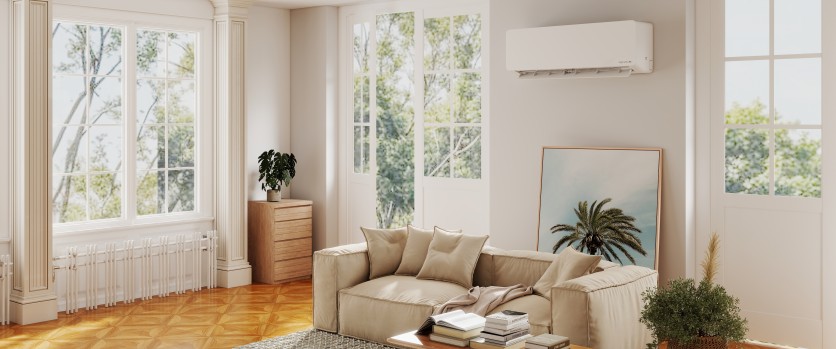
The E-Save Series is the most technically advanced model in the lineup. It carries a dedicated AI chip that does more than manage a schedule or respond to voice commands. The chip monitors how the space actually heats and cools over time, then adjusts compressor output to match what the room needs at that moment.
Standard mini splits work in a simple on/off pattern. They run at full speed until the target temperature is hit, shut off, wait for the temp to rise again, then kick back on. The E-Save intelligently optimizes compressor output beyond traditional inverter capabilities by learning the room's specific thermal footprint over time. Cozeware laboratory data shows the efficiency gains from this AI-optimized approach can reach up to 38% above what a non-AI 20 SEER2 model consumes under specific testing conditions. That's a significant difference over a full season.
Cozeware
Specs That Go Beyond the Standard Tier
The E-Save also pushes heating efficiency to 10 HSPF2, up from 8.5 on the other two series. HSPF2 is the heating equivalent of SEER2, and a jump from 8.5 to 10 is a meaningful step for anyone using the unit as a year-round heat pump.
The operating temperature range is the other headline difference. The E-Save keeps working in temperatures as low as -13°F and as high as 140°F. Most standard mini-splits become unreliable somewhere around 0°F to 5°F. That extended low-temperature range makes the E-Save genuinely viable in northern climates where staying warm through winter usually means buying a more expensive specialized system.
Here's a breakdown of what the E-Save Series offers:
- AI chip: Adjusts compressor output based on live room conditions
- Cooling efficiency: 20 SEER2, plus 38% additional AI-optimized savings
- Heating efficiency: 10 HSPF2
- Operating range: -13°F to 140°F
- Sleep mode noise: 28 dB
- Connectivity: Wi-Fi and Bluetooth built in
- Warranty: 5-year parts, 7-year compressor
The built-in Bluetooth is worth calling out separately. Most smart home systems rely entirely on Wi-Fi, which means a router restart or network outage breaks app control. Bluetooth keeps the unit responsive locally without needing an internet connection. It's a practical backup that makes the system more reliable day to day.
The ultra-efficient mini split AC in the E-Save Series is listed at $740 before discounts. Use promo code TECH20 at checkout to save 20%. The code is non-stackable and cannot be combined with any other ongoing promotions.
Which Series Fits Your Situation
Choosing between the three comes down to your home's voltage setup, your climate, and how much long-term efficiency matters to you.
The Enduring Series is the right fit for standard 115V setups where the priority is reliable, quiet cooling with smart control. The Visio is built for 230V spaces that need tougher performance and benefit from bundled installation hardware and multi-level ECO settings. The E-Save makes the most sense for buyers who want the lowest possible operating costs over time and need a unit that stays functional through harsh winters.
All three models are ETL safety certified and AHRI performance verified, and all three support voice control through Google Assistant and Alexa. For the best available discount, use promo code TECH20 at checkout to receive 20% off your purchase. The code is non-stackable and cannot be combined with any other offers or promotions currently running on the site.

-
 C114 Communication Network
 -
 Communication Home
