
 Search

Meta.com
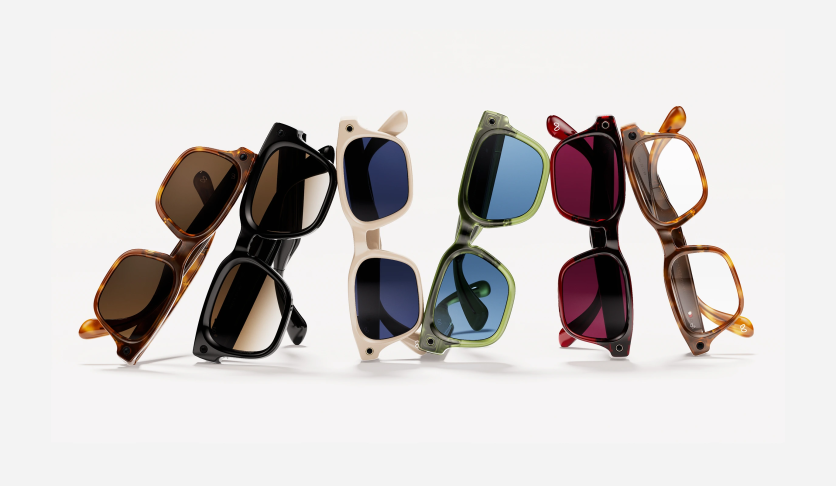
Meta launched its first self-branded AI smart glasses on Tuesday, dropping the Ray-Ban and Oakley co-branding that defined its wearables strategy for five years and cutting the entry price by $80 in the process. The Meta Adventurer and Meta Fury — both priced at $299 — and a $399 Meta Glasses by Kylie, designed in collaboration with Kylie Jenner, are available today at Meta.com, LensCrafters, Sunglass Hut, Best Buy, and Amazon. The new lineup runs on Muse Spark, the first AI model from Meta Superintelligence Labs, which ships with a hybrid inference architecture for real-time visual understanding and 20-language live translation. Buyers who passed on the $379 Ray-Ban Meta Gen 2 now have a concrete price incentive to reconsider — though the same hardware comes with a fuller privacy picture than the launch materials reflect.
Meta Adventurer and Fury: What You Get for $80 Less Than Ray-Ban Meta
The Adventurer and Fury carry over the core hardware from the Ray-Ban Meta Gen 2: a 12-megapixel camera capable of 3K video, a five-microphone array, open-ear speakers, and eight hours of battery life with up to 40 hours of additional charge from the included case, according to MacRumors. EssilorLuxottica — the French-Italian parent of Ray-Ban and Oakley — remains the manufacturing partner, with its logo appearing on the temple arms and packaging alongside Meta's. What the new lineup drops is the Ray-Ban brand name itself, along with the premium pricing that comes with it.
The two base models diverge in silhouette. The Adventurer features a slimmer, rectangular Wayfarer-adjacent frame in standard and large sizes. The Fury is boxier and thicker-armed — a modern take on a wider, more assertive classic shape. Between the two models, Meta offers 26 color and lens combinations including tortoise, racing green, sandstone, and merlot, with clear, polarized, transition, and prescription lens options across a power range from -12 to +2.25. New comfort engineering includes a three-way adjustable nose pad, bendable temple tips, and overextension hinges for wider head shapes. A dedicated action button on the right arm launches Meta AI or can be remapped to a user-chosen function.
The Meta Glasses by Kylie ($399) takes a different direction: a slim oval frame with a small gemstone near the camera, a metal nose pad engineered to resist makeup residue, and — a first for wearable hardware — the option to replace the standard Meta AI voice with an AI-generated version of Jenner's own. The charging case includes a built-in mirror.
Read more: Meta's New Smart Glasses Reportedly in the Works; Release Planned for 2026
Muse Spark: How Meta's Wearable AI Model Actually Works
Every model ships with Muse Spark, the first release from Meta Superintelligence Labs — the group led by Alexandr Wang — and Meta's first closed-weight AI model. The closed-weight decision marks a deliberate strategic departure: Meta built its AI reputation on open-source Llama releases, which powered hundreds of third-party products. Muse Spark is proprietary.
The model is designed specifically for wearable-constraint inference. Per Meta's own technical blog, it operates in three modes — Instant, Thinking, and Contemplating — that trade response latency against reasoning depth. The architecture uses a technique called thought compression during training: the model is rewarded for accuracy but penalized for excessive reasoning tokens, producing a system that solves complex problems with significantly fewer compute cycles than comparably capable models. Meta claims Muse Spark matches Llama 4 Maverick's performance while using 10 times less compute.
On the glasses, Instant mode handles quick queries with low latency; Thinking and Contemplating modes escalate to cloud-based processing for more complex reasoning and translation. The practical consequence for buyers is direct: the 14 new languages added today — Mandarin, Korean, Japanese, Arabic, Hindi, and nine others — bringing the total to 20, all require cloud connectivity, as Android Central's hands-on confirmed. Translation between Spanish, French, Italian, German, and Portuguese — the original six supported languages — remains available offline. A user without a network connection loses access to all 14 newly added languages.
Muse Spark also introduces Dynamic Photo — a burst-capture mode that automatically selects the best frame — and is rolling out via firmware update to existing Ray-Ban Meta and Oakley Meta devices. The AI upgrade is not exclusive to buyers of the new hardware.
Meta vs Ray-Ban Smart Glasses: What the Branding Change Means
For the past five years, Meta's smart glasses strategy rested on borrowed brand equity: EssilorLuxottica's Ray-Ban and Oakley names gave the hardware fashion credibility it could not manufacture on its own. Today's launch inverts that logic. Meta CTO Andrew Bosworth explained the pricing arithmetic at a press event in New York on Monday: "Reaching people isn't just about design and style. It's also about the price point that you can reach, and so if you're going to be wearing the Ray-Ban Wayfarer … you pay a premium for that," Bosworth told Yahoo Finance.
The Ray-Ban and Oakley partnerships continue — both lines remain on sale — but the new Meta-branded lineup establishes a lower price floor for the first time. Smart glasses without displays surged 167 percent year-over-year in Q1 2026, and Meta held 69.2 percent of the AI glasses market during that quarter, according to IDC's June 15 tracker report. In a separate count, Counterpoint Research puts the combined Meta and EssilorLuxottica share above 80 percent, using a broader methodology. Either figure represents a commanding position in a fast-growing category.
That lead faces credible competitive pressure. Google and Samsung are expected to unveil Android XR AI glasses this fall with Gemini integration. Snap unveiled its fully augmented-reality Specs on June 16 at $2,195 — a different product category targeting early adopters willing to pay for an AR display. Apple's entry into smart glasses is expected in 2027. IDC's framing of the Google threat is pointed: "Google enters the smart glasses race with an advantage no rival can manufacture overnight: an ecosystem already embedded in billions of lives." CEO Mark Zuckerberg noted in April that the number of people using Meta glasses daily has tripled year-over-year. Meta is also exploring camera-free glasses focused solely on audio — calls, music, and AI interaction — which Bosworth said could lower prices further and enable new frame designs.
Smart Glasses Privacy Concerns: What Buyers Need to Know Before They Purchase
The $299 price point is the most visible change in today's launch. It is not the most significant one for buyers who want a complete picture. In the months before the Adventurer and Fury went on sale, two independent investigative findings provided a fuller account of what Meta's smart glasses actually do with the footage they capture — and what they may soon do with the faces they see.
The Kenya footage review. In February 2026, Swedish newspapers Svenska Dagbladet and Göteborgs-Posten reported that workers at Sama, a Kenya-based contractor, had been reviewing video clips captured through users' Ray-Ban Meta glasses as part of Meta's AI training pipeline. The footage included bathroom visits, nudity, and sexual activity — captured by users who had opted into AI data sharing without realizing that human contractors in another country would view the content. A federal class-action lawsuit, Bartone et al. v. Meta Platforms, was filed on March 4, 2026, in the Northern District of California, alleging that Meta marketed the glasses as "designed for privacy, controlled by you" while routing footage to human reviewers overseas. Meta has said users were notified of potential human review in its terms of service. The UK Information Commissioner's Office and Kenya's Data Protection Commissioner both opened investigations.
The NameTag facial recognition pipeline. On June 4, 2026, Wired published an investigation finding that Meta had distributed dormant facial recognition code — internally called "NameTag" — to the Meta AI companion app on more than 50 million phones since January 2026. TechTimes covered that investigation in detail. The system uses three AI models to detect faces captured through the glasses' camera, generate 2,048-dimensional biometric faceprints stored locally on the phone, and trigger a notification identifying a recognized person. An independent security researcher confirmed that the pipeline functions end-to-end on a test image. Cooper Quintin, a senior technologist at the Electronic Frontier Foundation's Threat Lab, reviewed the code and said the feature was "nearly ready to go," warning that Meta had "created the capacity to turn their customers into a distributed surveillance machine."
Meta disputes the framing. Spokesperson Ryan Daniels called the findings "merely evidence" of ongoing exploration, said nothing had shipped to consumers, and pledged transparency if any feature is ever launched. At Monday's press event, Bosworth described facial recognition as "the number one request from users" and said it would be "a huge boost for the blind community." Meta has previously paid more than $2 billion in biometric privacy settlements, including $1.4 billion to Texas in 2024.
The recording LED remains Meta's primary privacy control for bystanders. All models include an LED that illuminates when the camera is active. Security researchers have previously documented modification kits that disable the LED, and the indicator's small size has drawn sustained criticism as insufficient notice for anyone who happens to be in the frame.
Read more: Meta Smart Glasses Facial Recognition Code Is Already on Millions of Phones, Wired Finds
Why This Launch Matters Beyond the Price Tag
Meta has invested heavily in smart glasses as the one Reality Labs product line showing consistent consumer adoption — its VR headsets remain largely a gaming niche. Smart glasses daily active users nearly tripled year-over-year, per Zuckerberg's April earnings call. The Meta-branded, lower-cost lineup expands the accessible price floor for the first time, removing the Ray-Ban premium as the minimum cost of entry while keeping EssilorLuxottica's manufacturing quality and optical lens network in place. The strategic question the company is now live-testing: whether the Meta name alone, unanchored from Ray-Ban, can carry the hardware into the hands of buyers who found $379 too steep — and whether a more accessible price point changes the calculus for buyers who found the privacy questions manageable enough to accept.
Frequently Asked Questions
Are Meta AI smart glasses the same as Ray-Ban Meta glasses?
The new Meta Adventurer and Fury share the same core hardware as the Ray-Ban Meta Gen 2 — identical 12-megapixel camera, 3K video, five-microphone array, and eight-hour battery life. EssilorLuxottica manufactures both lines; its logo appears on the new models' temple arms. The primary differences are frame design, branding, and price: the Adventurer and Fury start at $299 versus $379 for the Ray-Ban Meta Wayfarer Gen 2. The Ray-Ban and Oakley lines remain on sale.
What is Muse Spark and how does it differ from the previous Meta AI on glasses?
Muse Spark is the first model from Meta Superintelligence Labs and Meta's first proprietary, closed-weight AI — a departure from its open-source Llama approach. Its key architectural feature for glasses is a three-mode inference system (Instant, Thinking, Contemplating). Instant mode handles fast, low-latency queries; the deeper modes leverage cloud processing for complex reasoning. The 14 newly added translation languages all require cloud connectivity, meaning they will not function without an internet connection. Meta claims Muse Spark matches Llama 4 Maverick's capabilities at 10 times lower compute cost, enabling the efficiency the wearable use case requires.
The NameTag facial recognition feature: does it come with the new glasses?
Dormant facial recognition code called NameTag is already installed in the Meta AI companion app — required to use any Meta glasses — on more than 50 million phones, per a Wired investigation published June 4, 2026. The feature is not active and does not currently identify anyone. An independent security researcher confirmed the full biometric pipeline functions on a test image and described it as "one switch away" from activation. Meta says NameTag represents exploratory development and that any launch would be announced transparently. This code is present whether you own the new Adventurer or an existing Ray-Ban Meta. Buyers should treat its current state as dormant, not absent.
Will Meta AI smart glasses work with prescription lenses?
Yes. All three new models — Adventurer, Fury, and Meta Glasses by Kylie — support prescription lenses with a power range from -12 to +2.25. Clear, tinted, polarized, and transition lens options are available. Prescription lens orders can be placed through LensCrafters and other optical partners at the same retail locations carrying the frames.

-
 C114 Communication Network
 -
 Communication Home
