
 Search

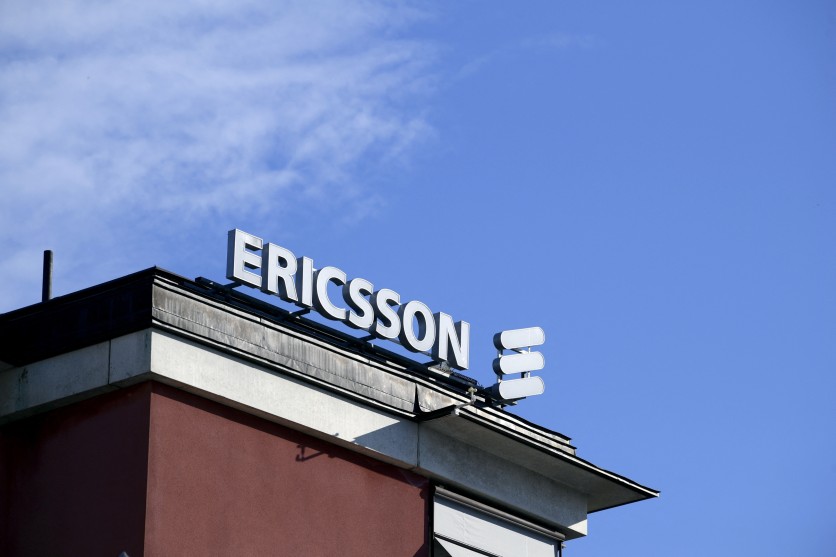
Telecom company Ericsson's headquarters are pictured in Kista, Stockholm on July 12, 2024. MIKAELA LANDESTROEM/TT NEWS AGENCY/AFP via Getty Images
Ericsson will not follow Nokia's lead and abandon its proprietary cloud infrastructure — and Nokia's decision to exit that business has already begun redirecting stranded carrier customers toward the Swedish vendor's full-stack 5G core. Jenny Lindqvist, who heads Ericsson's cloud software and services division, reaffirmed the company's commitment to its Cloud Native Infrastructure Solution in an interview at Ericsson's Stockholm headquarters, published July 1 by Light Reading. Her statement arrives as Nokia customers face a forced migration deadline of roughly 2028, and as at least one major operator has already made its choice: Three UK replaced Nokia with Ericsson's stack in January 2025 in what it described as the largest cloud-native core network in Europe.
The development is a significant data point for every carrier network team weighing multi-vendor cloud ambitions against the operational reality of vendor-agnostic platforms. Ericsson has now compiled more than 50 live deployments of its cloud-native 5G core on its own infrastructure, while sustaining a cumulative operating loss of $4.7 billion in the same business since 2017 — a wager on a model its Finnish rival concluded was unwinnable.
Nokia's Cloud Exit Left Customers Without a Platform to Stand On
Three years ago, Nokia made the decision that Ericsson's executives are now explicitly rejecting. The Finnish company announced in June 2023 that it would transfer more than 350 employees to IBM-owned Red Hat and make Red Hat's OpenShift platform the primary cloud infrastructure for Nokia's core network applications, as confirmed by the Red Hat Nokia partnership FAQ.
The products Nokia walked away from — CloudBand Infrastructure Software (CBIS) and Nokia Container Services (NCS) — had been its in-house answer to the same question Ericsson is still answering with CNIS: what cloud layer runs your 5G network functions? Nokia concluded it could not compete in cloud infrastructure against Red Hat and the hyperscalers, and that carriers increasingly wanted applications from multiple vendors running on a single managed cloud rather than siloed, vendor-specific stacks.
The problem is that Nokia's exit set a clock ticking for every operator whose core network was built on CBIS or NCS. Laurent Leboucher, Orange's group chief technology officer, said Nokia would stop selling its in-house cloud infrastructure and would end support for it within approximately two years. "The core today is still on legacy infrastructure," he said at FutureNet World in London in April. "They decided to discontinue this solution so they don't sell it anymore, and they will stop support, I think, in two years or something, and so we have to move away."
Orange is most likely to run its future 5G core on its own internal platform — Orange Telco Cloud — but Leboucher acknowledged that operators without the resources to build proprietary cloud platforms face harder choices. Three UK had already made its choice: it switched to an all-Ericsson CNIS package in January 2025, abandoning a combination of Nokia and Microsoft-owned Affirmed Networks, as announced in the Three UK selects Ericsson press release.
What CNIS Actually Is — and Why Ericsson Is Betting on Bare Metal
The technical argument at the center of Ericsson's full-stack stance is a specific architectural claim: by running containerized network functions directly on physical servers, without the overhead of a hypervisor or virtual machine layer, CNIS delivers better performance and lower total cost than conventional virtualized infrastructure.
Conventional network functions virtualization (NFV), formalized by the ETSI NFV Industry Specification Group in 2012, runs software network functions on virtual machines atop a hypervisor. The cloud-native shift replaced VMs with containers orchestrated by Kubernetes — lighter, faster to spin up, more granularly scalable. Ericsson's CNIS goes a step further: it certifies with the Cloud Native Computing Foundation and runs Kubernetes directly on bare metal hardware, skipping the hypervisor layer entirely, as described in the Ericsson Cloud Native Infrastructure product documentation.
Ericsson claims this architectural choice reduces total cost of ownership by 15 to 20 percent compared to traditional virtualized infrastructure, and that the verified full-stack integration between its 5G core applications and CNIS means operators get guaranteed interworking without the integration testing that multi-vendor combinations require. CNIS is built on Ericsson Cloud Container Distribution, Ericsson Software Defined Infrastructure for hardware management, and an operations management system that automates lifecycle management across deployments, per the Ericsson cloud infrastructure solutions portfolio page.
Customers on CNIS include Swisscom, Telefónica Germany (serving 45 million subscribers), Wind Tre, Telstra, SK Telecom (home of the world's first bare-metal cloud-native dual-mode 5G core), and Docomo. An additional 15-plus deployments run Ericsson's 5G core applications on third-party cloud platforms, and one operator uses an Ericsson on-demand 5G Google Cloud service Ericsson has built with Google Cloud, with seven others in trials.
Nokia's replacement infrastructure — the Red Hat OpenShift platform, a Kubernetes distribution built on top of Red Hat Enterprise Linux — also uses containers orchestrated by Kubernetes, but typically with a virtualization layer rather than bare metal by default, and with the explicit goal of being deployable across a range of hardware and cloud providers. The key difference is not whether Nokia or Ericsson uses Kubernetes; it is whether the infrastructure is optimized for a single vendor's applications or designed to run applications from any vendor.
Why Deutsche Telekom's HTC Initiative Puts the Full-Stack Model Under Pressure
The case against Ericsson's model does not come only from Nokia. Deutsche Telekom has been building a platform called Horizontal TelCo Cloud (HTC), an internally developed system using Kubernetes for container orchestration — the same underlying technology as CNIS — but designed specifically to host 5G core applications from multiple vendors, as detailed by the Deutsche Telekom HTC initiative coverage.
When Deutsche Telekom presented HTC at FutureNet World in London in April, the vendors on stage beside it included Mavenir, Amdocs, HPE, and Nokia. Ericsson was notably absent. A Deutsche Telekom spokesperson confirmed to Light Reading that Ericsson's 5G standalone packet core is currently not deployed in Germany and that the carrier is in ongoing discussions with Ericsson about future participation in HTC.
Deutsche Telekom has said it aims to phase out Ericsson's existing non-standalone 5G core by 2028 and replace it with Mavenir on HTC. That is both a near-term deadline for Ericsson to engage with the HTC initiative and a signal of how seriously large European operators are pursuing vendor-agnostic cloud strategies.
Leboucher's assessment of Ericsson's Sylva participation — the Linux Foundation Europe Project Sylva open-source project aimed at creating a standard, multi-vendor telco cloud framework launched in November 2022 — has nevertheless improved. "I think this is really changing now," he said. "Today it's much easier." Sylva, whose founding contributors included both Ericsson and Nokia, released its first community version in February 2024 via the Sylva V1 community release and is designed to let the same network application run on multiple infrastructure platforms — the direct architectural alternative to Ericsson's full-stack.
An Unprofitable Business Making an Expensive Bet
Ericsson's cloud software and services division, which Lindqvist took over in 2025, reported its first operating profit in nine years during 2024, when results from previously separate digital and managed services groups are combined. But the margin — 8 percent — was significantly below the 13 percent that Nokia's equivalent unit posted. The first quarter of 2026 was worse: the division broke even. Since 2017, the cumulative operating loss for the business has reached SEK 45.5 billion ($4.7 billion), on revenues of SEK 572.6 billion ($58.9 billion), according to Light Reading Ericsson cloud profitability reporting.
Sustaining a proprietary cloud infrastructure platform requires continuous R&D investment that must compete, by price, with Red Hat, which is backed by IBM, and with hyperscalers including Google Cloud and AWS. Ericsson has managed this partly through efficiency measures: since the end of 2022, the company has cut approximately 18,000 jobs across the group, more than a fifth of its total workforce, partly by using cloud-native technologies to configure products more efficiently with fewer people, per Light Reading Ericsson restructuring coverage.
Lindqvist argued that the cloud division will play a central role in the next wave of value creation as operators use network slicing — a 5G feature that guarantees bandwidth and latency for specific services, only possible on a standalone 5G core — to charge higher prices for differentiated connectivity. Per Narvinger, the incoming Ericsson CEO who currently leads the company's much larger mobile networks group, said the shift to cloud-native technologies enabled the efficiency gains that helped control costs. "Before the industry's shift to cloud-native technologies, configuration took much longer," he said. "The automation that came from it has, effectively, allowed Ericsson to manage with fewer human resources."
Europe's 5G Adoption Gap Puts the Full-Stack Bet at Greater Risk
Ericsson's ability to realize revenue from its full-stack 5G core depends heavily on operators deploying 5G standalone networks, which in turn requires midband spectrum coverage. Here, the market gap is substantial. The Ericsson Mobility Report June 2026 puts midband 5G coverage in Europe at 60 percent — compared with 90 percent in North America and 95 percent in India.
Lindqvist blamed European regulatory policy for suppressing the operator scale needed to justify large network investments. Europe has more operators competing in smaller markets than the US or Asia, which limits the capital available per operator for infrastructure upgrades. "If you have a strong mobile network, you will also maybe attract the new AI developers on top," she said, arguing that regulators who prioritize low consumer prices over network investment are undermining the region's competitiveness. "We have very many players in Europe and that makes it more difficult for operators to build scale to get returns on investment."
Globally, 5G subscriptions top three billion, with 390 service providers having launched commercial 5G services, including more than 90 that have launched 5G standalone — the network tier that Ericsson's full-stack core is primarily designed to serve.
Ericsson Turns 150 With the Largest Bet in Its Cloud Business Still Unresolved
On April 1, Ericsson marked its Ericsson 150th anniversary. Lars Magnus Ericsson opened his first telegraph repair workshop on that date in 1876 in Stockholm. A company that started with two lathes and a small number of employees is now the West's largest 5G equipment manufacturer by volume.
The cloud infrastructure question — whether a telecom equipment company can also be a viable cloud platform company — is the most consequential unresolved strategic question it faces in its 150th year. Nokia answered that question one way in June 2023 and immediately forced hundreds of its existing customers to reconsider their platforms. Ericsson answered it the other way, and Three UK's January 2025 decision to switch from Nokia's stack to Ericsson's suggests that Nokia's exit created real commercial momentum for the full-stack alternative.
Whether that momentum is durable — whether the operators who want a single multi-vendor cloud will standardize on platforms like DT's HTC or Sylva, or whether the operators who want full-stack integration will sustain Ericsson's cloud group long enough to turn the $4.7 billion in cumulative losses into profit — is a question that will be settled by procurement decisions made in the next two to three years, well before Nokia's support cutoff for its abandoned products.
Frequently Asked Questions
What is the difference between Ericsson's CNIS and Nokia's Red Hat approach to 5G core infrastructure?
Ericsson's Cloud Native Infrastructure Solution (CNIS) is a proprietary, Ericsson-developed platform that runs containerized 5G network functions directly on bare-metal servers using Kubernetes, without a hypervisor or virtual machine layer. Nokia abandoned its own cloud infrastructure products — CloudBand Infrastructure Software and Nokia Container Services — in June 2023, transferring the relevant teams to IBM-owned Red Hat. Nokia's 5G core applications now run on Red Hat OpenShift, a multi-vendor Kubernetes platform designed to be deployable across different hardware and cloud providers. The core difference is optimization: Ericsson's stack is tuned specifically for Ericsson applications and claims 15 to 20 percent total cost of ownership advantages, while Red Hat OpenShift is designed for flexibility across vendors and environments.
Why did Nokia exit its cloud infrastructure business, and what does that mean for its existing customers?
Nokia's executives concluded they could not compete as a cloud infrastructure developer against Red Hat and hyperscalers, and that large carriers increasingly wanted a single platform to host applications from multiple vendors rather than managing separate infrastructure per vendor. The practical consequence for Nokia customers is that two products — CBIS and NCS — are being discontinued, with Nokia expected to end support by approximately 2028. Operators on those platforms must migrate to new infrastructure before that deadline. Orange has signaled it will build its own platform equivalent, while Three UK chose to move to Ericsson's CNIS in January 2025 rather than follow Nokia to Red Hat.
What is cloud-native 5G core, and why does the choice of cloud infrastructure platform matter for network operators?
A cloud-native 5G core runs the software functions that manage mobile network traffic — authentication, session management, user plane processing, network slicing — as containerized microservices orchestrated by Kubernetes, rather than as monolithic software on proprietary dedicated hardware. The choice of infrastructure platform matters because it determines what 5G features an operator can activate (slicing requires a standalone core), how quickly software updates can be deployed, how much integration testing is required when mixing applications from different vendors, and what happens when one vendor discontinues its platform. An operator whose 5G core runs on a discontinued platform faces the same re-platforming challenge as a company migrating off end-of-life enterprise software — except that the software manages connectivity for millions of subscribers.
Is Ericsson's cloud business profitable, and how does the full-stack bet look financially?
The cloud software and services division reported its first operating profit in nine years during 2024, but posted an 8 percent operating margin in that period versus Nokia's 13 percent in its equivalent unit. The first quarter of 2026 saw the division break even. The cumulative operating loss since 2017 stands at SEK 45.5 billion, equivalent to approximately $4.7 billion, on revenues of roughly $58.9 billion over that period. Lindqvist has argued the division has "more potential" and that network slicing will drive the next round of operator spending, but the financial case for maintaining proprietary cloud infrastructure depends on that revenue materializing as 5G standalone adoption accelerates — a process that has been slower than expected in Europe.

-
 C114 Communication Network
 -
 Communication Home
