
 Search

Asus.com
A 32GB DDR5-6000 kit that cost $80 to $120 a year ago now runs $400 to $470 at US retailers — and the only credible new supply source is a Chinese state-affiliated company that the Pentagon lists as a military-linked organization, according to Tom's Hardware price tracker data from July 24, 2026. GIGABYTE announced on July 24 that its full lineup of AMD and Intel DDR5 motherboards now supports memory built on chips from ChangXin Memory Technologies (CXMT), completing a sweep of the three largest motherboard vendors. MSI and ASUS made similar moves in early July. The question for any PC builder is not whether CXMT works — major motherboard vendors have now confirmed it does — but what else comes with it, and when it will actually be available to buy. (Exchange rates used for currency conversions: 1 USD = 6.7722 CNY, sourced July 25, 2026.)
What GIGABYTE's Announcement Actually Covers
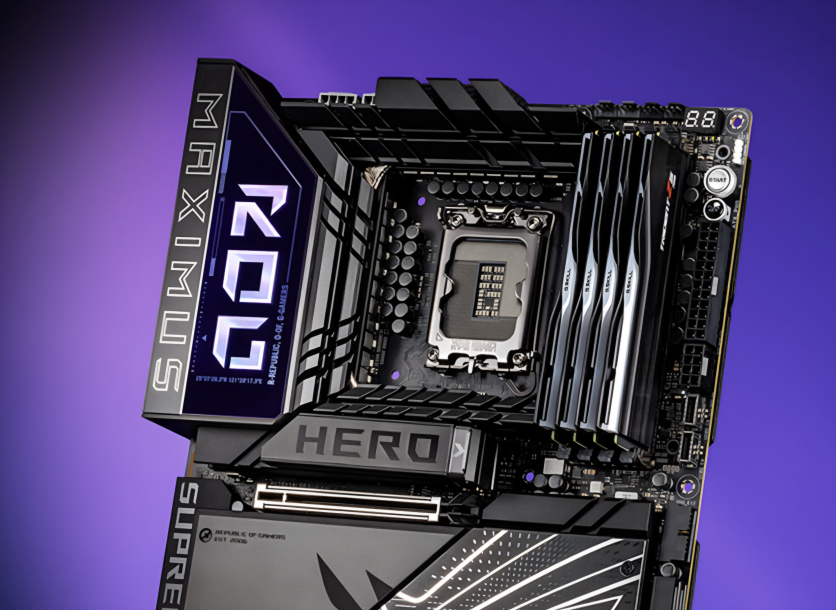
GIGABYTE's update, built on AMD's AGESA 1.3.0.1c microcode and the company's own memory tuning optimizations, enables its 800-series and 600-series AM5 motherboards to run CXMT's 16-gigabit and 24-gigabit dies stably at speeds of up to 8,200 MT/s. Intel 700-series and 800-series boards already carry CXMT support in their shipping firmware and require no update.
GIGABYTE said in its announcement that "the DDR5 memory market has faced tight supply and rising prices in recent months," describing CXMT-based memory as "a welcome additional source of supply for consumers."
The 24-gigabit die density is worth noting specifically. It is a DDR5 capacity tier added to the JEDEC standard to allow 24GB DIMM configurations — a step between the conventional 16GB and 32GB options — and CXMT has moved into it aggressively.
The technical unlock that made these speeds possible was AMD's AGESA 1.3.0.1c release. AGESA is AMD's BIOS implementation architecture — the firmware layer that controls how the memory controller communicates with DRAM modules, including the frequency tables, voltage margins, and timing parameters used during memory training. CXMT's silicon trains differently from Samsung and SK Hynix dies, and earlier AGESA versions imposed a ceiling of around 6,800 MT/s on CXMT modules running on AM5. The 1.3.0.1c update removed that ceiling; GIGABYTE's own tuning layer extends it further.
TechTimes reported on July 6 that MSI appears to have been first to market with global CXMT BIOS optimizations, validated at DDR5-8200 on AM5. ASUS followed with a beta BIOS for its X670 and X870 boards, achieving speeds that appear to exceed GIGABYTE's 8,200 MT/s ceiling using its own memory reference code. GIGABYTE's announcement is distinct in covering both AMD and Intel in a single global release — and in framing it explicitly as a supply-chain response rather than an enthusiast feature.
Read more: CXMT DDR5-8200 Validated on MSI AM5 Boards, But Pentagon Keeps It on Military List
DDR5 Prices: Where the Math Became Unavoidable
The story behind the vendor sweep is not enthusiasm for Chinese memory — it is the economics of a sustained supply crisis.
Samsung, SK Hynix, and Micron collectively control approximately 90% of global DRAM output. All three have systematically redirected manufacturing capacity toward High Bandwidth Memory (HBM) — the 3D-stacked, through-silicon-via memory used inside AI accelerators — which consumes roughly three times the wafer area per gigabyte compared to standard DDR5. Long-term supply agreements with hyperscale data center operators — Meta, Google, Microsoft, Amazon — have locked up years of HBM production at premium pricing.
The result for consumer DDR5 has been structural, not cyclical. A 32GB DDR5-6000 kit that sold for $80 to $120 in mid-2025 now costs between $400 and $470, with no comparable option below that range, according to price tracking data from July 24, 2026. Gartner projects combined DRAM and SSD prices will surge 130% by year-end 2026. SK Hynix has warned the shortage may persist past 2030.
HBM requires building eight to twelve DRAM dies vertically, linked by thousands of microscopic copper through-silicon vias (TSVs) and mounted on a silicon interposer beside the compute logic. That construction delivers enormous bandwidth — HBM4 now reaching 2 terabytes per second — but each gigabyte of HBM diverts wafer capacity that once made consumer DRAM, according to TrendForce memory analysis. CXMT, which has negligible HBM output, is filling a gap the Big Three voluntarily vacated.
Read more: DDR5 RAM Hits $375 Floor for PC Builders: HBM Takes Three Times More Wafers
Who CXMT Is and What It Has Built
ChangXin Memory Technologies, headquartered in Hefei in China's Anhui province, was founded in 2016 as China's answer to its near-total dependence on foreign DRAM. It spent its early years producing DDR4 for the domestic market. Its DDR5 push has been more aggressive: rated at up to 8,000 MT/s in standard configurations, its 16Gb and 24Gb dies are now capable — as the motherboard validation work confirms — of running above 8,200 MT/s with third-party firmware tuning.
CXMT is the first company to credibly challenge the Samsung-SK Hynix-Micron DRAM oligopoly in over 30 years. Prior challengers — Japan's Elpida, Germany's Qimonda — went bankrupt during downturns and were absorbed into the existing oligopoly. CXMT is backed by state capital rather than commercial investment and has survived a downturn cycle that would have killed a commercially funded startup. Whether this state-backed entry disrupts the oligopoly permanently — or is contained by export controls and geopolitical pressure — is the more consequential question that GIGABYTE's BIOS update is a symptom of, not an answer to.
Research firm Citrini estimates CXMT will reach approximately 350,000 wafer starts per month by the end of 2026, a figure that would make it the fourth-largest DRAM producer globally. Independent testing by Hardware Unboxed in February 2026 found that CXMT-based DDR5 consumer kits delivered gaming performance essentially equivalent to Samsung or SK Hynix-based kits — suggesting the performance gap for desktop users is in manufacturing economics and process generation, not in the shipped product. That finding makes the supply math harder to dismiss on technical grounds.
The company's financial trajectory confirms its market moment. CXMT's first-quarter 2026 revenue reached CNY 50.8 billion (approximately $7.5 billion USD), an increase of roughly 719% year-over-year. Caixin Global confirmed the company priced its Shanghai STAR Market IPO at CNY 8.66 per share, raising CNY 57.9 billion (approximately $8.6 billion USD) — the largest listing in STAR Market history — with shares scheduled to begin trading on July 27, 2026.
What CXMT Still Cannot Do
Board vendor validation normalizes CXMT. It does not eliminate the gaps that separate it from the incumbents.
CXMT's manufacturing process lags Samsung and SK Hynix by approximately two to three generations, according to analysts at Seoul Economic Daily and TechInsights. The reason is structural: US export controls have blocked CXMT's access to EUV (extreme ultraviolet) lithography equipment from ASML since 2019, and since October 2022, selling equipment or technology needed to produce DRAM below 18nm half-pitch requires a US export license. CXMT manufactures on DUV (deep ultraviolet) equipment, which is less efficient per wafer and produces higher defect rates at advanced geometries. The result is a cost-per-bit that trails Samsung, SK Hynix, and Micron by more than 30%.
CXMT's DDR5 modules marketed in Western channels do not carry EXPO certification — AMD's Extended Profiles for Overclocking standard — which allows plug-and-play high-speed operation on AM5 platforms. Without EXPO, running CXMT modules at validated speeds requires manual XMP/timing configuration, which adds friction for non-enthusiast builders. The BIOS updates from GIGABYTE and others address the platform-level compatibility — they do not grant EXPO certification, which is a separate process involving cooperation between the memory module vendor and AMD.
On the HBM front, CXMT is targeting HBM3 production by end of 2026, but volume production at competitive yield is a 2028 or later prospect, according to analysts tracking its through-silicon-via (TSV) stacking development. The technology gap in TSV stacking and domestic equipment maturity are the primary constraints. For now, CXMT's production lines are available for conventional DDR5 precisely because it has not yet been absorbed into the HBM supply chain — which is itself a temporary condition rather than a permanent market position.
Legal Exposure for US Buyers: What the DoD Designation Means and Does Not Mean
CXMT carries a designation that most consumer memory brands do not. On June 8, 2026, the US Department of Defense published its updated Section 1260H list of "Chinese Military Companies" — adding 65 entities including Alibaba, Baidu, BYD, and TP-Link — with CXMT remaining on the list after a brief and unexplained apparent removal in February was withdrawn within hours, according to the Pentagon's June 8 update. The designation reflects CXMT's affiliation with China's Ministry of Industry and Information Technology (MIIT).
Section 1260H designation is not a trade ban on private citizens or commercial buyers. Its legal consequences are targeted at the US government and defense contractors specifically. Under Section 805 of the FY2024 National Defense Authorization Act, the Pentagon has been prohibited since June 30, 2026 from entering into, renewing, or extending contracts with CXMT or entities under its control. A broader product ban — barring procurement of goods that include CXMT-produced components — takes effect June 30, 2027. A separate provision of the FY2023 NDAA bars the US federal government from procuring chips manufactured by CXMT.
For a private individual building or upgrading a home or small-business PC, none of those restrictions apply directly. The more relevant practical question is what Chinese law requires of CXMT as a company, independent of the 1260H designation.
China's National Intelligence Law of 2017, in its Article 7, requires that all organizations and citizens must support, assist, and cooperate with national intelligence work. This obligation applies to CXMT. It is not a theoretical risk — it is a legal condition of operating under Chinese jurisdiction, regardless of what CXMT's stated privacy policies say, where it is incorporated, or where its servers are physically located.
The important distinction for memory hardware specifically: DDR5 DRAM is a passive component. It stores and retrieves data at the direction of the CPU and system firmware. It does not independently establish network connections, run software, collect data, or transmit anything. The National Intelligence Law creates a legal obligation for CXMT as a corporation — but it does not give Chinese intelligence services access to data stored in your RAM through the memory chip itself. The risk calculus for CXMT memory in a private consumer system is therefore different from, say, a CXMT-designed network router or a device with its own firmware stack.
That said, US government contractors, defense-adjacent OEMs, and organizations with supply chain compliance requirements should conduct a formal export control review before incorporating CXMT components, as the 1260H designation creates compliance obligations even where it does not impose outright bans.
Additionally, South Korean prosecutors indicted 10 former Samsung Electronics employees in December 2025 for allegedly transferring Samsung's 10nm-class DRAM process technology to CXMT — including handwritten documentation of hundreds of manufacturing process steps covering gas flow ratios, reactor pressures, and photoresist settings. Five suspects were detained, five released on bail; a former Samsung executive who became a CXMT development head was among those arrested, according to South Korean prosecutors. A prior case resulted in a 7-year prison sentence for a former Samsung team manager who leaked 18nm DRAM trade secrets to CXMT. CXMT has not been charged in either case.
Who Can Actually Buy This Right Now
The practical limitation for Western builders is not legal — it is logistical.
CXMT's DDR5 output remains primarily a domestic Chinese product. Gloway and KingBank, two Chinese memory module brands, have sold CXMT-based consumer DDR5 as far back as late 2024. Corsair has been reported to be incorporating CXMT-produced chips into at least some of its DDR5 kits — the first visible appearance of CXMT silicon under a recognized Western brand. But the pipeline from Hefei to a mainstream US or European retailer remains thin. A buyer in the US looking to take advantage of GIGABYTE's new BIOS compatibility today will find few if any CXMT-based options in domestic retail channels.
This is a geopolitically conditioned availability gap, not a simple logistics delay. The US DoD's 1260H designation does not prohibit commercial sales, but it creates reputational and compliance concerns for OEMs (Dell, HP, Lenovo) that supply US government customers, and those concerns translate into sourcing caution. The interagency committee that governs the Commerce Department's Entity List has approved CXMT for addition to the trade blacklist — an action that would bar US companies from exporting goods and technology to CXMT — but formal publication of that addition has been delayed for diplomatic reasons as of late June 2026. If that designation is ultimately published, the compliance calculus for Western brands using CXMT chips changes significantly.
The memory shortage is projected to persist into at least 2027 — and most analyst forecasts put meaningful relief further out than that. The longer prices stay elevated, the stronger the economic argument for Western module brands to diversify their chip sourcing. Corsair's apparent move is the leading edge of that logic; whether it becomes a pattern depends on factors outside any motherboard vendor's control.
A US or European builder today cannot walk into a store and buy CXMT memory. What GIGABYTE has done is confirm that when CXMT supply does reach Western markets — in its own name or under a Western brand's label — the boards are ready.
Decision Framework for Builders
The honest bottom line for anyone researching this before a purchase: CXMT DDR5 works, performs comparably to the incumbents at the consumer level, and is now formally validated at high speeds by every major motherboard vendor, as Hardware Unboxed testing confirmed. It is made by a company with a Pentagon military designation, operates under Chinese intelligence cooperation laws that apply to all Chinese organizations, and is the subject of ongoing criminal proceedings in South Korea related to alleged technology theft. Its process node lags the incumbents by two to three generations, its cost-per-bit is higher, and it lacks EXPO certification for the plug-and-play speed configuration Western builders expect.
It is also nearly impossible to buy in the United States today.
For builders in China, GIGABYTE's BIOS update opens a wider selection of validated, high-speed DDR5 that is locally available. For builders in the US and Europe, the update matters directionally — the industry is formally normalizing CXMT as a viable supplier — but the supply chain has not yet delivered. Whether that changes depends on the Entity List, diplomatic dynamics between Washington and Beijing, and whether the memory shortage remains severe enough to push Western brands to absorb the compliance complexity.
The shortage is not going away. Neither, it appears, is CXMT.
Frequently Asked Questions
Is CXMT DDR5 memory legal for US consumers to buy and use?
Yes. Section 1260H designation is not a trade restriction on private buyers. The US federal government and Pentagon contractors face specific procurement bans, but there is no law prohibiting a private individual from purchasing or using CXMT-based memory. Builders should be aware, however, that CXMT-based modules are currently difficult or impossible to find in US retail channels regardless of legality. Those in regulated industries, government-adjacent organizations, or enterprises with supply chain compliance requirements should conduct a formal export control review before sourcing CXMT components.
Does CXMT memory actually perform as well as Samsung or SK Hynix DDR5?
For desktop gaming and general-purpose workloads, yes — independent testing by Hardware Unboxed in February 2026 found CXMT-based DDR5 kits delivering essentially equivalent performance to comparable Samsung and SK Hynix-based kits. The gap is in manufacturing economics (cost-per-bit is roughly 30% higher than the incumbents) and process node maturity (two to three generations behind), not in consumer-facing benchmark results. CXMT modules sold in Western markets generally lack EXPO certification, meaning maximum speeds require manual timing configuration rather than automatic profile loading.
Why is DDR5 so expensive in 2026, and will CXMT change that?
DDR5 prices have risen 400–500% from mid-2025 because Samsung, SK Hynix, and Micron have redirected manufacturing capacity toward High Bandwidth Memory for AI accelerators, which consumes roughly three times the wafer area per gigabyte, as Gartner and other analysts have documented. CXMT could introduce meaningful downward pressure if its supply reaches Western markets at scale, but it is not yet available through US or European retail channels in significant volume. Most analyst forecasts do not expect substantial DDR5 price relief before 2027 or 2028, and only if new fabrication capacity comes online across the industry.
What does CXMT's status on the DoD military list actually mean for a home builder?
For a private individual building a gaming PC or home workstation, the Section 1260H designation has no direct legal effect — it restricts US government and Pentagon procurement, not commercial purchases. The more broadly applicable consideration is that CXMT, like all Chinese companies, is legally required to cooperate with China's national intelligence operations under the National Intelligence Law of 2017. DDR5 DRAM is a passive memory component that cannot independently transmit or collect data, so that legal obligation does not translate into a technical spy capability in the chip itself. The designation does create compliance review obligations for US government contractors, OEMs serving federal customers, and defense-adjacent organizations, as the 1260H designation framework makes clear.

-
 C114 Communication Network
 -
 Communication Home
