
 Search

(Image credit: Tom's Hardware)
-
Facebook -
X -
-
-
Pinterest -
Flipboard -
Email
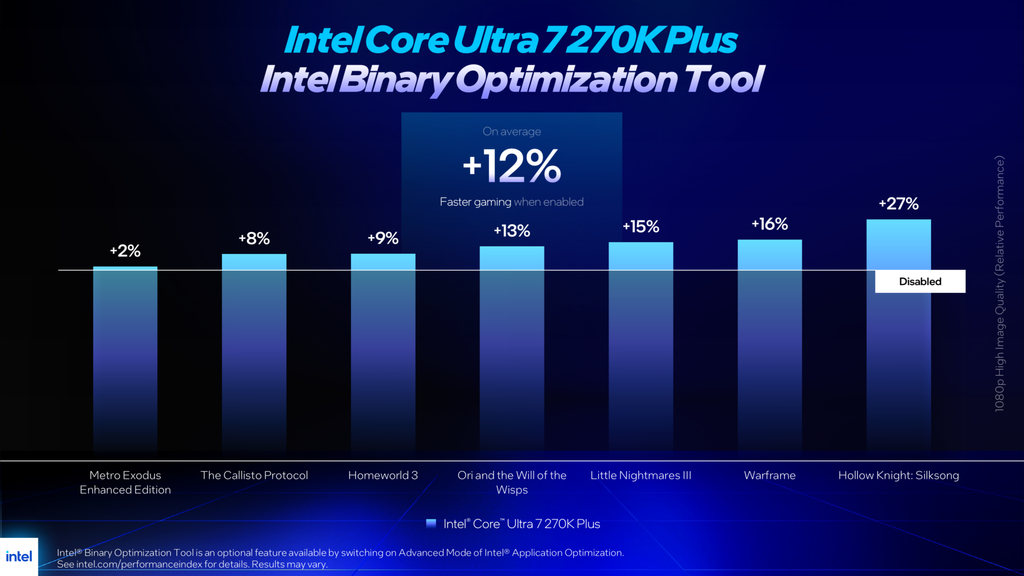
Intel is broadening support for its Binary Optimization Tool, or iBOT, with seven new games. Across the newly-supported titles, Intel claims an average performance jump of 12%, and increases as high as 27%. To unlock support for the new games, you'll need the latest Intel Platform Performance Package. Then, you'll be able to select the games under the Advanced tab in the Intel Application Optimization GUI.
(Image credit: Tom's Hardware)
- CPU scaling with DLSS
- Ryzen to the top: How AMD innovated in the gaming CPU market
- How ARM is working its way into PCs
- AMD CES 2026 gaming trends press Q&A roundtable transcript
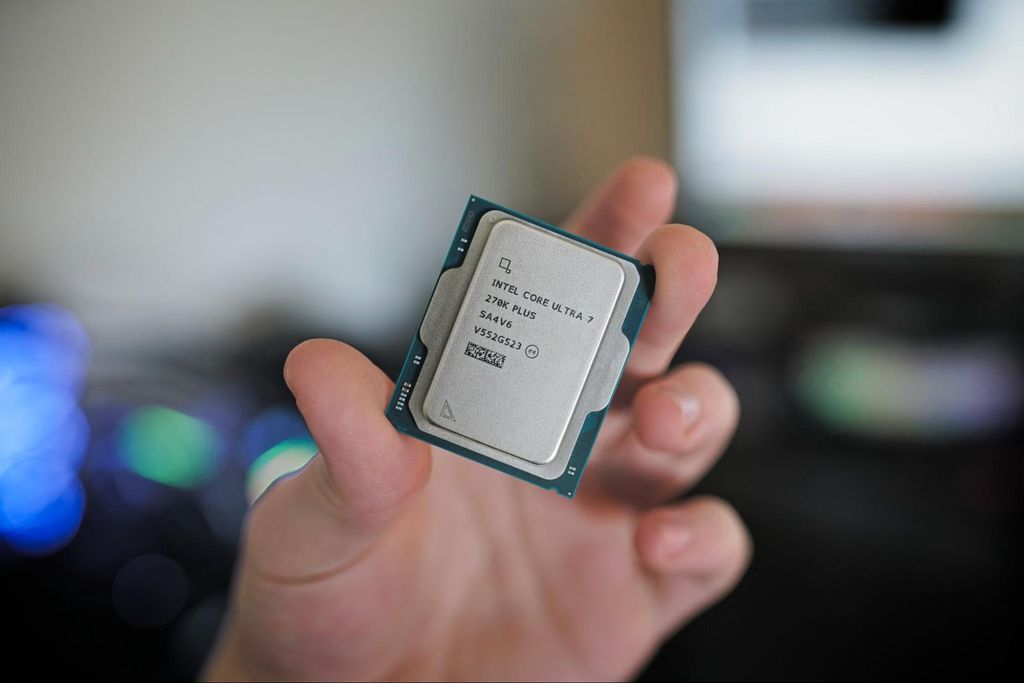
We originally saw iBOT roll out with Arrow Lake Refresh chips like the Core Ultra 7 270K Plus, but the feature works on Panther Lake chips, as well as Intel's latest HX mobile chips, Core Ultra 9 290HX Plus and Core Ultra 7 270HX Plus. Older Intel CPUs can't use iBOT due to hardware registers Intel must tap into for optimization. However, Intel says it plans on supporting the feature on future CPUs.
Intel initially rolled out iBOT with support for 12 games, which has now expanded to 19 titles. In our iBOT testing, we found that the feature offered an 8% average performance improvement, with the feature climbing as high as an 18% improvement in Shadow of the Tomb Raider.

Here are the games Intel added with the latest update:
- Metro Exodus Enhanced Edition
- The Callisto Protocol
- Homeworld 3
- Ori and the Will of the Wisps
- Little Nightmares III
- Warframe
- Hollow Knight: Silksong
Across the seven new games, Intel claims an average performance improvement of 12% with the Core Ultra 7 270K Plus. Intel tested at 1080p with High settings, and it used 32GB of DDR5-7200 memory and an Nvidia GeForce RTX 5090.
(Image credit: Intel)
At the higher-end of the spectrum, Intel saw a 27% jump in Hollow Knight: Silksong and 16% improvement in Warframe. On the other end, Metro Exodus showed just a 2% uplift, while The Callisto Protocol jumped by 8%.
Intel's approach with iBOT might seem a bit scattershot, with 19 games now supported and no clear pattern between them. There are some popular and widely-played titles, such as Warframe and Cyberpunk 2077, but also less-demanding games like Silksong and older titles that don't see much play these games, like The Callisto Protocol. Even as the list expands, this strange mix is likely to stick around.
That's due to how iBOT works. It's essentially a translation layer, not dissimilar from Microsoft Prism. However, Intel isn't translating instructions from one ISA to another. Instead, it's optimizing x86 applications to ensure they're using the latest, most efficient instructions. Intel does this optimization with Hardware Profile-Guided Optimizations, or HWPGO, tapping into the silicon to see what's going on while code is executing. Once Intel has its optimizations, it packages them into a profile and ships.
Although iBOT is a unique feature, it's not universally applicable. Some games (and applications, as iBOT works outside of games) are already optimized enough that iBOT provides no benefit. We've also seen performance differences between chips, even between the Core Ultra 5 250K Plus and Core Ultra 7 270K Plus. It would be interesting to see how the feature works on more constrained chips, such as Panther Lake.

Follow Tom's Hardware on Google News, or add us as a preferred source, to get our latest news, analysis, & reviews in your feeds.

-
 C114 Communication Network
 -
 Communication Home
