
 Search

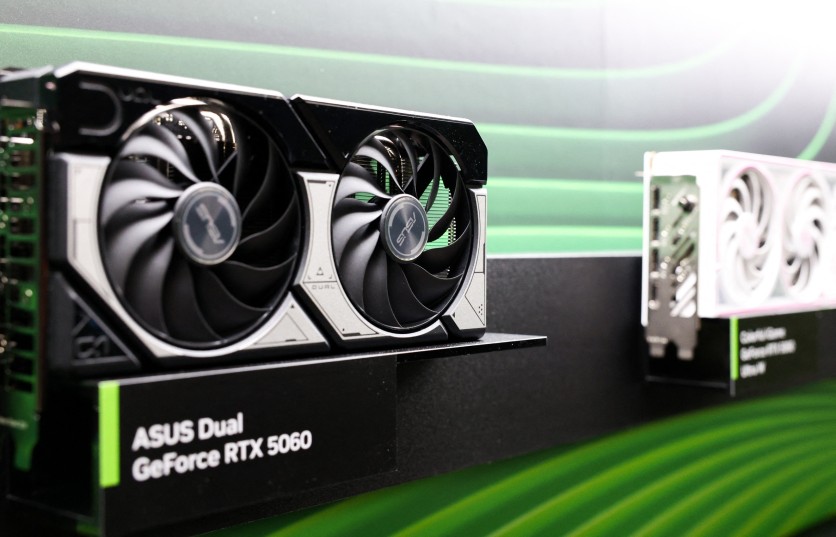
A sample of the Nvidia GeForce RTX 5060 is displayed during a production preview exhibition in Taipei on May 21, 2025. I-HWA CHENG/AFP via Getty Images
If you've been holding off on a GPU purchase because mid-range prices looked stable, that window is closing. NVIDIA has notified its add-in board (AIB) partners of a sweeping new round of GPU kit price increases covering both GDDR7-based Blackwell RTX 50 series cards and older GeForce products using GDDR6 — meaning budget and mid-range buyers who had been sheltered from the first wave of memory-driven GPU inflation are now directly in the crosshairs.
NVIDIA supplies its board partners — the companies including ASUS, MSI, Gigabyte, and others that build and sell the retail cards — with bundled packages called GPU kits, which pair the GPU die with its video memory allocation. When memory costs rise, the whole kit rises with it, and AIBs have no certified alternative supply path. This is the second such notification in 2026: in May, NVIDIA raised kit prices specifically for the RTX 5090 and its China-market variant, the RTX 5090D V2, as Tweaktown reported. This round is broader — and its effects will reach cards that were, until now, reliably affordable.
BenchLife Report Confirms Scope of Latest Price Notice
The report originated with BenchLife, a Taiwan-based hardware publication with documented supply-chain sourcing, and was independently confirmed by TechPowerUp alongside VideoCardz, PC Gamer, OC3D, and KitGuru within 24 hours. BenchLife's translated account states that partners received official notification of kit price increases covering "GeForce products using GDDR6 memory" in addition to the GDDR7-based Blackwell lineup — a scope that extends to revived RTX 30-series cards including the RTX 3060 12GB, which made a surprise return to US retail shelves in July close to its original 2021 launch MSRP. That favorable pricing is now at risk.
The same BenchLife report noted that partners are also absorbing higher costs for GPU cooling systems, PCB manufacturing, and packaging, though those increases are smaller in magnitude compared to the memory-driven component of the kit price change.
Read more: RTX 3060 12GB Returns to Newegg at $330 as GPU Memory Crisis Hits Budget Buyers
Why GDDR7 Has Become a Production Bottleneck
At the center of the pricing crisis is a specific economic mismatch between two different types of high-performance memory: High-Bandwidth Memory (HBM), which feeds AI data-center accelerators, and GDDR7/GDDR6, which feeds consumer gaming GPUs. The two categories compete for the same fabrication capacity at the world's three major DRAM manufacturers — Samsung, SK Hynix, and Micron.
HBM is physically larger per die than conventional DRAM. Micron CEO Sanjay Mehrotra has confirmed that an HBM3E die is roughly twice the size of an equivalent-capacity DDR5 module. Larger dies mean fewer units per wafer, which means each wafer committed to HBM produces dramatically fewer memory "bits" than it would if devoted to standard GDDR7. The tradeoff is that HBM commands a far higher price per unit from AI customers — hyperscalers including Google, Microsoft, Meta, and Amazon are placing open-ended orders that absorb all available HBM supply. Memory makers optimize for margin, not consumer bit volume, so capacity has shifted accordingly.
TSMC's CoWoS advanced packaging — required to attach HBM stacks to AI GPU dies — is the second bottleneck. That capacity is expanding to an estimated 120,000–140,000 wafers per month by late 2026, but remains fully booked, with NVIDIA alone consuming roughly 60% of the allocation for its own H100, B200, and GB200 data-center accelerators.
This is the structural irony at the heart of the current GPU market: the same NVIDIA product line that has made the company one of the most profitable businesses on earth — its AI accelerator business — is the primary demand driver of the memory shortage that is preventing the company from launching consumer products and forcing its AIB partners to raise retail prices.
Why the RTX 50 SUPER Remains on Hold
The most visible product casualty of the 3 GB GDDR7 pricing crisis is NVIDIA's RTX 50 SUPER refresh. The planned lineup — RTX 5080 SUPER, RTX 5070 Ti SUPER, and RTX 5070 SUPER — is reportedly ready in hardware form: at least one board partner has received production-ready GPUs, though NVIDIA has instructed partners to hold the launch indefinitely.
The reason is arithmetic. The SUPER series would use higher-density 3 GB GDDR7 modules rather than the standard 2 GB chips in the existing Blackwell lineup. A 3 GB GDDR7 module currently costs between $60 and $70, while a 2 GB GDDR7 module costs roughly $20. For the RTX 5080 SUPER, which would use eight such modules to deliver 24 GB of VRAM on a 256-bit bus, the memory component of the bill of materials reaches $480 to $560 — compared to roughly $160 when using standard 2 GB chips. That is an increase of $320 to $400 in memory costs alone, before accounting for the GPU die, PCB, thermal solution, power delivery components, and AIB profit margin, as Tech4Gamers detailed in its analysis of the delay.
The pricing discrepancy is not linear with capacity. A 3 GB GDDR7 die uses a 24 Gbit density versus the 16 Gbit density in a 2 GB chip. Higher-density dies have lower production yields and more defect sensitivity at the same process node, which drives non-linear cost increases during a supply shortage. NVIDIA is also reportedly redirecting available 3 GB GDDR7 chips toward higher-margin products — the RTX Pro 6000 Blackwell and Rubin CPX AI cards — where the memory cost increase is easier to pass through to enterprise customers, per KitGuru's reporting on the delay.
Speculation among industry analysts has settled on late 2026 or CES 2027 as the most credible launch window for the RTX 50 SUPER lineup — if memory pricing cooperates. No official timeline has been provided.
Similarly on hold is the RTX 5050 9GB, which would need three 3 GB GDDR7 chips. At current pricing, three modules alone cost $180 to $210 — approaching the retail price of last-generation mid-range cards.
An Industry-Wide Problem AMD Cannot Escape Either
NVIDIA is not navigating this alone. AMD's Radeon RX 9000 series uses GDDR6, not GDDR7, but GDDR6 is also subject to the broader memory reallocation driving the crisis. AMD reportedly raised the GDDR memory kit prices it charges board partners by approximately 10% effective July 2026 — its second such increase in roughly six months. A further 10–15% increase across the Radeon lineup is anticipated in the second half of 2026, according to supply-chain reporting from Board Channels as cited by VideoCardz.
The RTX 3060 12GB — which NVIDIA and Samsung restarted production on at Samsung's trailing-edge foundry in order to offer consumers a value option — uses GDDR6. Its newly restored pricing near its original 2021 MSRP is now explicitly within the scope of NVIDIA's latest kit price notification. Buyers who purchased the card at its comeback pricing got the best deal available in 2026. New units will cost more.
Intel's Arc GPU lineup, which also uses GDDR6, is equally exposed. No vendor currently using consumer graphics memory is insulated from the underlying shortage.
Read more: GPU Memory Crisis Prices RTX 5090 Above $4,300 as Nvidia Offers Paper Cards
What Do Industry Analysts Say About Recovery?
The supply-side data offers little comfort for buyers hoping for a near-term reversal. IDC's 2026 DRAM supply forecast projects supply growth of 16% year-over-year — below the historical norm of 20 to 30% — because HBM production absorbs the available growth. IDC has classified the current situation as "a potentially permanent strategic reallocation" of manufacturing capacity, not a cyclical correction.
Intel CEO Lip-Bu Tan has stated publicly that there will be "no relief until 2028," citing direct conversations with key players in the memory industry. TrendForce projects that conventional DRAM contract prices rose 90 to 95% quarter-over-quarter in Q1 2026, with further increases in Q2 2026 for graphics DRAM specifically. SK Hynix, one of the three memory makers responsible for essentially all global DRAM output, has warned that 2027 will be the worst year of the shortage and that the supply squeeze could persist into 2030.
New fabrication facilities from Micron, Samsung, and SK Hynix are under construction, but meaningful additional output is not expected before late 2027 at the earliest — and multiple analysts view even that timeline as optimistic given the pace of AI infrastructure deployment.
What Does This Mean for Buyers Right Now?
The practical implications are direct. The period of relative pricing stability that GPU buyers experienced in the first half of 2026 is ending. The specific mechanism matters: NVIDIA's kit price increases do not instantly produce higher retail prices. AIBs work through existing inventory before ordering new kits, and some will absorb a portion of the increase rather than pass it fully to retail. But the direction is unambiguous: every GPU assembled from kits ordered after this notice will cost more than the equivalent card made before it.
NVIDIA's official statement — that the company "continues to ship all GeForce SKUs and is working closely with suppliers to maximize memory availability" — remains in effect, but it does not address pricing.
For buyers with a GPU purchase on their list, the calculus has shifted. There is no clearing event visible on the horizon — no new memory fab coming online, no announced RTX 50 SUPER launch, no signal from AI infrastructure buyers that their demand will moderate — that would reverse memory pricing pressure within the relevant purchase-decision window. Waiting for prices to normalize is increasingly a bet against the structural direction of the semiconductor supply chain.
The one group that still has options: buyers of last-generation cards — RTX 4070, RTX 4070 Ti, RX 7800 XT, RX 7900 GRE — built with memory that predates the current acute shortage. Those cards are experiencing less pricing pressure precisely because they do not compete with AI infrastructure buyers for the same components. At the mid-to-high-end new-card tier, the shortage is structural and, by all available evidence, not ending soon.
Frequently Asked Questions
Why are GPU prices going up again in 2026?
NVIDIA has issued a GPU kit price increase notification to its add-in board (AIB) partners covering both GDDR7 (RTX 50 series Blackwell) and GDDR6 (older GeForce products). The underlying cause is a structural reallocation of semiconductor wafer capacity toward High-Bandwidth Memory (HBM) for AI data-center accelerators. Samsung, SK Hynix, and Micron — which together produce nearly all of the world's DRAM — have shifted manufacturing capacity toward HBM, which commands far higher prices per wafer from AI customers. This reduces the supply available for consumer GDDR7 and GDDR6, pushing costs higher throughout the chain from memory maker to GPU vendor to AIB to retail.
When will the RTX 50 SUPER launch?
NVIDIA has not provided any revised launch window. The hardware is reportedly ready — at least one AIB has received production GPUs — but NVIDIA has instructed partners to hold all launch preparations. The delay is driven specifically by the cost of 3 GB GDDR7 modules, which currently run $60 to $70 each, compared to roughly $20 for the standard 2 GB chips. On a card like the RTX 5080 SUPER that would use eight such modules, the memory bill of materials alone reaches $480 to $560. Industry speculation points to late 2026 or CES 2027 as the most credible window, but nothing is confirmed, and if GDDR7 pricing does not improve, some SKUs may not reach retail in their currently planned configurations.
Should I buy a GPU now or wait?
Based on current supply-chain data and analyst projections, waiting for prices to fall is a bet against the structural direction of the memory market. IDC has classified the shortage as a potentially permanent strategic reallocation — not a typical cyclical correction. Intel CEO Lip-Bu Tan has stated publicly that relief is not expected until 2028. SK Hynix has warned that 2027 will be the worst year of the shortage. If your current GPU is functional and handles your workload, holding is the most financially defensible position. If you must buy, the best value options are currently last-generation cards (RTX 4070-class, RX 7800 XT-class) that use memory predating the acute shortage — these are experiencing less pricing pressure than current-generation cards.
Does the GDDR7 shortage affect AMD Radeon cards too?
Yes. AMD's Radeon RX 9000 series uses GDDR6 rather than GDDR7, but GDDR6 supply is also constrained by the same underlying HBM capacity reallocation. AMD reportedly raised its GDDR memory kit prices to AIB partners by approximately 10% effective July 2026 — its second such increase in roughly six months. A further 10–15% increase across the Radeon RX 9000 lineup is anticipated in the second half of 2026. Intel Arc cards, which also use GDDR6, are equally exposed. No current consumer GPU vendor is insulated from the underlying memory shortage.

-
 C114 Communication Network
 -
 Communication Home
