
 Search

Ford.com
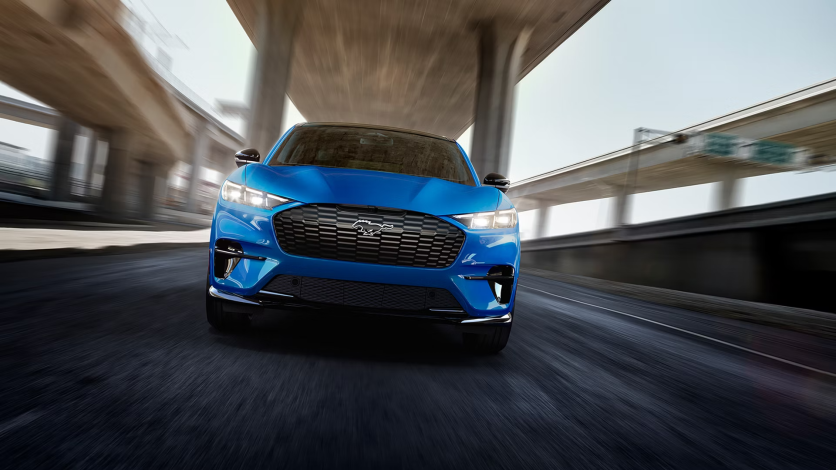
Ford Motor Company filed a safety recall with the National Highway Traffic Safety Administration on July 7, 2026, covering every all-wheel-drive Mustang Mach-E crossover from the 2021, 2022, and 2023 model years — 42,784 vehicles in total — over a rear differential pinion shaft susceptible to bending fatigue fracture. If you own one of these vehicles, do one thing right now before reading further: engage the electronic parking brake every time you park, every time, without exception. That single action eliminates the recall's most immediately dangerous failure scenario while you wait for a remedy that won't reach dealers until the fourth quarter of 2026.
Ford has confirmed a 100% defect rate across the entire recalled population — not a fraction of vehicles suspected to contain a flaw, but every single one. That figure, combined with the fact that the affected part was manufactured at BorgWarner's facility in San Luis Potosí, Mexico, from February 27, 2021, through August 21, 2025 — a run of more than four years — points to a systemic, persistent manufacturing process failure rather than an isolated production anomaly. The root cause, Ford acknowledged, is still officially under investigation.
Rollaway and Sudden Power Loss: What the Fracture Does
The defective component is the rear differential pinion shaft, part number LJ9P-7P500-A, housed inside the BorgWarner-supplied Primary Drive Unit assembly that drives the rear axle in AWD configurations of the Mach-E. The shaft is susceptible to bending fatigue failure — a metallurgical process in which repeated cyclic stress gradually degrades a metal component's structural integrity until it fractures. Unlike a sudden mechanical break, bending fatigue fracture is progressive and often invisible from the outside; a shaft can carry a growing crack for an extended period before catastrophic failure occurs without warning.
When the shaft fractures, two distinct safety hazards emerge. The first is a complete loss of propulsive power, which can strand a driver without warning, mid-route. The second is more serious: if the fracture has already occurred silently and the driver places the vehicle in Park without engaging the electronic parking brake, the failed drivetrain can allow the vehicle to roll freely. Ford noted that a Malfunction Indicator Light may illuminate, and technicians inspecting the vehicle may retrieve diagnostic trouble codes P174E, P0A2F, P019C, or P27B2 — but the absence of those warnings does not rule out a fracture that has already happened.
As of June 11, 2026, Ford had received 62 warranty claims, 14 reports through its internal Global Common Quality Indicator System, 4 customer contacts through the Global Contact Center, and 2 European White Alerts tied to the condition. Ford stated it was not aware of any accidents, injuries, or fires connected to the defect.
Read more: Ford Mustang Mach-E Recall: 48,000 Cars Affected by an Unknown Issue in its Batteries
Why EVs Make Shaft Core Hardness a Critical Specification
The EV drivetrain architecture that makes this defect particularly consequential is different from what most drivers experience in a gas-powered vehicle. In a dual-motor AWD Mach-E, the rear BorgWarner Primary Drive Unit combines an electric motor, a single-speed fixed-ratio gearbox, and the rear differential in one compact assembly. Unlike a traditional multi-speed transmission, the electric motor delivers its full torque output from zero RPM — and regenerative braking applies a reverse torque load on the same shaft during deceleration. The result is a more demanding cyclic bending load profile than a comparable internal combustion drivetrain would impose, which makes the core hardness specification of the pinion shaft — its resistance to bending fatigue — more critical, not less.
Core hardness in this context refers to the mechanical strength of the steel at the center of the shaft, as distinct from its hardened outer surface. Automotive pinion shafts are typically manufactured using a carburizing heat treatment process: the part is heated in a carbon-rich environment that diffuses carbon into the outer layer, creating a hard martensitic case, while the lower-carbon core remains tougher and more resistant to fracture. When the carburizing process is controlled correctly, the resulting shaft can handle the cyclic bending loads of its duty cycle for its designed service life. When core hardness falls short — through insufficient carburizing time, uneven furnace temperatures, inadequate quenching, or other process control failures — the shaft's internal resistance to bending fatigue is compromised from the moment it leaves the manufacturing line.
Ford's investigation identified "discrepancies in part core hardness measurements" while working with BorgWarner, pointing directly to a failure in the heat-treatment manufacturing process at BorgWarner's San Luis Potosí plant. The investigation team analyzed eight affected shafts in total — six recovered under warranty between March and May 2026, plus two previously analyzed by BorgWarner in 2025 — and every one showed evidence of bending fatigue failure.
How a European Teardown Triggered a U.S. Recall
The recall's origin traces to Europe. In March 2026, Ford's Product Development team reviewed teardown results from a failed rear differential recovered from a 2023 Mach-E in the European market. The finding prompted Ford's Critical Concern Review Group to open a formal investigation on March 17, 2026.
Over the following two months, Ford's materials laboratories analyzed six additional pinion shafts returned under warranty in the United States. All six showed the same bending fatigue failure pattern. Two shafts that BorgWarner had previously examined in 2025 — before Ford had formally opened its investigation — also showed the same failure mode. The consistency across the sample was unambiguous: every shaft examined had failed the same way, for the same reason.
The investigation established that the defect did not arise in a discrete production batch. The affected part entered production on February 27, 2021, and BorgWarner did not remove it from production until August 21, 2025 — a window spanning more than four years of output. During that time, affected shafts were installed in every AWD Mach-E rolling off the line. Because the vehicles were not assembled in sequential VIN order, the defect does not fall neatly within a VIN range, requiring owners to look up their specific vehicle to confirm whether it is included in the recall.
Ford's Field Review Committee reviewed the accumulated evidence on June 23, 2026, and approved a formal field action. Dealer advance notification followed on July 1, and the NHTSA filing came days later.
What Owners Can Do Now — and When the Fix Arrives
For the approximately 42,784 affected AWD Mach-E owners, the timeline divides into two phases: now, and late 2026.
Right now: Apply the electronic parking brake every time the vehicle is parked. This eliminates the rollaway risk even if the pinion shaft has already fractured silently. There is no interim recall remedy, no software patch, and no inspection procedure that can certify a specific vehicle as unaffected; the only currently available mitigation is the parking brake habit. Owners can also watch for the Malfunction Indicator Light and the four diagnostic codes noted above as warning signs.
How to confirm whether your vehicle is affected: Because affected VINs were not produced in order, Ford directs owners to check through one of three channels: calling Ford's toll-free recall line at 1-866-436-7332, visiting a Ford or Lincoln dealer (who can check through Ford's OASIS database), or searching the 17-character VIN — all Mach-E VINs begin with 3FM — at NHTSA.gov. Note that VINs are not expected to be searchable on NHTSA.gov until December 28, 2026, which is also when remedy notification letters are scheduled to begin mailing.
The remedy: Ford plans to have parts available in the fourth quarter of 2026. The permanent fix involves dealer inspection followed by repair or replacement of the rear differential assembly with a redesigned, more fatigue-resistant pinion shaft. All work will be performed at no charge. Interim notification letters alerting owners to the safety risk are scheduled to begin mailing on July 13, 2026, with completion expected by July 17 — but those letters will not yet include remedy appointment information. Owners should expect a second set of letters, beginning December 28, 2026, once parts are available.
Ford's internal reference number for this recall is 26S50; the NHTSA designation is Safety Recall No. 26V417.
Read more: NHTSA Investigates Ford's BlueCruise Self-Driving Tech After Mustang Mach E Fatal Accidents
Mach-E Recall Joins Ford's 2026 Quality Ledger
The differential action is one of two simultaneous Mustang-branded recalls Ford filed this week. The larger of the two covers 67,842 gas-powered Mustang and Mustang GTD coupes from the 2024–2026 model years over a wiper motor failure caused by a chip programming mismatch at the supplier level: a 16-kilobyte chip was programmed with a 32-kilobyte algorithm, causing loss of the motor's LIN communication with the steering column in sub-freezing temperatures. Combined, the two recalls pull 110,626 vehicles into Ford's service pipeline in a single week, from two different suppliers, for two different programming and manufacturing failures. Details on both recalls via How-To Geek
Ford has now issued more than 50 recalls in 2026 covering more than 11 million vehicles, a pace that leads the industry. The pace follows a record 2025 in which Ford issued 153 recalls covering 13 million cars and trucks. The automaker attributes the volume to a deliberate, expanded quality detection posture: it has doubled its safety engineering staff and now tests critical systems to failure, and it agreed to a November 2024 NHTSA settlement that required it to audit and expand its prior three years of recalls. At the same time, Ford topped the 2026 J.D. Power Initial Quality Study among mass-market brands with a score of 152 problems per 100 vehicles — its first number-one ranking since 2010 — and cut warranty costs by $500 million in 2025 compared to the prior year.
Whether those two data points represent progress or contradiction depends on which lens you apply. Karl Brauer, executive analyst at iSeeCars, characterized Ford's quality problem as a persistent, decade-long issue unaddressed under current leadership. An iSeeCars analysis covering April 2025 through March 2026 found that Ford vehicles carry the highest projected lifetime recall rates in the industry — with the Lincoln Aviator projected at 92 lifetime recalls against an industry median of 3.9. The J.D. Power study, which measures owner-reported problems in the first 90 days of ownership, and lifetime recall projections, which measure cumulative engineering defects across a vehicle's life, are measuring different things — and for this week's 42,784 Mach-E AWD owners, the gap between those two measures is precisely what they now live in.
Does Mach-E Qualify for a Lemon Law Claim?
That depends on your state, but the general threshold for state lemon law protection — typically three or more repair attempts for the same safety defect within a warranty period, or a vehicle out of service for 30 or more days — has not been reached here because the remedy itself is not yet available. Owners who have already had drivetrain issues linked to the P174E, P0A2F, P019C, or P27B2 codes documented at a dealer should retain those records. If a vehicle requires multiple repair attempts once the remedy is available, those records may support a lemon law or warranty claim. Contact a consumer protection attorney in your state for guidance specific to your situation.
Frequently Asked Questions
Is my Mach-E safe to drive right now?
Ford has not issued a do-not-drive warning, so the vehicle is not prohibited from road use. However, the risk of undetected shaft fracture is real, and the one mitigation currently available to owners is applying the electronic parking brake every time the vehicle is parked — without exception. If you experience a Malfunction Indicator Light, or if your dealer retrieves diagnostic codes P174E, P0A2F, P019C, or P27B2, contact Ford's recall line at 1-866-436-7332 and document the service visit. You can check the status of this recall at any time using the NHTSA recall search.
Why does a 100% defect rate matter — doesn't that just mean every car gets fixed?
A 100% defect rate is significant beyond logistics. It means the problem was not a statistical outlier in manufacturing — a fraction of parts that came out wrong in a batch. It means every single shaft produced over a 4.5-year window from BorgWarner's San Luis Potosí plant came out wrong, consistently. That points to a persistent process control failure in the carburizing heat-treatment operation, not a random defect. It raises questions about how long the discrepancy in core hardness went undetected both at BorgWarner's outgoing quality control and at Ford's incoming inspection — questions whose answers will likely depend on the root cause investigation still underway.
When will my Mach-E be fixed, and how much will it cost me?
The rear differential assembly repair or replacement is expected to become available at Ford and Lincoln dealers in the fourth quarter of 2026. Remedy notification letters are scheduled to begin mailing on December 28, 2026, with VINs searchable on NHTSA.gov beginning the same date. All recall repairs are performed at no cost to the owner or lessee.
Why don't I see my VIN in the NHTSA recall database yet?
Ford has confirmed that affected VINs will not be searchable on NHTSA.gov until December 28, 2026 — the same date remedy notification letters begin. This is because the vehicles were not assembled in sequential VIN order, and the database population is tied to the remedy notification schedule. If you believe your AWD Mach-E from the 2021, 2022, or 2023 model year may be affected and want confirmation sooner, call Ford's recall line at 1-866-436-7332 or visit a Ford or Lincoln dealer, where staff can check your VIN through the OASIS dealer database immediately. You can also check any time at the NHTSA VIN lookup.

-
 C114 Communication Network
 -
 Communication Home
