
 Search

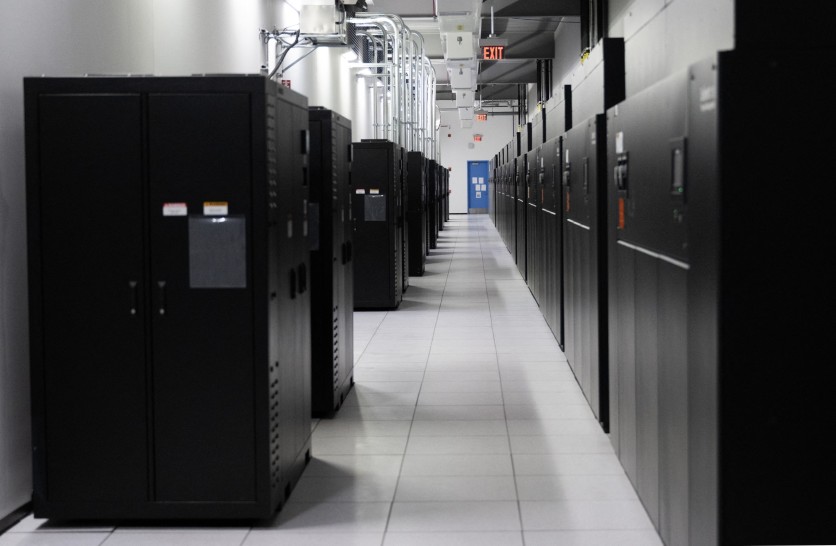
Power banks on the left, and active servers are seen at a Digital Realty data center in Ashburn, Virginia on November 12, 2025. ANDREW CABALLERO-REYNOLDS/AFP via Getty Images
Samsung SDI is supplying battery cells for AI data centers to Simplo Technology, a Taiwanese battery-pack maker, according to industry sources — a business expected to lift the South Korean company's small-format battery results as orders grow. Samsung SDI declined to confirm specific customers, and Simplo did not respond to questions about whether it does business with Samsung SDI.
The reported volume runs into the hundreds of billions of won and, according to The Elec, could surpass 1 trillion won a year as orders rise. Data-center batteries prize high power output, and Samsung SDI's cells use a nickel-cobalt-aluminum (NCA) chemistry to deliver high output and fast charging. As data-center demand has risen, the company's cylindrical-cell production has grown significantly, the sources said. Simplo assembles the cells into packs such as battery backup units (BBUs) and delivers them to North American technology companies; the end customers are reported to include Amazon and Meta, though the chain is described by sources rather than confirmed by the companies.
The Sourced Supply Chain
Simplo, a publicly listed Taiwanese firm, historically made packs for laptops, smartphones and tablets before expanding into electric vehicles, e-bikes and energy storage. It spun off Trend Power in 2014 to grow its data-center and storage businesses and has supplied BBUs to large cloud operators since 2019. According to one industry source, Trend Power takes Samsung SDI cells and processes them into modules and packs before they reach end customers such as U.S. technology firms, and Simplo favors Samsung SDI products — a preference the source traced to their laptop-battery dealings.
What Samsung SDI would say on the record was narrower. "As BBU sales increase due to expanded data-center investment, cylindrical battery production is rising, and utilization rates are high," a company official said, while declining to name customers. That much fits a broader pattern: Samsung SDI and Panasonic, the two firms vying for the lead in BBU cells, are both reported to be running short of supply as demand climbs.
Read more: Chinese Battery Makers Land Over 25 GWh of US and European Grid-Storage Orders
Why an AI Rack Needs This Exact Battery
The technology explains why Samsung SDI is in the conversation at all. An AI server runs many graphics processing units at once, drawing large amounts of power in short bursts and destabilizing voltage. Attaching a BBU to each server rack to offset those momentary shortfalls and steady the voltage has become standard among major cloud providers; the units also supply power instantly during an outage to prevent data loss. Because a BBU has to fit inside a confined rack alongside the servers, its cells must be compact yet capable of high instantaneous output.
That combination is what selects the chemistry. Samsung SDI's cylindrical BBU cells pair a high-nickel NCA cathode with a silicon-carbon composite anode for high capacity and fast charging — with nickel boosting energy density, cobalt adding stability, and aluminum reinforcing output. Lithium iron phosphate (LFP) cells of the same size offer lower energy density and, at 3.2 volts against NCA's 3.6 to 3.7 volts, weaker instantaneous output — which makes them generally unsuitable for BBUs. The same logic drives a product split: BBUs use cylindrical cells distributed rack by rack, while an uninterruptible power supply (UPS), which backs up a whole facility from a dedicated room, uses larger prismatic cells. Samsung SDI leads that high-output UPS-battery market, applying a lithium-manganese-oxide chemistry rated for up to 15 years and supplying cells to Schneider Electric for more than a decade.
A Policy Tailwind
Beyond the long relationship and the technology fit, the reporting points to a third factor: a U.S. move away from Chinese-made batteries. As the Defense Department updated its "1260H List" of Chinese military companies — which includes several Chinese battery makers — a prohibition on U.S. government agencies procuring directly from listed firms took effect on June 30. That legal bar applies to federal procurement rather than all commercial dealings, but it sits atop a broader commercial shift: technology firms sourcing data-center batteries from Korean, Chinese and Japanese suppliers are understood to be keeping Chinese cells out of their U.S. facilities and weighting stability and long-term maintenance over price. Samsung SDI makes BBU-suitable cylindrical cells at plants in Cheonan and Malaysia to serve that non-China demand.
None of this reflects on the quality of Chinese cells, which dominate global storage on cost and scale; it is a national-security-driven reordering of who supplies the U.S. market, and Korean makers are among its clearest beneficiaries.
Read more: ROCKET Battery Maker Sebang Commits $66M to US Energy Storage Amid FEOC Rules
The Broader Data-Center Battery Business
The Simplo cells are one piece of a data-center push that spans three product types. Beyond BBUs and UPS systems, Samsung SDI is expanding containerized energy-storage systems installed outside data centers — its flagship Samsung Battery Box packs cells with safety and cooling systems into a 20-foot container that connects straight to the grid. The order book there has grown: in December, Samsung SDI signed a contract worth more than 2 trillion won (about $1.3 billion) with a large U.S. energy company for the LFP-based SBB 2.0, followed in March by a 1.5 trillion won ($980 million) deal bundling three SBB models.
Together, these businesses are meant to steady Samsung SDI's earnings as electric-vehicle demand softens. The company is targeting a return to quarterly operating profit this year as utilization rises at both its Hungarian EV line and its cylindrical-cell lines. Analysts project second-quarter revenue of about 3.64 trillion won ($2.38 billion), up 2% from the prior quarter, with operating profit of about 21.2 billion won ($13.9 million) — a return to the black. Those are forecasts rather than reported results, and the quarter's actual numbers will be the test.
Frequently Asked Questions
What is a BBU in a data center?
A battery backup unit (BBU) is a battery attached to an individual server rack in a data center. AI servers run many GPUs simultaneously and draw large amounts of power in sudden bursts, which can destabilize voltage; the BBU offsets those momentary shortfalls to keep voltage steady, and if utility power fails, it supplies electricity instantly so data isn't lost before backup generators take over. Because it sits inside the rack, a BBU must be compact yet able to deliver high instantaneous output — requirements that shape which battery cells are suitable.
Why can't LFP batteries be used for BBUs?
Lithium iron phosphate (LFP) cells, while cheaper and widely used in stationary storage, have lower energy density and a lower cell voltage — about 3.2 volts, versus roughly 3.6 to 3.7 volts for the nickel-cobalt-aluminum (NCA) chemistry Samsung SDI uses. In a cell of the same size, that lower voltage means weaker instantaneous power output, which is the very thing a BBU needs to deliver in a confined rack. That is why NCA cylindrical cells are favored for BBUs and LFP is generally considered unsuitable for the job.
What is the 1260H List?
The "1260H List" is a U.S. Department of Defense roster of companies it identifies as "Chinese military companies" operating in the United States, published under a provision of the fiscal 2021 National Defense Authorization Act. The list was updated in June 2026, and as of June 30, U.S. government agencies are prohibited from procuring directly from listed entities — several Chinese battery makers among them. The list itself is an identification mechanism tied to federal procurement rather than a blanket ban on commercial transactions, but it reinforces a broader U.S. push to keep Chinese batteries out of sensitive infrastructure.
Who supplies batteries for AI data centers?
Several battery makers supply the AI data-center market, which spans rack-level BBUs, facility-wide UPS systems, and containerized energy storage. Samsung SDI is a significant player in high-output cylindrical BBU cells and leads the UPS-battery segment; Panasonic is its main rival in BBU cells, and both are reported to be supply-constrained as demand rises. As U.S. buyers steer around Chinese cells for domestic facilities, Korean and Japanese suppliers have been positioned to capture that demand, with Samsung SDI producing BBU-suitable cells in Cheonan, South Korea, and in Malaysia.

-
 C114 Communication Network
 -
 Communication Home
