
 Search

Samsung.com
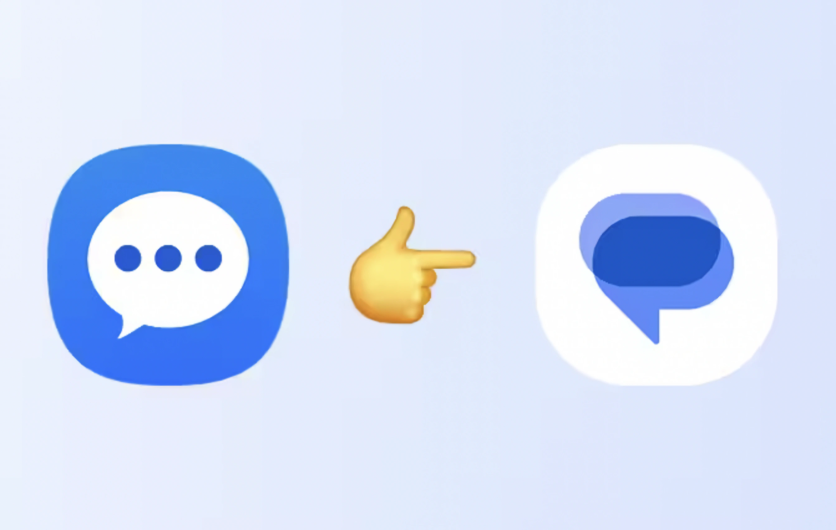
Samsung Messages stopped working today for millions of U.S. Galaxy users — and scammers started laying traps for the confused months before the cutoff arrived. As of July 6, 2026, the app can no longer send or receive SMS, MMS, or RCS messages on Galaxy phones running Android 12 or higher. The shutdown is the final act in a years-long retreat that ended with Google gaining operational control of the RCS messaging layer for virtually all U.S. Android users — a consolidation that matters well beyond which icon sits in a dock. For anyone who received a text message telling them Samsung Messages was ending and urging them to tap a link: do not tap it. Samsung does not send standalone text messages containing links asking users to switch apps. Make the switch manually, through Settings.
Read more: Samsung Messages to Shut Down by July In Favor of Google Messages App
What Stopped Working and Who It Affects
Not every Galaxy owner is equally affected.
Phones running Android 14 or newer moved to Google Messages automatically, with the home screen icon updating on its own. Android 12 and 13 devices require a manual default-app change through Settings. The process takes about two minutes: open Settings, navigate to Apps, tap the default SMS app setting, and select Google Messages. On Android 12 or 13 specifically, the Google Messages icon will not automatically shift into the home screen dock after switching — long-press the Samsung Messages icon in the dock, remove it, then find the Google Messages icon and drag it into the dock manually.
Galaxy users on Android 11 or older are not affected and can continue using Samsung Messages. The Galaxy S26 was already past this decision point before today: Samsung never pre-installed Samsung Messages on it and blocked download from the Galaxy Store entirely. Samsung Messages is now unavailable for download from the Galaxy Store on all affected devices.
There is one group for whom no clean transition exists: owners of Tizen-based Galaxy Watches released before the Galaxy Watch 4. Those watches cannot run Google Messages. After today, they still send and receive individual text messages, but they permanently lose the ability to display full conversation history — with no documented workaround. Galaxy Watch 4 and newer models, which run Wear OS, retain full conversation sync through Google Messages and are unaffected. See Samsung's Galaxy Watch Tizen OS support notice for details.
The "Call & Text on Other Devices" continuity service — which allowed Samsung Messages conversations to extend to tablets and PCs — is now disrupted for users who relied on it. Reconfiguring cross-device messaging through Google Messages is the path forward, following Google Messages multi-device pairing guide.
Your Message History Is Not Gone — Give It 24 Hours
Conversation history transfers automatically to Google Messages when users switch defaults. Samsung warns the migration can take up to 24 hours to complete depending on data volume. A blank or incomplete conversation list immediately after switching is normal — not a sign of data loss. Users with important threads should verify their key conversations appear in Google Messages before assuming anything was lost.
Folder organization and customization settings do not migrate cleanly. Samsung Messages supported chat folders and automatic deletion of old threads; Google Messages currently has neither. Users who relied on those organizational features will need to rebuild that structure manually. Google is rolling out a "Chat themes" feature that lets each conversation have its own color palette and custom wallpaper — see the Google Messages Chat themes rollout — but that is a visual upgrade, not a substitute for folder-based organization.
Unsolicited Samsung Texts Are a Scam: What to Delete and What to Do
Documented as early as April 2026, a smishing campaign — fraudulent SMS messages designed to exploit confusion about this transition — has been circulating among Galaxy users. At least one named consumer, Gilberto of Running Springs, California, reported receiving a text claiming Samsung Messages would end on July 6, 2026, and urging him to tap a link to complete the switch. The message was not from Samsung. Read CyberGuy's Samsung Messages scam warning for the full account.
Samsung does not send standalone text messages with links asking users to switch apps. Any text arriving in this format — regardless of how official it looks, regardless of whether it cites a real date — should be deleted without tapping any link it contains. The actual switch is made through your device's Settings, not through any link in a text message.
If an in-app notification appears inside the Samsung Messages app itself, that notification is legitimate — Samsung has deployed those through the app directly for some users. The distinction is between a notification inside the app (legitimate) and a standalone text message that arrived in your inbox containing a link (delete it).
Read more: Samsung: Google Messages Now Priority in US, Phases Out Samsung Messages
Why Samsung Messages Failed Where Google Didn't: the Carrier Infrastructure Problem
The shutdown was not a product decision in the usual sense. It was an infrastructure verdict.
Samsung Messages was built as a carrier-dependent application. Its RCS capabilities — read receipts, high-quality media, typing indicators — were only as reliable as whatever carrier happened to be running its RCS backend at any given moment. When a carrier's infrastructure degraded, the app quietly fell back to standard SMS and MMS with no warning to the user. Samsung had no architectural fix for that dependency. The structural problem is documented in detail in coverage of Samsung Messages carrier RCS dependency.
Google spotted this structural weakness a decade ago and solved it by acquiring Jibe Mobile in September 2015. Jibe had built a cloud RCS platform that let carriers offload their entire RCS backend to Google's infrastructure instead of maintaining proprietary servers themselves. Rather than requiring each carrier to operate its own RCS stack, Jibe made it possible to plug directly into Google's cloud and deploy reliable RCS immediately. See Google's 2015 Jibe Mobile acquisition. The GSMA then published the Universal Profile standard in November 2016 — developed in partnership with Google — which gave carriers a single interoperability specification and accelerated adoption.
Samsung was actually among the earliest adopters of RCS, commercially launching RCS-capable devices in Europe in 2012 and in the United States in 2015. Early adoption did not translate into a durable infrastructure advantage. As Samsung Messages continued to depend on carrier-by-carrier backend quality, Google Messages routed through Jibe's centralized cloud platform and delivered consistent RCS regardless of which carrier a user was on. The gap between the two apps was not primarily a feature gap — it was an infrastructure gap Samsung built into its own product from the start.
What Google Messages Delivers That Samsung Messages Never Could
For most Galaxy users, the switch is a genuine capability upgrade.
Google Messages brings high-quality photo and video sharing, typing indicators, read receipts, end-to-end encryption on Android-to-Android RCS chats using the Signal Protocol, and cross-device continuity across phone, tablet, and web. For cross-platform messaging with iPhone contacts, iOS 18 or later is required and RCS must be enabled on both sides.
The AI-powered features in Google Messages are the area of sharpest departure from Samsung Messages' final state. Gemini-powered scam detection automatically flags suspicious texts and can block malicious links; smart replies suggest context-appropriate responses; and Remix, an experimental image-generation tool, operates directly within conversations — capabilities Samsung Messages had not been updated to match.
The AI-powered scam detection is particularly relevant today, as the smishing campaign targeting this exact transition demonstrates that bad actors are already testing Galaxy users' instincts around trusted versus untrusted texts.
What Google Messages does not yet replicate: chat folders and automatic deletion of old threads. Those were genuine Samsung Messages differentiators and remain gaps in Google's app. Chat themes address visual customization but are not a functional substitute for organizational features. Users who relied on those capabilities face the most friction in this transition.
How Google Came to Control U.S. Android Messaging — and What That Means
Today's Samsung Messages shutdown is the final milestone in a consolidation that had already happened at the infrastructure level before most users noticed.
By the time Samsung made Google Messages the default on the Galaxy S22 in early 2022, the carrier migration to Jibe was already underway. AT&T moved its entire RCS operation to Google's Jibe servers in June 2023. T-Mobile followed in September 2023. Verizon completed its migration in early 2024. The full timeline of U.S. carriers' Jibe RCS migration shows how thoroughly the infrastructure consolidation preceded today's app-level shutdown. By the end of 2024, virtually all major U.S. carrier RCS traffic was routing through Google's infrastructure — meaning every Android user on one of those carriers was already depending on Google's cloud for their advanced messaging features, regardless of which app sat on their screen.
Samsung Messages dropping as the default in 2021, disappearing from pre-installation on the Z Fold 6 and Z Flip 6 in 2024, and ceasing service entirely today tracks as a product consequence of that infrastructure reality. Maintaining a proprietary messaging client when the underlying carrier infrastructure had already migrated to a competitor's cloud was a cost without a proportionate return.
The result is a mobile messaging landscape where Google functions as the de facto RCS operator for U.S. Android users — not just an app developer, but the cloud infrastructure provider beneath the messaging layer. For users, this means more reliable, consistent RCS across carriers. For the industry, it represents a significant concentration of control over the communications layer that was supposed to remain distributed among carriers and device makers. The full scope of this RCS consolidation under Google's infrastructure has drawn antitrust scrutiny from analysts who note the structural tension with RCS being an open standard.
Frequently Asked Questions
Why did Samsung discontinue its Messages app?
Samsung Messages was structurally dependent on individual mobile carriers to host and maintain the RCS server infrastructure that powers modern messaging features. When a carrier's backend was unreliable, the app silently dropped back to standard SMS with no warning. Google, which acquired Jibe Mobile in 2015, built a cloud-hosted RCS platform that carriers could plug into directly — eliminating the per-carrier reliability variance. As every major U.S. carrier migrated to Google's Jibe backend by 2024, Samsung was running a carrier-dependent client on top of infrastructure its competitor controlled. That made maintaining a parallel proprietary messaging app an expensive proposition without a clear technical advantage.
What should I do if I received a text message about Samsung Messages ending?
Do not tap any link in an unsolicited text message about this transition. A documented smishing campaign has been sending fraudulent texts about the Samsung Messages shutdown since at least April 2026, designed to redirect users to malicious sites. Samsung does not send standalone text messages containing links asking users to switch apps. Delete the message. To make the switch safely, open Settings on your Galaxy phone, navigate to Apps, find the default SMS app setting, and select Google Messages. If Google Messages is not installed, download it from the Google Play Store directly — not from any link in a text.
What happens to my existing conversations when I switch to Google Messages?
Samsung says all messages and conversations transfer automatically from Samsung Messages to Google Messages after you switch defaults. The transfer can take up to 24 hours to complete depending on the volume of data. A blank or incomplete message list immediately after switching is normal and does not indicate data loss. Folder organization and customization settings from Samsung Messages do not migrate — those will need to be manually rebuilt. Verify that your important conversations are visible in Google Messages before disabling or uninstalling Samsung Messages from your device.
Does this affect my Galaxy Watch?
It depends on which watch you own. Galaxy Watch 4 and newer models run Wear OS and fully support Google Messages, including complete conversation history sync. However, Tizen-based Galaxy Watches released before the Galaxy Watch 4 cannot run Google Messages. After today's cutoff, those watches, while retaining the ability to send and receive individual texts, permanently lose full conversation history display — with no documented workaround available.

-
 C114 Communication Network
 -
 Communication Home
