
 Search

lexus.eu
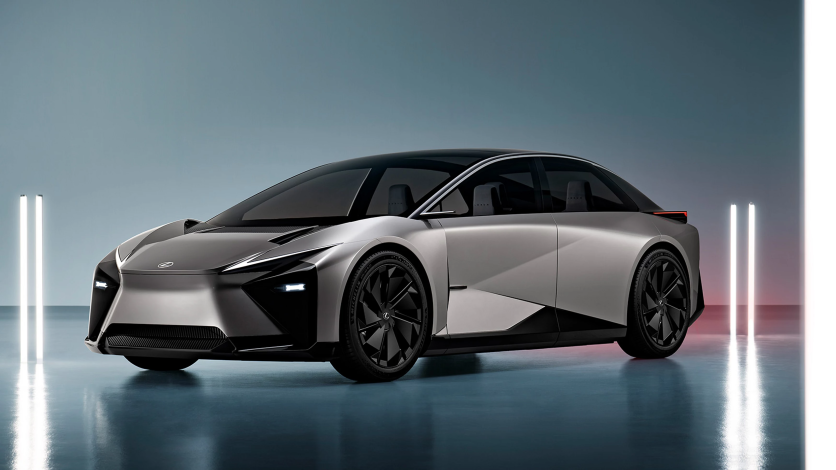
Toyota has ended development of the Lexus LF-ZC, the ambitious flagship electric sedan that had served since 2023 as the automaker's most explicit statement about its BEV future, but the cancellation carries a caveat that changes its significance entirely. Toyota Executive Vice President Hiroki Nakajima confirmed last month that all underlying technology developed for the vehicle — including a next-generation gigacasting manufacturing system, a new electrical and electronic platform for advanced driver-assistance systems, and next-generation high-performance prismatic battery cells — has reached production readiness. A successor program was approved on the same day the LF-ZC was cancelled.
For buyers who were waiting for the LF-ZC and for investors tracking Toyota's competitive position against BYD, the news is a program cancellation, not a technology retreat. The platform that was supposed to make the LF-ZC a milestone vehicle is intact, already partially deployed, and heading to a different vehicle — one that will almost certainly wear an SUV body rather than a sedan's.
The Car Is Dead. The Platform Is Not.
Nakajima told reporters that the technology developed during the LF-ZC program has already cleared production readiness. "Many new technologies cultivated during the development of the LF-ZC, such as Gigacast, a new electrical and electronic platform for advanced driver-assistance systems (ADAS), and miniaturization and weight reduction, have already been completed," he said, adding that a successor vehicle had been greenlit. Toyota has not disclosed a timeline, a nameplate, or a body style for the replacement.
The reasons for cancelling the LF-ZC itself are economic, not technical. At the stage where the program required committing to production molds and mass-production tooling — an investment that can run upwards of $1.5 million per mold — the cost-benefit calculation no longer held. Premium electric sedan demand has proven weaker than Toyota projected when the LF-ZC was conceived, and Lexus leadership has applied tighter capital discipline to the product lineup. Toyota chose to save the technology and abandon the specific vehicle, a distinction that matters for understanding what comes next.
How Gigacasting Works: And Why It Killed the LF-ZC
Gigacasting — also called megacasting or integrated die casting — is a manufacturing process that forces molten aluminum into enormous molds under high pressure to produce single-piece structural components that previously required 70 or more individually stamped and welded parts. The machines that do this weigh between 410 and 430 tonnes, generate clamping forces between 55,000 and 61,000 kilonewtons, and complete a casting cycle in roughly 80 to 90 seconds. Tesla pioneered the approach for automotive applications when it began using Idra Group's presses for the Model Y's rear underbody starting in late 2020, eliminating dozens of body shop robots in the process.
Toyota's planned implementation for the LF-ZC differed from Tesla's in one notable way: where Tesla casts the vehicle in a front-section and rear-section pair using a structural battery pack as the center, Toyota designed its gigacasting architecture in three sections — front, center, and rear — with the center section housing the battery pack in a structurally isolated enclosure. That isolation was deliberate: it allows the battery to be replaced or upgraded independently of the body structure, a design decision aimed at extending vehicle service life as cell chemistry improves.
The gigacasting commitment is also the reason the LF-ZC was cancelled rather than delayed again. Production molds for gigacasting are not adjustable the way stamping dies can be. Once ordered, they lock in the vehicle's architecture. Toyota reached the decision point for that commitment, determined the volume and pricing assumptions no longer justified the outlay, and chose to redirect the technology to a higher-volume successor — presumably an SUV, which sells in larger numbers and with better margins than a flagship sedan.
Read more: Lexus Introduces Next-Gen Battery EV Concept Car LF-ZC Set for 2026 Release
Arene OS: Toyota's Vehicle Software Is Already in Production
The framing that Arene OS "has begun to be adapted" for the RAV4 significantly understates what has already happened. Toyota's subsidiary Woven by Toyota announced in May 2025 that Arene — the software platform developed alongside the LF-ZC's Intelligent Cockpit — had been deployed in the 2026 RAV4. That made the RAV4 the first Toyota production vehicle to run Arene, and one of the world's best-selling SUVs the first mass-market host for the software architecture the LF-ZC was supposed to introduce.
Arene is not a traditional automotive operating system in the sense of a single piece of software controlling the vehicle. It is a development platform: a software development kit, a suite of virtualized testing tools, and a data infrastructure layer that allows Toyota and its suppliers to build vehicle software as modular components reusable across models and powertrain types. The architecture separates software from the hardware it runs on — a shift from the traditional automotive approach where each electronic control unit was tightly coupled to a specific hardware configuration and could not be updated independently. In the RAV4, Arene powers Toyota Safety Sense 4.0 and the multimedia cockpit system, using a domain architecture that runs safety-critical functions separately from infotainment. Future vehicles will use a fully centralized architecture where body electronics, steering, and braking software also run on the platform.
The significance for the LF-ZC's cancellation is this: whatever vehicle eventually carries the full next-generation Lexus platform, the software development work has not been wasted. Arene tools and software written for the LF-ZC's Intelligent Cockpit are already part of the same development ecosystem that is running in production RAV4s. That is not a footnote — it is arguably the most consequential claim Nakajima's announcement contains.
Next-Generation Prismatic Batteries: What the LF-ZC Was Building Toward
The LF-ZC was designed around high-performance prismatic battery cells that Toyota said would achieve roughly double the range of conventional lithium-ion battery packs. Understanding what that claim means requires knowing what makes prismatic cells different — and why doubling range is harder than it sounds.
A prismatic cell is a rectangular, rigid-cased battery cell whose electrode sheets are either stacked or rolled flat inside a metal or composite housing. The rectangular geometry allows cells to pack against each other with 90 to 95 percent space efficiency, meaning almost no volume inside the battery pack is wasted on gaps between cells — compared to cylindrical cells, which leave significant dead space because circles cannot tile without gaps. For a given pack volume, prismatic cells can store more energy. They also simplify thermal management routing in some configurations because the flat surfaces conduct heat more predictably than the curved faces of cylindrical cells.
Toyota's target of roughly double the range is not simply about putting more cells in a bigger pack. It involves a combination of higher energy density at the cell level — through improvements in the cell's electrode materials — and better system-level efficiency through reduced aerodynamic drag, weight reduction from gigacasting, and the tight aerodynamic integration of the flat battery profile into the vehicle's floor. The LF-ZC's claimed drag coefficient of 0.2 or lower (most contemporary sedans run around 0.28 to 0.30) was part of the same efficiency equation as the battery chemistry. These technologies are confirmed production-ready by Nakajima's statement. Whether they will reach a vehicle in time to matter in a market where BYD's newest models already offer competitive range is the open question.
Japan's Broader EV Recalibration
The LF-ZC cancellation belongs to a pattern. Honda cancelled three North American models — including two 0 Series EVs and the Acura RSX — in March 2026, taking a write-down the company said could reach 2.5 trillion yen. Subaru adjusted its 1.5 trillion yen EV investment, redirecting funds toward hybrids and internal combustion vehicles. Mazda's electric models are partly built on partner Changan's platform rather than a proprietary architecture. Toyota itself delayed plans to build a new EV battery plant in Japan twice in 2025.
Auto analyst Sam Abuelsamid, Telemetry vice president of market research and insights, described Toyota's position as improved relative to recent years. "A fair criticism used to be that Toyota talked about electrification broadly, but offered very little substance in the EV space. That's definitely harder to say now," he said in March 2026, noting that Toyota's approach of expanding hybrid profitability while developing EV platforms incrementally has left it in a stronger competitive position than rivals that committed to dedicated EV architectures earlier and at higher capital cost.
The counterargument is timing. Toyota's global BEV sales reached approximately 190,000 vehicles in 2025, a gain of more than 40 percent year-over-year but still representing roughly 1.8 percent of the company's total volume of 10.48 million vehicles. BYD, by contrast, sold more than 160,000 vehicles abroad in a single month in 2026 and is expanding into Japan's domestic market with new models. BYD's CEO has publicly stated ambitions to surpass Toyota in global volume within five years. Whether Toyota's platform-first, vehicle-second approach produces a flagship BEV that arrives fast enough to matter in the premium segment remains the central unanswered question about the company's long-term EV position.
What Comes Next for the Lexus EV Program?
Toyota has provided no timeline, nameplate, or specifications for the LF-ZC's successor, and the company's track record on next-generation BEV commitments suggests caution is warranted. The technology stack — gigacasting, ADAS electrical and electronic platform, Arene OS, prismatic cells — is confirmed production-ready. The vehicle that will deploy it in a BEV context is not.
In the near term, Lexus is growing its BEV lineup through a different strategy. The 2026 Lexus ES is the first Lexus sedan available in a fully electric configuration, though it uses the existing TNGA-K platform shared with multiple powertrain types rather than a purpose-designed EV architecture. The Lexus TZ, a three-row electric crossover announced for the 2027 model year, uses the same flexible platform. These vehicles are profitable from launch because they share tooling across powertrain variants — the economic logic that killed the LF-ZC's dedicated architecture.
When the successor to the LF-ZC arrives — if it arrives on a schedule faster than the analysts who suggested 2030 as a realistic date — it will carry three years of additional development history and, crucially, software maturity from Arene's deployment in the RAV4. Whether that makes the wait worthwhile or whether it simply hands the premium electric segment to competitors who showed up first is a question Toyota cannot answer today.
Frequently Asked Questions
Why was the Lexus LF-ZC cancelled?
Toyota cancelled the LF-ZC program following an internal review that weighed changing market conditions, the high cost of committing to production molds and mass-production tooling required for the vehicle's gigacasting architecture, and softer-than-projected demand for premium electric sedans. The decision was economic, not technical — Toyota separately confirmed that all the underlying technology developed for the vehicle has reached production readiness.
What is Toyota gigacasting, and how does it work?
Gigacasting is a high-pressure aluminum die casting process in which massive machines — weighing over 400 tonnes and applying more than 55,000 kilonewtons of clamping force — inject molten aluminum into molds to produce single-piece structural components in roughly 80 to 90 seconds. For the LF-ZC, Toyota planned a three-section gigacasting architecture: front body, a center section housing the structurally isolated battery pack, and rear body. This approach, pioneered in automotive production by Tesla starting in 2020, eliminates the need to weld dozens of separately stamped body components and substantially reduces body-shop manufacturing complexity.
Is Toyota's LF-ZC software platform already being used in production vehicles?
Yes. Arene OS, the software platform developed by Toyota subsidiary Woven by Toyota for the LF-ZC's Intelligent Cockpit, was deployed in the 2026 RAV4, announced in May 2025. The RAV4 became the first Toyota production vehicle to run Arene, using it to power Toyota Safety Sense 4.0 and the multimedia cockpit system. The LF-ZC's vehicle software investment is not dormant — it is actively running in production vehicles.
Will Lexus build another flagship electric sedan?
Toyota has confirmed a successor program exists and was approved on the same day the LF-ZC was cancelled. The company has not disclosed a timeline, body style, or nameplate. Reports indicate the successor will likely be an SUV rather than a sedan, reflecting the commercial logic that premium electric crossovers sell in higher volumes with better margins than flagship sedans. When, or whether, the successor reaches the market before 2030 remains unclear.

-
 C114 Communication Network
 -
 Communication Home
