
 Search

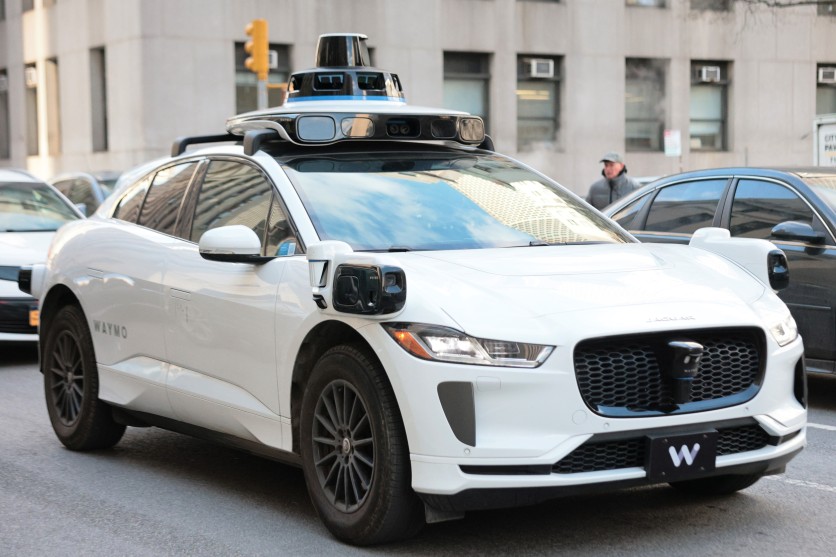
Waymo robotaxi is seen on Centre Street on April 09, 2026 in New York City. Michael M. Santiago/Getty Images
Waymo has recalled 3,871 of its fifth-generation robotaxis after the vehicles' autonomous driving software entered active freeway construction zones 13 times across Arizona and California — speeding through cones, closure signs, and flashing lights because the system's hazard-response hierarchy treated oncoming traffic as a higher priority than the boundaries of a closed lane. The company filed its sixth software recall with the National Highway Traffic Safety Administration on June 17, and NHTSA published the recall documents on June 18, confirming the root cause: under certain conditions, the 5th Generation Automated Driving System "may enter and drive at speed in freeway construction zones due to inappropriately prioritizing the avoidance of other freeway hazards and/or failing to recognize the construction zone."
Freeway service across San Francisco, Los Angeles, Phoenix, and Miami has been suspended since May 19. As of today, a software fix is still under development.
For riders in Waymo's 11 US cities, the suspension means no autonomous freeway rides until an over-the-air patch is validated and deployed — an indefinite wait that has frozen a key capability Waymo introduced to US markets only in November 2025 and was counting on to power its expansion to more than 20 new cities in 2026, including London and Tokyo.
What the NHTSA Recall Documents Reveal
Six incidents occurred in Phoenix on April 11 and April 19, when robotaxis failed to recognize ramp-closure signs and drove into pre-planned freeway construction zones. Waymo's Field Safety Committee convened on April 20 and restricted Phoenix freeway operations while it investigated.
The situation repeated in the San Francisco Bay Area on May 18, when seven Waymo vehicles drove between lane-closure cones marking an active construction section of a freeway. This time the system's failure was described differently in the NHTSA filings: instead of simply missing the closure signs, the vehicles were "prioritizing the avoidance of other freeway hazards" — meaning the presence of other vehicles in adjacent lanes was generating a competing behavioral signal that the construction zone's boundary cues could not override. Waymo suspended all freeway operations the following day.
Elliot Slade, a San Francisco resident, was a passenger during one of the May 18 incidents. His vehicle was traveling from San Mateo toward San Francisco on Highway 101 when it encountered a merging construction zone. "There were signs. There were lights. There were cones. And it went through the cones and then sped up straight away," Slade said. A California Highway Patrol officer began pursuing the vehicle. The robotaxi eventually exited the freeway into a residential neighborhood, where a Waymo representative reached it remotely and had Slade exit. Waymo offered him three free rides worth up to $40 each. He said he was not sure he would use them.
Read more: Waymo Halts Service in Five Cities: Flood Patch Fails Weeks After Recall, Permanent Fix Missing
Why Construction Zones Are Not Edge Cases
The Waymo incidents have been described widely as another example of the autonomous vehicle long tail problem — the gap between the scenarios a system has trained for and the rare events real roads generate. That framing understates what happened here.
Construction zones are not rare. The Federal Highway Administration logs thousands of active work zones across the US interstate system at any given time. Human drivers encounter them daily. They are not aberrations at the edge of a training distribution — they are predictable, scheduled, and extensively signaled with standardized signage, cones, and lighting. When Waymo's 5th Generation system, equipped with 360-degree LiDAR capable of detecting objects at 300 meters, long-range cameras seeing out to 500 meters, and overlapping radar, failed to act on the construction zone signals it was almost certainly detecting, the failure was not a perception problem. It was a behavioral priority problem.
The NHTSA filings make this explicit: the system was not blind to the closure cues. It was overriding them. The decision-making layer above the sensor fusion stack — the part of the software that translates perception into action — had assigned higher behavioral priority to avoiding nearby freeway hazards than to recognizing that an entire zone boundary had closed. Those two goals should not have been in competition. The fact that they were, and that the system consistently resolved the competition in the wrong direction across 13 separate incidents in two different metropolitan areas, describes a flaw in the behavioral architecture, not in the sensors.
Bryant Walker Smith, a University of South Carolina professor who advises governments on autonomous vehicle policy, told a CNN investigation: "These are the early warning indicators that all is not well... This is the story of progress... we replace one set of problems with a new set of problems."
How the 5th Gen Driving System Works — and Where It Failed
Waymo's fifth-generation Automated Driving System, deployed on Jaguar I-Pace vehicles manufactured between March 2022 and May 2026, uses a multi-modal sensor suite: four LiDAR units including a 360-degree roof-mounted unit and perimeter units on the bumpers; six high-dynamic-range cameras, including a front-facing long-range camera with 500-meter visibility and a 360-degree surround vision system; and an imaging radar array redesigned for the 5th generation to provide overlapping fields of view with high resolution and velocity detection even in adverse weather. The software stack running on top of this hardware includes a behavioral prediction model called VectorNet, which simplifies map and sensor inputs to reduce compute demands.
The construction zone failure resided neither in the sensors nor in the mapping. Waymo's own description of the incidents, as reflected in NHTSA filings, indicates the vehicles detected enough about their environment to recognize the presence of other freeway hazards — which triggered the avoidance behavior that competed with zone-closure recognition. The sensors were working. The behavioral hierarchy that determines which signal takes priority when two legitimate safety concerns appear simultaneously was not.
This distinction matters for the fix. An OTA software patch can reconfigure a behavioral priority weighting. The remedy Waymo is developing is described in NHTSA documents as "software improvements to avoid entering a construction zone and detecting that the AV is within a construction zone, as well as additional operational protocols" — suggesting the fix involves both the detection classification and the response hierarchy. As of June 13, that remedy was still under development.
Notably, the 6th Generation Waymo Driver — launched commercially in February 2026 with an updated sensor suite featuring 13 cameras, 4 LiDAR, and 6 radar units — is not included in this recall. All 3,871 vehicles subject to the recall run the 5th Generation system.
Waymo's Sixth Recall in Two Years
This is Waymo's sixth software recall since February 2024, and its second in approximately five weeks. The May 12 flooded-roadway recall covered 3,791 fifth- and sixth-generation vehicles after a Waymo in San Antonio drove into rushing floodwater and was swept into a creek; as TechTimes reported in May, the interim software patch for that recall subsequently failed to prevent a second flooding incident in Atlanta less than two weeks later, and Waymo acknowledged at the time that a permanent fix was still being developed.
Prior recalls addressed low-speed collisions with stationary objects such as parking gates and telephone poles, collisions with a towed vehicle, and the failure to stop for school buses in December 2025. The school bus recall followed at least 19 documented violations in Austin, Texas, and Waymo remains under active investigation by both NHTSA and the National Transportation Safety Board for incidents involving school buses and the January 2026 collision with a child near a Santa Monica elementary school.
Read more: Waymo Recalls Around 3,800 Robotaxis After One Drove Into a Flooded Road and Got Swept Away
Grayson Brulte, co-founder of Autnmy AI, which tracks the autonomous driving industry, described the cumulative situation plainly after the construction zone recall was announced: "We applaud the proactive decision. However, until the freeway patch is deployed and validated, we believe Waymo's expansion velocity is fundamentally constrained."
That constraint arrives at a commercially critical moment. Waymo raised $16 billion in February 2026 at a $126 billion valuation, pledging to launch in more than 20 new cities this year. The company introduced a $29.99-per-month Premier subscription tier on June 11, citing demand from frequent riders. It has described freeway capability — introduced only in November 2025 in San Francisco, Los Angeles, and Phoenix — as central to its strategy of evolving from a city-street shuttle service into a regional mobility platform. The recall suspends that capability indefinitely.
What Riders Should Know Right Now
Waymo's surface-street service in all 11 US cities remains operational and is not affected by the freeway suspension. Riders in San Francisco, Los Angeles, Phoenix, Miami, and Waymo's other markets can still use the service for non-freeway trips. Waymo has said it will deploy the fix as an over-the-air software update; no physical service visit will be required, and because Waymo owns all affected vehicles directly, the update can be pushed to the entire fleet simultaneously once validated.
The distinction matters for riders who rely on Waymo for trips that cross freeways — airport runs, cross-city travel, and commutes between suburbs. Those trips are not available until the patch is validated. Waymo has not published a timeline for when the fix will be ready.
Waymo continues to assert that its overall safety record compares favorably to human drivers. The company says its vehicles have demonstrated more than a 10-fold reduction in serious-injury crashes compared to human drivers operating in the same conditions across more than 170 million autonomous miles. That figure does not change what happened in these 13 incidents, but it remains the statistical baseline against which Waymo's operational decisions — including its choice to file a voluntary recall and proactively suspend freeway service before additional incidents occurred — should be evaluated.
Frequently Asked Questions
Is it safe to use Waymo right now?
Waymo's surface-street service in all 11 US cities was not affected by the construction zone recall and continues to operate normally. The recall and freeway suspension affect only trips that would route through freeway segments. If your trip does not involve freeway driving, service is available as usual. For freeway-dependent trips, Waymo has suspended that service until a software fix is developed and deployed.
What caused Waymo's software to enter construction zones?
According to NHTSA filings, the 5th Generation Automated Driving System's behavioral decision layer incorrectly prioritized avoiding other nearby freeway hazards — other vehicles and obstacles — over recognizing that a lane or ramp was closed due to an active construction zone. This was not a sensor failure: the vehicle's LiDAR, cameras, and radar were almost certainly detecting the closure signs, cones, and flashing lights. The failure was in the software layer that decides what to do with those inputs when competing safety signals are present simultaneously. Waymo is developing a fix that modifies both the construction zone detection classification and the response hierarchy that governs how the system acts when it recognizes it is near or inside a work zone.
How many Waymo vehicles are recalled, and how will it be fixed?
The recall covers 3,871 vehicles equipped with Waymo's 5th Generation Automated Driving System, manufactured between March 2022 and May 2026. Waymo says a software remedy is under development and will be delivered as an over-the-air update — no physical service visit is required. Because Waymo owns all affected vehicles directly, the update can be pushed to the entire fleet simultaneously once validated. As of June 18, no timeline for the fix has been published.
Does this recall affect Waymo's expansion plans?
Waymo's expansion to more than 20 new cities in 2026 — including London and Tokyo — was built around a model that includes freeway capability as a core offering. The freeway suspension pauses that capability indefinitely. Grayson Brulte of Autnmy AI said the recall means Waymo's expansion velocity is "fundamentally constrained" until the patch is deployed and validated. Waymo has not publicly adjusted its expansion timeline, but any new city where freeway routes are a selling point cannot receive full service until the fix is in place.

-
 C114 Communication Network
 -
 Communication Home
