
 Search

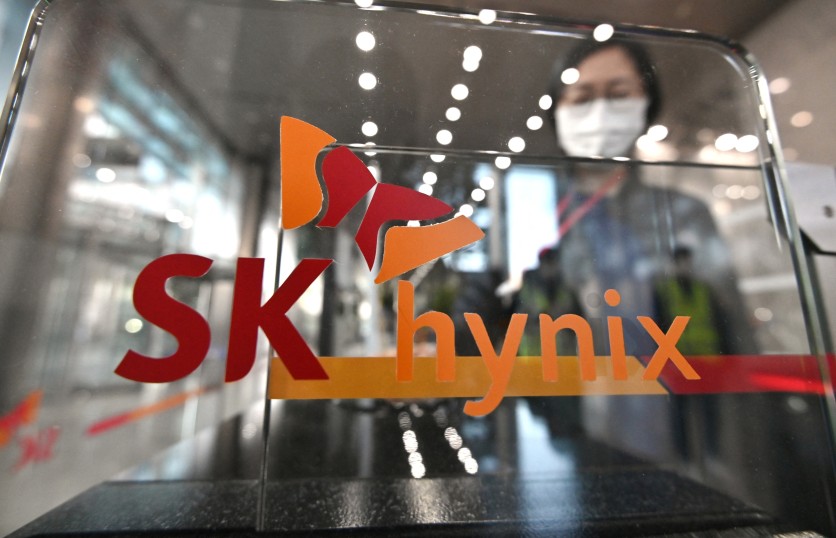
A woman walks past a logo of SK Hynix at the lobby of the company's Bundang office in Seongnam on January 29, 2021, after South Korea's SK Hynix saw fourth-quarter operating profits quadruple as strong mobile chip demand offset lower prices. Jung Yeon-je / AFP/AFP via Getty Images
SK hynix said on June 19 that it exhibited its full range of AI-server memory at HPE Discover Las Vegas 2026, Hewlett Packard Enterprise's annual conference, held June 15–18 at the Venetian, deepening its partnership with HPE and showcasing its breadth as what it calls a "full-stack AI memory" supplier.
The interesting part of the showcase is what it says about where the AI-memory race is heading. Most of this year's attention has fixed on high-bandwidth memory, but HBM alone cannot solve AI's memory problem, and SK hynix used the event to argue that the next phase is about the whole memory stack — and especially about new ways to share and pool memory across a system.
Four Zones, One Argument
The booth was organized into four zones — HBM, CXL memory modules, enterprise SSDs, and server DRAM. The HBM zone was built around a model recreating the internal structure of Nvidia's Vera Rubin platform, showing where HBM is integrated, with physical units displayed alongside: 16-layer 48GB HBM4, 12-layer 36GB HBM4, and 12-layer 36GB HBM3E, tracing the technology across generations.
Directly behind it, the company showed its CMM-DDR5 (CXL Memory Module) products side by side: a first-generation 128GB module based on CXL 2.0+, and a second-generation 256GB module on the newer CXL 3.2 standard — a capacity doubling in a single generation. A pooled-memory server from the partner Liqid, fitted with SK hynix's CMM-DDR5, was also on display.
Why Pooling Memory Matters
This is the genuinely forward-looking idea. In a conventional server, DRAM is bolted to a specific CPU; if that processor runs short, memory sitting idle next to a neighboring chip cannot help, so capacity gets stranded. CXL — Compute Express Link, which runs on the PCIe physical interface but uses its own protocol — lets memory attach to the system rather than one processor, so it can be added without redesigning the server. And because CXL memory isn't tied to a specific CPU or GPU, it can be pooled and allocated as needed through switch technology, using capacity far more efficiently. That becomes increasingly important as AI models strain conventional memory limits, which is exactly the bottleneck SK hynix is pitching CXL to relieve.
Read more: Roundhill Memory ETF Sets Price Record as Vera Rubin Confirms AI Memory Demand Is Structural
The Rest of the Stack
In the server-DRAM zone, SK hynix featured a 256GB 3DS RDIMM — which it bills as the industry's largest-capacity module, stacking multiple DRAM chips vertically via through-silicon vias — along with 128GB, 96GB, and 64GB DDR5 RDIMMs and a 192GB SOCAMM2, a compact, low-power module based on LPDDR and designed for AI servers. The enterprise-SSD zone displayed data-center drives in various form factors, including a PS1010 E3.S already used in HPE's systems; SK hynix said the drive, based on 176-layer 4D NAND, has completed HPE certification and is shipping, alongside a 64GB DDR5 RDIMM that the company says is the world's first to use its 10nm-class sixth-generation ("1c") process — the same generation it is putting into its latest HBM.
In a conference session, SK hynix presented next-generation memory architectures aimed at the capacity and bandwidth limits of today's systems. It proposed CXL pooled-memory systems and Processing Near Memory (PNM) designs — which place compute right next to the memory to cut the time and energy lost shuttling data back and forth — and introduced HMSDK (Heterogeneous Memory Software Development Kit), a tool for managing mixed memory types. These are proposals and roadmap concepts rather than shipping products, but together they sketch the company's bet that memory architecture, not just raw HBM speed, will define the next round of AI infrastructure.
The company said HPE Discover let it reaffirm ties with HPE and other key partners and broadcast its technology, and that it would keep expanding its role in AI infrastructure as a full-stack AI memory maker — meaning the complete lineup of memory used across AI computing systems. As with any vendor showcase, the breadth and "largest-capacity" claims are SK hynix's own, presented at its own booth rather than independently benchmarked.
Read more: Nvidia and SK Group Sign First Multi-Platform AI Alliance: Memory, Cloud, Fab Design Under One Deal
Frequently Asked Questions
What is CXL memory?
CXL (Compute Express Link) is a high-speed interconnect standard that runs on the PCIe physical interface but uses its own protocol to connect CPUs, GPUs, and memory in a server. Its key advantage is that memory connected over CXL is not tied to a single processor, so it can be added to a system without major redesign and, using CXL switches, pooled and allocated to whichever processor needs it — reducing the wasted "stranded" capacity common in conventional servers.
What is "full-stack AI memory"?
It is SK hynix's term for offering the complete range of memory used across AI computing systems — high-bandwidth memory (HBM) for accelerators, server DRAM, enterprise SSDs for storage, and CXL memory modules for expansion and pooling — rather than specializing in just one category. The pitch is that a single supplier can cover every memory need in an AI server, from the fastest tier next to the GPU to high-capacity expansion.
What is Processing Near Memory (PNM)?
Processing Near Memory is an architecture that places some computing capability right next to the memory, rather than sending all data back and forth to a distant processor. Because moving data between memory and compute consumes significant time and energy — often called the "memory wall" — doing simple operations near the memory can improve efficiency for data-heavy AI workloads. SK hynix presented PNM as a next-generation concept, not a shipping product.
What did SK hynix show at HPE Discover 2026?
SK hynix exhibited across four zones: HBM (including 16-layer 48GB HBM4 and HBM3E units around a Nvidia Vera Rubin model), CXL memory modules (a 128GB CXL 2.0+ module and a 256GB CXL 3.2 module, plus a Liqid pooled-memory server), server DRAM (a 256GB 3DS RDIMM it bills as the industry's largest, plus other RDIMMs and a 192GB SOCAMM2), and enterprise SSDs (including the HPE-certified PS1010 E3.S). It also presented CXL pooling, PNM, and HMSDK as next-generation concepts.

-
 C114 Communication Network
 -
 Communication Home
