
 Search

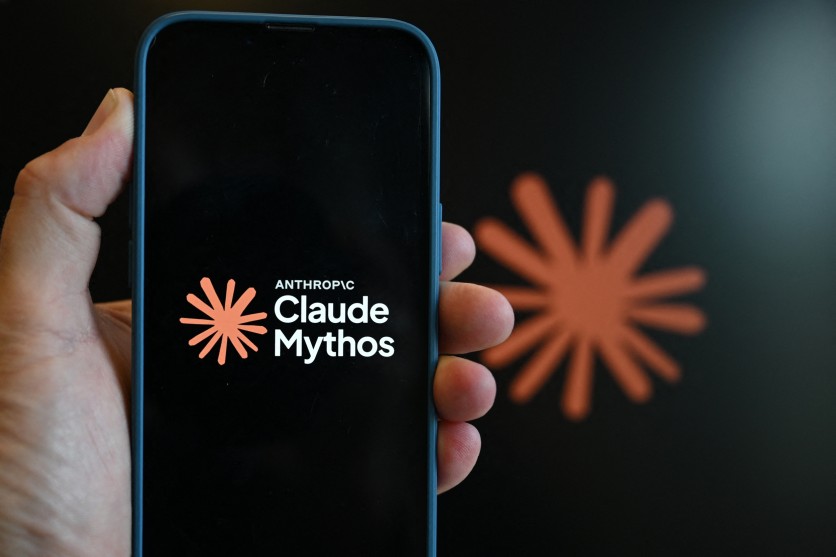
This photograph shows the logo of the AI assistant "Claude Mythos" built by the US artificial intelligence safety and research company Anthropic displayed on a smartphone's screen in Brussels on June 10, 2026. Nicolas TUCAT/AFP via Getty Images
Anthropic, the U.S. maker of the Claude AI models, held a briefing in Seoul on June 17 to mark the official opening of its Seoul office — about nine months after rival OpenAI launched its Korea operation. It is Anthropic's third office in the Asia-Pacific region, after Tokyo and Bengaluru.
Disclosure: Anthropic is the company that develops Claude, the AI model writing this article. The reporting below treats Anthropic's own figures and characterizations as company claims, and weighs the export-control dispute using independent sourcing.
Chris Ciauri, Anthropic's managing director of international, said Korea is a country with great ambitions for AI that fits the company naturally, citing shared philosophical ground with Korea's AI regulatory framework, the AI Framework Act. The opening lands at an awkward moment: it doubles, in practice, as a coordination channel between Anthropic's headquarters and Seoul over a U.S. export-control order that has cut off Korean access to the company's most capable models.
The Expansion and the Restriction Are the Same Story
On June 12, a U.S. export-control directive barred foreign nationals from accessing Anthropic's latest models, Mythos 5 and Fable 5, on national-security grounds — and because the models run on shared cloud services where a nationality rule is hard to enforce selectively, Anthropic disabled both for every customer worldwide to comply. The same restriction also touched the related Project Glasswing cybersecurity initiative. That is why an office meant to deepen Korean ties opened the same week Korean institutions lost access to the models at the center of the company's frontier work.
Ciauri largely declined to discuss the substance, saying only that he did not expect the controls to last, that they appeared likely to be resolved soon, and that access would return "quickly through Glasswing Wave 2," with details to follow on the company's blog. That optimism is worth weighing against what is publicly verifiable, which is little: Anthropic has disputed the government's stated concern — a reported method for bypassing the models' safeguards — but the Commerce Department's letter and the underlying technical demonstration have not been published, leaving outside experts unable to judge which side's account is closer to the truth.
Read more: Anthropic Fable 5 Shutdown: US Export Order Forces a Global Customer Cutoff
The China-Tie Allegation at the Center
The Washington Post reported the controls were tied to concerns about a Korean telecom firm's alleged links to China; subsequent reporting by WIRED identified the firm as SK Telecom — Korea's largest carrier, an Anthropic investor, and one of roughly 150 organizations that had been granted Mythos access through Project Glasswing before that access was reportedly revoked at the U.S. government's request. SK Telecom has denied having ties to China. None of the underlying evidence has been made public, so the allegation remains contested rather than established, and Anthropic itself did not engage it at the briefing.
The Adoption Case Anthropic Made Instead
In place of detail on the controls, the company leaned on its commercial momentum. By Anthropic's account, its revenue grew from about $9 billion at the end of 2025 to roughly $47 billion recently, and it claims a 40% enterprise market share; it suggested Korean growth would track that trajectory but did not break out Korea-specific targets. It described Korea as among its most active markets globally, saying Koreans use Claude at more than 3.5 times the rate expected for the population — a figure drawn from the company's own Economic Index. Those numbers are Anthropic's own and were not independently audited.
Choi Ki-young, Anthropic's first Korea representative director and a former head of Snowflake Korea, said the company is reviewing options such as local infrastructure and data residency to meet Korea's regulatory environment. Asked about the partnerships OpenAI has already struck with major Korean IT-services conglomerates, he said Anthropic has no intention of giving exclusive advantages to specific systems-integration firms, and that the best partner would be decided together with each customer. Beyond building teams across technical support, sales, policy, and operations, the company offered little concrete Korea-specific strategy.
The Deployment Roster
The company did point to a roster of Korean deployments. Naver has rolled out the AI coding agent Claude Code across its entire engineering organization — described as one of the largest enterprise adoptions in Asia — while LG CNS is providing Claude to thousands of employees and plans to expand it across LG Group, and Samsung SDS is introducing Claude Cowork and Claude Code for Samsung Electronics staff. Game developer Nexon uses Claude Code in live-service game development, and Hanwha Solutions provides Claude to global employees via AWS Bedrock with in-region data controls. Anthropic also signed a memorandum of understanding with Korea's Ministry of Science and ICT on AI safety, and said it will provide Claude to up to 60 researchers in the National AI Research Lab consortium spanning KAIST, Korea University, Yonsei, and POSTECH.
Read more: SK Telecom Three-Year Anthropic Bet Pays Off in Tenfold Gains and a Glasswing Seat
The result is a launch pulling in two directions at once: a confident, long-term bet on one of Anthropic's most enthusiastic markets, opened in the same week a national-security restriction it disputes but cannot yet lift has cut that market off from its flagship models. Which of those two becomes the story of Anthropic in Korea depends largely on whether the controls resolve as quickly as the company predicts.
Frequently Asked Questions
Why did the US restrict access to Anthropic's AI models?
On June 12, 2026, a U.S. export-control directive barred foreign nationals from accessing Anthropic's most advanced models, Mythos 5 and Fable 5, citing national security. Anthropic disabled both models for all customers worldwide because the restriction was difficult to enforce selectively on shared cloud services. The Washington Post reported the order was tied to concerns about a Korean telecom's alleged China links; WIRED identified the firm as SK Telecom, which has denied any such ties. The government has not published its evidence, so the specifics remain disputed.
What is Project Glasswing?
Project Glasswing is Anthropic's controlled-access cybersecurity program that gives vetted organizations restricted access to its most capable security-focused models for defensive vulnerability work. It expanded in early June 2026 to roughly 150 organizations across more than 15 countries. The recent U.S. export controls affected access for some participants; Anthropic says access for Korean partners would be restored through a "Glasswing Wave 2."
What Korean companies use Claude?
Anthropic listed several deployments: Naver (Claude Code across its full engineering organization), LG CNS (Claude for thousands of employees, expanding across LG Group), Samsung SDS (Claude Cowork and Claude Code for Samsung Electronics staff), Nexon (Claude Code for live-service games), and Hanwha Solutions (Claude via AWS Bedrock). It also signed an MOU with Korea's science ministry and will provide Claude to up to 60 researchers in a university consortium.
How does Anthropic's Korea entry compare with OpenAI's?
Anthropic opened its Seoul office roughly nine months after OpenAI launched its Korea operation, making it a later entrant in a market both see as strategically important. Anthropic's Korea director said the company would not give exclusive advantages to particular systems-integration partners, an implicit contrast with the conglomerate partnerships OpenAI has pursued. Both companies are also competing in government cybersecurity, where each has launched controlled-access programs for vetted defenders.

-
 C114 Communication Network
 -
 Communication Home
