
 Search

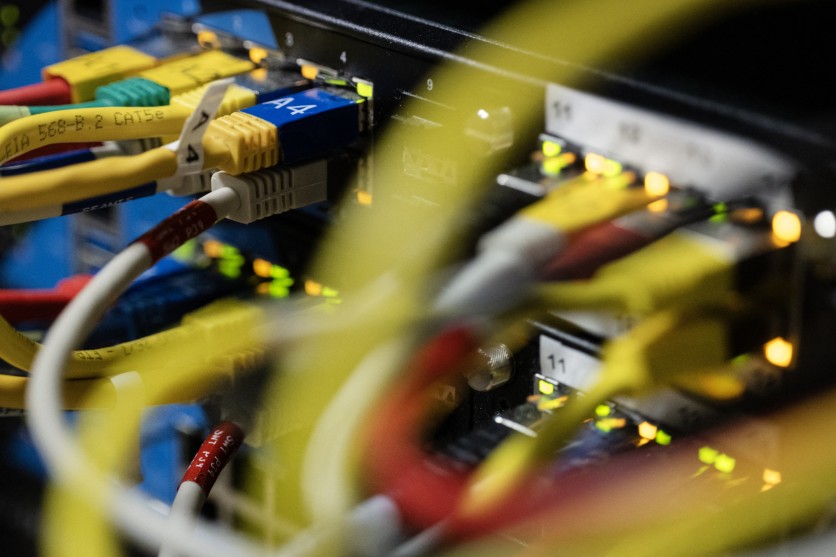
This photograph shows cables in the data centre of the Cross-A (Regional operational monitoring and rescue center- A for Atlantic) in Etel, western France on June 3, 2026. Fred TANNEAU/AFP via Getty Images
LS Electric has landed another contract to supply power-distribution equipment for AI data centers being built by major North American technology companies.
The South Korean firm said on June 17 that it signed a 106.4 billion won deal, about $70 million, to provide a 38-kilovolt-class high-voltage power-distribution system for a North American AI data center project. The order is a follow-on from an existing big-tech customer, with equipment to be delivered from August through November. As is standard in these deals, LS Electric did not name the client, citing nondisclosure terms; industry watchers have generally speculated that its data center customers sit among the largest U.S. hyperscalers, though neither LS Electric nor the customers confirm it.
The Velocity Is the Story
A single $70 million order is not, by itself, remarkable. What stands out is the pace. LS Electric's cumulative orders from North American big-tech data center projects have now neared 1.2 trillion won, roughly $800 million — surpassing, in just half a year, the 800 billion won it booked from North American data centers in all of last year. The momentum builds on a string of 2026 wins, including a $115 million switchgear-and-transformer contract in April and a $220 million power-distribution deal, via Bloom Energy, for a hyperscale facility in New Mexico later that month.
The detail that matters most is that this latest deal is a follow-on — an existing customer placing more. In power-distribution equipment, where quality, on-time delivery, and after-sales support all have to be proven before an order is placed, repeat business is the clearest signal a supplier has cleared those bars. That is what turns a vendor into an infrastructure partner.
Why AI Data Centers Are Short of Power Gear
The reason these orders keep coming is a bottleneck most people never see. AI data centers consume electricity on a scale that strains the grid — global data center power use is projected to more than double from about 415 terawatt-hours in 2024 toward roughly 945 terawatt-hours by 2030 — and that power cannot just be plugged in. It arrives at very high transmission voltages and has to be stepped down and routed safely to thousands of server racks, the job of distribution equipment: transformers, switchgear, and the circuit breakers that instantly isolate a fault before it cascades into a fire or destroys expensive accelerators. A "38-kilovolt-class" system sits near the front of that chain inside the facility, taking in high-voltage feed and parceling it out.
Because that gear is custom-built, quality-critical, and now in global short supply, whoever can deliver it reliably and on schedule wins the next order — which is precisely the position LS Electric is trying to hold.
Building in America to Win in America
The company is leaning on its U.S. manufacturing footprint — LS Electric Utah, formerly MCM Engineering II, and its Bastrop campus in Texas — to shore up supply-chain stability and shorten delivery times. Producing strategic power equipment locally also helps blunt the tariff pressure that has fallen on imported electrical gear, a motivation LS Electric cited when it opened the Bastrop site.
LS Electric, which holds about a 60% share of South Korea's commercial data center power market and partnered with Naver Cloud last year to add AI to its power systems, is also expanding into direct-current distribution aimed at next-generation, more energy-efficient data centers. An LS Electric official said the company keeps winning follow-on orders on the trust built with big-tech customers, and that its technology and supply capacity are being recognized.
The demand backdrop is unlikely to fade soon: the largest hyperscalers are racing to lock up power and infrastructure years ahead of need, which keeps the orders for the unglamorous equipment that actually energizes a data center flowing to the suppliers that can keep up.
Frequently Asked Questions
Why do AI data centers need so much power equipment?
AI servers draw far more electricity than conventional computing, and a single large data center can consume as much power as a small city. That electricity arrives from the grid at very high voltages and must be stepped down and distributed safely to thousands of racks, which requires transformers, switchgear, and circuit breakers. As AI buildouts accelerate, demand for this equipment has outstripped supply, creating a global shortage.
What is a power-distribution system in a data center?
It is the chain of equipment that takes high-voltage electricity coming into a facility and delivers it, at usable voltages, to the servers and cooling systems. It includes transformers that change voltage levels, switchgear that routes power, and protective devices such as circuit breakers that cut off a circuit during a fault to prevent damage or fire. LS Electric's latest contract covers a 38-kilovolt-class high-voltage system.
Who is LS Electric's data center customer?
LS Electric has not disclosed the customer, citing a nondisclosure agreement, and described it only as an existing big-tech client placing a follow-on order. Industry observers have speculated that its data center customers are among the largest U.S. hyperscalers, but neither LS Electric nor the companies have confirmed any specific name.
How fast is LS Electric's data center business growing?
According to the company, its cumulative orders from North American big-tech data center projects have neared 1.2 trillion won (about $800 million), exceeding its full-year 2025 North American data center bookings of roughly 800 billion won in just the first half of 2026. Recent wins include April contracts worth $115 million and $220 million, the latter via Bloom Energy for a New Mexico facility.

-
 C114 Communication Network
 -
 Communication Home
