
 Search


roku.com
Roku is shutting down its smart home accessories business — and if you own one of its cameras, video doorbells, or home monitoring systems, the company still hasn't answered the most important question: how much longer will any of it work?
The streaming platform confirmed the exit to Lowpass newsletter this week, days after Fox Corporation completed its $22 billion acquisition of Roku on November 6. A spokesperson put it plainly: Roku is exiting smart home to sharpen "our focus on Roku's core mission: Being the top streaming platform." What that framing leaves out is that the wind-down had been underway for months before Fox's ink dried — and that the customers who bought into Roku's four-year smart home experiment are now holding hardware with no announced end-of-support date, no migration path to any other platform, and an active class action lawsuit already in the courts.
What Fox Actually Bought — And What It Didn't
Fox closed its acquisition of Roku on November 6, 2026, folding the streaming company into a newly formed Fox Digital Platforms division alongside Tubi, Fox One, and Red Seat Ventures. Roku founder and CEO Anthony Wood joined the Fox board of directors as co-chair of the new division; Paul Cheesbrough serves as co-chair and CEO. Fox CEO Lachlan Murdoch called the closing "a defining moment," and said the company expects to realize roughly $400 million in cost savings within two years.
What Fox paid $22 billion for was not doorbells. It was Roku's connected TV operating system — the software embedded in more than 100 million active households worldwide, commanding nearly 40 percent of U.S. streaming platform usage, according to Horowitz Research. Fox sold the bulk of its entertainment assets to Disney for roughly $71 billion in 2019, leaving it with live sports, news, Tubi, and an ambition to own the streaming layer it had no platform to deliver at scale. Roku's ad-tech stack — its OneView DSP, home-screen real estate, and direct advertiser relationships — solved that problem. With advertising and platform subscriptions contributing roughly $1.3 billion of Roku's $1.5 billion in Q3 revenue, the smart home segment was at best a rounding error and at worst a liability.
Jettisoning it makes clean strategic sense. For the customers left holding the hardware, the math looks different.
A Four-Year Bet That Never Paid Off — and the Security History Customers Weren't Told About
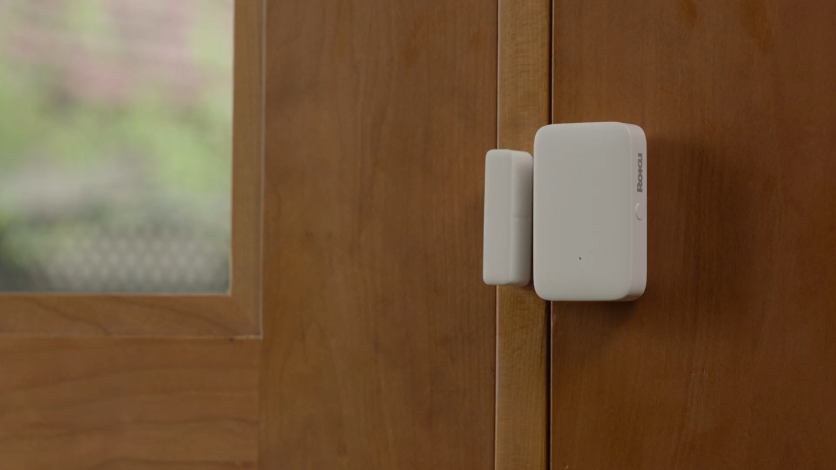
Roku launched its smart home lineup in October 2022, entering a crowded market against Amazon, Google, and Samsung with a range of products manufactured under a white-label arrangement with Wyze Labs, a Seattle-based smart home company founded by former Amazon employees. The initial lineup — sold exclusively at Walmart — included floodlight cameras, indoor and outdoor security cameras, a 360-degree indoor camera, a video doorbell and chime, smart bulbs, light strips, and both indoor and outdoor smart plugs. In 2023, Roku expanded the line with a home monitoring system featuring a keypad, siren, and door and window sensors.
What Roku did not prominently disclose at launch — and what matters a great deal now that the company is exiting — is the security track record of the manufacturer behind its smart home products.
Wyze Labs had already compiled a notable history of security problems by the time Roku began selling its white-labeled hardware. In 2019, cybersecurity researchers at Bitdefender discovered three significant vulnerabilities in Wyze's security cameras. Wyze was notified and sat on the findings for three years without public disclosure — a decision Bitdefender ultimately forced into the open in 2022. Wirecutter, the New York Times' product review site, dropped all Wyze camera recommendations in September 2023, citing the company's "failure to develop the sorts of robust procedures that adequately protect its customers." Just five months later, in February 2024, a caching error during a Wyze service outage allowed approximately 13,000 customers to briefly see video feeds from strangers' cameras — a breach reported by CNN.
Roku's own support documentation confirms that Roku Smart Home cameras "were developed in partnership with Wyze Labs." Roku sold these products under its own brand throughout Wyze's most prominent breach period.
The Class Action Already In Progress
The Wyze security history is context. The class action is current.
A lawsuit filed in California federal court in March 2026 alleges that Roku quietly removed a core feature from its Smart Home Cameras in July 2025 — the Motion Snapshots capability, which allowed cameras to send users still images of detected motion or sound without a paid subscription. Roku had marketed this feature as a free, included function at launch. The company removed it without warning, without an email to affected customers, and without a public announcement, according to the complaint. Customers discovered the change when their cameras simply stopped delivering the feature they had paid for.
The class action covers anyone worldwide who purchased Roku Smart Home cameras before July 16, 2025, and still owned one on or after that date. Roku has not disclosed how many customers fall into that category, nor how much revenue the smart home segment generated — information that would help those customers assess the scope of their exposure.
The Ecosystem Problem No One Is Talking About
Here is the detail that transforms this from a business story into a consumer one: Roku's smart home system was designed as a closed, proprietary ecosystem from day one.
Roku's own support documentation — updated as recently as February 2026 — states explicitly that Roku Smart Home devices "work exclusively with other Roku products and not with products sold by any other company including Wyze Labs." The Roku Smart Home app "was designed to work exclusively with Roku Smart Home devices." There is no compatibility with Amazon Alexa's device ecosystem, with Google Home, with Apple HomeKit, or with any third-party hub.
That design decision, which Roku defended as a feature when the products launched, is now a liability. It means there is no migration path. Roku Smart Home customers cannot take their cameras, sensors, or doorbells and connect them to Ring, Nest, SimpliSafe, or any competing service. When Roku terminates cloud services — a question the company has not answered, including whether it will give customers advance notice — every device in the lineup becomes inoperable hardware.
This is not a hypothetical. Belkin made the same call with its Wemo smart home line in January 2026, shutting down the Wemo app and ending support for most devices with a few months' notice. Wyze has made similar feature changes with minimal warning. The pattern in budget smart home hardware is consistent: when the business model stops working, the cloud infrastructure follows, and the hardware becomes e-waste.
What Happens Now — The Questions Roku Hasn't Answered
As of publication, Roku says it will continue to support and service smart home products already in consumers' hands. That statement leaves the following questions unanswered:
Cloud services and video recording: Roku's camera subscription service ($3.99 per camera per month, or $9.99/month for all cameras) provides video clip retention and cloud storage. How long will this service remain active? Roku has not said.
Professional monitoring: Roku offered live U.S.-based professional monitoring as an add-on to its home monitoring system. For customers paying for emergency response capability, how long does that service continue? Roku has not said.
Software updates: Security vulnerabilities require ongoing software patches. Roku has not stated how long it will issue firmware updates for existing devices.
Migration or buyback: Roku has offered no compensation, trade-in program, or migration assistance to customers whose hardware will eventually become non-functional.
Only two products remain listed on Roku's website as of this writing — an indoor surveillance camera and a video doorbell — both offered at steep discounts consistent with clearance pricing rather than active inventory management. Consumers who purchase these units at discount pricing today are acquiring hardware with the same unanswered support questions.
What Customers Should Do Now
If you own Roku Smart Home products, here is what the available information suggests:
Do not buy remaining clearance units. Steep discounts on the last two products on Roku's site reflect a business in exit mode, not a sale.
Document your subscription and feature expectations. If you paid for a subscription expecting specific features that were later removed, preserve records. The existing class action may expand; consumer protection agencies in your state may be a resource.
Contact Roku directly about your monitoring service. If you subscribed to Roku's professional monitoring service, ask Roku in writing when that service will be discontinued and whether refunds are available. Get the response in writing.
Begin evaluating alternatives. Ring (Amazon), Nest (Google), and SimpliSafe all operate competing ecosystem hardware. None of your existing Roku devices will work on these platforms, but transitioning sooner — while your Roku hardware still functions — gives you time to make a considered choice rather than an emergency one.
Check the class action. The Roku class action filing covers anyone who purchased a Roku Smart Home camera before July 16, 2025 — if that describes you, you may be a potential class member.
The Larger Picture
Roku's smart home retreat is a clean strategic move for Fox and a cautionary tale about closed hardware ecosystems for consumers.
Fox paid $22 billion for a connected TV operating system, an advertising platform, and 100 million households. It got the smart home line as an appendage it never wanted and shed it within days of closing. That sequence reflects the fundamental logic of the acquisition clearly: Roku's value is in software and advertising, not in doorbells and light strips.
For the consumers who spent three or four years building a Roku-centered smart home — who bought cameras, wired in doorbells, subscribed to monitoring plans — the strategic logic of a media acquisition is not the operative concern. The operative concern is whether the hardware they trusted to secure their homes will keep working, whether the professional monitoring service they paid for will stay on, and whether Roku will give them enough notice to make alternative arrangements before the lights go out.
As of November 11, 2026, Roku has confirmed the exit. It has not confirmed anything else.
Frequently Asked Questions
Is Roku smart home discontinued?
Yes. Roku has confirmed it is exiting the smart home accessories business. The company stopped selling most products months before the Fox acquisition closed on November 6, 2026, and has since confirmed the full exit. Only two products — an indoor camera and a video doorbell — remain on Roku's site as of this writing, offered at clearance pricing. No new smart home products are expected.
Will Roku still support my smart home cameras and doorbell?
Roku has stated it will continue to support and service smart home products already in customers' hands, but has not specified for how long. The company has not announced an end date for cloud services, video clip storage subscriptions, professional monitoring, or firmware updates. Owners of Roku Smart Home products should monitor official Roku communications for any support end date announcement.
Can I migrate Roku smart home to Ring, Nest, or another platform?
No. Roku Smart Home devices were built as a closed, proprietary ecosystem and work exclusively with the Roku Smart Home app and other Roku products. They are not compatible with Amazon Alexa, Google Home, Apple HomeKit, Ring, Nest, SimpliSafe, or any third-party smart home platform. When Roku terminates cloud services, existing hardware will become inoperable with no migration option available.
What is the Roku smart home class action about?
A class action lawsuit filed in California federal court in March 2026, Moses v. Roku Inc. (Case No. 3:26-cv-01422), alleges that Roku removed the Motion Snapshots feature from its Smart Home Cameras in July 2025 without warning or compensation. Motion Snapshots allowed cameras to send still images of detected motion without a paid subscription — a feature Roku had marketed as free and included at the time of purchase. The class covers anyone who purchased a Roku Smart Home camera before July 16, 2025, and still owned one on or after that date. The lawsuit is pending; no verdict or settlement has been reached.
What happens to my Roku smart home subscription and monitoring service?
Roku has not announced when it will end its camera subscription service ($3.99 per camera per month or $9.99 per month for all cameras) or its professional monitoring add-on. As of publication, both services appear to remain active. Customers with active subscriptions should contact Roku directly in writing to ask for a specific end date and to inquire about refund eligibility if services are terminated before their subscription period ends.

-
 C114 Communication Network
-
 Communication Home
