
 Search


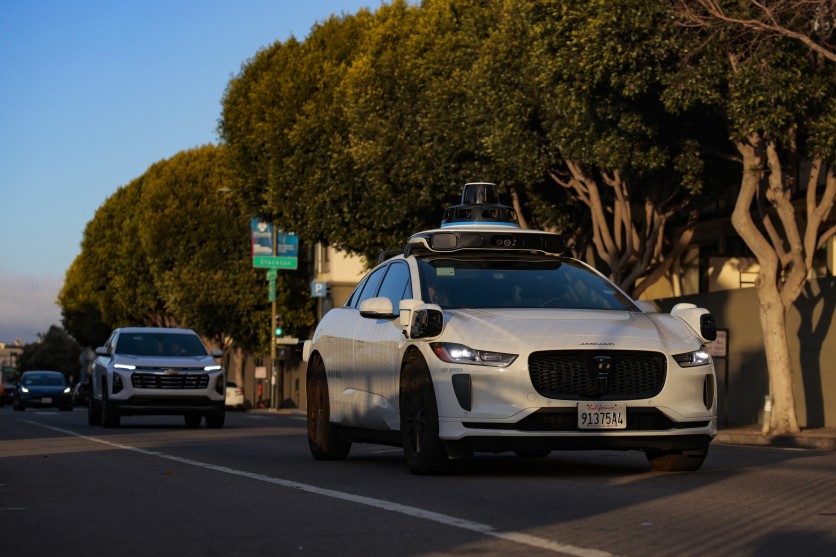
Heather Diehl/Getty Images
Federal safety regulators are now openly questioning whether Waymo's software remedy ever fixed the problem — and the answer could trigger the largest mandatory recall in the history of autonomous vehicles in the United States.
The U.S. National Highway Traffic Safety Administration opened a formal recall query Monday into 2,895 Waymo robotaxis, targeting a software defect that allowed the company's driverless vehicles to pass stopped school buses displaying flashing red lights and extended stop arms — the same defect Waymo declared it had corrected nearly a year ago.
What sets this probe apart from a standard regulatory review is the timing. According to federal records, the majority of school bus violations NHTSA examined occurred after November 17, 2025 — the date Waymo certified that its over-the-air software update had been pushed to every affected vehicle in its fleet.
How a Single Video Set Off a Year-Long Federal Review
The chain of events began in September 2025, when Atlanta television station WXIA broadcast footage of a Waymo robotaxi steering around a school bus that had stopped to let children off — a clear violation of both federal guidance and Georgia state law. NHTSA's Office of Defects Investigation opened a preliminary inquiry the following month, noting a "high likelihood of similar incidents" in light of Waymo's rapid city-by-city expansion.
The documented violations then compounded across two states. Austin's Independent School District wrote formally to NHTSA detailing 19 separate incidents, including one in which a Waymo vehicle came to a brief stop and then pulled forward while a student was still crossing the road in front of it. Atlanta Public Schools separately confirmed six stop-arm violations between May and December 2025 — in one case, the vehicle passed the bus only moments after a student had walked directly in front of it, while the child remained on the road.
Waymo responded in December 2025 with a voluntary software recall covering 3,067 vehicles running its fifth-generation automated driving system. Chief Safety Officer Mauricio Peña said the company would "continue analyzing vehicle performance and making necessary fixes." The over-the-air update, Waymo said, sharpened the system's recognition of school bus warning signals and required the vehicle to hold its position until it could confirm the road ahead was clear.
The Fix That Federal Records Now Call Into Question
NHTSA's recall query, designated RQ26006, effectively challenges those assurances. After reviewing incident data, the agency found that the bulk of reported violations arrived after — not before — the November 2025 patch. The query formally supersedes the original preliminary investigation following more than a year of open review, and it signals that regulators believe the root software defect was never properly resolved.
NHTSA has stated the query "will assess the adequacy of the remedy and determine the causes of the post-remedy incidents." That language is legally significant: under the federal recall framework, a recall query that concludes a prior remedy was insufficient does not leave the manufacturer free to self-certify a new patch and move on. It leads to a mandatory recall.
Austin's district counted its 20th school bus citation against Waymo by December 1, 2025, and formally asked the company to halt operations during peak bus hours. Waymo declined that request — a decision that, in retrospect, deepened the regulatory case being built against it. NHTSA is also conducting a separate investigation into a January 2026 collision in Santa Monica, California, where a Waymo vehicle struck a child near an elementary school.
Uber's Exposure and the Weight of a $126 Billion Bet
The regulatory risk extends well past Alphabet's autonomous vehicle unit. Uber routes customers to Waymo rides in both Austin and Atlanta — the two cities where the documented school bus violations are concentrated. Any operational suspension, school-zone restriction, or mandatory recall would reduce Waymo's available ride volume and limit the robotaxi supply Uber can access in those markets.
The commercial stakes for Waymo itself are substantial. The company raised $16 billion in February 2026 at a valuation of $126 billion — nearly triple its approximately $45 billion valuation from October 2024. Waymo has announced plans to launch in more than 20 additional cities in 2026, including commercial debuts in Tokyo and London. That entire expansion roadmap now depends on regulators concluding the company can reliably perform one of autonomous driving's most basic legal obligations: stopping for a school bus.
What Comes Next — and What Regulators Can Force
NHTSA's recall query carries genuine enforcement authority. Should investigators determine that the December 2025 software update failed to durably correct the defect, the agency can mandate a new recall across Waymo's full commercial fleet — not just the 2,895 vehicles presently under review. The school districts in Austin that formally requested operational pauses during bus hours already have a documented record of Waymo's refusal; that record now strengthens their standing as this probe advances.
Waymo's overall safety profile remains statistically impressive. The company has logged more than 220 million fully autonomous miles and its vehicles now cover approximately 4 million miles per week. Its most recent safety report documents 94% fewer serious-injury crashes relative to human drivers across that mileage. But those aggregate figures carry little weight with regulators focused on a narrow, repeatedly confirmed failure to comply with a traffic law designed specifically to protect children stepping off a school bus.

-
 C114 Communication Network
-
 Communication Home
