
 Search


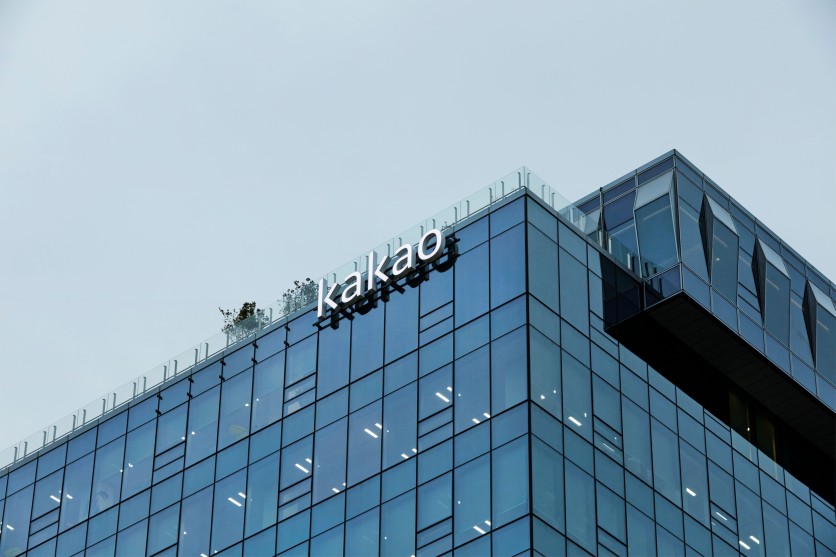
kakaocorp.com
South Korea's dominant ride-hailing platform has locked in Nvidia hardware to power its next generation of fully autonomous robotaxis, in a move that shifts the company from cautious testing into a credible race for Level 4 certification.
The two companies formalized the agreement at Nvidia AI Day Seoul 2026, a two-day event bringing together the U.S. chipmaker and South Korea's leading technology companies to accelerate physical AI development. For Kakao Mobility — which controls the country's largest on-demand taxi network through the Kakao T app — the timing is strategic: Seoul has set a target of launching fully unmanned Level 4 robotaxis in its Sangam autonomous driving district starting October 2026, and competition for a driverless certification has never been fiercer.
A Two-Chip Computing Bet
At the core of the agreement is an autonomous driving computing unit loaded with two Nvidia Drive AGX Thor processors. Each Thor chip delivers up to 2,000 teraflops of FP8 performance — a substantial leap over previous-generation hardware — and dual configurations connect via Nvidia's NVLink-C2C interconnect to handle the kind of real-time, sensor-heavy inference that fully driverless operation demands. Oversight of the development and validation process falls to Nvidia Halos, the company's integrated safety framework designed to meet automotive-grade functional safety standards.
Kakao Mobility will pair that hardware with its proprietary end-to-end AI model, a single neural network that processes environmental data and translates it directly into driving decisions. The company has previously relied on a hybrid system blending rule-based logic with machine learning — an approach that works at smaller scale but proves harder to push toward full autonomy. Handing off compute-intensive inference to the dual Thor stack is designed to free engineering resources to advance the AI model itself.
"We will not only accelerate the advancement of our end-to-end autonomous driving technology but also prepare for the era of Level 4 commercialization by serving as a central player in the global technology ecosystem connecting software, components and vehicle manufacturers," said Kakao Mobility CEO Ryu Geung-seon.
The Kia Layer and Why Certification Depends on It
The vehicles that will carry this new stack are not retrofitted taxis. They are Kia purpose-built vehicles engineered from the ground up for autonomous operation — adding an Nvidia layer on top of a partnership Kakao Mobility and Kia struck in July 2026. The resulting architecture is a three-way integration: Kakao's AI software, Nvidia's computing and perception hardware, and Kia's chassis validated as a single system.
That integration matters for regulatory reasons. South Korea's Ministry of Land, Infrastructure and Transport requires companies to satisfy strict mileage and safety thresholds before granting a driverless operation permit — the authorization that allows vehicles to run with no one in the driver's seat. Kakao Mobility already holds a temporary permit to test Level 4 vehicles, but the driverless certification is the next and much harder threshold. Nvidia's Halos safety validation framework, which monitors and prevents software-level system failures, is specifically intended to accelerate that certification process.
Closing the Gap on Domestic and Foreign Rivals
The urgency behind the deal is real. A Korea JoongAng Daily investigation found that Kakao Mobility had logged fewer qualifying autonomous miles than domestic rival RideFlux — the only Korean company currently holding an unmanned driverless operation permit — and held fewer AV-related patents. Meanwhile, Waymo and Baidu have both signaled intent to enter the Korean market, increasing the pressure on domestic players to reach commercial-grade driverless capability before foreign competition arrives.
Kakao Mobility's operational record does provide a foundation to build on. The company's late-night Gangnam robotaxi service — accessible through Kakao T — transitioned from a free pilot to paid commercial operation on April 6, 2026, accumulating early-stage operational data in live urban conditions. But that service still relies on a safety operator in the driver's seat, and its hybrid AI architecture differs from the fully learned end-to-end model the company is now building.
Nvidia's Broader Korean Strategy
For Nvidia, the Kakao Mobility agreement fits a larger campaign to become the preferred autonomous driving platform across Asia. The chipmaker has proposed cooperation on a government-led driverless robotaxi demonstration project with Korean AV companies and the Ministry of Land, Infrastructure and Transport — positioning its Drive platform not merely as hardware, but as the architecture around which Korea's national robotaxi ecosystem may be organized. The November AI Day summit also featured ongoing physical AI collaborations with Hyundai Motor Group, Doosan Robotics, LG Electronics and SK Hynix, relationships first established during Jensen Huang's visit to Seoul in June 2026.
With a certified hardware stack, a Kia-built vehicle platform and Korea's most widely used mobility app as the distribution layer, the Kakao-Nvidia alliance holds the structural components for commercially viable driverless rides at scale. Whether the certification timeline and real-world performance can match that ambition is the test that remains.

-
 C114 Communication Network
-
 Communication Home
