
 Search

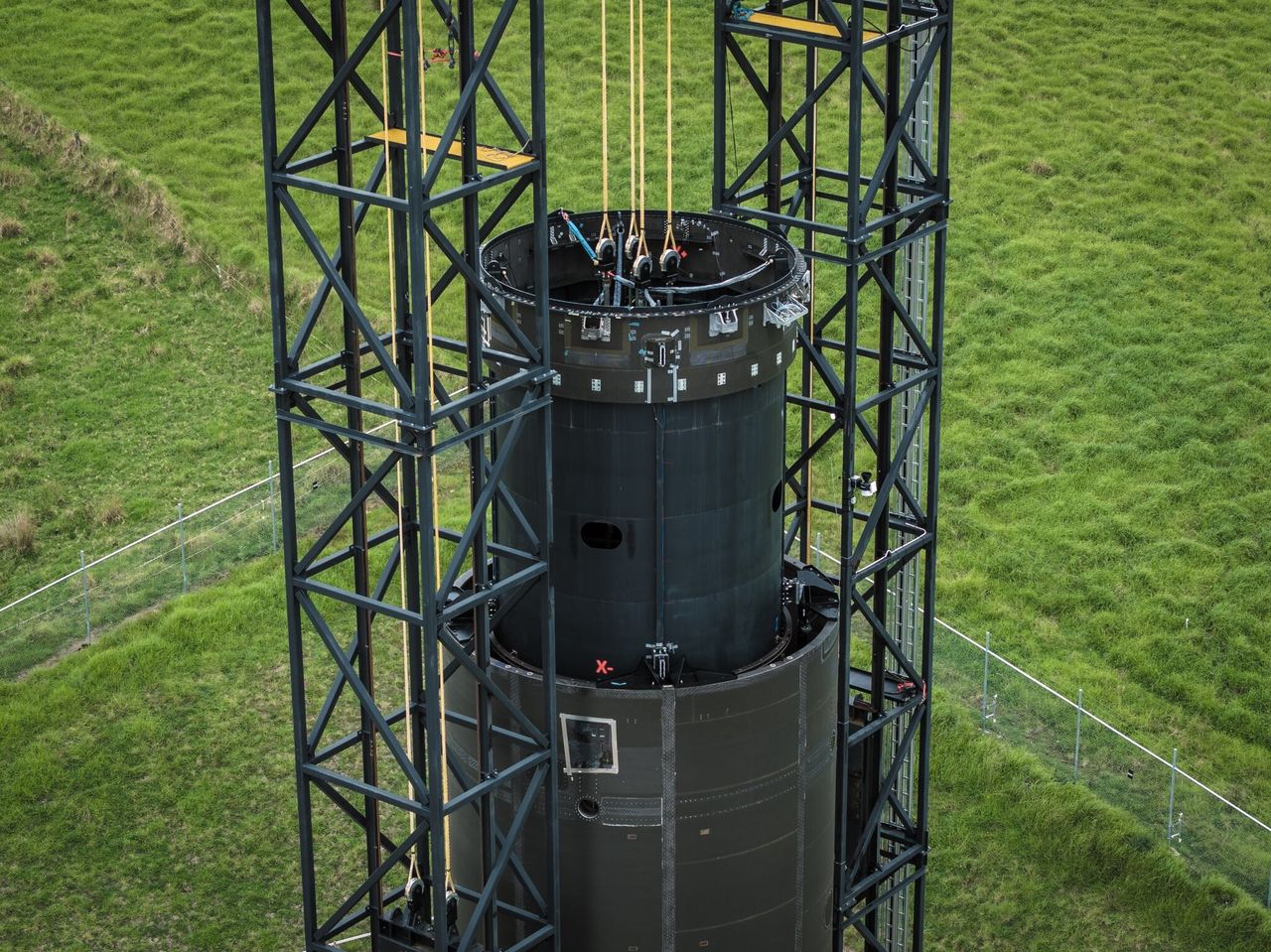
Rocket Lab stage separation testing of its Neutron rocket.(Source: Rocket Lab)
Rocket Lab's new "Neutron" rocket will be stuck on the launch pad until sometime next year.
The company's plan to push ahead with Neutron, a mid-level, reusable rocket capable of launching a sizable payload of low-Earth orbit (LEO) satellites, was dealt a setback after recent inspections uncovered issues with the vehicle's carbon composites that could compromise the rocket's overall strength and durability.
Though Rocket Lab claims to have resolved the problem, it will delay the inaugural launch of Neutron from Q4 2026 to sometime in 2027. That could amplify recent concerns about a shortage of near-term launch capacity and prevent Rocket Lab from gaining much ground on SpaceX.
That will extend a delay for Neutron that is going on three years and was "initially driven by engine development and testing," the analysts at New Street Research pointed out in a research note (registration required).
Standing at 141 feet, Neutron is billed as a medium-lift launch vehicle (with a reusable first stage) that can deploy up to 13,000 kilograms (28,660) pounds) of LEO satellite payload, or 1,500 kilograms for trips to Mars and Venus. That compares to the Electron, a 59-foot rocket for smaller satellites that has nearly 100 launches under its belt and has deployed more than 268 satellites so far.
This latest delay comes after inspections identified "voids" – or air pockets – in the carbon-composite dome for Neutron's first-stage propellant tank, President and CEO Peter Beck explained Wednesday in this recorded presentation.
While Rocket Lab had been making some progress from a failed qualification uncovered earlier in the year, more recent inspections of the rocket's revised, thicker carbon fiber sections caused the company to "delay production and investigate further," Beck said, noting that the air pockets in the structure could compromise durability and reliability.
'Possible success isn't our standard'
While that doesn't necessarily mean that the dome would fail in flight, Beck stressed that Rocket Lab will only move forward "when we believe the system has the appropriate margins. Possible success isn't our standard."
He said that Rocket Lab was able to replicate the issue and has added ways to mitigate the issue from the manufacturing process moving forward. While that will push Neutron's first launch to 2027, Rocket Lab isn't ready to provide a specific target date.
The delay also comes as Rocket Lab moves ahead with its pending acquisition of Iridium, a deal will give Rocket Lab access to Iridium's systems and services for satellite connectivity along with its positioning, navigation and timing (PNT) offerings and, importantly, access to global L-band spectrum that, they say, is capable of reaching ultra-rural areas and penetrating through harsh conditions.
Rising concerns about near-term launch capacity
New Street Research noted that it makes sense for Rocket Lab to be cautious with Neutron, but added that "repeated manufacturing setbacks raise questions about its production process." As such, the firm said it will reduce its near-term forecasts for Rocket Lab, but will disclose those details later.
Rocket Lab shares were down nearly 10% in Thursday afternoon trading.
Bigger picture, the analysts said further delays with Neutron also reduces near-term launch capacity as SpaceX scales back Falcon 9 launches. That's also coming about as SpaceX tries to gain ground with Starship, the heavy-duty rocket that entered orbit for the first time during its most recent test flight.
"Given the difficulty of bringing new vehicles to market and ramping launch cadence, capacity growth will likely lag demand in the coming year, constraining satellite operators' deployment plans," they explained.
However, the analysts still see potential for Neutron "becoming a credible independent second source to SpaceX."

-
 C114 Communication Network
 -
 Communication Home
