
 Search

Mechrevo.com
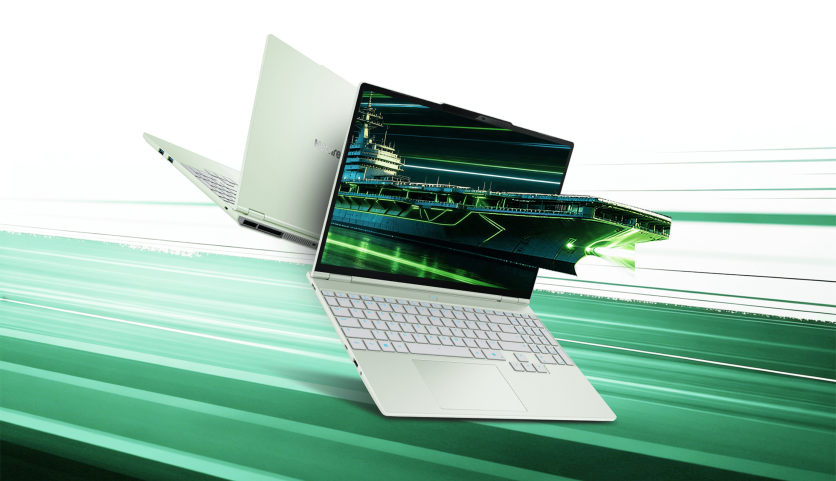
AMD quietly formalized what the gaming laptop market has been hinting at: not every Zen 5 chip needs an AI accelerator. The company's new Ryzen 7 449 — a Gorgon Point processor stripped of its XDNA 2 neural processing unit — landed in one of its first commercial products this weekend when Chinese OEM Mechrevo launched the Mechrevo Phenom 15 Air launch. The move signals a deliberate fork in AMD's mobile lineup: Ryzen AI 400 chips carry the NPU and the Copilot+ certification that comes with it, while the new Ryzen 400 tier — same silicon, same TSMC 4nm process, same hybrid Zen 5 and Zen 5c architecture — ditches the AI block entirely and targets buyers who will spend their performance budget on a discrete GPU instead, as confirmed by the first Ryzen 7 449 laptop coverage at launch.
What AMD Left Out: Why the Gaming Market Won't Notice
To understand why the Ryzen 7 449 matters, it helps to know what it shares with its AI-branded sibling. The Ryzen AI 7 450 — the closest Gorgon Point equivalent — uses the same 4+4 hybrid core layout: four full-size Zen 5 cores paired with four compact Zen 5c cores, for eight cores and 16 threads in total. The Ryzen 7 449 replicates that structure on the same TSMC 4nm fabrication node, with 16MB of L3 cache and a configurable thermal envelope spanning 15W to 54W, per the AMD Ryzen 7 449 specifications on AMD's own product page.
The differences are modest. The Ryzen 7 449 boosts to 5.0 GHz versus 5.1 GHz on the AI variant — a 100 MHz deficit unlikely to register in any workload a gamer measures. Its Radeon 860M integrated GPU runs at 2.8 GHz versus 3.1 GHz on the Ryzen AI 7 450, a 300 MHz gap that matters only if you rely on the iGPU for display output — which, in a machine like the Phenom 15 Air, is almost never the case.
What is missing entirely: the XDNA 2 neural processing unit. AMD's Ryzen AI chips carry the XDNA 2 NPU at 50 TOPS, which is what earns them Microsoft's Copilot+ PC certification — a Windows 11 hardware category requiring Copilot+ requires 40 TOPS NPU of dedicated NPU compute. Without an NPU, the Ryzen 7 449 delivers approximately 15-16 TOPS without NPU from the combined CPU and iGPU — nowhere near that threshold. For a gaming laptop paired with a discrete GPU, that gap is functionally irrelevant.
One question AMD has not publicly answered: whether the Ryzen 7 449 uses a separate die with the NPU physically absent, or the same Gorgon Point die with the XDNA 2 block disabled — a process known as die binning. Multiple hardware publications have documented that this NPU disabled or absent unresolved question has not yet been clarified by AMD. If binning is the mechanism, AMD is extracting commercial value from production wafers that test below the XDNA 2 quality threshold — a standard semiconductor yield-optimization practice, and one that keeps per-chip costs down for OEMs who do not need the AI functionality.
Read more: AMD Portal Confirms Zen 6 CPU Families for AM5: Olympic Ridge and Medusa Disclosed
The Laptop: Thin, Fast, and Deliberately Not an AI PC
Mechrevo paired the Ryzen 7 449 with an NVIDIA GeForce RTX 5060 Laptop GPU running at up to 115W — a configuration that can handle most current AAA games smoothly at 1080p on high settings, as reflected in RTX 5060 gaming benchmark data. Under combined CPU-plus-GPU load, the system draws up to 170W total, managed by a dual-fan cooling at 85W that allows the CPU to operate at up to 85W in CPU-intensive scenarios.
The display is a 15.3-inch QHD OLED 240Hz panel with full DCI-P3 color coverage and factory color calibration. OLED panels at this resolution and refresh rate in the 15-inch form factor are typically associated with premium ultrabooks priced at or above this machine's launch tier; their presence in a gaming-first chassis at this configuration is a differentiation move in the 2026 market. The panel's individual pixel illumination produces true blacks and effectively infinite contrast ratio compared to IPS alternatives at the same size and resolution.
The full Phenom 15 Air specifications include 24GB of LPDDR5X RAM and a 1TB PCIe 4.0 NVMe solid-state drive. The chassis measures 18.75 mm (0.74 inches) at its thinnest point and weighs approximately 1.6 kg (3.53 lbs) — genuinely slim and light for a laptop carrying this GPU tier at 115W. Connectivity includes Wi-Fi 6E, Bluetooth 5.3, USB4, USB-C, three USB-A ports, HDMI, Ethernet, and a combined audio jack.
Is the NPU Necessary for Gaming? AMD Has Now Officially Answered
The Ryzen 7 449's existence is AMD's implicit answer to a question the industry has been asking since Copilot+ launched: does every laptop sold in 2026 need to be an AI PC? For gaming-first buyers, the answer the new chip proposes is no.
A dedicated NPU's primary utility in the current consumer landscape is enabling Copilot+ on-device feature list: Windows Recall (an on-device encrypted index of screen activity), Live Captions with offline real-time translation, and Windows Studio Effects for video calls. None of those features are material to gaming performance. The CPU and iGPU can still run AI-adjacent workloads — image upscaling, background removal, noise suppression — at lower efficiency than a dedicated NPU, but at levels that gaming-use applications do not meaningfully stress. For buyers who intend to run every GPU-intensive task through an RTX 5060, the NPU's absence changes nothing about what the laptop can do.
What it does change: the chip's eligibility for Copilot+ certification and, potentially, its cost to the OEM. AMD has not published pricing for the Ryzen 7 449 at the chip level, and the Phenom 15 Air's CNY 11,499 China launch price (approximately $1,711 USD at the August 31, 2026 mid-market rate of 1 USD = 6.72 CNY, per Xe.com) includes a premium OLED display, RTX 5060 at 115W, and 24GB of fast memory — meaning the chip's cost delta, if any, is absorbed into a configuration-level premium rather than passed through directly as a headline price advantage.
What the Ryzen 7 449 does confirm is that AMD now maintains two product tiers within Gorgon Point: Ryzen AI 400 chips, which carry the NPU, earn the Copilot+ branding, and command a marketing premium; and Ryzen 400 chips, which share the same silicon and process but target buyers for whom the AI layer is an expense rather than a benefit.
What It Means to Buy a Chinese OEM Gaming Laptop
The Phenom 15 Air is a product of Mechrevo — formally, Zhitong Intelligent Technology (Suzhou) Co., Ltd. — a Chinese company whose Mechrevo company profile Baidu entry confirms it is headquartered in Suzhou with R&D centers in Beijing, Suzhou, Shenzhen, and Taipei, founded in 2014. As of 2026, the brand ranks first among domestic Chinese gaming laptop brands in China market share and third industry-wide. It made its international exhibition debut at CES 2025 and operates a Mechrevo North America storefront, though not all domestic products reach Western retail channels.
What the law requires — and what it means for this device:
As a company registered in the People's Republic of China, Mechrevo operates under a legal framework that requires disclosure to prospective international buyers. Three laws govern Chinese companies' relationship with the Chinese government and user data:
The National Intelligence Law of the People's Republic of China (2017), Article 7 states that all organizations and citizens shall support, assist, and cooperate with state intelligence work in accordance with the law. The China National Intelligence Law text is publicly available and applies to all Chinese-registered companies, regardless of where their products are sold, where their servers are located, or what their own privacy policies state.
The Cybersecurity Law of the People's Republic of China (2017, amended January 2026) requires network operators to store selected categories of data within China and allows Chinese authorities to conduct spot-checks on network operations, per the PRC Cybersecurity Law Wikipedia entry. The Data Security Law of the People's Republic of China (2021) governs the classification and handling of data with national security implications and supports government-access provisions that can apply to user data held by Chinese companies, as summarized in the PRC Data Security Law Wikipedia entry.
These laws create a structural condition that no company policy can override: Mechrevo, as a Chinese-registered entity, is legally compelled to cooperate with Chinese government intelligence requests. This is not a claim about Mechrevo's intentions or conduct — no published security research or government advisory documents a Mechrevo-specific backdoor or confirmed data breach. The DHS advisory on Chinese data law confirms the legal obligation for Chinese-registered firms exists regardless of specific incident history.
What data a Windows 11 laptop like the Phenom 15 Air collects: Windows telemetry (usage patterns, hardware identifiers, installed software), location data from apps that request it, browsing history if synced via browser accounts, and biometric data if Windows Hello is enrolled. Any of these categories could be subject to a government request under the laws described above.
What no independent audit has confirmed or denied: No published security research specifically audits Mechrevo's firmware, hardware, or data transmission practices. The 2024 AceMagic factory malware 2024 incident — a different, smaller Chinese OEM found to have shipped factory-installed malware on mini PC units — represents the closest documented precedent in the category; no equivalent finding has been published for Mechrevo.
What readers can do to reduce exposure:
- Audit firmware and running processes on receipt using tools such as Process Monitor and Wireshark network analysis
- Operate the laptop on a dedicated network segment (separate VLAN) isolated from sensitive home or work systems
- Use a VPN for any sensitive traffic transmitted from the device
- Review Windows telemetry settings and limit to the minimum diagnostic level
No mitigation fully eliminates the structural legal risk created by the company's Chinese registration. Readers should weigh these conditions alongside performance and price when making a purchasing decision.
Read more: HP's New AMD Business Laptop Is Available Globally: EliteBook 8 G2a 14 Delivers 50 TOPS NPU
Pricing, Availability, and the International Question
The Mechrevo Phenom 15 Air 2026 launched at CNY 11,499 (approximately $1,711 USD at the August 31, 2026 mid-market rate) in China, in a single configuration: Ryzen 7 449, RTX 5060 at 115W, 24GB LPDDR5X, 1TB PCIe 4.0 NVMe, 15.3-inch QHD OLED at 240Hz.
Mechrevo operates a Mechrevo North America storefront and has shipped products internationally through third-party channels including AliExpress and regional distributors. However, the company does not bring all of its domestic Chinese products to Western markets, and as of the date of this article, no international release of the Phenom 15 Air 2026 has been announced. Buyers outside China seeking this specific configuration will need to monitor gray-market importers or wait for a potential future announcement.
Decision Summary
The Mechrevo Phenom 15 Air 2026 makes a coherent case for its target buyer: a gamer who wants Zen 5 CPU performance, RTX 5060 gaming capability, and a premium OLED display in a sub-1.7 kg chassis, and who has no use for the Copilot+ certification that comes with AMD's AI-branded chips. The Ryzen 7 449 delivers the CPU and iGPU performance virtually indistinguishable from its AI-branded sibling in gaming workloads, while the RTX 5060 at 115W does the heavy lifting.
The machine is a Chinese OEM product from a company subject to Chinese national intelligence and data security laws. No Mechrevo-specific security incident has been documented, but the legal framework is a fixed condition of the company's registration — not a contested risk — and buyers outside China who prioritize data sovereignty should factor it into their decision. Buyers for whom performance-per-dollar in gaming use cases is the primary criterion, and who are comfortable applying the mitigations described above, will find the Phenom 15 Air a technically credible choice at its price point.
More broadly, the Ryzen 7 449's appearance in a commercial product confirms that AMD's Gorgon Point fork is real and that additional OEMs are likely to follow. Gaming laptops that skip the AI premium are arriving.
Exchange rate as of August 31, 2026; all conversions are approximate.
Frequently Asked Questions
What is the difference between the Ryzen 7 449 and the Ryzen AI 7 450, and does it matter for gaming?
Both chips use the same Gorgon Point silicon on TSMC's 4nm process with a 4+4 hybrid core layout (four Zen 5 and four Zen 5c cores). The Ryzen 7 449 runs 100 MHz slower at peak boost (5.0 GHz vs. 5.1 GHz) and has a 300 MHz lower iGPU clock. It has no XDNA 2 neural processing unit, which means it cannot qualify for Microsoft's Copilot+ PC certification. For gaming on a discrete GPU, none of these differences are likely to produce measurable frame-rate differences. The NPU is unused during gaming; the 100 MHz CPU delta is below the threshold of gaming-workload sensitivity; and the iGPU only matters if the dGPU is not handling display output, which it should be in any gaming scenario. For a comprehensive Ryzen 7 449 vs AI 450 breakdown, VideoCardz's coverage details both chips' specification differences.
Does the Ryzen 7 449 support Copilot+ PC features?
No. The Microsoft Copilot+ 40 TOPS requirement for PC certification demands a dedicated neural processing unit capable of at least 40 TOPS of AI compute — a hardware requirement no software update can change. The Ryzen 7 449 has no NPU. Without it, the total platform AI performance is approximately 15–16 TOPS from the combined CPU and iGPU, well below the certification threshold. Cloud-based Copilot through a browser remains available on any Windows 11 machine regardless of NPU presence; it is only the on-device Copilot+ features (Recall, on-device Live Captions, Windows Studio Effects) that require the NPU.
Is it safe to buy a Mechrevo laptop outside China?
Mechrevo is a Chinese-registered company legally subject to China's National Intelligence Law (2017), Cybersecurity Law (2017), and Data Security Law (2021). Article 7 of the National Intelligence Law requires all Chinese organizations to cooperate with government intelligence requests. No independent security audit of Mechrevo-specific firmware has been published, and no Mechrevo-specific data breach or backdoor has been documented. The legal obligation exists independently of any specific incident. Buyers in sensitive professional or government roles should treat this as a disqualifying condition. Buyers who accept the risk should use the device on an isolated network segment and audit running processes on receipt. The DHS advisory on Chinese data law provides additional guidance on the legal obligations of Chinese-registered firms.
When will the Mechrevo Phenom 15 Air be available outside China?
As of August 31, 2026, Mechrevo has made no announcement of international availability for the Phenom 15 Air 2026. The company operates a Mechrevo North America storefront and has shipped products internationally through third-party channels, but not all domestic products reach Western markets. Buyers outside China should monitor Mechrevo's international channels and gray-market importers for potential availability.

-
 C114 Communication Network
 -
 Communication Home
