
 Search

Evehome.com
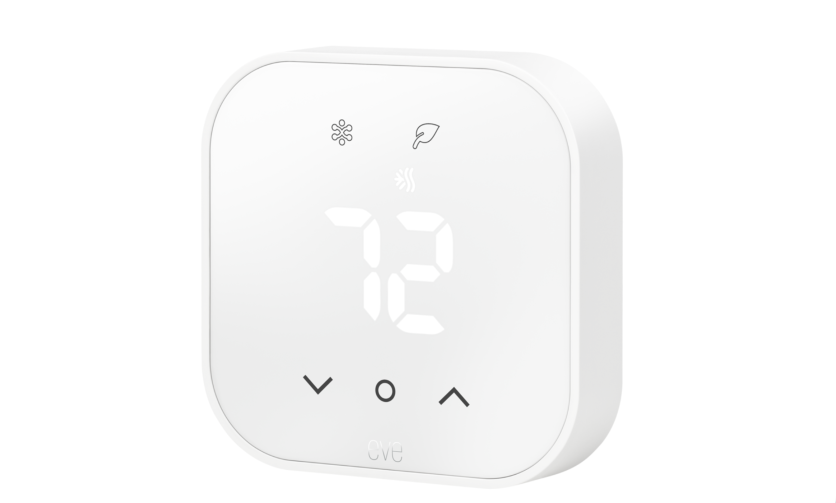
Eve Systems has put its long-delayed smart thermostat for water-based underfloor heating on general sale in Germany, Austria, and Switzerland, priced at €119.95 (approximately $137 USD; exchange rate as of July 28, 2026 — conversions are approximate). The device is the first thermostat purpose-built for hydronic underfloor heating to reach the European market running Matter over Thread with no cloud account, no subscription, and no vendor lock-in — arriving approximately six months behind its originally announced Q1 2026 ship date.
Walk into any modern German home built in the last several years and the floor is likely radiantly warm from PEX pipes circulating water just below the screed. That system — hydronic underfloor heating (Fußbodenheizung) — is now the standard heat distribution method in roughly 55% of new German single-family homes, up from about 30% in 2010, driven by years of regulatory pressure to reduce fossil fuel reliance in new construction. Heat pumps running at the low flow temperatures hydronic systems require are the natural pairing. Until now, Matter-native smart control for those floors has been the missing piece.
Eve's ABB-backed Munich team has spent the better part of two years building a thermostat specifically for that gap. What went on sale today is the result: a 94 × 94 × 20 mm (3.7 × 3.7 × 0.8 inches) wall-mounted controller that replaces a conventional analog or programmable thermostat, communicates over the Thread mesh network, and integrates with five major smart home platforms — Apple Home, Google Home, Amazon Alexa, Samsung SmartThings, and Home Assistant — without ever establishing a connection to Eve's servers.
Eve Thermostat for Underfloor Heating: What the Hardware Actually Does
The thermostat is designed for water-based (hydronic) underfloor heating systems that use 230V electrothermal actuators — the motorized valves that open and close to regulate water flow through floor loops. By default, it switches those actuators through a Triac circuit rather than a mechanical relay.
That distinction is more significant than it might appear to a buyer scanning a spec sheet. A Triac is a solid-state semiconductor that switches alternating current at the zero-crossing of the AC sine wave — meaning no moving parts, no electromagnetic arcing, and no audible click. A mechanical relay, by contrast, is a miniature switch with physical metal contacts that engage and disengage every time the thermostat cycles the heat. At the slow proportional-control switching frequencies typical of a floor heating system — roughly once every fifteen seconds — a relay rated for 100,000 cycles would theoretically wear out in a matter of hours of continuous proportional cycling. Triac devices are rated for millions of cycles and produce zero noise, making Eve's choice of Triac output a meaningful engineering decision for a thermostat likely to spend its life in a bedroom or living room.
The maximum load for the Triac output is 65 mA / 15W — a spec that matches the power draw of virtually all residential electrothermal UFH actuators. For installations that require relay-based control (higher-load applications such as pumps or motorized valve assemblies), the thermostat includes separate relay terminals (NO, NC, and COM), though relay operation produces the characteristic mechanical click the Triac circuit is specifically designed to eliminate.
Physical specs confirmed by Eve's product page: power supply 100–240 VAC 50/60 Hz; temperature accuracy 0.1°C (0.18°F); switching hysteresis of 0.5°C (0.9°F); operating range 5–35°C (41–95°F); IP20 rated for indoor use. The backlit display includes an ambient light sensor that dims or extinguishes the screen after an adjustable interval — a small but appreciated feature for bedroom placement.
How Matter over Thread Makes Local Control Permanent
The thermostat's connectivity rests on two layered protocols that are easy to confuse but serve distinct roles.
Thread is the networking layer. It is an IPv6-based, low-power mesh protocol built on the same IEEE 802.15.4 radio standard as Zigbee — operating in the 2.4 GHz band — but unlike Zigbee or Z-Wave, it creates a genuinely self-healing network where every mains-powered device acts as a relay node. Because the Eve Thermostat is mains-powered and always on, it qualifies as a Full Thread Device (FTD) — meaning it actively routes Thread packets for other devices in the home rather than merely receiving them. Adding the thermostat to an existing Thread network strengthens the mesh by contributing an additional router node, extending the network's reach and adding redundancy.
Matter is the application layer that runs on top of Thread (or Wi-Fi) and handles the actual control semantics: device commissioning, cluster definitions for thermostat behavior, cross-ecosystem identity, and the encrypted command structure that lets an Apple Home hub and a Google Home hub both address the same device without conflict. Eve has certified this thermostat to Matter 1.4.1 — the maintenance release of Matter 1.4, which expanded the standard's energy management clusters and is the most widely deployed stable version as of mid-2026. Matter 1.6, which added NFC commissioning and Joint Fabric for multi-ecosystem device sharing, was released in June 2026 but platform adoption remains incomplete.
The practical result of this architecture is that the thermostat's core function — measuring temperature, controlling actuators, executing schedules — runs entirely inside the home network. If Eve's servers went offline tomorrow or the company were acquired and shut down, the thermostat would continue operating indefinitely.
Read more: Matter 1.6 Fixes Smart Home Setup and Ecosystem Conflicts With NFC and Joint Fabric
Why Germany Is Ready for This Thermostat Right Now
Eve is not the first company to offer a smart thermostat that works with underfloor heating — Tado's X series supports UFH and includes Matter over Thread connectivity, while Danfoss launched its Icon2 system with app-guided installation at ISH 2025. What Eve is claiming is a combination that the underfloor heating market has lacked: Matter-native, cloud-free, Thread-mesh operation that works across all five major ecosystems simultaneously without a subscription.
That combination arrives at a structurally significant moment for German construction. For years, Germany's Building Energy Act (GEG) required all new heating systems to derive at least 65% of their energy from renewable sources — a mandate that effectively drove heat pump installations in new builds and, by extension, the hydronic underfloor heating systems best suited to heat pump operation. Germany's parliament replaced the GEG with the Building Modernization Act (GModG) on July 10, 2026, removing that specific mandate in favor of a technology-neutral approach with biofuel blending requirements beginning in 2029. The regulatory shift does not undo the structural investment already made: the installed base of hydronic UFH in German homes built over the last decade is large and growing, and those systems need smart controls regardless of which law governs new construction.
Heat pumps operate most efficiently at low flow temperatures — typically 30–45°C (86–113°F) — and hydronic underfloor heating systems are specifically designed to work at those temperatures, making them the natural distribution partner for the heat pump installations that now dominate German new construction. Germany held a 22.7–26.8% share of the European underfloor heating market as of 2025, and the European market overall was valued at approximately $2.2 billion USD in 2025, growing at a 6–7% compound annual rate.
The smart home category, meanwhile, has historically underserved hydronic UFH: most existing smart UFH controllers either require proprietary bridges, rely on cloud connectivity, or are confined to a single platform. Eve's Matter-over-Thread approach brings the same interoperability guarantees the standard has established for lighting and door locks to a heating category that has lagged behind.
What You Need Before Buying
The thermostat's local-first architecture has one genuine dependency: a Thread Border Router. The thermostat communicates exclusively over Thread; to reach it from an app or a voice assistant, the Thread mesh must be bridged to the home's IP network by a compatible hub. Devices that serve this role include:
- Apple HomePod mini, HomePod (2nd gen), or Apple TV 4K for Apple Home users
- Amazon Echo (4th gen), Echo Show (10th gen) for Alexa users
- Google TV Streamer or Nest Hub Max for Google Home users
- eero Pro 6 or later for general Thread/Matter use
- Any Matter controller with Thread support for Home Assistant
Users who already own any of the above are ready to install. Users who do not should add approximately $50–$100 USD to their budget for a compatible hub before the thermostat is useful.
A second constraint applies to scheduling: the Eve app is required to configure on-device schedules. As of launch, the Eve app supports thermostats on iOS/iPadOS for Apple Home platform users and on Android for Google Home platform users. Schedules are not currently configurable via the Alexa or SmartThings apps directly, though both platforms can still control temperature and activate automations through their own systems.
For users in the Android/Google Home ecosystem, it is worth confirming the current status of the Android Eve app's thermostat support before purchase, as the feature set was still expanding at the time of the CES 2026 announcement.
Privacy Architecture: What "No Cloud" Actually Means
Eve's privacy claim is architectural, not contractual. The thermostat contains no phone-home connection: there are no network calls to Eve's servers during operation, no telemetry sent outside the home, and no account credential stored on an external server. Eve, as a Munich-based ABB subsidiary, operates under EU GDPR; ABB's data privacy officer is listed at ABB AG in Mannheim. The absence of a cloud account means there is no data to breach and no vendor relationship to monetize occupancy patterns.
This matters because smart thermostats as a category have drawn sustained privacy scrutiny. A 2024 survey by Copeland (formerly Emerson Climate Technologies) of 2,000 U.S. homeowners found that more than half had no idea how data is collected from their smart thermostats, and 7 in 10 said they would be more likely to replace their current thermostat with a brand that did not share data with third parties. Eve's architecture structurally eliminates that exposure at the protocol level.
Launch Details and Availability
The Eve Thermostat for underfloor heating is available now at evehome.com and via Amazon in Germany, Austria, and Switzerland. Suggested retail price is €119.95 (approximately $137 USD).
For comparison, the companion Eve Thermo smart radiator valve (5th generation) is priced at €79.95 (approximately $91 USD) and has been available since December 2025. The North American Eve Thermostat for HVAC forced-air systems, announced at CES 2026 at $129.95 USD, remains listed as Coming Soon on Eve's website as of this article's publication.
Eve's full residential heating lineup across system types:
| Product | Heating Type | Price | Region |
|---|---|---|---|
Eve Thermo 5th Gen | Radiator / TRV | €79.95 (~$91 USD) | EU |
Eve Thermostat (UFH) | Hydronic underfloor, 230V actuators | €119.95 (~$137 USD) | EU (DE/AT/CH) |
Eve Thermostat (HVAC) | Forced-air HVAC | $129.95 (Coming Soon) | North America |
All three are certified to Matter 1.4.1 and run over Thread. All three operate with no cloud account, no subscription, and no registration required.
No subscription or cloud account is required after purchase.
Frequently Asked Questions
Does Eve Thermostat for underfloor heating require an internet connection to work?
No. Once set up, the thermostat operates entirely on the local Thread mesh network inside your home. Schedules, automations, and temperature control all run on-device or through your local home hub — no internet connection is required for any core function. Remote access when you are away from home routes through your chosen smart home platform (Apple Home, Google Home, etc.) rather than through Eve's servers.
Do I need a special hub, and which one?
Yes — a Thread Border Router is required. This is a device that bridges the Thread mesh network to your home's IP network. If you already own an Apple HomePod mini, HomePod (2nd gen), Apple TV 4K, Amazon Echo (4th gen or later), Google TV Streamer, Nest Hub Max, or an eero Pro 6 or later router, you already have one. If you do not, budget approximately $50–$100 USD for a compatible hub in addition to the thermostat price.
Why does Germany have so much underfloor heating compared to North America?
Hydronic underfloor heating (Fußbodenheizung) became standard in German new construction partly through cultural preference for radiant warmth and partly through regulatory momentum. Germany's successive building energy regulations mandated that new heating systems increasingly rely on renewable energy, which drove heat pump installations — and heat pumps work most efficiently at the low flow temperatures (30–45°C / 86–113°F) that hydronic underfloor systems are specifically designed to use. The result: roughly 55% of new German single-family homes now include hydronic underfloor heating, compared to fewer than 3% of new American residential builds.
Is this thermostat compatible with Tado, Homematic, or other existing smart heating systems in my home?
Eve Thermostat for underfloor heating is a standalone controller — it replaces your existing wall thermostat and controls your UFH actuators directly. It does not interface with Tado or Homematic hubs. However, because it speaks Matter, it can coexist in the same smart home alongside other Matter-compatible devices from any manufacturer, and it can be controlled through the same app or voice assistant you already use, regardless of what other brands you have installed.

-
 C114 Communication Network
 -
 Communication Home
