
 Search

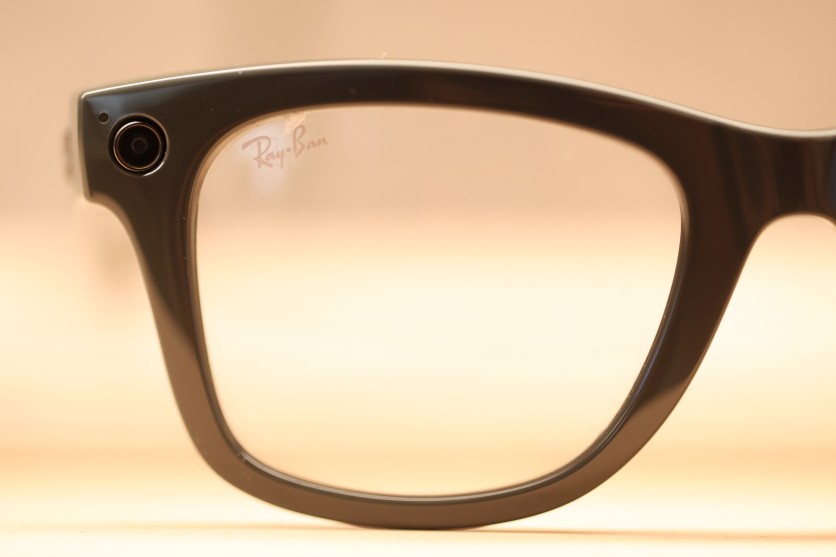
BURLINGAME, CALIFORNIA - MAY 04: Ray-Ban Smart Glasses are displayed during a media preview at the new Meta Store on May 04, 2022 in Burlingame, California. Meta is set to open its first physical retail store on May 9. Justin Sullivan/Getty Images
Apple has redesigned the schedule for its first smart glasses around a question that has nothing to do with engineering: can a company put a camera on someone's face in public, pointed at strangers, and make those strangers comfortable with it? Meta's Ray-Ban glasses — the category's commercial leader with more than seven million pairs sold — spent the past year demonstrating that the answer, as currently practiced by the industry, is no. Apple is taking six more months to figure out whether its answer can be different.
Mark Gurman's Power On newsletter, published July 26, 2026, reports that the glasses — internally codenamed N50 — will make their public debut at WWDC in June 2027, with consumer availability expected by the end of that year. That is a roughly six-month slip from a previously reported late-2026 reveal. Gurman identified privacy work as the primary new factor behind the delay, with teams across Apple's Vision hardware group still prototyping hardware and software features that do not exist on any current product.
The week before Gurman's report, New York State banned smart glasses from every one of its 1,240 courthouses — the first statewide court prohibition on the hardware in the United States. The timing was not coordinated with Apple, but it could not have been more instructive. Recording-indicator lights, which Apple is reportedly designing with tamper-proof hardware, were deemed insufficient to protect court proceedings. Courts confiscated the hardware at the door. Apple is designing the N50 into that environment.
Read more: Smart Glasses Banned From All New York Courts as LED Safety Gap Proves Unfixable
Why Apple Delayed: Privacy Is the Engineering Problem
The heart of Gurman's report is not the timeline — it is the depth of the privacy problem Apple is still solving. Teams inside Apple have considered launching the N50 without a camera at all, the report says. They have also prototyped a version that keeps the cameras but disables photo and video recording, using them only to analyze the wearer's surroundings in real time for AI-assisted tasks. Under that model, the glasses would answer questions about what they see without creating a persistent record of it.
The more likely outcome, Gurman reports, is a version with functioning cameras and a suite of privacy protections: on-device AI processing that keeps visual data off remote servers, a firm prohibition on facial recognition, a commitment not to train its models on user-captured footage, and tamper-proof physical indicator lights that glow visibly whenever the cameras are active. That is not a feature list. It is a rebuttal — point by point — to the documented failures of the product Apple is competing against.
The camera-free prototype is the most revealing detail in the report. No company prototypes a product it is certain it will not ship. Apple prototyped camera-free glasses because someone inside Apple took seriously the possibility that there is no engineering solution to the consent gap — that no indicator light, no privacy policy, and no on-device processing commitment can fully resolve the problem of a camera on a face in public looking at strangers who did not agree to be analyzed. The extra six months are, in part, time spent determining whether that concern was right.
Apple Smart Glasses Technical Architecture: What On-Device AI Actually Means
The N50's technical architecture is the key to Apple's privacy argument, and it is meaningfully different from what its competitors have shipped. The glasses use a custom chip, internally codenamed N401, derived from the Apple Watch S-series — an extremely power-efficient design tuned to handle local sensing, camera encoding, always-on triggers, and audio output within the thermal and battery constraints of an eyewear frame.
That chip does not run Apple's visual AI. The heavy work — processing what the cameras see through Siri and Apple Intelligence — offloads to the paired iPhone over Bluetooth, where the iPhone's own Neural Engine, a dedicated AI processing unit built into the iPhone's A-series chip, handles inference locally. The key phrase is "locally." When Apple says its glasses process visual data on-device, "the device" is the iPhone in the wearer's pocket, not Apple's servers. Footage does not travel to Apple's cloud infrastructure to answer a query. It travels four feet, invisibly, to the phone.
This is the architectural distinction that separates Apple's approach from Meta's, and it is the reason Apple's privacy claim — if the product ships as described — would be independently verifiable in a way that Meta's was not. Meta's Ray-Ban glasses were marketed as "designed for privacy, controlled by you." What that phrase concealed, according to a federal class-action lawsuit filed in March 2026, was that footage captured by the glasses was allegedly transmitted to Meta's servers and then routed to a subcontractor in Nairobi, Kenya, where human workers labeled the content to train Meta's AI. Those workers, according to a February 2026 investigation by Swedish newspapers Svenska Dagbladet and Göteborgs-Posten, described reviewing footage of users undressing, using the toilet, and engaging in sexual activity. Meta has disputed the characterization of its data practices.
Apple's architecture, if it functions as Gurman describes, closes that specific hole. A camera that sends visual data to a phone that processes it locally and returns only an audio answer has no contractor pipeline. There is nothing to transmit to a subcontractor because the data never leaves the user's possession in a form that could be stored, labeled, or leaked. The constraint is also the privacy feature.
The trade-off is capability. On-device processing on a phone is powerful, but it is not as powerful as the cloud infrastructure Meta and Google can throw at a query. Apple Intelligence on an iPhone is a meaningfully capable AI system for in-context visual tasks — reading a menu, translating a sign, describing a scene — but for tasks that require access to vast external databases or real-time internet search, the iPhone's Neural Engine has limits that a data center does not. Apple is betting that those limits are acceptable to the reader who also cares about where their footage goes.
The first-generation N50 will not include an in-lens display. Augmented reality overlay — the feature that would make the glasses genuinely different from AirPods with cameras — is years away. Battery life has not been confirmed for the N50, but the category reference point is instructive: Meta's Ray-Ban glasses provide approximately four hours of active use per charge. Apple's Apple Watch-derived chip is designed to be more power-efficient than Meta's Qualcomm Snapdragon AR1, but what that means in practice for all-day wearability remains unconfirmed.
Why the Category Has a Structural Problem Engineering Cannot Solve
Apple is not the first major tech company to try to put a camera on a face and make the public comfortable with it. Google Glass, launched to consumers in 2013, failed for a cluster of well-documented reasons, but the one that proved impossible to engineer away was privacy stigma. Wearers acquired a nickname — "Glassholes" — and faced social friction in restaurants, gyms, and public spaces that no hardware feature could resolve. The category essentially collapsed in 2015.
Meta revived it a decade later by partnering with a fashion-credible brand, pricing the product accessibly, and emphasizing audio features that made the camera feel incidental. That strategy worked commercially: more than seven million pairs sold in 2025. It did not resolve the underlying consent problem. The scale of adoption amplified the harm surface. In 2024, two Harvard students built a proof-of-concept system connecting Ray-Ban glasses to a facial recognition pipeline that could identify strangers in real time — pulling up names, addresses, and family members within minutes. The demonstration circulated widely before the contractor footage scandal broke, establishing the technical worst case in the public mind.
When Swedish investigative journalists published their Sama contractor findings in February 2026, the context was already charged. Meta terminated its Sama contract after workers spoke out, affecting approximately 1,108 jobs. A BBC investigation separately found dozens of male content creators using the glasses to film women secretly for social media. Adam Mosseri of Instagram announced in July 2026 that the platform would remove accounts posting harassment content filmed with smart glasses — but the policy arrived after the wave, not before it.
None of the harms required a privacy policy violation. Most of them were people using the hardware as it was designed — pointing a camera at their surroundings and capturing what they saw. The problem is not bad actors exploiting a gap. The problem is that the form factor makes continuous recording in public socially indistinguishable from wearing glasses, and every bystander in the frame participates in the footage without consenting to it.
Apple's indicator lights, its no-facial-recognition commitment, and its on-device processing architecture address the provider-side failure — the data going to contractors, the AI training on intimate footage, the surveillance pipeline the wearer did not fully understand. They do not resolve the bystander-consent gap. A tamper-proof LED that blinks when the camera is active still requires every stranger in the frame to be close enough to see the light, to know what it means, and to have a meaningful option to leave before they are captured. That is the structural problem Google never solved and Meta never tried to solve. Apple's camera-free prototype suggests the company knows it.
How Does Apple Smart Glasses Privacy Compare to Meta Ray-Ban and Google?
The competitive landscape Apple is entering in 2027 is significantly more crowded than the one that existed when the N50 was first planned. Samsung and Google unveiled their Galaxy Glasses at Galaxy Unpacked in London on July 22, 2026 — five days before Gurman's report — with a fall 2026 retail launch expected. The Samsung/Google product uses the same Qualcomm Snapdragon AR1 Gen 1 chip that powers Meta's Ray-Ban glasses, runs Android XR with Google Gemini as its AI interface, and is expected to start at approximately $379. Neither Samsung nor Google had published a data policy governing what Gemini does with footage the glasses capture as of the Unpacked event — the exact gap that generated Meta's class-action lawsuit.
Google's Gemini AI is cloud-dependent for complex queries in a way that Apple Intelligence is not. Google's Gemini Apps privacy documentation, updated as of May 2026, states that voice recordings triggered by the wake word are stored in the cloud by default and can be retained for up to 12 months, with conversations reviewed by human auditors retained separately for up to three years. For a camera-equipped wearable, that cloud architecture means footage that triggers an AI query potentially leaves the device in a form that can be stored and reviewed. Apple's iPhone-side Neural Engine processing, if the architecture ships as described, avoids that specific exposure.
Meta is preparing next-generation hardware. The company's next-generation glasses — internally codenamed Aperol and Bellini — are reportedly designed around a "super sensing" capability that would capture environmental data continuously, potentially without LED signaling when that capture is active. That design direction was cited by the New York courts as one reason they rejected hardware-level indicator lights as sufficient protection and imposed the device ban instead.
Where Apple may hold a durable advantage is the combination of ecosystem depth and privacy-by-architecture. Apple Intelligence processes sensitive tasks locally, on a device the user controls. Nearly half of potential smart glasses buyers cite data concerns as a purchase barrier. Apple is the only company in the category that can make a credible technical argument — not just a marketing one — that its glasses do not have a contractor pipeline, because the architecture does not require one.
The first-generation competitive framing, then, is not a specs comparison. It is a trust comparison. Meta has seven million units of installed base and a class-action lawsuit. Google has Gemini's breadth and an undisclosed footage-retention policy. Apple has a timeline that slipped six months because the company decided to get the answer to a hard question right before it shipped.
Read more: Samsung Galaxy Glasses Land in a Market That Just Banned Smart Glasses From Courts
What Is Apple N50 Price, Design, and What Will the Glasses Do?
The N50 is expected to sell in the $200 to $500 range, positioning it as a mainstream accessory rather than a premium device — and well below Vision Pro's $3,499 entry point. Design-wise, Gurman describes oval-shaped camera housings, multiple frame styles, and unique color options. The glasses are built from premium acetate. Four distinct frame designs are reportedly being tested.
Feature-wise, the N50 is set up as a direct answer to Meta's Ray-Ban line: hands-free photography and video, phone calls, music playback, turn-by-turn navigation, real-time translation, and contextual AI responses from an upgraded Siri backed by Apple Intelligence. Look at a restaurant menu and Siri can read you the reviews. Point at a foreign-language sign and the glasses translate it aloud.
The glasses will not function independently. They pair with an iPhone over Bluetooth, relying on the phone for the AI processing that makes those features possible. That design mirrors the original Apple Watch — a deeply iPhone-dependent accessory when it launched in 2015, gaining independence in later generations. The dependency is also a privacy feature: visual data that only travels to the iPhone in the user's pocket cannot be intercepted in transit to a remote server.
Apple has not made any public statement about the N50. The WWDC 2027 timing — where Apple also revealed Vision Pro in 2023, nearly a full year before it shipped — would give developers time to build integrations before the glasses reach consumers later that year. The reveal at a developer conference is itself a signal: Apple intends this to be a platform, not just a product.
Frequently Asked Questions
Will Apple smart glasses have facial recognition?
No — Gurman's July 26, 2026 report states that Apple's plan for the N50 includes a firm prohibition on facial recognition. This is a product decision, not a legal requirement: the United States has no federal law prohibiting commercial facial recognition on smart glasses. Apple's prohibition is a direct response to the documented harms and regulatory pressure that followed Meta's reported discussions about a "Name Tag" real-time face-matching feature in early 2026.
How is Apple protecting privacy in its N50 smart glasses differently from Meta?
The core architectural difference is where AI processing happens. Apple's N50 sends visual data to the paired iPhone, where Apple Intelligence handles inference on the iPhone's Neural Engine — a local processor that does not transmit footage to Apple's servers. Meta's Ray-Ban glasses, according to a federal class-action lawsuit filed in March 2026, allegedly transmitted footage to Meta's cloud servers and then to a third-party annotation firm in Kenya. Apple is also committing not to train AI models on user-captured footage and to equip the N50 with tamper-proof physical recording indicator lights. None of these protections are guaranteed until an independent security audit reviews the shipped hardware — which has not occurred because the product has not shipped.
Why did New York ban smart glasses from its courts, and does that affect Apple's launch?
New York State's Unified Court System banned all camera- and microphone-equipped eyewear from every one of its 1,240 courthouses effective July 20, 2026. The ban was the first statewide court prohibition in the United States. It cited concerns about covert recording under New York's Civil Rights Law and determined that recording indicator lights — including Meta's tamper-proof LED — could not substitute for confiscating the hardware at the door. The ban does not directly affect Apple's 2027 launch, but it illustrates the regulatory and social environment the N50 must navigate. Apple's privacy-first design philosophy is partly a response to this category-wide backlash.
Does the structural public consent problem mean Apple's glasses can still end up enabling surveillance?
Yes — and this is the question Apple's camera-free prototype signals the company is taking seriously. Apple's on-device processing, no-facial-recognition commitment, and tamper-proof indicator lights address the provider-side failure: the footage going to contractors, the AI training pipeline, the surveillance infrastructure the wearer did not fully understand. They do not resolve the bystander-consent gap. Anyone captured by a wearer's glasses in a public space has no meaningful opt-out, regardless of how carefully Apple designed the data pipeline behind the camera. The LED informs them they are being recorded, if they are close enough to see it and know what it means. It does not give them a way to decline. That gap is structural to the form factor, and Apple's willingness to prototype a camera-free version is the clearest signal that the company has not resolved it — only decided, for now, to proceed anyway with engineering constraints as the answer it can ship.

-
 C114 Communication Network
 -
 Communication Home
