
 Search

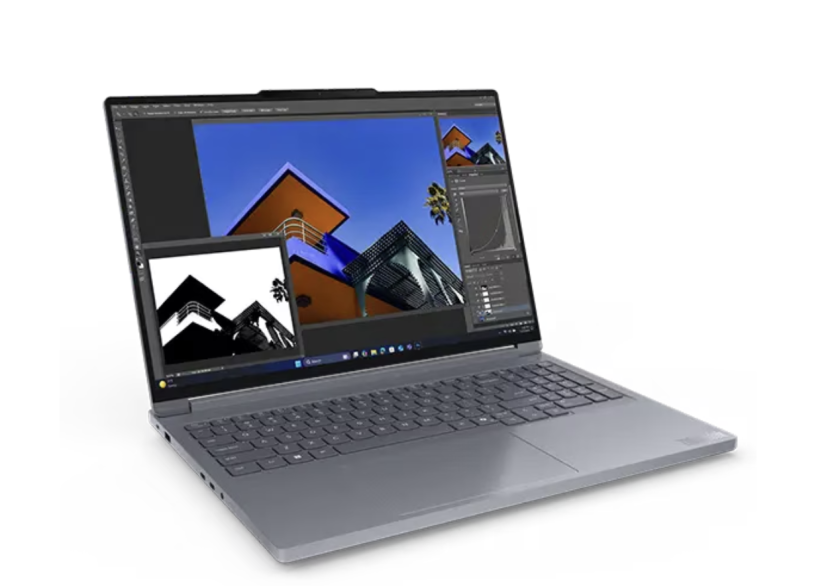
Lenovo has expanded the configuration options for its ThinkBook 16p Gen 6, adding Intel's Core Ultra 9 290HX Plus processor and Nvidia's GeForce RTX 5070 laptop GPU with 12GB of GDDR7 VRAM, as reported by Notebookcheck on July 22, 2026. The update lands without a chassis redesign — the same 16-inch aluminum body, the same 3.2K IPS display running at 165 Hz, and the same 85 Wh battery carry over from the original model that Notebookcheck called "one of the best 16-inch multimedia laptops" in its December 2025 review.
The core argument for the refresh is straightforward. Buyers who passed on the original ThinkBook 16p Gen 6 because its 8GB of VRAM felt too close to the floor for intensive creative work now have a direct upgrade path within the same generation, without needing a new review to understand the chassis. The display calibration, build quality, thermals, and expansion options are all unchanged. Only the silicon and the VRAM pool are different.
What that actually means in practice requires one important clarification upfront. The RTX 5070 12GB variant in this machine is not a faster GPU in the conventional sense. Independent benchmarks published in April and May 2026 showed the 12GB RTX 5070 laptop performing essentially identically to the 8GB variant in synthetic tests, because both versions share the same 128-bit memory bus, the same 4,608 CUDA cores, and the same 384 GB/s of memory bandwidth — a fact confirmed at the GPU's April 28 launch. The additional VRAM comes from denser memory chips — 24-gigabit modules instead of 16-gigabit — not from a wider bus or additional chips. The gain is capacity, not throughput.
Read more: Lenovo Legion 9i Gets Intel's Final Arrow Lake CPU: What Buyers Must Know Now
What the RTX 5070 12GB Actually Does (and Does Not Do)
That distinction matters more than it might appear. When a workload hits the 8GB ceiling — large local language model inference, memory-heavy gaming at the machine's native 3.2K (3200x2000) resolution, or 3D scene management with complex textures — the 12GB variant delivers real, measurable relief. Early benchmark data showed the 12GB RTX 5070 dramatically outperforming the 8GB version when running a 27-billion-parameter local LLM model at full quality, while performing identically on that same model at quantized 9-billion-parameter settings. The engineering reason is straightforward: at 9 billion parameters, the 8GB version never saturates its VRAM pool; at 27 billion parameters, it runs out of headroom entirely.
The 115W total graphics power (TGP) cap is the other variable buyers need to understand. Dedicated gaming laptops frequently run the RTX 5070 at 140 to 175 watts — and at those power budgets, they extract meaningfully higher GPU performance from the same chip. The ThinkBook 16p Gen 6 runs both the RTX 5060 and RTX 5070 at the same 115W ceiling, which is a deliberate design choice consistent with the machine's positioning as a professional creator laptop rather than a gaming machine. The thermal and acoustic character of the chassis is optimized for sustained creative workloads at this power level. Buyers looking for maximum raw GPU throughput should evaluate TGP alongside VRAM capacity when comparing configurations.
That said, the RTX 5070 12GB runs on Nvidia's Blackwell architecture, and Blackwell's DLSS 4 Multi-Frame Generation is available regardless of power limit. On supported titles and applications, DLSS 4 can generate up to three AI-rendered frames for every natively rendered frame — a 4x output multiplier that partially offsets the TGP constraint for visual-output workloads like gaming and GPU-accelerated video preview.
Why Does the RTX 5070 Exist in Two Memory Configurations?
The 12GB RTX 5070 laptop variant launched in April 2026 as part of Nvidia's response to an ongoing GDDR7 memory supply constraint. Nvidia's driver patch notes confirmed that the 24-gigabit memory modules — which produce the 12GB configuration — were introduced to give laptop manufacturers an additional inventory pool alongside the 16-gigabit modules used in the 8GB variant. The two variants coexist at different price points, with OEMs choosing which to implement in a given configuration.
GDDR7 itself is a meaningful step forward from the GDDR6 used in prior-generation laptop GPUs. Micron's GDDR7 specifications confirm that GDDR7 achieves up to 32 gigabits per second per pin — representing roughly 60 percent more bandwidth than GDDR6 — through PAM3 (pulse amplitude modulation with three signal levels) signaling, and delivers better than 50 percent improvement in power efficiency versus GDDR6. Both the 8GB and 12GB RTX 5070 variants benefit from these GDDR7 characteristics equally, since the memory standard and module count are identical between them.
Same Chassis, Substantially Different CPU Ceiling
The headline CPU addition is the Core Ultra 9 290HX Plus, Intel's 24-core Arrow Lake HX flagship — a processor that until this update was found primarily in high-end gaming machines: the Razer Blade 18 2026, the MSI Raider 16 Max HX, and the Alienware 16X Aurora (currently listed at $3,459 on Amazon). Notebookcheck's benchmarks show the 290HX Plus delivering meaningfully faster multi-core throughput than both the Core Ultra 7 255HX in the original review unit and the mid-tier Core Ultra 9 275HX.
For CPU-bound workloads — video editing, 3D rendering, software compilation, large AI inference jobs — the 290HX Plus represents a genuine tier increase over the original ThinkBook 16p Gen 6 configuration. For GPU-dominated workloads, including most gaming, the GPU (and its TGP cap) remains the dominant performance variable.
Lenovo has also added a lower-entry CPU option with the Core Ultra 7 251HX. At 18 cores, the 251HX slots below the existing Core Ultra 7 255HX and, according to Notebookcheck's comparative benchmarks, trails the 290HX Plus by more than 20 percent in multi-core workloads. Buyers stepping into the ThinkBook 16p Gen 6 for the first time should look closely at which CPU tier they're selecting — the configuration options now span a wide performance range.
Creator Laptop With a Gaming Laptop's CPU
The ThinkBook 16p has always occupied an unusual position in Lenovo's product lineup. Designed for creative professionals and sitting under the ThinkBook brand rather than the Legion gaming line, it has consistently shipped with gaming-grade GPU configurations — and now matches the CPU tier of gaming flagships costing substantially more. What separates it from those machines is intentional: the understated two-tone aluminum chassis, the absence of RGB lighting, and the software stack oriented toward productivity rather than gaming UI.
For a buyer who needs gaming-tier CPU and GPU performance in a machine that reads as a professional device in a conference room or client meeting, the ThinkBook 16p Gen 6 with RTX 5070 12GB closes much of that gap. Prior reviews of the original configuration remain substantially valid given the unchanged chassis, display, battery, and connectivity.
Pricing Not Yet Announced
Lenovo has not published pricing or availability details for the RTX 5070 12GB or Core Ultra 9 290HX Plus configurations as of this writing. The ThinkBook 16p G6 with RTX 5070 12GB configuration is listed in Lenovo's PSREF database with a PSREF entry dated May 6, 2026, but no regional pricing has been confirmed.
Buyers who evaluated the original ThinkBook 16p Gen 6 and held off due to VRAM constraints now have a confirmed upgrade path within the same chassis generation.
Lenovo Is a Chinese Company: What China's Laws Require
Lenovo Group Limited is incorporated in Hong Kong, with its primary operational headquarters in Beijing. Approximately 30 percent of Lenovo's shares are held by Legend Holdings Corporation, which is majority-owned by the Chinese Academy of Sciences — a government-backed research institution. Three Chinese laws apply to Lenovo's global operations and cannot be waived by corporate policy, server location, or Western incorporation address:
China's National Intelligence Law (2017), Article 7 requires that all organizations and citizens operating under Chinese jurisdiction must support, assist, and cooperate with national intelligence work. This obligation applies to Lenovo's global operations, not solely to activities conducted inside China.
China's Cybersecurity Law (2017) imposes data localization requirements and mandates that network operators provide government access to data upon request.
China's Data Security Law (2021) establishes additional government data access obligations, including cooperation with national security investigations.
These are fixed legal conditions, not risks to be weighed against price. No Lenovo privacy policy, no US corporate structure, and no representation by the company's Western-based executives can override these statutory requirements under China's National Intelligence Law.
Lenovo's documented security history includes: a 2006 US State Department network ban citing Chinese ownership risks; a 2007 MI5 assessment identifying backdoors, which led Five Eyes intelligence partners (the US, UK, Canada, Australia, and New Zealand) to exclude Lenovo devices from classified systems; a 2008 incident in which Lenovo laptops deployed with the US Marine Corps in Iraq were found transmitting data to China; and a 2015 disclosure of Superfish pre-installed software, which a 2019 Pentagon Inspector General report characterized as an "information aggregator" designed to surveil user credentials and funnel user data to storage centers on the Chinese mainland. In July 2025, security firm Binarly disclosed six vulnerabilities (CVE-2025-4421 through CVE-2025-4426) in Insyde BIOS firmware used by Lenovo devices, four of which received high-severity ratings, affecting System Management Mode — the firmware layer that executes before the operating system loads and persists through OS reinstallation. All of these incidents are documented in prior TechTimes coverage of Lenovo hardware.
What data the ThinkBook 16p Gen 6 may collect: Location data, usage patterns, diagnostic telemetry, application activity, and hardware inventory through Lenovo's software stack, including Lenovo Vantage. Any of these categories could be subject to a government intelligence request under the laws named above. No independent third-party security audit of the ThinkBook 16p Gen 6 has been published.
What readers can do to reduce (not eliminate) exposure: Wipe the pre-installed operating system and reinstall Windows from Microsoft's official media rather than Lenovo's recovery partition. Remove all Lenovo-branded software that is not required for hardware function, using hardware drivers pulled from Lenovo's PSREF database where necessary. Disable Lenovo telemetry services in Windows Task Scheduler and monitor Lenovo's recurring BIOS security bulletins — firmware patches should be applied promptly.
No mitigation fully addresses the structural legal obligation Lenovo carries as a Chinese-domiciled company. The legal framework described above is the relevant background for any buyer handling sensitive professional, government, or classified data on this hardware.
Read more: Lenovo Legion Tab Gen 5 Review: Best Android Gaming Tablet of 2026, Privacy Risks Included
Should You Buy the ThinkBook 16p Gen 6 RTX 5070 12GB?
The ThinkBook 16p Gen 6 with RTX 5070 12GB is the right answer for a specific buyer: someone who needs a professional-looking 16-inch laptop with gaming-grade GPU power, genuine VRAM headroom for local AI inference and high-resolution creative workloads, and a well-reviewed chassis with a display calibrated to X-Rite color accuracy standards. The fact that prior reviews of the RTX 5060 configuration remain largely valid — the chassis, thermals, display, and connectivity are identical — is a meaningful advantage over buying a completely new design without an established review record.
The configuration is the wrong answer for a buyer whose primary concern is raw GPU throughput in games, because the 115W TGP cap is a real ceiling: gaming machines with the same RTX 5070 chip typically run it 25 to 60 watts higher. And for any buyer handling sensitive data, the China law section above is not optional reading — it is the purchase condition.
Pricing, when announced, will determine whether the premium over the existing RTX 5060 configuration is proportionate to the capacity upgrade. That information is not yet available.
Frequently Asked Questions
Is 8GB of VRAM enough, or is the RTX 5070 12GB upgrade worth it?
For most creative workflows at the ThinkBook 16p Gen 6's native 3.2K resolution, 8GB is increasingly tight. The 12GB variant delivers meaningful relief for large local language model inference (models above roughly 13 billion parameters), memory-saturated 3D scenes, and high-texture-density gaming at native resolution. The catch is that the 12GB variant uses denser memory chips rather than a wider memory bus — so bandwidth (384 GB/s) and raw GPU compute are essentially identical between the two variants. The upgrade is VRAM capacity, not GPU speed. If your workloads regularly hit the 8GB wall, the upgrade is real. If they do not, the existing configuration's GPU performance is unchanged.
What does the same 115W TGP mean for ThinkBook 16p Gen 6 gaming performance?
TGP (total graphics power) sets how many watts the GPU can draw under sustained load. Gaming laptops from Razer, MSI, and Alienware frequently allocate 140 to 175 watts to the same RTX 5070 chip — and extract proportionally more performance as a result. The ThinkBook 16p Gen 6 caps both its RTX 5060 and RTX 5070 at 115W, which delivers a quieter, cooler machine optimized for sustained workloads rather than peak gaming throughput. DLSS 4's Multi-Frame Generation on Blackwell helps close that gap visually in supported titles, but cannot fully substitute for the compute headroom a higher TGP provides.
Is Lenovo a Chinese company, and does that affect the ThinkBook 16p Gen 6?
Lenovo is headquartered in Beijing and incorporated in Hong Kong. It is subject to China's National Intelligence Law (2017), which legally requires all Chinese organizations to cooperate with government intelligence requests — a requirement that applies to Lenovo's global operations. China's Cybersecurity Law (2017) and Data Security Law (2021) impose additional government data access obligations. No Lenovo privacy policy or Western corporate structure overrides these laws. Lenovo has a documented history of security incidents including the 2015 Superfish pre-installation, 2025 BIOS firmware vulnerabilities rated high-severity by security firm Binarly, and a 2026 proposed class-action lawsuit (Christy v. Lenovo, Case No. 3:26-cv-01133) alleging data transmission to China — a case in active litigation with no verdict reached. Buyers handling sensitive professional data should read the security section in this article before purchasing.
How does the Core Ultra 9 290HX Plus compare to the CPU in the original ThinkBook 16p Gen 6?
The original Notebookcheck review unit shipped with the Core Ultra 7 255HX, a 20-core Arrow Lake HX processor. The 290HX Plus adds four more cores (reaching 24 total), higher clock ceilings (up to 5.5 GHz on performance cores versus 5.2 GHz on the 255HX), and a faster die-to-die interconnect that reduces the memory latency penalty inherent to Arrow Lake's disaggregated tile architecture. Notebookcheck's benchmarks indicate the 290HX Plus delivers significantly faster multi-core throughput than both the 255HX and the mid-tier 275HX. For CPU-bound workloads — video encoding, 3D rendering, compilation, large inference jobs — this is a genuine performance tier increase. For GPU-limited tasks, the TGP cap remains the binding constraint.

-
 C114 Communication Network
 -
 Communication Home
