
 Search

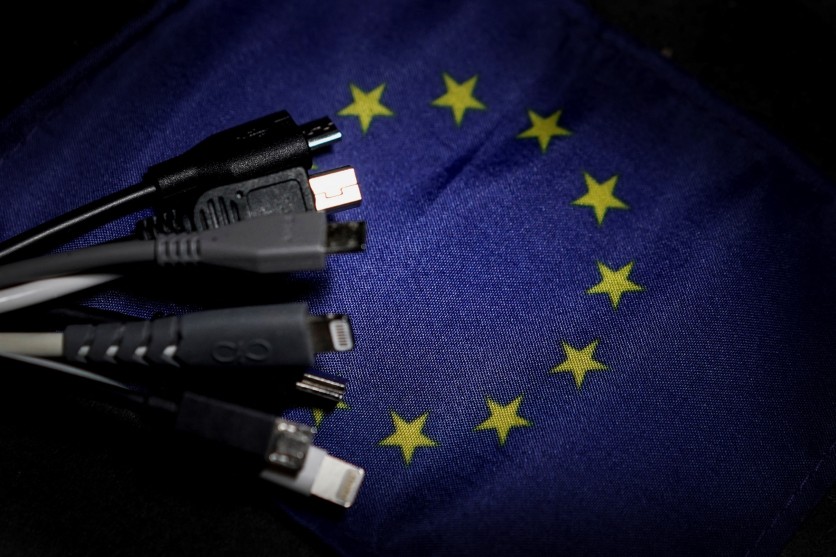
A picture taken on February 6, 2020 in Brussels shows plugs for mobile charger next to a European flag. KENZO TRIBOUILLARD/AFP via Getty Images
Anyone planning to buy a Kindle before the end of 2026 faces a genuine decision: the current lineup is available now, but a redesigned generation built around user-replaceable batteries and a faster AI processor is confirmed to be coming before the year is out. The driver is a European Union regulation with a February 18, 2027 deadline that Amazon — holder of roughly 72 percent of the global e-reader market — cannot afford to miss, according to Amazon's complete Kindle lineup refresh confirmed by Good e-Reader on July 14, 2026.
Article 11 of EU Battery Regulation 2023/1542 is the mechanism. From that date, any portable device placed on the EU market must be designed so that end users can remove and replace the battery themselves using only commercially available tools. Heat guns and chemical solvents to dissolve adhesive are explicitly prohibited. Manufacturers must also make replacement batteries available at reasonable, non-discriminatory prices for at least five years after a model's commercial life ends. The deadline is fixed and non-negotiable: any device that does not comply cannot legally be sold in the EU after February 18, 2027.
Read more: EU Battery Law Redesigns Switch 2 This Autumn, Retires Switch 1 in Europe
Every Kindle Model Gets Rebuilt — Not Just the New Ones
Good e-Reader, which has reported on direct Amazon disclosures regarding the new lineup, confirmed on July 14, 2026 that the redesign covers every current model: the Kindle Paperwhite, Paperwhite Signature Edition, Colorsoft, Kindle Scribe, and base Kindle. That includes models introduced only in late 2025 and early 2026. The primary change is a switch from adhesive bonding — the manufacturing approach that has held Kindle back panels in place for years — to screw-fastened enclosures that allow end users to open the device and swap the battery.
The hardware change is more significant than it appears. Adhesive bonding in Kindle designs serves a dual purpose: it keeps devices thin and it creates a continuous, unbroken seal that underpins their water resistance ratings. A screw-on back panel cannot replicate that seal directly. Instead, engineers must use gasket-based solutions — compressed O-rings or perimeter seals that maintain an IP rating without adhesive. That architecture works, but it requires re-engineering the entire chassis to accommodate the seal geometry, the fastener positions, and the clearance for a removable battery compartment. Amazon is not updating existing Kindles; it is rebuilding them from scratch.
The regulation does allow a narrow derogation for products primarily designed to operate in wet environments. Under that provision, water-resistant devices that achieve IP67 certification or higher and whose batteries retain at least 80 percent capacity after 1,000 charge cycles — or 83 percent after 500 cycles — may restrict battery replacement to independent professionals rather than end users, according to EU battery derogation guidance from Cooley Productwise. For most consumer e-readers, which rarely carry IP67 ratings and cannot easily document cycle performance to that standard, the carve-out is inaccessible. Amazon is not pursuing it.
What Amazon's Firmware Already Reveals — and One Catch
The evidence that Amazon began redesigning its hardware before any public announcement came from an unexpected source. A Kindle software update — firmware version 5.19.4, since pulled — contained text referencing battery replacement infrastructure that would be meaningless on a device with a permanently sealed battery. Among the strings recovered by a user on the MobileRead forum: a warning that charging had been limited because the installed battery could not be recognized, a recommendation to use a battery meeting Amazon specifications, and an instruction to scan a QR code to purchase a battery replacement kit. The firmware's subsequent removal from Amazon's update servers confirmed the company was not ready to announce the new devices, not that the redesign was abandoned.
There is, however, a meaningful caveat embedded in that same firmware. The language — "battery that meets Amazon specifications" paired with a charging limitation for unrecognized cells — is a textbook description of parts pairing: a software control that restricts the device to first-party or approved batteries and degrades performance when it detects a third-party replacement, as detailed in the iFixit parts pairing analysis. Parts pairing is exactly what the EU Battery Regulation aims to prohibit. The regulation states explicitly that software cannot be used to impair the replaceability of batteries, including through pairing spare parts to individual units. If Amazon ships new Kindles with the charging-limitation behavior intact, it may find itself compliant on the hardware side and non-compliant on the software side. That tension will be resolved — or litigated — before the February deadline.
AI Hardware Comes Along for the Compliance Ride
The compliance deadline is also creating a window Amazon appears to be using for a broader hardware upgrade. The new Kindles are expected to carry faster processors with more RAM than the current lineup, enabling on-device AI capabilities that go beyond the Kindle Recaps and Story So Far features available today, according to Good e-Reader's reporting on the new lineup.
The timing aligns directly with new chip architecture purpose-built for AI-capable e-readers. At Computex 2026 in late May, E Ink and MediaTek jointly announced an expanded collaboration built around two new system-on-chips: the MT8115 and MT8126. The platform is the first to integrate a hardware timing controller directly onto an AI-capable processor designed for ePaper displays — an architectural change that matters because prior e-reader chips required a separate external timing controller, adding latency and power overhead to every display refresh. The MT8115 and MT8126 combine those functions on a single die, delivering up to 7.4 trillion operations per second of AI compute while maintaining the low-power characteristics that give e-readers their weeks-long battery life.
On-device capabilities demonstrated with the MediaTek platform include real-time translation across more than 20 languages, multi-speaker voice recognition, meeting transcription, and long-document summarization — all running locally without a cloud connection. Whether Amazon licenses the MediaTek platform directly or develops its own silicon, the direction established by the Computex announcement defines what the next generation of Kindles is expected to do.
Read more: Kindle Paperwhite Falls to a 2026 Low: Best E-Reader Deal Before Amazon Prime Day
Why Is February the Hard Deadline?
The February 18, 2027 date comes directly from Article 11's implementation schedule within EU Battery Regulation 2023/1542, which entered into force in February 2024 but staged its most demanding requirements across a multi-year timeline. February 18, 2027 is the date Article 11's portable-battery replaceability requirement becomes binding for all new products placed on the EU market. Devices already sold before that date remain legal; the obligation applies only to products shipped to retailers after that cutoff.
Europe accounts for roughly 27 percent of global Kindle shipments, according to Good e-Reader's reporting on Amazon market data, with Germany, the UK, and France as the three primary markets. For a company with Amazon's production scale, maintaining separate EU-compliant and non-compliant Kindle product lines is almost certainly more expensive than standardizing the redesigned hardware globally — the same logic that made the EU's USB-C mandate effective worldwide despite applying only within the bloc. Analysts and industry observers expect the battery-swappable Kindles to ship everywhere Amazon sells e-readers, not just in Europe.
Amazon Is Ready — Most Rivals Are Not
Amazon's readiness stands in sharp contrast to the rest of the e-reader industry. A Good e-Reader analysis published in late June identified the majority of competing brands — including Onyx Boox (Shenzhen, China), Bigme, Meebook, PocketBook, and Tolino — as inadequately prepared for the change. These companies face a compliance burden that goes well beyond swapping in different fasteners: they must redesign chassis, establish replacement-battery supply chains, make parts available for five years, publish replacement instructions, and in some cases seek fresh regulatory certifications — all before February 2027. Smaller brands that depend entirely on hardware sales and operate without resources for a full-platform redesign have few good options.
Rakuten Kobo, Amazon's closest Western rival, had moved the most proactively of any e-reader brand as of mid-2026. The company partnered with iFixit roughly two years ago for screen repairs, component swaps, and battery replacement support, making genuine replacement parts available through the iFixit Kobo Repair Hub for its Clara BW, Clara Colour, and Libra Colour devices. The reMarkable Paper Pure, announced May 6, 2026 at $399, adopted a ten-screw chassis with a 3,820 mAh battery that the company's design signals are intended to be user-replaceable, though reMarkable has not formally confirmed the battery replacement process or made replacement cells available for purchase as of this writing.
For brands that cannot meet the February deadline, the realistic options are absorbing the redesign costs, withdrawing from European sales, or exiting the market. Industry analysis suggests Chinese-headquartered manufacturers in the Android-based e-reader segment — which compete primarily on price — may be the most likely to exit the EU rather than fund a platform overhaul.
What This Means if You Own — or Are Buying — a Kindle
The February 18, 2027 deadline applies only to devices placed on the EU market after that date. Every Kindle currently in use, regardless of country, remains fully legal to own and operate. The regulation is not retroactive.
For anyone considering a Kindle purchase before the new lineup arrives, the decision turns on timing and priorities. The current Kindle Paperwhite, Colorsoft, and Scribe are capable devices; nothing about today's announcement makes them stop working. But a buyer who purchases one of these models in the next few months will own hardware built to the old sealed-battery standard, while a buyer who waits for the new generation will get a device designed from the ground up for a decade of use — with a swappable battery available at a regulated reasonable price for at least five years after the model is discontinued.
Battery degradation is one of the most consistent reasons readers replace e-readers before the display or electronics fail. A user-replaceable battery, combined with the regulation's requirement that replacement cells remain available to independent repair shops — not just Amazon-authorized centers — changes the long-term economics of Kindle ownership materially.
Amazon has not announced specific release dates, prices, or hardware specifications for any new model. Given the February 2027 deadline, a product launch in the fourth quarter of 2026 would leave the company limited margin for delays.
What the July 31 Right to Repair Directive Adds
The battery regulation is one component of a broader legislative framework that becomes more consequential in the weeks ahead. The EU's Right to Repair Directive — Directive 2024/1799 — takes effect July 31, 2026, seventeen days from today. That directive requires manufacturers to offer repairs at reasonable prices, provide spare parts and repair manuals, and prohibits manufacturers from refusing repairs because a device has previously been serviced by a third party or repaired with non-original parts. It also bars the use of software to prevent repair — directly addressing the parts-pairing practice that Amazon's firmware appears to anticipate.
Together, the two regulations form an interlocking framework: Article 11 of the Battery Regulation mandates that hardware must be physically accessible for battery replacement; the Right to Repair Directive mandates that software cannot then block the swap. For Kindle owners, the practical result — when it arrives — is a device that can be meaningfully extended beyond its battery's first lifespan, at a price the regulation requires to be reasonable.
Frequently Asked Questions
Will the new Kindles with replaceable batteries be sold outside Europe?
Amazon has not confirmed global availability, but industry analysis strongly points toward a worldwide rollout. Maintaining separate EU-compliant and non-compliant production lines adds significant cost and logistical complexity. The USB-C mandate established the precedent: when the EU required a charging standard that applied only within the bloc, manufacturers standardized it globally because producing two hardware variants made no financial sense. E-reader production economics follow the same logic.
Does the EU's parts-pairing prohibition apply to Amazon's software approach for battery authentication?
Yes, directly. Article 11 of EU Battery Regulation 2023/1542 explicitly prohibits using software to impair the replaceability of batteries, including by pairing spare parts to individual units. Amazon's pulled firmware — which limits charging performance for batteries the device cannot recognize — describes exactly this mechanism. Whether Amazon modifies that behavior before launch, or faces a compliance challenge after launch, is unresolved as of this writing. It is the central open legal question in the new Kindle story.
Should I buy a current Kindle now, or wait for the new lineup?
If battery longevity matters to your decision, waiting for the redesigned lineup is the more durable choice — the new hardware will be engineered for user-serviceable battery replacement, and EU regulations require replacement cells to remain available for at least five years after a model's commercial life ends. If you want a Kindle today for active use, the current Paperwhite or Colorsoft remain capable devices; the regulation does not affect their usability. Amazon has not announced pricing or release dates for the new generation, so a late-2026 window is likely but not confirmed.
Does the EU battery law affect every e-reader brand, or just Amazon and Kobo?
The regulation applies to any portable device placed on the EU market after February 18, 2027, regardless of manufacturer. Amazon and Kobo are the most prepared; most other brands — including Onyx Boox, Bigme, Meebook, PocketBook, and Tolino — have not publicly confirmed compliance plans as of July 2026. Brands that cannot meet the deadline must choose between redesigning their products, selling only outside the EU, or exiting the market entirely.

-
 C114 Communication Network
 -
 Communication Home
