
 Search

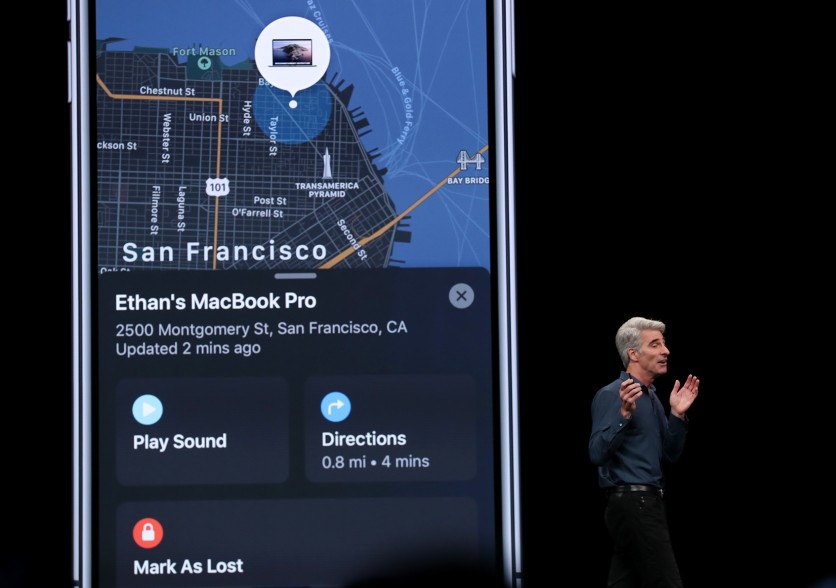
Apple's senior vice president of Software Engineering Craig Federighi speaks during the keynote address during the 2019 Apple Worldwide Developer Conference (WWDC) at the San Jose Convention Center on June 03, 2019 in San Jose, California. Justin Sullivan/Getty Images
Apple seeded iOS 26.6 Beta 5 to registered developers on July 13 and, for the first time in this release cycle, opened the same build to public testers on the same day — a signal that the update is entering its final stretch before a general release expected around July 27. The decision to advance to a dual-track beta marks the last significant checkpoint before an RC and public launch, and it brings the update's two substantive additions — an anti-theft auto-lock feature and a transparency fix for parental contact-blocking — into the hands of the broadest pre-release audience yet.
The update is tightly scoped. With Apple's engineering focus largely shifted to iOS 27, iOS 26.6 carries no new visual design work or Apple Intelligence changes. What it does carry is meaningful for everyday security: a forthcoming feature that would lock an iPhone the moment sensors determine it has been violently snatched, and a notification that tells parents when they have hit the ceiling on blocked contacts in Family Sharing.
Read more: Apple Reportedly Working on Security Feature That Detects if iPhone Has Been Snatched From Owner
iPhone Theft Has Created Genuine Demand for an Instant Lock
The problem the anti-snatch feature is designed to solve is well-documented. London's Metropolitan Police recorded 117,211 mobile phone thefts in 2024, a 29.1 percent increase from the 90,810 logged in 2022 — with iPhones representing the largest single category of stolen devices, accounting for just under 71,000 of those thefts. At 320 thefts per day, the Metropolitan Police's own commander described the scale as "industrial," fueled by criminal networks that sell or export stolen devices.
The specific vulnerability Apple is targeting is the brief window between a snatch and a lock. A thief who grabs an unlocked iPhone gains access to banking apps, stored passwords, Apple Pay, and contact lists before any existing protection activates. Activation Lock and Find My are post-theft recovery tools, not real-time deterrents. Stolen Device Protection — first introduced in January 2024 with iOS 17.3 and made default-on with iOS 26.4 — adds biometric requirements and a one-hour delay for sensitive account changes, but it still requires the device to first enter a vulnerable state. The anti-snatching feature is designed to close that gap by locking the device before a thief can act.
How the Detection System Works: Five Signals, One Decision
The detection architecture, identified in iOS beta code by 9to5Mac in May and present across every successive beta build, uses five signals evaluated simultaneously rather than any single sensor.
The first two signals come from the iPhone's own hardware. The accelerometer measures the sudden, sharp linear acceleration of a grab — the force vector of a violent yank differs from the smooth arc of running or cycling. The gyroscope captures the abrupt angular rotation that follows as the device is redirected. Neither sensor alone is sufficient to declare a theft, but together they establish the motion signature of a snatch.
The third signal is what distinguishes Apple's approach from Android's Theft Detection Lock. A paired Apple Watch continuously monitors its Bluetooth distance to the iPhone. When that distance increases suddenly and rapidly — the Watch stays on the owner's wrist while the iPhone moves away — the system registers a device-separation event consistent with theft. Google's Theft Detection Lock, available on Android 10 and later, uses AI, the device's own motion sensors, Wi-Fi, and Bluetooth, but does not have access to a companion wearable's independent location signal.
The final two signals operate as suppressors rather than detectors. If the iPhone is connected to a known Wi-Fi network — home, office, a trusted location — the lock does not trigger. If geofencing places the device at a recognized location, the same suppression applies. These checks mirror the existing logic of Stolen Device Protection and give the multi-sensor system a contextual layer that reduces false positives during legitimate high-motion activities like commuting or exercise.
When all signals align — sudden violent motion, Watch separation, unfamiliar network, unfamiliar location — the device locks and Stolen Device Protection activates: biometric authentication becomes mandatory for stored passwords and payment cards, and a one-hour delay gates any Apple Account password change.
One engineering question remains unresolved in the current beta: whether an Apple Watch is required for the feature to function at all, or whether it operates in a degraded mode on iPhones without a paired Watch. Forbes noted this ambiguity in its May reporting, and Apple has not officially confirmed the feature or its final specification.
Apple Is Building on Existing Architecture, Not Starting from Scratch
The anti-snatching feature is not Apple's first deployment of motion-based event classification on wearable hardware. Apple Watch fall detection — which uses the Watch's own accelerometer and gyroscope to identify the deceleration pattern of a fall, then alerts emergency services — is a direct precedent. Apple has operated that motion-classification system at scale since Apple Watch Series 4 in 2018.
Stolen Device Protection, already active on all iPhones as of iOS 26.4, provides the security scaffolding the new feature snaps into. The anti-snatching system essentially moves the activation point for that scaffolding from "after theft is suspected" to "at the moment of theft detection." The code references in successive betas suggest this integration is real and progressing, though it has not yet appeared in user-accessible form.
Apple has been under pressure from UK law enforcement to do more. In November 2025, London's Metropolitan Police publicly blamed Apple for failing to act on the theft epidemic and called on the company to use the National Mobile Phone Register more aggressively for identifying and disabling stolen devices — criticism Apple deflected by telling the Met to focus on "traditional policing."
Blocked-Contact Limit Transparency: Smaller Change, Regulatory Weight
The second notable change in iOS 26.6 is more modest in user-facing terms but carries disproportionate regulatory significance. The update adds a notification when a user reaches the maximum number of blocked contacts — a hard ceiling documented in iOS code at 20,000 entries.
For most users, this is a quality-of-life fix. For parents relying on Apple's Family Sharing and Screen Time infrastructure to block specific contacts from reaching their children, it exposes a real constraint. A blocked-contacts ceiling that is invisible until it is breached is a ceiling that can fail silently. Making it visible is a first step toward transparency, but it does not raise the ceiling or remove it.
The change lands as Apple faces scrutiny in both the UK and EU over its child-protection infrastructure — timing that is almost certainly not coincidental.
Regulatory Backdrop: Two Separate Compliance Clocks
Apple is threading child-safety compliance obligations across both the iOS 26.6 and iOS 27 release cycles under two distinct regulatory deadlines.
In the UK, Apple's March 25, 2026 rollout of device-level age verification with iOS 26.4 drew praise from Ofcom, the UK's communications regulator, which called it "a real win for children and families." The implementation requires UK users to confirm they are 18 or older to access age-restricted App Store content, using account-history inference, a credit card, or a government driving license. That implementation was voluntary — the UK's Online Safety Act requires age verification from platforms and websites, not operating systems, and Apple chose to go further than the law strictly mandated. The UK's Online Safety Act gives Ofcom power to fine companies up to 10 percent of global annual revenue for noncompliance, and both Meta and Google have already faced regulatory pressure under the regime.
A second, harder deadline sits approximately September 8, 2026 — days after iOS 27 is expected to ship — requiring Apple to introduce device-level controls that prevent children from taking, sending, receiving, or viewing explicit images. The parental-controls overhaul planned for iOS 27 is Apple's primary response to that requirement, but incremental changes like the blocked-contacts notification in iOS 26.6 reflect how Apple is distributing that work across the full release cycle rather than concentrating it in a single update.
At the EU level, the picture is more complicated. The temporary ePrivacy Directive derogation that had allowed platforms to voluntarily detect and remove child sexual abuse material from communication services expired on April 3, 2026, after EU Parliament negotiations on an extension collapsed. The EU Parliament voted on July 9, 2026 to allow a reinstatement of the derogation through 2028, but the measure had not yet fully entered into force as of mid-July, leaving the legal situation for voluntary CSAM detection in flux. That creates pressure on Apple and other platform operators to demonstrate visible, proactive child-safety measures through other means — exactly the category of change the blocked-contacts notification represents.
Read more: iOS 27 Public Beta Arrives This Week: How to Install, and the iPhone 18 Dates It Locks In
When iOS 26.6 Ships, and What Comes After
Beta 5 arriving on July 13 points to a general release around the week of July 27, consistent with Apple's pattern for late-July x.6 point updates. iOS 18.6 and iOS 17.6 both shipped on July 29 of their respective years; iOS 16.6 landed July 24. A release candidate is expected roughly a week before the public launch.
For non-beta users, iOS 26.5 is the current shipping version. iOS 26.6 will carry most iPhone users through to the fall iOS 27 launch alongside the iPhone 18 lineup in September.
Whether the anti-snatching feature ships with iOS 26.6 or debuts with iOS 27 is not yet confirmed. The code references have appeared in successive beta builds — a sign of active development — but the feature has not entered user-accessible testing in any beta to date. Apple has not officially announced it.
How to Join the Public Beta
Any iPhone running iOS 26.5 can now enroll in the iOS 26.6 public beta at beta.apple.com using an Apple ID, with no developer account or payment required. After enrollment, the beta appears under Settings → General → Software Update → Beta Updates. Apple and third-party testers recommend installing betas only on a secondary device, as pre-release software can introduce instability and data loss.
Frequently Asked Questions
How does Apple's anti-snatching feature know the difference between a theft and someone just dropping their phone?
The system does not rely on a single sensor. It evaluates five signals simultaneously: the accelerometer identifies the sharp, directed force vector of a violent grab; the gyroscope registers the abrupt angular change as the device is redirected; the paired Apple Watch detects sudden, rapid Bluetooth distance separation (the Watch stays on the owner's wrist while the phone moves away); and two suppressor signals — familiar Wi-Fi network and recognized location — prevent the lock from firing when the phone is at home or the office. A dropped phone would produce a different accelerometer signature and would not simultaneously trigger Watch separation, an unfamiliar network flag, and a location alert. That said, false-positive rates in real-world conditions have not been disclosed, and Apple has not confirmed the feature's final specification.
Do you need an Apple Watch for the anti-snatching feature to work?
This is the key unresolved engineering question. The Apple Watch proximity signal is described as a secondary verification layer that reduces false positives — but reporting from Forbes noted, based on the available beta code, that it is unclear whether the Watch is required for the feature to function at all or whether the iPhone can operate a degraded version of the detection using its own sensors alone. Apple has not officially confirmed the feature or its hardware requirements.
When is iOS 26.6 expected to release publicly?
Based on Apple's historical cadence — iOS 18.6 launched July 29, 2025; iOS 17.6 launched July 29, 2024; iOS 16.6 launched July 24, 2023 — iOS 26.6 is projected to release around the week of July 27, 2026. A release candidate is expected roughly a week before that. Non-beta users are currently on iOS 26.5.
What does Apple's iOS 26.4 age verification in the UK mean for adult users who just want to use their phone normally?
Most UK users with a longstanding Apple Account were verified automatically, without submitting any documents — Apple inferred their adult status from account age and payment history. Users without that history were required to scan a UK driving license or link a UK credit card; passports and debit cards were not accepted, a limitation that frustrated users whose only government ID is a passport. Users who declined to verify had their phones placed into a restricted mode: Safari and third-party browsers activate a Web Content Filter, Communication Safety scans activate in Messages and FaceTime, and App Store access to age-restricted apps is locked. Crucially, Apple's implementation went further than the UK Online Safety Act required — the Act targets platforms, not operating systems — meaning Apple chose to establish a device-level identity-check precedent voluntarily.

-
 C114 Communication Network
 -
 Communication Home
