
 Search

Cocorostore.jp.sharp
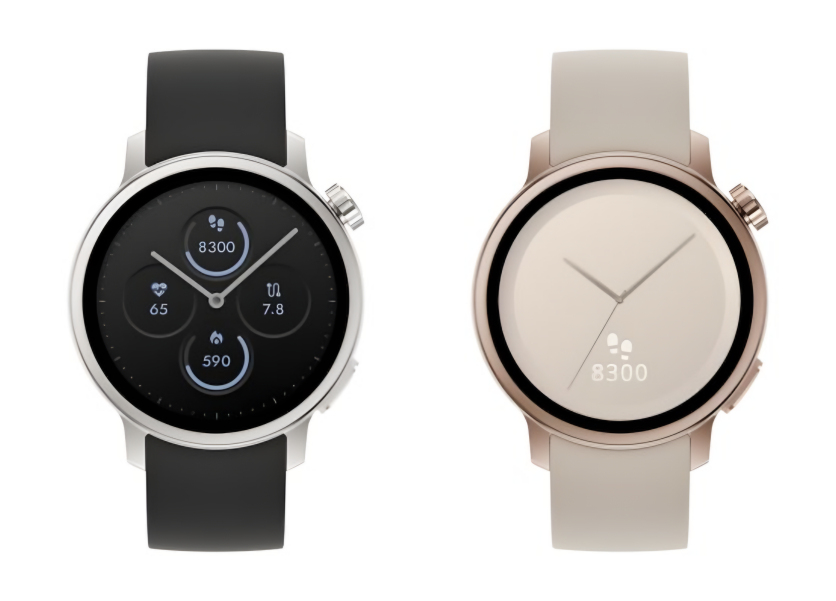
Sharp Corporation launched its first smartwatch on July 3 with a feature Apple, Samsung, and Garmin have yet to ship: a sensor that estimates how many calories a person has consumed without requiring any food entry, barcode scanning, or meal photos. The Karada Mate Watch, which goes on sale in Japan on July 9 for ¥59,400 (approximately $370), uses HEALBE FLOW technology HEALBE Corporation's proprietary FLOW technology to detect glucose absorption through the wrist and convert those readings into a running calorie balance — no input from the wearer required.
The capability has been commercially available in a niche form through HEALBE's own GoBe U band, sold in the United States, but the Sharp partnership puts the technology into a full-featured smartwatch design targeting mainstream buyers for the first time. Whether it works as described in everyday use remains, after more than a decade of contested testing, an open question.
Wearables Have Always Counted the Wrong Calories
Every fitness wearable that ships today can estimate how many calories a person has burned. Not one of the mainstream competitors can tell a wearer how many calories were consumed — at least not without the wearer doing the logging. Wearables have never tracked intake That gap has persisted not for want of effort but because the physiology of inferring nutrition from a wrist sensor is genuinely difficult.
The standard approach — food logging apps, barcode scanners, meal photo AI — requires active participation, and most users abandon it within weeks. Food logging adherence research A 2014 Stanford study found wearable devices were broadly poor at calorie tracking; HEALBE's GoBe technology was not included in that research, but the category-wide failure established the benchmark that passive sensing would need to beat.
Sharp's entry into wearables did not start with another sports watch or sleep ring. It started with a nutrition claim and, alongside it, a companion smart ring — the Karada Mate Ring, developed with Japanese sensor specialist SOXAI — that handles continuous biometric tracking, particularly sleep. The ecosystem launch signals that Sharp is positioning Karada Mate as a health management platform, not a single-device experiment.
How FLOW Technology Actually Works
HEALBE FLOW does not identify food on a plate. It does not scan a barcode. It does not analyze a meal photograph. What it does is track what happens inside the body after food has been eaten and digested.
The mechanism begins with bioelectrical impedance analysis, a decades-established technique in which a small alternating electrical current is passed through tissue and the resulting impedance — the resistance and reactance of the body to that current — is measured. At low frequency, the current flows through extracellular water only. At high frequency, it penetrates cell membranes and flows through intracellular water as well. The difference between the two readings reflects how water is distributed inside and outside cells.
When glucose is absorbed into cells after a meal, cells take in glucose and release intracellular water — a measurable fluid shift. HEALBE's sensor reads the shape of this impedance change over time, producing what the company calls a glucose absorption curve estimate. An algorithm then converts the curve into a calorie estimate.
Crucially, the system tracks absorbed energy, not ingested food. The Karada Mate Watch can also detect calories from internal sources — fat and glycogen reserves being metabolized — meaning the calorie ledger reflects what the body actually used, including energy drawn from stored fat. The system also accounts for macronutrient absorption rates: a mixed meal like a hamburger produces a different glucose curve than bread or meat eaten separately, because absorption timing differs by food type.
Sharp makes the wear requirement explicit: the watch must be worn 22 to 23 hours per day for calorie intake and burn tracking to function. This is not a technicality. Wrist BIA accuracy literature considers wrist-based BIA suitable for tracking trends in individuals over extended periods, not for single-measurement precision. The accuracy floor depends on the algorithm accumulating enough continuous impedance data to build an individualized baseline — a process that can take up to two weeks of consistent wear. Removing the watch for more than an hour or two breaks that calibration window.
The sensor suite surrounding the calorie feature is fully competitive: 1.32-inch OLED at 466×466 resolution with always-on display support, optical heart rate, SpO2, skin temperature, GPS, barometer, compass, light sensor, and Bluetooth 5.4. The case is 42×42×9.4mm in stainless steel with Corning Gorilla Glass 5, weighing approximately 33 grams. A 5 ATM and IP6X rating means the watch can be submerged and washed with hand soap. The design earned a 2026 iF Design Award and comes in gold and silver, using a standard 20mm band. Battery life is approximately 2.5 days.
The System's Known Accuracy Ceiling
The HEALBE FLOW technology has now been through three commercial product generations since 2014, and the independent testing record is genuinely mixed — not uniformly positive or negative.
The most favorable independent test, conducted by Digital Trends' Jeff Van Camp on the first-generation GoBe, showed the device within 10 percent of manual calorie tracking across seven straight days of parallel logging, with an average deviation under 6 percent. Van Camp described the experience as "a complete life changer" while simultaneously calling the device "one of the buggiest, most frustrating devices I've ever used."
The most unfavorable independent test, conducted by Alphr on the GoBe 2, produced a single-day reading of 480 calories consumed against a MyFitnessPal count of 1,665 calories for the same day. HEALBE's response — that alcohol calories are not counted and that delayed digestion of a large meal may credit the next day — is technically accurate but highlights real limitations: a system that cannot count alcohol and that delays calorie credit by 24 hours is a system with structural gaps for many real-world eating patterns.
Medical professionals were more categorical early on. Early medical skepticism San Francisco physician Mark Savant, quoted in Pando Daily's 2014 investigative coverage, stated the product "defies the laws of science as I understand them." Medical Futurist characterized GoBe 2 measurements as "arbitrary." VentureBeat, reviewing the GoBe 3 in 2019, noted that the UC Davis Foods for Health Institute study HEALBE cited — showing 89 percent accuracy — involved only 27 volunteers over two weeks and had not undergone peer review at the time of publication.
The underlying scientific concern is structural: the correlation between wrist-measured impedance changes and calorie intake depends on a chain of inferences, each adding its own error margin. Consumer BIA accuracy consumer-grade devices are generally accurate within ±10 percent against reference methods for body composition; calorie intake, a second-order inference from glucose absorption curves, adds further uncertainty.
HEALBE also officially acknowledges several categories where the system produces inaccurate readings:
Alcohol calories from ethanol are not detected; only carbohydrate calories in mixed drinks register. Ketogenic diets confound the system because fat metabolism does not produce the glucose absorption signals the algorithm interprets. Fasting and glycogen depletion produce readings because internal energy sources are being consumed, not because food was eaten. Medications affecting water-salt balance, cardiovascular function, or metabolic processes interfere with readings. Creams, oils, tattoos, or scar tissue on the sensor contact point degrade accuracy. Exercise immediately before meals creates impedance artifacts.
For a device marketing itself to health-conscious consumers, not all of whom eat standard carbohydrate-heavy diets, these are not edge cases.
That said, the goalpost for this technology may not be laboratory-grade precision. For a consumer trying to understand whether they are running a calorie surplus or deficit over the course of a week, a directional estimate — even one with a ±15 percent error margin — may be more useful than the alternative: either not tracking at all, or the food logging that most people abandon within a month.
What Doesn't Work, and in Which Diet
A technically literate buyer needs to know before purchasing where the system breaks down. Based on HEALBE's own published accuracy conditions and independent testing:
FLOW works best when the wearer eats a standard Western or Japanese diet with normal carbohydrate content, wears the watch continuously for at least two weeks to build calibration, keeps the sensor skin contact area free of creams and cosmetics, avoids vigorous exercise immediately before meals, and is not taking medications affecting water metabolism.
FLOW is significantly less reliable for: low-carbohydrate or ketogenic diets, any diet involving substantial alcohol consumption, intermittent fasting protocols, people with conditions affecting water-salt balance (including diabetes, hormonal disorders, or circulatory conditions), and anyone who cannot tolerate 22-plus hours of daily wear — including people who exercise strenuously and need to remove the watch for comfort.
Battery life compounds the wear constraint. At 2.5 days, the Karada Mate Watch must be charged at least every two and a half days. If charging takes place during a meal window, that data is lost and potentially affects next-day calibration.
Karada Mate as an Ecosystem
Sharp positioned the Karada Mate Watch as part of a broader health management platform rather than as a standalone device. The Karada Mate Ring, developed with SOXAI's sensing technology, launched alongside the watch on July 9 at ¥41,800 (~$260). The ring handles continuous overnight tracking — sleep staging, heart rate, SpO2, skin temperature — with up to 14 days of battery life and a titanium exterior with Duratect coating. At 6.7mm wide, 2.8mm thick, and 2.1 to 3.1 grams depending on size, it is designed for all-day wear alongside the watch.
The division of labor is deliberate: the watch carries the HEALBE calorie feature, which requires the bulkier impedance sensor stack; the ring handles the light, continuous biometric sensing where multi-day battery matters more than calorie counting.
Both devices sync with the Karada Mate app, which offers a free baseline tier and a paid Plus Plan at ¥600 per month (approximately $4). The Plus Plan adds AI-powered meal photo analysis against a database of approximately 150,000 Japanese dishes for manual nutrient logging, and advice supervised by registered dietitians across four dimensions: diet, sleep, exercise, and physical condition. The hybrid model — passive sensor plus optional photo-based manual entry — gives users a way to cross-reference the automatic estimates against intentional logging when precision matters.
Sharp's Strategic Move
Sharp has not been a smartwatch company. Its wearable and mobile divisions have faced the same pressure as the rest of Japan's legacy electronics sector: intense commoditization at the consumer level and slow movement into new growth categories. Sharp's wearables revenue strategy
"Sharp's entry will lead to the creation of new needs," said Masaaki Nakae, head of Sharp's mobile communications business division, at the June 16 product launch event. Japan's aging population and government investment in preventive healthcare have made the country a particularly receptive market for health wearables that go beyond step counting. A device capable of passively monitoring caloric balance fits that cultural and policy context more naturally in Japan than it might in a market less focused on preventive wellness.
For HEALBE, the Sharp partnership is both a validation and a distribution upgrade. The company's own GoBe products have remained niche in the decade since the controversial Indiegogo campaign, reaching an estimated 75,000 users worldwide by the company's own count — a figure that cannot be independently verified but is consistent with a credible specialty wearable with mixed reviews. Licensing to Sharp expands the platform's reach into mainstream retail through COCORO STORE and potentially into brick-and-mortar in Japan.
No international launch has been announced. For buyers outside Japan, direct import from COCORO STORE or third-party Japanese importers is the only available path at this writing.
What Comes Next
The Karada Mate Watch's July 9 launch in Japan will be the first opportunity for sustained independent testing of the current generation hardware. Prior HEALBE accuracy testing applies to predecessor products; the Karada Mate Watch integration may include algorithm updates not reflected in GoBe U testing data.
The accuracy question is not whether FLOW technology is pseudoscience — the bioelectrical impedance mechanism is scientifically grounded and the glucose-absorption inference is physiologically coherent. The question is how reliable the calorie estimate is in ordinary, varied, real-world conditions across a diverse user population, when the underlying BIA measurement has acknowledged sensitivity to hydration, exercise timing, skin conditions, diet composition, and wear continuity. That question will only be answered by independent testers who wear the Karada Mate Watch continuously for at least two weeks and compare its output to reference methods.
If that testing confirms accuracy comparable to the best GoBe results — within 10 to 15 percent of reference tracking across varied meal types — the Karada Mate Watch will represent the first mainstream smartwatch to close the calorie-tracking loop that fitness wearables have promised since 2014.
Frequently Asked Questions
How does the Sharp Karada Mate Watch estimate calorie intake without food logging?
The watch uses HEALBE's FLOW technology, which passes alternating electrical signals at multiple frequencies through the wrist. When a meal is digested and glucose is absorbed into cells, cells release intracellular water — a fluid shift that changes the electrical impedance readings. An algorithm interprets the shape of this glucose absorption curve to estimate calories absorbed. The system does not identify food; it reads the body's physiological response after digestion, which means calorie readings appear in the app hours after eating, not at the moment of consumption.
Why is wearing the watch for 22 to 23 hours a day required for accuracy?
Wrist-based bioelectrical impedance cannot reliably measure calorie intake from a single snapshot. It is designed for trending data: the algorithm builds an individualized baseline by accumulating continuous impedance readings over days, then interprets deviations from that baseline as glucose absorption events. The longer and more consistently the watch is worn, the more accurate that baseline becomes. Removing the watch for extended periods — particularly during meals — breaks the data continuity the algorithm needs. HEALBE recommends up to two weeks of consistent wear before the calorie readings stabilize for a given individual.
Does the calorie tracking work on a low-carb or ketogenic diet?
No, not reliably. HEALBE FLOW detects calorie intake by inferring glucose absorption from impedance changes in wrist tissue. On a ketogenic diet, the body primarily metabolizes fat rather than glucose; without the glucose absorption curve, the system cannot accurately estimate food-derived calories. HEALBE explicitly lists ketogenic diets as a condition that affects accuracy. Similarly, alcohol calories from ethanol are not detected — only the carbohydrate content of mixed drinks registers.
Is the Sharp Karada Mate Watch available outside Japan?
As of its July 9, 2026 launch, the Karada Mate Watch is sold exclusively in Japan through Sharp's COCORO STORE at ¥59,400 (approximately $370). No international launch has been announced. Direct import from Japanese online retailers is an option for international buyers, though support, warranty coverage, and app localization may be limited outside the Japanese market.

-
 C114 Communication Network
 -
 Communication Home
