
 Search

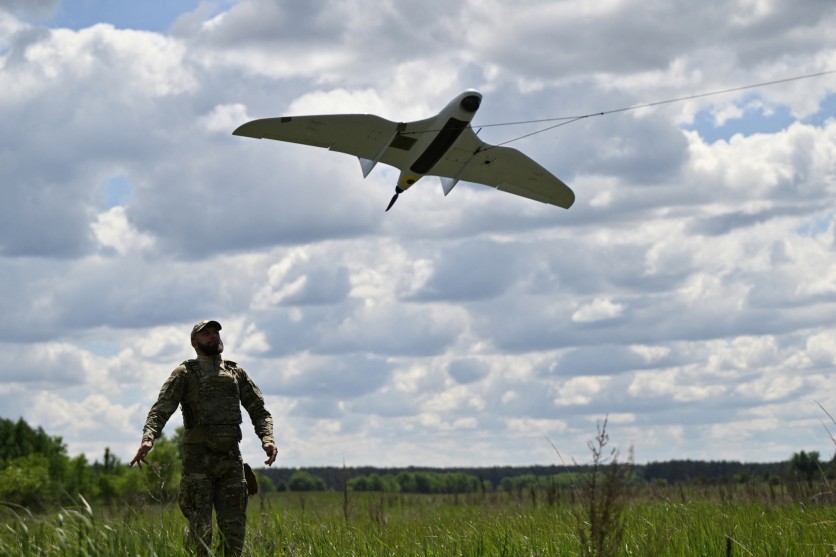
A serviceman of the State Border Guard Service of Ukraine launches an UAV for a patrol flight along the Ukraine-Belarus border in Chernigiv region on June 1, 2026, amid the Russian invasion of Ukraine. Genya SAVILOV/Getty images
Ukraine launched the largest drone offensive on Moscow in the four-year war on June 18, 2026, burning the Gazprom Neft refinery that supplies roughly 40 percent of the capital's fuel and halting the plant's operations until at least 2027 — a blow that landed as approximately one-third of Russia's entire national refining capacity was already offline from months of accumulated strike damage. Eight days later, on June 26, Ukraine escalated further: Russian air defenses reported intercepting 660 Ukrainian drones in a single night across 12 regions, a new record surpassing the June 18 wave, as Ukrainian President Volodymyr Zelensky announced a formal 40-day pressure operation aimed at compelling Russia to end the war. The combination marks the most consequential fortnight of Ukraine's energy warfare campaign and the clearest demonstration yet that massed one-way attack drones can overwhelm even the layered air defenses protecting Russia's capital.
What Happened at the Moscow Oil Refinery
Russian air defenses intercepted at least 194 Ukrainian drones on approach to Moscow during the June 18 attack — more than double the highest previous single-night figure for the capital, according to Russian authorities — but multiple drones reached the Gazprom Neft refinery in the Kapotnya district, located approximately 15 kilometers from the Kremlin. At least five fires broke out at the facility, which has a processing capacity exceeding 12 million tons of oil per year and supplies up to 40 percent of Moscow's fuel market and approximately 70 percent of the region's gasoline supply. At least 16 people, including two children, were injured across the Moscow region, according to Russian authorities.
The June 18 strike was the second on the same facility within a week. Ukrainian drones first hit the refinery on June 16, forcing a partial shutdown. The back-to-back attacks proved decisive: Reuters, citing two industry sources, reported that the refinery suspended crude processing and that operations were not expected to resume until 2027. Analysts at Russian investment bank Sinara estimated repair costs could reach up to $1 billion under a pessimistic scenario. Ukraine's General Staff confirmed the facility had halted operations.
The scale of collateral damage illustrated a structural weakness in Moscow's layered defenses. Intercepted drones did not always fall harmlessly: one brought down by Russian air defenses crashed into a megamall in southeast Moscow, setting the complex ablaze. Another struck the upper floors of a high-rise residential building. All four of Moscow's major airports suspended operations for much of the day. According to the Kyiv Independent, state airline Aeroflot and its subsidiary Rossiya canceled more than 170 flights and delayed over 110 others.
How Drone Saturation Defeats Layered Air Defense
The June 18 attack demonstrated a principle that defense analysts have documented throughout this war: any defensive system has a finite target-handling capacity, and a sufficiently large simultaneous launch can exceed it. Ukraine's one-way attack drones — inexpensive GNSS-guided platforms that fly pre-programmed routes — carry a structural cost advantage over the missiles required to intercept them. Industry analysis estimates a Shahed-class drone costs between $20,000 and $50,000, while surface-to-air missiles capable of defeating drone-class targets cost between $150,000 and $500,000 per shot. A defender who fires a $200,000 missile to destroy a $30,000 drone bleeds faster than the attacker does — a compounding arithmetic that Russia has been unable to resolve at Moscow's scale of exposure.
Russia shot down 555 Ukrainian drones across the country on the night of June 18, according to the Russian Defense Ministry — 194 of them on the Moscow approach alone. Yet the sheer volume ensured that some portion reached the refinery regardless of the intercept rate. The damage caused by falling intercept debris added a second failure mode: a defensive network that successfully destroys incoming drones may still produce civilian and infrastructure damage when wreckage comes down over dense urban areas. That constraint has no straightforward engineering solution within Moscow's current air defense architecture.
The Institute for the Study of War noted that the increasing frequency, size, and depth of Ukraine's long-range strike campaign against heavily defended major Russian cities "demonstrate growing vulnerabilities in Russian air defenses and dilemmas in how the Kremlin chooses to interact with the domestic costs of the war it started."
Russia's Fuel Crisis Deepens as One-Third of Refining Goes Dark
The Moscow Oil Refinery strike was not an isolated incident but the most visible node in a systematic campaign against Russian energy infrastructure. Energy Intelligence analysts estimated that, as of early June 2026, approximately 2.14 million barrels per day of Russian refining capacity — roughly one-third of the national total — was offline due to accumulated drone strike damage. Russian oil refining volumes fell below four million barrels per day in the first week of June, the lowest level in 21 years.
The consequence was a nationwide fuel crisis that spread well beyond Moscow. More than 25 Russian regions imposed gasoline sales restrictions before the June 18 attack. Russian authorities had already suspended fuel supplies to the public in occupied Crimea, which was also under sustained Ukrainian drone and maritime strike pressure. On June 26, Russian-installed Crimean occupation authorities declared a state of emergency, with Moscow's appointed governor acknowledging that no air defense system in the world can fully protect against the current volume of Ukrainian strikes. Russia's fourth-largest refinery — the Lukoil-operated NORSI plant in Nizhny Novgorod — also shut down on June 24 after a separate Ukrainian drone strike, deepening a supply crunch already straining domestic markets.
Grégoire Roos, director of the Europe, Russia, and Eurasia programs at Chatham House, described the Moscow refinery strikes as "the most interesting development over the past year" in the conflict, emphasizing that they reflected Ukraine's understanding that it must hit Russia "where it hurts the most" — by cutting energy revenues that fund the war.
Read more: IRGC Drone Targets Fifth Fleet HQ in Bahrain: Gulf Base Defense Costs $4M Per Intercept
Zelensky Frames Strikes as Strategic Retaliation
Zelensky was explicit about both the justification and the objective. "This is a fully justified response to Russian attacks on our cities and communities, and another important result of our warriors' work against facilities that sustain Russia's war machine," he said after the June 18 attack. He framed the specific timing as retaliation for Russia's June 15 strike on the Kyiv Pechersk Lavra, a historic monastery complex in the capital.
Ukrainian Foreign Minister Andrii Sybiha was equally direct in addressing Russians asking what was happening. "Your country started a war of aggression against ours," Sybiha wrote on X. "For years, it has been killing our people."
On June 25, Zelensky announced a formalized escalation: a 40-day operation by Ukraine's Security Service authorizing sustained long-range strikes specifically designed to pressure Russia into diplomatic engagement. The announcement came hours before Ukraine launched the 660-drone strike on June 26 — the largest single-night drone launch of the war. The previous single-night record had been 556 drones on May 17. Ukrainian military intelligence reported a secondary strategic benefit: by concentrating strikes on Moscow and the Kerch Bridge, Ukraine was forcing Russia to redeploy air defense coverage away from other regions, weakening protection elsewhere in the country.
Russia Threatens Escalation, Signals Diplomatic Interest
Moscow's response combined defiance with implicit acknowledgment of the damage. Russian Foreign Minister Sergei Lavrov stated that Russia would now conduct "massive group strikes on a regular basis" against targets whose condition directly affects the combat readiness of Ukrainian forces — a formulation that signaled intent to deepen strikes on Ukrainian energy and military infrastructure.
The Russian Central Bank cut its key interest rate to 14.25 percent, a move the Institute for the Study of War assessed as a possible sign that the Kremlin was eroding the bank's independence under war-economy pressure. Russia began importing gasoline from unspecified Asian countries to address domestic shortages that analysts said were likely to worsen through the summer. Deputy Prime Minister Alexander Novak said the domestic fuel market was "challenging but under control," noting that a total ban on diesel exports was under consideration alongside existing restrictions.
Despite the confrontational posture, the Kremlin simultaneously signaled willingness to resume direct negotiations with the United States. Kremlin aide Yuri Ushakov said Russia was expecting the return of White House envoys Steve Witkoff and Jared Kushner to Moscow, even as specific dates had not been set. The competing signals — escalation threats alongside diplomatic expectations — reflect a Kremlin calculation that the cost of continued warfare is rising faster than its political red lines allow it to acknowledge publicly.
Christopher Granville, managing director at TS Lombard, summarized the strategic moment precisely: "The end game is at hand and, therefore, we now have the risk of escalation."
Frequently Asked Questions
How many drones did Ukraine use in the Moscow attack?
Ukraine does not publicly disclose the number of drones used in strikes on Russia. Russian authorities reported intercepting at least 194 drones on approach to Moscow during the June 18 attack, and 555 drones intercepted nationwide that same night. On June 26, Russia reported intercepting 660 drones across 12 regions in a single night — a new record, reached as part of the formal 40-day pressure campaign Zelensky announced the previous day.
What happened to the Moscow oil refinery, and how long will it stay closed?
The Gazprom Neft Moscow Oil Refinery in the Kapotnya district was struck twice — on June 16 and June 18, 2026. At least five fires broke out during the second attack, and Reuters reported, citing industry sources, that crude processing was halted with operations not expected to resume until 2027. Sinara analysts placed the repair cost at up to $1 billion in a pessimistic scenario. The refinery supplies roughly 40 percent of Moscow's fuel market and approximately 70 percent of gasoline consumed in the capital region.
Is Russia running out of fuel?
Russia's domestic fuel crisis was severe before the Moscow refinery attacks. Energy Intelligence analysts estimated that approximately 2.14 million barrels per day of Russian refining capacity — about one-third of the national total — was offline from cumulative drone strike damage as of early June 2026. More than 25 Russian regions imposed gasoline sales restrictions. Russia suspended public fuel sales in occupied Crimea and began importing gasoline from unspecified Asian countries. The closure of both the Moscow refinery and Russia's fourth-largest refinery, NORSI, added further pressure to a supply system already operating at a 21-year low in output.
What is Ukraine's 40-day operation and what does it aim to achieve?
On June 25, 2026, Zelensky formally approved a 40-day Security Service of Ukraine operation designed to pressure Russia into ending the war through sustained long-range strikes on energy, logistics, and military-industrial targets. The announcement was followed hours later by the record 660-drone attack on June 26. The operation represents Ukraine's most explicit attempt to convert battlefield and economic pressure into diplomatic leverage, timed to a period when U.S. and European mediators have signaled renewed engagement.

-
 C114 Communication Network
 -
 Communication Home
