
 Search


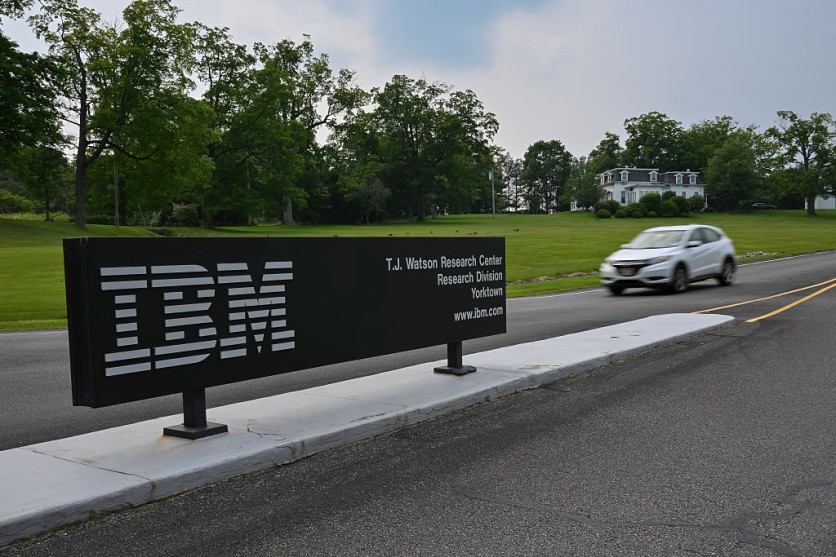
A view outside the IBM Thomas J. Watson Research Center on June 6, 2025 in Yorktown Heights, New York. Technology veteran IBM on June 10 laid out a plan to have a "practical" quantum computer tackling big problems before the end of this decade. Current quantum computers are still experimental and face significant challenges, including high error rates. Companies like IBM, Google, and others are working to build more stable and scalable quantum systems. Photo by ANGELA WEISS/AFP via Getty Images
Data teams running Apache Flink can now call IBM's Granite time-series models from SQL to forecast streaming data and flag anomalies without training a model or provisioning GPUs, but neither version is production-ready. An IBM Research post on Hugging Face dated Nov. 18 describes the models running as built-in functions in both Confluent Cloud for Apache Flink and Confluent Platform for Apache Flink, the version customers run in their own infrastructure.
The caveat sits in Confluent's own documentation. Confluent Cloud labels AI_FORECAST an Early Access Program feature meant for evaluation and non-production testing, with no support or service-level commitment, and AI_DETECT_ANOMALIES carries the same Early Access label. The on-premises version is listed as Open Preview in Confluent's Nov. 4 release post, and the setup documentation warns that its interfaces may change. Engineers who need answers now should treat the functions as something to test against their own data, not something to wire into alerts that trigger actions.
Anomaly Flags Come From Forecast Bands, With 99% Confidence as Default
AI_DETECT_ANOMALIES is not a separate detector. According to Confluent Cloud's documentation, a foundation model forecasts each series from its recent history and produces prediction intervals, and the function flags a reading that lands below the lower bound or above the upper bound. The confidence setting defaults to 99%; set it to 80% to flag values outside the 10th-to-90th percentile range. Separate settings let you set different lower and upper bounds.
Two other defaults shape behavior. The function leaves its outputs empty until it has seen 20 points, then keeps up to 512 recent values, a limit that varies by model. Confluent also advises spaced timestamps for best results. For each reading, the output includes the model's forecast, both bounds, an anomaly flag, and a root-mean-square error figure.
The design sits beside an older approach. Confluent's earlier built-in function, ML_DETECT_ANOMALIES, builds on ARIMA, the autoregressive integrated moving average statistical method, which fits a model to each series. The Granite functions instead use pretrained "zero-shot" models that forecast series they never saw during training. The tradeoff is the announcement's biggest open question: no per-series fitting is needed, but alert quality now depends on how well a pretrained model's bands match a customer's data. In the pages reviewed, the documentation calls them bounds prediction intervals but does not explain their computation.
Read more: AI Chart Understanding Breakthrough: MIT-IBM Dataset Lets Small Models Beat GPT-4o
Three Granite Models Offer Very Different Forecast Horizons and Context Limits
Confluent's materials name three selectable Granite models: TTM, FlowState and PatchTST-FM. TTM, short for Tiny Time Mixers, is the default. IBM Research's NeurIPS 2024 paper describes TTM as a compact model starting from 1 million parameters that can run on CPU-only machines. In AI_FORECAST, TTM supports forecasts up to 96 steps ahead from 52 to 512 values of history. PatchTST-FM supports up to 8,176 steps ahead from 16 to 8,064 values, and FlowState needs a horizon above six, according to Confluent's AI_FORECAST documentation.
FlowState takes a different route. IBM's Granite time-series documentation describes it as pairing a state-space encoder with a functional basis decoder, which lets it train at one timescale and forecast at another.
PatchTST-FM carries the strongest benchmark claim, with a caveat. IBM released PatchTST-FM-r2 on Sept. 9 at about 385 million parameters and reported that it ranked second among replicable zero-shot models on the GIFT-Eval benchmark as of Sept. 8, immediately behind Google Research's TimesFM-3. Those are IBM's own results, and the benchmark's creators acknowledge partial data leakage in the pretraining data of TimesFM, Chronos and Moirai, a reminder that leaderboard rankings do not guarantee results on a customer's data. The Confluent pages reviewed name PatchTST-FM without a revision number, so readers should not assume the r2 ranking describes the model Confluent serves.
Read more: IBM Suffers Worst Day Since Black Monday as AI Chip Shortage Drains Software Spending
IBM Post Reports No Accuracy Benchmarks and No Customer Results
The IBM post walks through six scenarios, including screening card payments for fraud, and presents them as illustrations of what organizations could build. It reports no accuracy or latency benchmarks, names no customer deployments, and labels two figures as simulated data. IBM also cautions that similarity search by itself "does not establish a root cause."
Independent research argues for checking before trusting. A 2025 ICLR workshop paper by William Toner and colleagues tested well-known zero-shot time-series foundation models on cloud data and found that many produced poor forecasts and were consistently outperformed by simple linear baselines. A 2025 preprint led by Nouha Karaouli of Univ. Rennes, CNRS and Inria found that a time-series foundation model's zero-shot ability is tied to the domains it was pretrained on. On the anomaly side, Qinghua Liu and John Paparrizos of Ohio State argued at NeurIPS 2024 that the field has long been plagued by flawed benchmark datasets and biased evaluation measures.
Fraud screening shows why the stakes matter. IBM's post says flagged card payments pass to existing fraud systems as an additional input. For banks, U.S. regulators issued SR 26-2 on April 17, 2026, replacing the long-standing SR 11-7 model-risk guidance. Consultancy Elevate reports that statistical and machine learning fraud-detection models generally remain in scope and that interagency third-party risk guidance still applies to vendor-delivered AI. Cloudnews.tech writer David Carrero wrote on Sept. 3 that a wrong alert is a nuisance, but automated actions such as blocking payments need considerably stricter controls.
On-Premises Model Servers Use Plain HTTP and No Authentication
In the on-premises setup, each model runs in its own Kubernetes-based model server, and an administrator sets each server's URL in the environment's statement defaults for Confluent Manager for Apache Flink. Confluent's documentation says the servers have no authentication and use plain HTTP, and it advises restricting access with a Kubernetes NetworkPolicy. By default the functions send up to the last 512 values of a series to the server without timestamps, and the documentation says nothing goes to Confluent. Confluent says to set model URLs in every environment, because statement authors could otherwise point calls at other endpoints.
Deployment has other requirements. By default the servers download model weights from Hugging Face at startup, so air-gapped clusters must mount the files manually. Statements must run on Flink 2.3, x86 nodes need AVX2 support, and Confluent recommends a CPU limit on each server because it runs one thread per CPU in that limit. The PatchTST-FM download is about 1 gigabyte. The Cloud Security Alliance warned in May that organizations can scan software packages rigorously while treating model weights as inert data.
Why Does IBM-Owned Confluent Also Offer Google's TimesFM?
Confluent Cloud also offers Google Research's TimesFM 2.5 through the same function, so Granite is one option rather than the only choice. IBM completed its acquisition of Confluent on March 17, 2026, paying $31 per share in cash for an enterprise value of about $11 billion, as Techzine also reported. Confluent's Aug. 18 update, five months after the close, announced both Granite and TimesFM in Early Access on AWS and said users can switch models with a single parameter. That switch is the practical test: running Granite, TimesFM and the older ARIMA function side by side on the same series is the validation the published material does not supply.
Neither Deployment Has a Published General-Availability Date
Confluent's Q4 release post covers neither pricing nor a general-availability timeline for the on-premises functions, and says future releases will expand the model catalog. In Confluent Cloud, usage is billed in Confluent compute units as part of compute pool usage.
The decision framework for engineers is short. Granite turns forecasting and anomaly detection into a SQL call that can run on commodity CPUs. The cloud version is explicitly non-production, the on-premises version is a preview with unauthenticated servers, and in the material reviewed no published figure shows how accurate or fast either one is on real streams. Teams should test several models on their own seasonal, sparse and noisy series, check false-alarm rates at their chosen confidence setting, and keep automated actions behind human review until the features leave preview.
Frequently Asked Questions
What is a time series foundation model?
It is a model pretrained on many different series so it can forecast a new one without per-series training, which is what "zero-shot" means here. IBM's TTM paper describes compact versions that run on CPU-only machines.
How does Flink SQL decide a reading is an anomaly?
The model forecasts a band for the next reading, and the function flags values outside it at the chosen confidence level. How often alerts fire therefore depends on how well that band fits your data, which the published material does not measure.
Do the functions really run without GPUs?
IBM's post says the models run on CPUs, and Confluent's on-premises documentation describes AVX2 and CPU-limit requirements for its servers. In Confluent Cloud, Confluent hosts the models, and its Aug. 18 post cites shared GPU resources as a cost benefit, so the pages reviewed do not say which hardware the hosted version uses.
Should anomaly alerts trigger automatic actions?
Not without checks. IBM's own fraud scenario routes flagged payments to existing fraud systems as an additional input, and the false-alarm rate at a given confidence setting has to be measured on your own series first. David Carrero's Sept. 3 column calls for stricter controls for automated actions.

-
 C114 Communication Network
-
 Communication Home
