
 Search

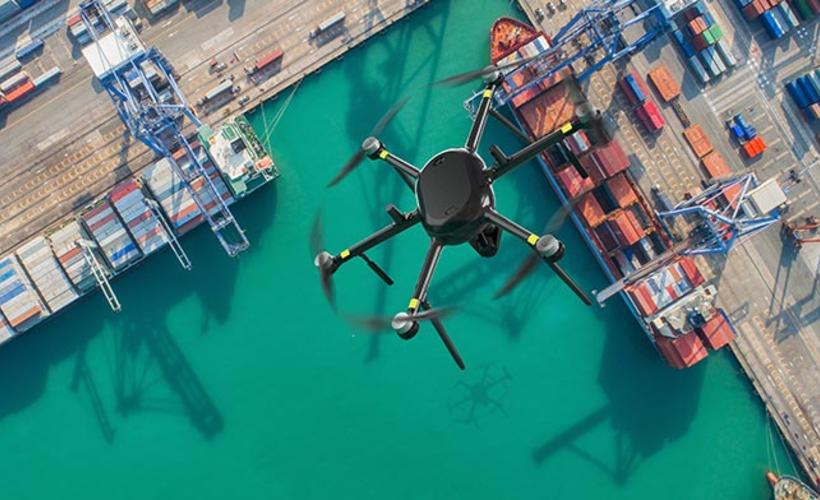
Image: Nokia
Nokia’s sale of its campus private 5G business to Aurelius includes its MPW platform but excludes its drone unit, it turns out. The latter is under strategic review, as the Finnish vendor draws a sharper line between campus and wide-area private wireless.
In sum – what to know:
Drones retained – Nokia Drone Networks is excluded from the Aurelius deal and is under strategic review, despite its crossover apps in industrial monitoring and public safety.
Portfolio transferred – Aurelius will acquire ECE’s DAC, MPW and MXIE platforms, alongside its industrial devices and software, serving nearly 900 customers across 60 countries.
Private 5G divided – Nokia will continue deploying MPW with its RAN solutions for wider-area private networks, while ECE focuses on campus deployments under its new owner.
UPDATE | The sale of Nokia’s campus 5G business to private equity firm Aurelius (stylised AURELIUS) does not include its drones unit, the Finnish firm has confirmed. The division, called Nokia Drone Networks, is also under “strategic” review, it turns out. Meanwhile, Nokia confirmed its Modular Private Wireless (MPW) platform for wider-area private 5G, is part of the deal with Aurelius for the purchase of its Enterprise Campus Edge (ECE) business. Nokia said it will “continue to deploy” MPW with its RAN solutions for larger “mission-critical” customers.
A spokesperson for Nokia said: “The agreement with Aurelius does not include Nokia Drone Networks. That business will remain part of Nokia while the company continues to assess strategic options for it.” As written yesterday (October 13) in discussion of the ECE sale, Nokia Drone Networks grew out of the ECE stable as a drone-in-a-box solution comprising a drone, docking station, dual gimbal camera, plus edge cloud processing. It has been supplied with its MXIE platform for campus environments, as pitched with its DAC private core network solution
As such, it has occupied the same industrial headspace as its ECE unit, geared for “mission/business” (delete per your PR preferences) critical monitoring and inspection cases in outdoor (campus-defined) mines, ports, and plants, plus similar industrial locales – essential to ECE’s vision and Nokia’s position in the private 5G market, plus to Aurelius’s interest in taking over. But its drones proposition has also found a home in wider-area utility, transport, and safety networks – notably with blue-light deployments by Citymesh and Swisscom in Belgium and Switzerland.
Citymesh, a long-time ECE partner, launched 70 ‘safety drones’ for Belgian police and fire services on a specialist public wide-area 5G network in 2023; the deal followed tests on private 5G at Brussels Airport as far back as 2021 – at least three years prior to the formation of Nokia Drones Networks as a business division. Swisscom Broadcast announced a deal with Nokia to deploy 300 drones on its public 5G network for the emergency services, public safety, and private industrial sectors in 2024. So the division has crossover appeal on local/field/wide-area private/public 5G systems.
Meanwhile, there remains crossover with MPW, moving with ECE to Aurelius, between the outdoor campus customers that Nokia is giving up and the rangier outdoor engagements it will continue to pursue. Note: Nokia retains a RAN interest in all aspects of private 5G, with ECE to continue to pair Nokia radios with its edge (core) networks, computing, devices, and applications; but ECE will retain and build customer/integrator deals in so-called ‘campus’ domains. Note also: as with such deals, ECE will likely be required to re-sign certain contracts, notably among state/critical customers.
Nokia said: “MPW remains part of the ECE solution portfolio… Nokia remains focused on wide-area private wireless networks where our technologies can differentiate, in particular large-scale mission-critical enterprise (MCE) networks for utilities, rail, public safety, and defense. As part of the agreement, Nokia will continue to deploy MPW for the wide-area and field-area MCE use cases mentioned previously, while ECE, under new ownership, will focus on campus network use cases, including manufacturing, mining, logistics, airports, ports, and power generation.”
Part of the issue for Nokia (and for media/commentators discussing it) is semantics; the term ‘mission critical’ is bandied about quite freely in Industry 4.0 circles – attached as often to supply chains (ports, factories, mines) and infrastructure, including power generation (ascribed by Nokia above to ECE), as it is to ‘critical’ safety and defense operations. The rule-of-thumb, then, is that ECE will take the mission/business critical campus-edge cases, inside enterprise perimeters, and Nokia will take the bigger private 5G cases that look more like small public-telco deployments – in scale at least.
Aurelius is taking the entire ECE portfolio, excluding Nokia Drone Networks. This includes sundry versions (micro to campus) of its seminal Digital Automation Cloud (DAC) core network platform, plus the MPW version, and its MX Industrial Edge (MXIE) compute platform, and extensions (MX Grid, MX Boost etc), as well as industrial devices and software applications. The financial terms have not been disclosed. The transaction is expected to close in the first half of 2027, subject to regulatory approvals. Nokia said the sale would give ECE greater independence and agility.
Nokia will concentrate capital and resources on areas where it thinks it can differentiate and create long-term value, it said.
Aurelius plans to put ECE into its ‘opportunities’ fund, which targets businesses with potential for growth following complex corporate carve-outs. The investment firm, which operates across Europe and has offices in London and Munich, has completed more than 300 transactions and holds a portfolio spanning technology distribution, industrial manufacturing, mobility, software and business services. Its technology-related interests include UK distributor Exertis and Swiss electronics distributor Distrelec.
ECE presents an unusually large carve-out, with around 1,000 employees across more than 60 countries and nearly 900 customers, including major multi-nationals with multi-site installations. Aurelius sees scope to build on its established position in private 5G and industrial edge, including through AI-powered industrial automation. Managing director Fabian Steger said the business had “differentiated technology, a talented team, a global footprint and an established customer base”, with opportunities to expand its portfolio as a standalone company.
The transaction follows Nokia’s sale of its fixed wireless access (FWA) business to Inseego. It forms part of a wider effort to simplify its portfolio around mobile infrastructure and network infrastructure.

-
 C114 Communication Network
 -
 Communication Home
