
 Search


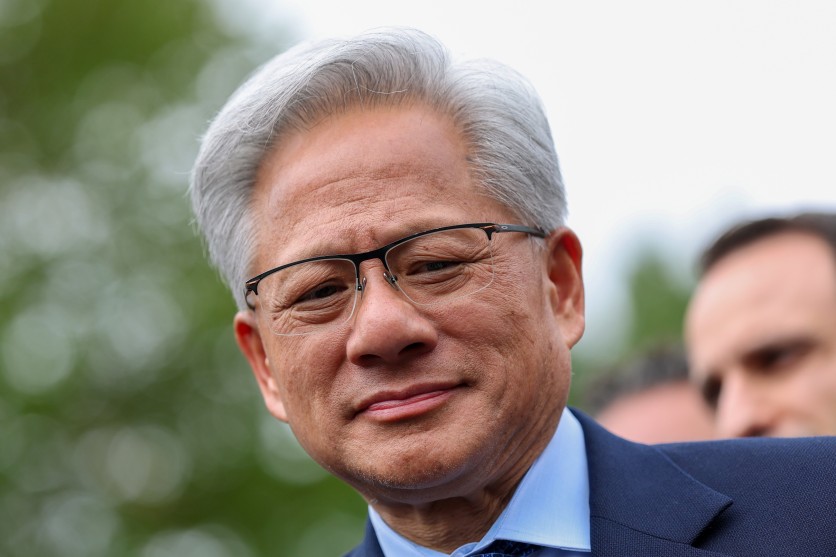
Nvidia CEO Jensen Huang looks on as U.S. President Donald Trump holds a press briefing with AI executives following a meeting on artificial intelligence, outside the West Wing of the White House on September 29, 2026 in Washington, DC. Kevin Dietsch/Getty Images
Nvidia co-founder Jensen Huang resigned Thursday as president, CEO and board member, and CFO Colette Kress now runs the Santa Clara, California, chipmaker as interim CEO while keeping her finance job, five days before Nvidia reports third-quarter earnings. Nvidia's filing and press release offer no reason for the departure, and shares fell 7.7% to $160.28 shortly after the open.
For anyone who owns Nvidia stock or builds AI products on its chips, the immediate questions are who makes decisions, who signs off on the numbers and what the board has learned. Nvidia has answered only the first, and only for now: Kress holds both top jobs until a permanent CEO is named, and the board gave no timeline for its search. Nvidia will report results Tuesday, Nov. 17, at about 4:20 p.m. ET, with a call at 5 p.m. ET.
Yahoo Finance reported a premarket decline of about 10%, and said Nvidia, once a $5 trillion company, was expected to open below $4 trillion and behind Apple and Microsoft in market value. At $160.28, the stock was roughly a third below its Oct. 6 record close of $239.24.
Kress Holds Both CEO and CFO Jobs, With No Pay Terms or Search Timeline Disclosed
Kress, 59, has been Nvidia's CFO since 2013 and will keep that role while serving as interim CEO. The board will consider internal and external candidates for the permanent job.
Harvey C. Jones, 73, a director since 1993, becomes the board's first-ever chair. He is managing partner of Square Wave Ventures, a private family office. Nvidia's own director biography says he led chip-design software maker Synopsys from 1987 to 1998, first as CEO and then as executive chairman. The filing describes no compensation terms for Kress's interim role or Jones's chair role. Jones said the board has full confidence in Kress and expects operations, customer commitments and the product roadmap to continue without interruption.
Why Did Jensen Huang Resign as Nvidia CEO?
Nvidia's press release and Form 8-K do not say. The filing states that the board accepted the resignation Nov. 11, effective immediately. The announcement does not mention the board's independent review or say whether it has finished.
The surrounding events come from news reports and Huang's own letter, not from Nvidia's regulatory filings. The New York Times reported Oct. 29 that U.S. officials concluded Alice Huang, a former executive at Singapore-based Nvidia customer Megaspeed and no relation to Jensen Huang, was a Chinese intelligence asset. China's Foreign Ministry spokesperson Guo Jiakun called the report groundless speculation. The Information reported this week that she was involved in companies that facilitated about $7.5 billion in chip sales to China, a claim Nvidia has not confirmed. On Nov. 8, Huang told staff in a letter that he had been unfaithful to his wife, and the board opened an independent review. Trump said Huang told him he had no idea the woman was a spy.
On Nov. 11, the Times reported a second relationship, with a Nvidia vice president who reports to him, and the Wall Street Journal reported that the board was preparing to remove him. Nvidia has not confirmed the second report, and Huang's Nov. 8 letter names no one.
Analysts Split Over Key-Person Risk After Nvidia Sheds 7.7% at Open
Bernstein downgraded Nvidia to Market-Perform and cut its price target from $400 to $200, saying the board would have difficulty keeping Huang even as fundamentals stayed strong. Days earlier, Bernstein had kept an Outperform rating and the $400 target while flagging key-person risk. Oppenheimer also downgraded the stock and withdrew its price target, with analyst Schafer warning of a possible "brain drain." Yorkville's Dan Ives cut his price target from $300 to $225, assuming Huang is removed.
Other analysts disagree. Raymond James kept its Strong Buy rating, with analyst Simon Leopold arguing the personal conduct does not change the fundamentals. Stifel's Ruben Roy said the stock will depend more on how the leadership change is executed than on whether it happens.
Past cases offer limited guidance. Yahoo Finance reviewed six CEO-conduct cases at Boeing, HP, Best Buy, Wynn, Intel and McDonald's and found first-day moves from about -8% to +9%, with a median dip near 3%. Four of the six trailed the S&P 500 over the next 12 months, by a median of about 12 percentage points.
Nvidia Ran With About 60 Direct Reports, No COO and No Public Succession Plan
Fortune reported before the resignation that Nvidia has no chief operating officer and that Huang had about 60 direct reports, which left it unclear who was next in line. Georgetown University's Jason Schloetzer, who studies CEO succession, told Fortune the board erred by not publicizing a clear succession plan a year or two ahead, leaving it facing a sudden transition. A 24/7 Wall St. analysis in May likewise found no named successor and no formal succession plan in public filings.
Huang had said he does not believe in succession planning, according to a Dow Jones report. Nvidia's latest proxy statement warns that it is "highly dependent on the services of our longstanding executive team," and that weak succession planning could hurt strategy and execution. Stanford corporate-governance professor David Larcker told Dow Jones that if Nvidia lacks a succession plan, that is a problem, and that he expects the board to consult outside advisers and lawyers.
Kress Now Fills Both Roles That Sarbanes-Oxley Names for Certifying Financial Reports
The governance question the announcement leaves open is who vouches for Nvidia's numbers. Under Section 302 of the Sarbanes-Oxley Act, a public company's principal executive and financial officers must each certify its quarterly and annual reports. Section 906 adds a criminal-law statement from the CEO and CFO or their equivalents. Kress signed Nvidia's 8-K as interim CEO, executive vice president and CFO.
Nvidia has not said how it will handle those certifications for its next periodic report, or whether it will name a separate acting finance chief. The announcement says only that Kress keeps the CFO role until a permanent CEO is named.
Huang Joined White House Science Council in March and Fought Chip-Export Limits
The White House named Huang to the President's Council of Advisors on Science and Technology on March 25, 2026, alongside executives including Meta's Mark Zuckerberg and Oracle's Larry Ellison. In December 2025, after meeting Trump, Huang called the GAIN AI Act "even more detrimental" than the AI Diffusion Act. The act would have required chipmakers to offer U.S. customers first access to advanced AI chips, and lawmakers left it out of the annual defense bill. In January, Huang also opposed Rep. Brian Mast's AI OVERWATCH Act.
Mast is one of three House chairs who asked Huang for a voluntary closed-door briefing on Nov. 18 about Alice Huang and Nvidia's espionage safeguards. Bernstein noted that the letter appeared to be a request rather than a subpoena. It is not clear whether the briefing will proceed now that Huang has left Nvidia, or whether his advisory seat continues.
Trump called Huang an honorable guy on Nov. 8. On Nov. 9, he said the FBI was looking into the matter "in terms of something else," without specifying what, and no FBI statement appears in the AP's account.
Who Could Become Nvidia's Permanent CEO?
The Financial Times has floated Ian Buck, who runs Nvidia's data center business, and Arm CEO Rene Haas, a former Nvidia executive, as possible candidates, according to Decrypt. Earlier commentary also named Bryan Catanzaro and Jay Puri. Bloomberg reported that directors were working with an outside firm on successors and weighing an interim CEO. None of those names reflects an announcement from Nvidia. Huang, who holds roughly 3.6% of the company according to the Wall Street Journal, is no longer on the board.
Nvidia Reports Results Tuesday at 4:20 p.m. ET and Faces House Briefing Request Wednesday
Tuesday's report will be Kress's first as interim CEO. Nvidia says it expects operations, customer commitments and the product roadmap to continue without interruption. Oppenheimer has warned that senior engineers and executives could leave, which makes retention a risk to watch. Nvidia also faces a proposed shareholder class action on behalf of investors who bought shares between Oct. 9 and Nov. 8, and its claims are unproven allegations.
Several questions remain unanswered. The board has not named its review committee or timeline, and it has not said whether findings will be made public. Nvidia has said earlier allegations that chips were diverted through Megaspeed were investigated and debunked last year. Singapore police have confirmed a Megaspeed investigation without establishing wrongdoing by Alice Huang.
For investors and AI customers, the decision framework is plain. Until a permanent CEO arrives, Nvidia's decisions rest with a finance chief who also holds the top job, a board chair appointed the day before, and a review whose findings may never be public. The company's own risk language says it depends on its executive team, and analysts are split on whether the stock now prices that dependence or the strength of the business. Tuesday's call is the first chance to hear how the new structure works in practice.
This article is for informational purposes only and does not constitute investment advice. Readers should conduct their own due diligence before making investment decisions.
Frequently Asked Questions
Who is running Nvidia now that Jensen Huang has resigned?
Colette Kress, Nvidia's CFO since 2013, is interim CEO and keeps her CFO role until the board names a permanent successor. Harvey C. Jones, a director since 1993, is the board's first-ever chair.
Does Jensen Huang still own Nvidia stock?
Yes. The Wall Street Journal reported that he holds roughly 3.6% of the company, though he is no longer on the board.
Is Nvidia still reporting earnings on Tuesday?
Yes. Nvidia says it will report third-quarter fiscal 2027 results as scheduled on Tuesday, Nov. 17, at about 4:20 p.m. ET, with the call at 5 p.m. ET.
Can one person serve as Nvidia's CEO and CFO at the same time?
Kress is doing so now. Sarbanes-Oxley names the principal executive and financial officers as the certifiers of periodic reports, and Nvidia has not said how it will handle that structure or whether it will name a separate acting finance chief. Kress signed Nvidia's 8-K as interim CEO, executive vice president and CFO.

-
 C114 Communication Network
-
 Communication Home
