
 Search


Galax.com
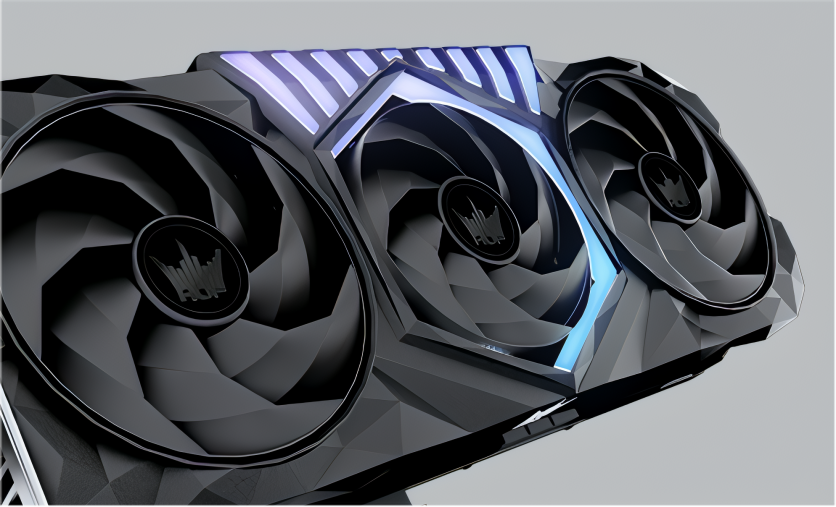
Galax has revealed the GeForce RTX 5080 HOF Extreme — the first add-in board based on NVIDIA's Blackwell RTX 5080 GPU to carry two 12V-2×6 power connectors — in a development that lands in the same week that reports of the RTX 5090's production wind-down have made the RTX 5080 the de facto ceiling for consumer GPU buyers. An October 22 launch date has been teased in promotional materials from Galax targeting the Chinese enthusiast market.
The card was exposed on October 20, 2026, through a Chinese-market poster shared by user Ssss-3DMark and picked up by VideoCardz. Its design traces back to Computex 2026, where Galax showed the HOF concept GPU-free, prompting widespread speculation that it was being held in reserve for a future RTX 6090. The reveal on October 20 settled that question: the Swarovski-trimmed flagship will be built on the current Blackwell RTX 5080.
The announcement arrives at a moment when the RTX 5090 — the GPU that would ordinarily occupy the extreme-enthusiast space — is becoming increasingly difficult to source, with multiple retailers reclassifying it from out of stock to "not carried." For Galax's target audience of competitive overclockers and record-pursuit builders, an over-engineered RTX 5080 is now the only viable option at the top of NVIDIA's Blackwell stack.
Read more: Nvidia Denied RTX 5090 Discontinuation: Micro Center Still Says Not Carried
Why Two Connectors on an RTX 5080?
The standard GeForce RTX 5080 carries a reference Total Graphics Power (TGP) of 360W and ships with a single 12V-2×6 connector, which is rated by the PCIe CEM 5.1 power spec to deliver up to 600W at 55 amps continuous — more than enough to handle the reference spec with headroom to spare. Most premium custom RTX 5080 variants push TGP to roughly 400W; those still run comfortably on one connector.
Galax's HOF Extreme adds a second 12V-2×6 connector. On the surface, a single connector already has far more headroom than a 360W RTX 5080 reference card needs. The second connector's presence signals that Galax is designing this card for sustained draws well beyond any existing RTX 5080 — not for its baseline operating mode, but for extreme overclocking sessions where a competitive benchmarker pushes the VRM to its limit. The precedent exists in Galax's own product history: the prior-generation RTX 4080 HOF OC LAB Plus-X was also equipped with two 16-pin connectors, and the RTX 5090D HOF OC LAB XOC — Galax's most extreme competitive variant — was reportedly configured with a BIOS targeting up to 2,000W for XOC runs.
In those extreme scenarios, having two independent high-amperage feeds from the power supply — rather than one connector at its ceiling — reduces the risk of any single conductor becoming a thermal bottleneck under sustained LN2 overclocking. It also leaves engineering room for a BIOS that may one day allow the RTX 5080 to operate at power targets a single connector could not reliably support.
A detail absent from every other RTX 5080 dual-connector implementation (mainly because no other RTX 5080 had one): Galax has internally routed the second connector through the PCB itself, so it emerges at a different position rather than sitting beside the first at the card's top edge. This proprietary routing means builders see only a single external connection point, keeping cable runs inside the case manageable despite the doubled power intake. Galax disclosed this hidden connector routing at Computex 2026.
WINGS 4.0 and a Four-Fan First for HOF
The HOF Extreme's cooling system represents another departure from every prior HOF card. Previous Hall of Fame designs topped out at three fans; the Extreme deploys four using Galax's WINGS 4.0 fan technology. Three fans sit in the conventional forward-facing arrangement across the cooler shroud; a fourth is mounted on the reverse side of the heatsink assembly at Computex. A large vapor chamber base distributes heat across the array, with multiple composite heat pipes running through the structure.
The Hyper Boost button — a feature carried across HOF generations — instantly spins all four fans to maximum speed, useful during timed benchmark runs where thermal headroom takes priority over noise. A dual-BIOS toggle switches between P-mode (performance) and S-mode (standard).
Swarovski Crystals and HOF Panel IV
In each corner of the cooler shroud, Galax has embedded genuine Swarovski crystals — not acrylic simulants — in what amounts to a direct statement about the product's price positioning. The use of the Austrian crystal brand mirrors tactics from the premium smartphone and audio markets, where Swarovski co-branded editions command a premium over the base product. The HOF lineage has always pursued luxury cues alongside its engineering credentials; the crown-shaped RGB panel inherited from earlier HOF designs is present here in an enlarged form.
The HOF Panel IV carries forward a feature from prior generations: a detachable display module that connects to the card and can show real-time GPU telemetry — clocks, voltages, temperatures — or play custom images and short video files. For the competitive benchmarker the HOF brand has always courted, monitoring hardware state at a glance without relying on on-screen overlays carries genuine workflow value.
Galax's One-HOF-Per-Generation Rule and the RTX 5090 Question
Galax has maintained a consistent pattern across GPU generations: one HOF flagship per generation. Notably, neither an RTX 4090 HOF nor an RTX 5090 HOF was ever produced for the consumer market. The RTX 5090 has faced persistent supply pressure throughout 2026, with reports emerging on October 10 that NVIDIA had halted new GB202 chip allocations to the RTX 5090 — reserving future production for its professional RTX Pro line. NVIDIA formally denied the RTX 5090 had been discontinued, but US retailer Micro Center subsequently changed RTX 5090 availability status on numerous models from "Out of Stock" to "Not Carried."
Against that backdrop, the decision to build the Extreme around an RTX 5080 carries resonance beyond engineering: if the RTX 5090 is effectively exiting the consumer market, then a heavily over-engineered RTX 5080 targeting the extreme-overclocking community is not a compromise — it is the only available destination for enthusiast builds at the very top of the Blackwell stack.
What Is Confirmed Now; What Remains Pending
Galax has confirmed the dual 12V-2×6 architecture, four-fan WINGS 4.0 cooling, Swarovski crystal accents, HOF Panel IV support, the enlarged crown panel, the Hyper Boost button, dual BIOS, and the October 22 launch date. The company has not yet disclosed the VRM phase count for the Extreme, factory-overclocked boost clock speeds, retail pricing, or confirmed regional distribution. Based on the HOF brand's history, availability outside China is expected to be extremely limited.
Does the RTX 5080 HOF Extreme Change Anything for Most Buyers?
For the overwhelming majority of PC builders — including those buying premium custom RTX 5080 cards — the HOF Extreme changes nothing. It is a card designed for competitive benchmarkers and extreme-overclocking enthusiasts who need maximum stability at extraordinary power levels, not for gaming or content creation at standard settings. Its Swarovski accents and elevated price point (unannounced but expected to clear any other RTX 5080 on the market by a significant margin) place it firmly in collector and record-pursuit territory.
For that audience, the dual 12V-2×6 architecture is meaningful: it is the first time this overclocking infrastructure has been applied to an RTX 5080, and it arrives at a moment when the RTX 5090 — the GPU that would ordinarily occupy this extreme-OC space — is becoming increasingly hard to source.
Frequently Asked Questions
Why does the Galax RTX 5080 HOF Extreme have two 16-pin power connectors if a single connector can already handle the RTX 5080's power requirement?
A single 12V-2×6 connector is rated to deliver up to 600W — far more than the RTX 5080's 360W reference TGP and even more than the roughly 400W OC headroom most premium custom cards use. The second connector is not there for standard operation. It signals that Galax is designing the VRM and PCB to support power targets well beyond anything a production RTX 5080 has attempted — likely for competitive extreme-overclocking (XOC) sessions using liquid nitrogen, where stable high-amperage power delivery at sustained high voltage becomes the limiting factor. Galax's RTX 4080 HOF OC LAB Plus-X used the same dual-connector approach for identical reasons.
Why did Galax build its flagship HOF card around the RTX 5080 instead of the RTX 5090?
Galax has consistently produced only one HOF flagship per GPU generation and historically skips the very top-tier die for the HOF treatment — neither an RTX 4090 HOF nor an RTX 5090 HOF for consumers ever appeared. The RTX 5090 has also faced mounting supply issues throughout 2026, with reports of NVIDIA halting new GB202 chip allocations in October. The Extreme's RTX 5080 foundation is therefore consistent with HOF tradition and practically timed with the RTX 5090's apparent supply contraction.
When will the Galax RTX 5080 HOF Extreme go on sale, and who can buy it?
Galax has teased an October 22 launch in Chinese materials. Based on the HOF brand's distribution history, the card is expected to launch primarily in China and in extremely limited quantities globally. Pricing has not been announced; given the dual-connector architecture, Swarovski crystals, and HOF premium positioning, the card will substantially exceed the price of any other RTX 5080 on the market. International buyers should not expect broad retail availability.
What does the internal routing of the second 16-pin connector mean in practice?
On conventional cards with two power connectors, both sit side by side at the card's top edge — which can create cable-management challenges inside a case. Galax has routed the HOF Extreme's second connector internally through the PCB, so only one connector position is visible externally. The second cable attaches at a separate internal point, with the power path running through the board itself to the VRM. This Computex 2026 design detail from Galax means the card draws from two full-rated power feeds while presenting a single-connector appearance — though in practice, builders will still need to run two separate cables from the PSU.

-
 C114 Communication Network
-
 Communication Home
