
 Search

Nvidia.com
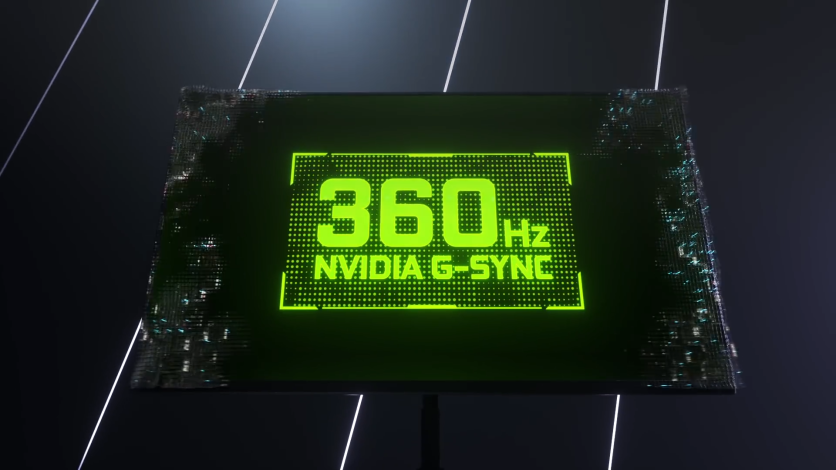
With the first wave of NVIDIA RTX Spark laptops set to reach customers today, NVIDIA on Thursday released GeForce Hotfix Driver 617.70 — a narrowly targeted update built on top of the existing 617.42 WHQL release that resolves two specific display issues affecting 360Hz monitors. One fix is complete. The other comes with a caveat every buyer of a high-refresh-rate gaming setup needs to read before deciding whether to install.
What 617.70 Actually Fixes
The hotfix addresses a pair of display bugs, both tied to monitors running at 360Hz. The first targets intermittent black flashes during gameplay on QHD displays at 360Hz (bug ID 4846825). The second fixes a separate issue in which frame rates on 360Hz G-SYNC Pulsar monitors unexpectedly cap near 320 FPS — well below the panel's rated ceiling — despite the hardware being physically capable of driving the full 360Hz (bug ID 6408986).
The Pulsar frame-rate fix is the cleaner of the two. The black-flash fix carries an important qualification: NVIDIA states that 617.70 resolves some, but not all, cases of the black-screen interruption, and continues investigating remaining cases. Readers still experiencing flashes after installing the hotfix should open NVIDIA Control Panel, navigate to Manage 3D Settings, and change Power Management Mode to Prefer Maximum Performance, followed by a system restart. A third problem — G-SYNC becoming unavailable after a monitor wakes from sleep — also remains under investigation.
The 617.70 package is available as separate desktop and notebook downloads, each weighing 634 MB (about 0.62 GB).
Why G-SYNC Pulsar Was Capping Frames in the First Place
The frame-rate cap on G-SYNC Pulsar monitors is not a GPU performance limitation — it is a driver timing protocol failure, and understanding why helps explain both what the fix actually does and why this category of bug is unique to Pulsar hardware.
G-SYNC in its original 2013 form worked through a dedicated hardware module installed inside each compatible monitor. That module managed the frame-timing handshake between the GPU and the display independently, buffering any timing imprecision from the driver.
G-SYNC Pulsar, which launched in January 2026, changed that architecture fundamentally. Rather than a separate module, NVIDIA collaborated with MediaTek to integrate the G-SYNC logic directly into the display's scaler chip. This integration enables Pulsar's signature feature: the backlight pulses in precise synchronization with each delivered frame, illuminating pixels only after they have fully transitioned to their new state. A 360Hz panel that receives perfectly synchronized strobe signals achieves over 1,000Hz perceived motion clarity — a 4x improvement in how fluid motion appears on screen.
The tradeoff is that the driver now owns the frame-cadence handshake directly, with no hardware module to absorb timing errors. When 617.42 sent incorrect frame-timing data to the display scaler, the scaler's strobe-sync algorithm could not resolve the discrepancy and effectively capped output at approximately 320 frames per second — the closest stable timing interval the driver's incorrect signal allowed — even though both the GPU and the panel were capable of 360. Driver 617.70 corrects the timing signal. No additional GPU horsepower is involved.
WHQL Drivers vs. Hotfixes: What the Difference Means for Installation Risk
Hotfix 617.70 is not a WHQL-certified driver. Understanding what that distinction means is the most actionable piece of information for any reader deciding whether to install it.
WHQL — Windows Hardware Quality Labs — is Microsoft's certification program for third-party device drivers. A WHQL-certified driver has run through Microsoft's comprehensive test suite across a wide range of hardware configurations and Windows editions, resulting in a digitally signed certification file that enables distribution through Windows Update. Passing WHQL is what allows a driver to be labeled "Game Ready" and pushed automatically through the NVIDIA App.
A hotfix driver skips that full certification cycle. As NVIDIA explains in its own release language, hotfixes go through a "much abbreviated QA process." The sole reason hotfixes exist is to get targeted corrections to affected users faster than the next full release cycle permits. Fixes included in a hotfix are always absorbed into the next WHQL release, at which point the hotfix download is removed. NVIDIA's own recommendation for users not directly experiencing the listed bugs is clear: wait for the next WHQL-certified Game Ready Driver.
This is the correct guidance. Hotfix 617.70 is the right choice for anyone currently experiencing a 320 FPS cap on a G-SYNC Pulsar 360Hz monitor, or for RTX Spark laptop buyers who want to start on the most current driver state available at launch. For everyone else on stable 617.42 WHQL, patience costs nothing here.
How This Lands Against the RTX Spark Launch
NVIDIA's timing for 617.70 is deliberate. The Surface Laptop Ultra — Microsoft's flagship RTX Spark system, starting at $2,599.99 for base configurations and scaling to $5,899 for fully loaded configurations — along with RTX Spark-based systems from Dell, HP, ASUS, Lenovo, and MSI, are scheduled to ship to customers today, October 16.
RTX Spark represents a significant architectural departure. The N1X chip combines a 20-core Grace ARM-based CPU with a Blackwell RTX GPU carrying 6,144 CUDA cores, sharing up to 128 GB of LPDDR5X unified memory — a pool accessible by both the CPU and GPU without the memory-bandwidth bottleneck that separates traditional CPU RAM from discrete VRAM. The GPU and CPU dies connect via NVLink-C2C. A second configuration, limited to laptops, uses an 18-core CPU paired with a 5,120-core Blackwell RTX GPU and 24 or 32 GB of unified memory.
The platform runs Windows 11 on ARM — meaning every driver in the stack, including the GPU driver, is being written for a processor instruction set that NVIDIA has not previously supported in consumer laptops. Early prototype testing from July 2026 documented the immaturity of that driver stack directly: a TechPowerUp forum user known as Fouquin spent a month with a pre-release Surface Laptop Ultra and found that the then-current 616.00 preview driver reconfigured power profiles in ways that substantially lowered performance, with efficiency dropping sharply and GPU behavior growing erratic. Prototype results are not predictive of retail performance, and the 617.x branch represents several driver generations of additional optimization. But they illustrate why NVIDIA is treating driver readiness at launch as a priority rather than an afterthought.
Is There Still a Third Problem?
Yes. The G-SYNC sleep issue — G-SYNC becoming unavailable after the monitor wakes from sleep — is confirmed reproduced by NVIDIA engineers but has no fix in 617.70 and no stated release timeline for a correction. Users affected by this specific issue should note that 617.70 does not address it. A follow-up hotfix or the next Game Ready Driver release will presumably carry the fix when it is ready; NVIDIA's standard practice is to absorb all hotfix and outstanding corrections into the next full WHQL release.
Who Should Install 617.70
The decision is narrow and follows directly from which bugs a reader has actually encountered:
Install 617.70 if: frames are capping near 320 FPS on a 360Hz G-SYNC Pulsar monitor, or intermittent black flashes are disrupting gameplay on a QHD 360Hz display. Day-one RTX Spark buyers should also install it as the most current available driver for the platform.
Wait for the next WHQL Game Ready Driver if: the system is running stably on 617.42 WHQL and none of the listed symptoms apply. The next certified release will include these same fixes with full Microsoft compatibility testing behind them, and no date has been announced for when it will arrive.
The 617.70 hotfix is available via Guru3D's official driver download for 64-bit Windows 10 and Windows 11.
Frequently Asked Questions
Why did my 360Hz G-SYNC Pulsar monitor show a frame rate below 360 FPS even at maximum settings?
The bug (ID 6408986) was a driver timing protocol error specific to how G-SYNC Pulsar works. Unlike earlier G-SYNC monitors, Pulsar integrates sync logic directly into the display scaler chip rather than a separate hardware module. That means the GPU driver must send a precise frame-cadence signal to the scaler for backlight strobe synchronization. Driver 617.42 was sending an incorrect timing signal, causing the scaler to settle at approximately 320 frames per second — the nearest stable interval its algorithm could produce from the flawed input. Installing hotfix 617.70 corrects the timing signal. No hardware upgrade is needed or involved.
What is the difference between a WHQL driver and a hotfix, and is it safe to install 617.70?
WHQL (Windows Hardware Quality Labs) certification means the driver has passed Microsoft's full compatibility test suite across diverse hardware and Windows versions, earning a digital signature that enables Windows Update distribution. A hotfix skips that comprehensive testing cycle and goes through a much shorter internal review, making it faster to release but less broadly validated. NVIDIA classifies hotfixes as beta drivers provided "as-is." Installing 617.70 is appropriate if the system is affected by one of the two documented 360Hz bugs or if it is a new RTX Spark machine. For users not experiencing these specific issues, the next full WHQL Game Ready Driver — which will incorporate these same fixes with complete certification — is the lower-risk path.
Will 617.70 fix the G-SYNC unavailability after my monitor wakes from sleep?
No. The sleep/wake G-SYNC loss is a separate issue that NVIDIA has confirmed and reproduced, but it is not addressed in 617.70. There is no announced release date for a corrective driver. Monitor the NVIDIA driver feedback threads or Guru3D's driver listing for the next Game Ready Driver release, which should include this correction.
Does the RTX Spark platform require different driver management than a standard NVIDIA GPU?
The RTX Spark's N1X chip combines an ARM-based Grace CPU with a Blackwell RTX GPU in a single unified-memory SoC — a fundamentally different architecture from traditional x86 systems with discrete GPUs. Because Windows on ARM is a newer platform for NVIDIA, the driver stack is being developed alongside the hardware launch rather than benefiting from years of x86 refinement. Early prototype testing documented real driver immaturity in mid-2026. The current 617.x branch represents substantial progress, but day-one buyers should anticipate driver updates arriving more frequently in the early months than they would for a mature platform — which is exactly what 617.70 illustrates.

-
 C114 Communication Network
 -
 Communication Home
