
 Search

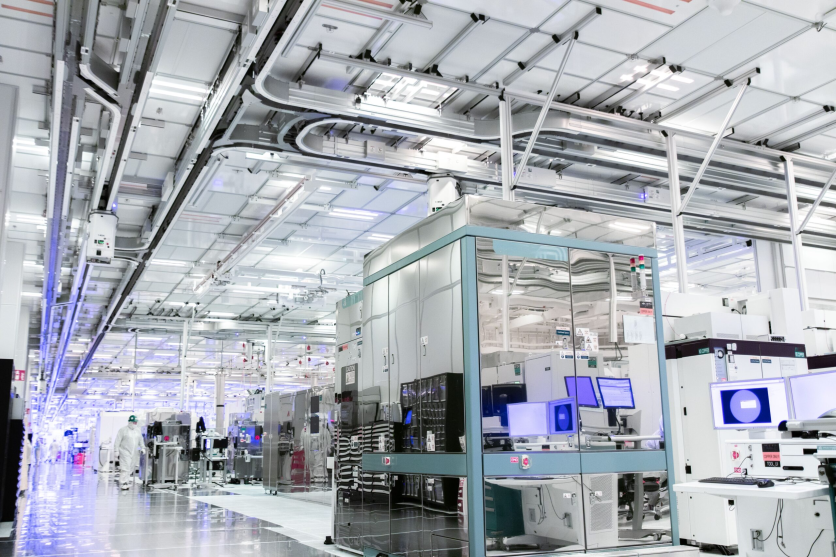
A modern industrial facility interior with advanced machinery and bright lighting. The equipment includes various computer monitors and high-tech apparatus, surrounded by clean, organized workspaces. People in protective suits work in the background. Intel.com
Intel announced on July 13, 2026, that it will pour €5 billion ($5.7 billion) into its Leixlip campus in County Kildare, Ireland — the only facility anywhere in Europe that manufactures chips using extreme ultraviolet lithography at high volume — as a structural shortage of AI server processors forces the chipmaker to extract every wafer it can from the world's most advanced chip-making technology it controls entirely in a single location.
The announcement, made on-site with Irish Taoiseach Micheál Martin present, is the largest single foundry commitment Intel has ever made in Europe. It is also a bet that contains a risk the official statements did not name: Leixlip is not just Europe's sole EUV fab — it is Intel's only manufacturing site anywhere in the world running the Intel 3 process node, the technology that produces the Xeon 6 server processors now facing global supply shortages. That concentration makes the campus central to European AI infrastructure and, simultaneously, the continent's primary single point of failure in semiconductor sovereignty.
Read more: CPU Walkout Confirmed: Intel, AMD, and Arm Are Racing to Fill the Bottleneck Choking the AI Expansion
What the €5 Billion Buys at Leixlip
The investment, which Intel confirmed began earlier in 2026, does not involve constructing a new building. Instead, the capital goes into three areas that expand what an existing cleanroom campus can produce.
First: fabrication facility upgrades across the Leixlip site, focused on installing the leading-edge manufacturing tools needed to scale output of Intel 3 wafers for Xeon 6 processors and next-generation Xeon chips.
Second: expansion of the automated track system that physically connects the campus's separate modules. This is the operational linchpin of a multi-building fab: a cleanroom-conditioned wafer transport network that moves silicon between process steps and between buildings without breaking the contamination controls required at the angstrom scale. Linking disparate modules into what Intel describes as a "singular, high-velocity production environment" is what turns a collection of buildings into a single coherent fab.
Third: R&D advancement and staff upskilling at the 4,900-person site. Intel said the program will generate several hundred additional permanent high-skill roles and engage approximately 2,000 specialized tradespeople during construction and equipment installation.
The bulk of the €5 billion — roughly 30% of Intel's total $17 billion capital expenditure budget for 2026 — is targeted for deployment by end-2027.
How EUV Lithography Makes Leixlip Irreplaceable
To understand why Leixlip matters, it is necessary to understand what makes the chips produced there fundamentally different from those made at older facilities.
Extreme ultraviolet lithography is the technology that prints transistor circuits at scales previously considered physically impossible. A conventional chip-making machine uses an argon fluoride excimer laser producing 193-nanometer light to expose patterns onto a silicon wafer. EUV uses a laser-pulsed plasma of tin droplets to generate light at 13.5 nanometers — roughly 14 times shorter in wavelength. That shorter wavelength allows finer circuit features, which translates directly into more transistors per square millimeter, lower power consumption per computation, and higher performance.
The engineering required to produce EUV light at manufacturing scale is extraordinary. Because all matter absorbs EUV radiation, the process cannot use lenses — it must operate in vacuum using precisely shaped mirrors made of 40 to 50 alternating layers of molybdenum and silicon. An EUV scanner weighs approximately 200 tons, costs around $180 million per machine, and consumes roughly ten times the electrical power of a conventional lithography tool. Only one company in the world manufactures these machines commercially: ASML Holding, the Dutch semiconductor equipment giant whose EUV monopoly makes every leading-edge chip fab on earth dependent on a supply chain that runs through the Netherlands.
Intel's Fab 34 at Leixlip — which opened its first module in September 2023 — was the first facility in Europe to run EUV lithography at high-volume manufacturing scale. No other European fab has followed. As of July 2026, Fab 34 remains the only EUV fab operating at volume anywhere in Europe.
Xeon 6 and the Global Sole Source That No One Announced
The Intel 3 process node produced at Leixlip is a 3-nanometer-class FinFET technology that uses EUV extensively. It is not available at any other Intel manufacturing site in the world. As Intel's executive vice president and chief technology and operations officer Naga Chandrasekaran stated when he announced the investment: "Ireland is our centre of excellence for Intel 3; we are not running Intel 3 in any other Intel manufacturing facilities," the Irish Times reported.
The processors that depend on this sole source are the Intel Xeon 6 "Granite Rapids" server processors — specifically the Xeon 6980P, the 128-core flagship that lists at $13,955 and carries a 500-watt thermal design power. The chip uses a chiplet architecture: three compute tiles built on Intel 3, each containing up to 44 cores, bonded together using Intel's Embedded Multi-die Interconnect Bridge packaging — a technique that embeds a silicon bridge inside an organic substrate to connect multiple dies without the cost of a full silicon interposer. The resulting package delivers up to 504 MB of L3 cache, 12-channel DDR5 and MRDIMM memory support at up to 8,800 MT/s, and on-chip AI acceleration via AMX-FP16 and AVX-512 instruction sets.
These processors are the host CPUs in large-scale AI data center deployments — the general-purpose orchestration layer that manages the operating system, data pipelines, networking, virtualization, and storage that feeds Nvidia's GPU accelerators. As AI workloads have scaled from experimental deployments to production "AI factories" running always-on inference, demand for Xeon-class CPUs has grown in parallel with demand for GPUs.
Intel's Q1 2026 results reflected this directly: the company's Data Center and AI segment generated $5.1 billion in revenue, a 22% increase year-on-year. Server CPU lead times for Xeon configurations had stretched to as long as six months by May 2026, according to TechTimes coverage of supply-chain reports from Nikkei Asia. Bank of America projected in mid-2026 that the server CPU market, worth approximately $27 billion in 2026, could exceed $60 billion by 2030 as agentic AI workloads scale. Oxford Economics economists warned in January 2026 that the supply-demand imbalance across the AI-driven semiconductor sector was expected to persist for years.
Read more: Intel and TSMC Pile In as Glass Substrates and Panel Packaging Head for 10x Growth
From Near-Crisis to Sole Source: Intel's Irish Turnaround
The strategic weight of Sunday's announcement is inseparable from how close Intel came to abandoning it entirely.
In 2024, Intel sold a 49% stake in Fab 34 to Apollo Global Management for $11.2 billion, a move that followed a 20% global workforce reduction — affecting up to 195 Leixlip employees with compulsory redundancy notices — and the cancellation of the company's planned Magdeburg facility in Germany. The German cancellation, despite a €10 billion subsidy commitment from the German government, redirected the entire weight of Intel's European manufacturing strategy to a single site in Kildare.
The reversal came in stages. In August 2025, the US government acquired a 10% stake in Intel, providing a strategic backstop that signaled the company's importance to US semiconductor policy. Commercial partnerships followed. In April 2026, Intel repurchased Apollo's 49% stake for $14.2 billion — paying a 27% premium over what it had received for that stake two years earlier — and restored full operational control of Fab 34.
Chandrasekaran described the turnaround in terms of momentum: "We are committed to Ireland. We have made four decades of investment and you cannot walk away from it." But the more pointed indicator of what drove the decision came in a statement about supply: "The demand for servers, the demand for AI is driving a significant increase in the need for Intel 3 wafers. That is where this €5 billion investment is coming in," he told the Irish Times.
Europe's Only EUV Fab Is Also Europe's Only Point of Failure
The investment's geopolitical framing by Irish ministers and EU officials is accurate as far as it goes: Fab 34 is the physical embodiment of European semiconductor sovereignty. But it is worth stating clearly what European semiconductor sovereignty looks like when concentrated at one site.
Taoiseach Micheál Martin described the announcement as something that "strengthens Ireland's role in securing resilient semiconductor supply chains." Ireland's Minister for Further and Higher Education James Lawless said it would "bolster Europe's tech sovereignty, protect European manufacturing from geopolitical risk." IDA Ireland CEO Michael Lohan called it evidence of "resilient global supply chains," according to Intel's official announcement.
These claims are true in aggregate and fragile in geography. The EU Chips Act, signed into force in September 2023, committed more than €43 billion in combined public and private investment to double Europe's share of global semiconductor production from approximately 10% to 20% by 2030. That 20% target now depends almost entirely on a single company, at a single campus, in a single country. Bruegel, the Brussels-based economic think tank, noted in a May 2026 analysis that this "self-sufficiency" framing risks repeating what it called the Chips Act's central mistake: dispersing resources toward an unattainable target rather than defending the specific chokepoints where Europe already holds irreplaceable positions.
The EU Commission moved to address the fragility with a different mechanism. In June 2026 — the same period in which the Leixlip expansion was already underway — the Commission proposed Chips Act 2.0, which would grant Brussels emergency powers to override chipmakers' commercial contracts during a supply crunch and compel priority delivery for EU crisis-critical orders. That proposal exists precisely because a system dependent on one fab requires the legal authority to commandeer its output when the next disruption arrives.
Intel is also not standing still on its next process generation. The company's 18A node — which introduces gate-all-around RibbonFET transistors and backside power delivery, and is not produced at Leixlip — has faced investor concern about yield timelines, with some reports suggesting commercially viable yields may not arrive until late 2026 or 2027. If 18A ramp is delayed, Leixlip's Intel 3 production becomes even more strategically critical as the company's primary advanced-node manufacturing output.
Jobs, Economy, and What Ireland Gains
The Irish economic stakes in the investment are substantial. Intel currently employs approximately 4,900 people at Leixlip — one of Ireland's largest private-sector technology employers — and the expansion is expected to add several hundred permanent high-skill roles. The company has invested more than €30 billion in Ireland since arriving in 1989 and contributes an estimated €3.73 billion annually to the Irish economy, with €284 million in annual spending with Irish suppliers.
Ireland's reliance on a small number of foreign multinationals is a structural feature of its economy: just three companies account for nearly half of its corporate tax intake, and foreign-owned firms employ approximately 11% of the national labor force, according to the Irish fiscal watchdog and related analyses. Chandrasekaran acknowledged the headwinds that could complicate the relationship: rising electricity costs and escalating construction costs in Ireland are real constraints that affect the total economics of the site.
Enterprise Minister Peter Burke noted that Intel's announcement is part of broader momentum — Qualcomm Technologies recently invested in Cork, and IDA Ireland recorded a record 323 investments in 2025.
What the Expansion Cannot Change
The €5 billion accelerates Leixlip's output of a technology that already exists. What it does not do is create a second European EUV site, diversify Europe's leading-edge chip supply away from a single national location, or address the structural dependency on ASML as the world's sole EUV scanner vendor — a dependency that is itself a geopolitical chokepoint, as ASML machines cannot be exported to China under US and Dutch export controls.
China's own prototype EUV machine, reportedly completed in Shenzhen by early 2025 and revealed in a Reuters investigation published that December, is not expected to produce commercially viable chips before 2028 to 2030 at the earliest. That timeline gives Intel's Leixlip campus a window of continued EUV advantage in the European context — but it also means that within the decade, the geopolitical dynamic around leading-edge chip manufacturing will shift again.
For now, the €5 billion commitment means that the Leixlip campus, the Intel 3 node, and the Xeon 6 processors it produces will remain the singular physical infrastructure on which European AI data center build-out depends. The spending is already underway. The machines are being installed. The race to build out AI capacity in Europe runs through one campus in County Kildare, and Intel has just committed to making it run faster.
Frequently Asked Questions
What is EUV lithography, and why does it make Intel's Leixlip factory different from other chip fabs?
Extreme ultraviolet lithography is a chip-printing process that uses 13.5-nanometer light — roughly 14 times shorter in wavelength than the previous standard — to engrave transistor circuits at scales that conventional techniques cannot reach. Because EUV light is absorbed by everything including air, the process requires vacuum operation, reflective mirrors instead of lenses, and machinery that weighs around 200 tons per unit. Only one company makes these scanners commercially: ASML of the Netherlands. Intel's Fab 34 in Leixlip, which opened in September 2023, is the only facility in Europe that operates this technology at high volume. No other European fab has EUV running at manufacturing scale as of July 2026.
Is Intel 3 only made in Ireland?
Yes. Naga Chandrasekaran, Intel's executive vice president and chief technology and operations officer, confirmed on July 13, 2026, that Ireland is Intel's sole global production site for the Intel 3 process node: "We are not running Intel 3 in any other Intel manufacturing facilities," the Irish Times reported. This means the Xeon 6 "Granite Rapids" server processors that power AI data centers globally are manufactured only in Leixlip. Any supply disruption at that one campus affects Intel 3 chip availability worldwide, not just in Europe.
Does expanding one fab in Ireland actually improve EU semiconductor sovereignty?
It expands the output of the only EUV manufacturing site in Europe, which matters for supply resilience. But the expansion deepens, rather than reduces, Europe's structural dependency on a single site. The EU Chips Act's 20% production target by 2030 depends almost entirely on Intel's continued commitment to Leixlip — a risk the EU Commission appears to have acknowledged with its June 2026 Chips Act 2.0 proposal, which would give Brussels emergency powers to override chipmakers' commercial contracts during a supply crunch. European chip sovereignty built on one campus is sovereignty that rests on a single company's investment decisions, as Intel's own near-withdrawal in 2024 and 2025 demonstrated.
How do Xeon CPUs like those made at Leixlip fit into AI data centers that run on Nvidia GPUs?
Nvidia's GPU accelerators handle the core matrix math of AI model training and inference. But every AI server also requires a host CPU that runs the operating system, manages memory and storage, handles network traffic, coordinates between GPU clusters, and manages the data pipelines that feed the accelerators. Intel's Xeon 6 processors fill that role in most hyperscale AI deployments. As AI factories scale — running hundreds of GPU clusters simultaneously — the demand for capable host CPUs has grown in proportion. Intel itself describes modern AI data centers as "AI factories" whose output depends on the coordination layer that Xeon provides, alongside but separate from the GPU acceleration layer.

-
 C114 Communication Network
 -
 Communication Home
