
 Search

Tesla.com
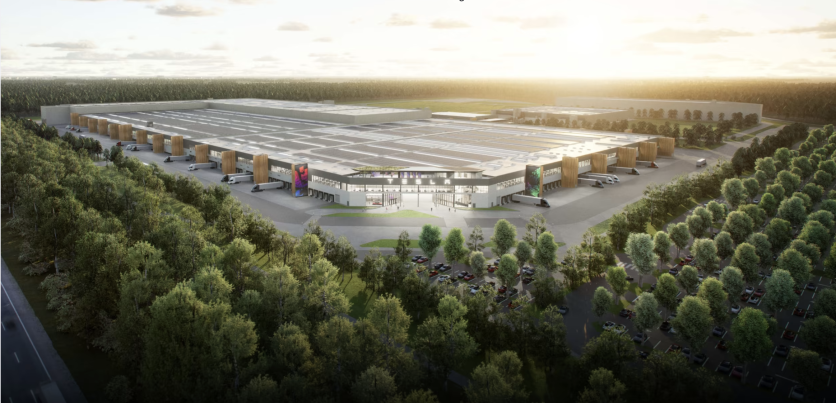
Tesla launched a formal startup program this week that gives outside companies direct access to the live battery cell production line at Gigafactory Berlin-Brandenburg — an unusual move that signals the company is reaching beyond its own R&D teams to solve the manufacturing problems still blocking its most ambitious European production target. Applications for the JUNI x Tesla Battery Cell Giga Challenge are open until July 24, 2026, and the program is set to begin in August. Startups that clear all five selection rounds can win paid pilot projects working directly with Tesla's cell team on the factory floor in Grünheide.
The timing matters. Tesla confirmed in its Q4 2025 investor update that it had achieved full dual-electrode dry manufacturing for the 4680 cell at Gigafactory Texas — a milestone that took eight years and a $235 million acquisition to reach. What the company now needs is to replicate that capability at scale in Germany, and it is asking the European startup ecosystem to help it get there faster.
Why Open the Factory Floor at All
The automotive industry does not normally share production infrastructure with outside companies. Gigafactory floors are closely guarded assets, and the precedent for letting pre-commercial startups run technology trials on a live manufacturing line is essentially nonexistent in the legacy auto sector. The model has precedents in software — where platforms invite third-party developers to build on top of core infrastructure — but applying it to heavy manufacturing at gigawatt scale is a different proposition entirely.
Tesla's stated rationale is straightforward: the company is ramping toward 18 gigawatt-hours of annual 4680 cell output at Grünheide, which would make it one of the largest cell operations in Europe and enough to supply battery packs for roughly 250,000 to 350,000 vehicles per year. Cell production is expected to begin in the first half of 2027. Getting there requires solving manufacturing problems in materials, equipment, automation, operations, and AI-driven process control — the five specific areas Tesla has defined for the challenge.
The unspoken rationale is more direct: the 4680 has been Tesla's hardest manufacturing problem since the cell was announced in September 2020, and reaching 18 GWh in Germany will require solving the same class of production-engineering problems that stalled the Texas ramp for years.
What the 4680 Actually Is — and Why Manufacturing It Is Hard
The 4680 cell gets its name from its dimensions: 46 millimeters in diameter and 80 millimeters tall. Compared to the 2170 cylindrical cells Tesla previously used, it offers roughly five times the energy capacity and six times the power output — not through better chemistry alone, but through two architectural changes that also reshape how it is made. Tesla unveiled the 4680 at Battery Day in September 2020.
The first change is the tabless electrode design. Prior cylindrical cells collected current through small discrete tabs — protruding connection points that caused resistance hot spots and constrained how much current could flow at peak power. The 4680 uses hexagonally symmetric anode and cathode disks without these protrusions, distributing current collection across the full electrode face. This reduces internal resistance, improves thermal management, and is what enables the cell's performance claims. A 2023 peer-reviewed teardown study published in the Journal of the Electrochemical Society confirmed the tabless architecture and its thermal characteristics through physical cell disassembly.
The second change — and the harder one to manufacture — is the dry electrode process.
How Dry Electrode Manufacturing Works, and Why It Took Eight Years
Traditional battery electrode manufacturing uses a wet process: active materials are dissolved in a toxic solvent called NMP (N-Methyl-2-pyrrolidone), coated onto metallic foil, then dried in long baking ovens and calendered. The process works, but it requires substantial energy, dedicated ventilation and recovery systems for solvent handling, and long drying lines that consume significant factory floor space.
The dry electrode process eliminates all of that. Active materials, a conductive carbon additive, and a PTFE binder are mixed as dry powders. Under controlled pressure, the PTFE fibrillates — forming a fibrous network that holds the powder together — and the mixture is compressed into a self-supporting film that is then laminated directly onto current collector foil. No solvent. No drying oven. Tesla has estimated the dry process can cut electrode manufacturing costs by more than 18 percent for the cathode alone, reduce equipment investment by 41 percent, and shrink the floor area needed for electrode production by roughly 90 percent.
Tesla acquired the technology through Maxwell Technologies, a supercapacitor company that had used dry electrode commercially in its own products, for roughly $235 million in May 2019. What seemed like a quick technology transfer turned into an eight-year engineering project. Applying the process to lithium-ion battery cathodes — which are chemically reactive and mechanically fragile — proved far harder than scaling it from supercapacitors. Early dry-coated cathode films cracked during compression, delaminated at high winding speeds, and developed pinholes from incomplete PTFE fibrillation. Tesla faced repeated scrap rate problems and equipment reliability issues that forced multiple production line redesigns.
The breakthrough arrived in Q4 2025. In its January 28, 2026 investor update, Tesla disclosed that it was producing both electrodes of the 4680 cell — anode and cathode — using a fully dry process at Gigafactory Texas, the first automaker to achieve this at scale. Reports from February 2026 indicated the company had reached stable yields above 90 percent for the dual dry process, a threshold previously considered unachievable in mass production.
Read more: South Korea Cracks Dry Electrode PTFE Dependency With Graphite Granule Design
What Tesla Is Actually Asking Startups to Solve
The Cell Giga Challenge is not an open call for new battery chemistry. Tesla is not looking for startups working on solid-state electrolytes or novel cathode materials in the abstract. It is looking for working solutions — companies with prototypes, test data, or prior pilots — to specific production engineering problems on a live 4680 line: materials that adhere consistently at high speed, equipment that produces uniform electrode film without pinholes or edge cracking, automation that detects and corrects defects without manual intervention, and AI-driven process control that can maintain yield stability as throughput increases. The JUNI program page confirms that applicants must demonstrate a proof of concept, manufacturing relevance, and scalability.
That specificity is significant. Tesla proved the dry electrode process in Texas; it now needs to replicate it in Germany under European supply chain conditions, at a facility that is targeting more than double its previous cell capacity, on a timeline that requires commercial-scale production to begin within roughly 18 months. A startup with a better PTFE fibrillation control mechanism, or a faster defect detection system, or a materials approach that reduces delamination at high winding speeds, has a direct commercial path: a paid pilot with the cell engineering team in Grünheide.
The program is run in partnership with JUNI, a Berlin-Brandenburg startup platform operated by UNITE gGmbH and backed by Germany's federal economics ministry and the EXIST program. The structure runs in five phases: an online application screened against Tesla's actual manufacturing requirements, a technical interview, a pitch day in front of Tesla stakeholders, and finally pilot discussions with the cell team.
Tesla confirmed a $250 million incremental investment in Giga Berlin's cell manufacturing in May 2026, announced by plant manager André Thierig on X. Combined with earlier commitments, total investment in the site's cell production setup has reached approximately $350 million, according to JUNI and electrive.com — a figure that puts cumulative site investment above $1.4 billion.
Giga Berlin's History Makes the Bet More Meaningful
Tesla first announced plans for what it described as the world's largest battery cell production facility alongside the Giga Berlin car factory in 2020, with an original ambition of up to 250 gigawatt-hours of annual capacity. Those plans were set aside in 2022 when Tesla shifted its battery investment focus to the United States to capture Inflation Reduction Act incentives.
The factory itself opened in March 2022 after a long and contested permitting process under Germany's Federal Immission Control Act, and has operated below its theoretical production ceiling since. The renewed commitment — fresh capital, a doubled cell target, and now a public startup challenge — reads as a deliberate signal that Tesla intends to make Grünheide a genuine manufacturing hub rather than simply an assembly point for vehicles built from cells shipped in from elsewhere.
For the German federal government, which co-funds JUNI through the EXIST program, the Cell Giga Challenge also serves a broader purpose: anchoring advanced battery manufacturing in Germany at a moment when Europe's position in the global battery supply chain remains contested.
What This Means for the Industry
Whether Tesla's approach will become a model others follow depends on what the program actually produces. Legacy automakers — Volkswagen, BMW, Mercedes — have never opened active cell lines to outside startups. If a pilot inside Giga Berlin yields an improvement that makes it into production by 2027, the argument for open manufacturing platforms becomes much harder to dismiss.
The competing risk is real: sharing a production environment also means sharing visibility into how the line operates, what its failure modes are, and where the gaps in Tesla's own engineering remain. Whether Tesla has calculated that the innovation upside outweighs the IP exposure — or whether it has structured the program to capture startup solutions while limiting disclosure — will only be visible in the program's terms and in what the pilots actually involve.
There is also the question of format competition. The industry has moved toward longer and wider cylindrical cells since the 4680 was announced, and BMW's Neue Klasse platform, Rivian's R2, and other entrants use 4695 or 46120 formats with different energy density and thermal tradeoff profiles. Tesla's investment in 18 GWh of 4680 capacity at Berlin is a sustained bet on a specific cell format in a competitive field.
The applications close July 24.
Frequently Asked Questions
What is the Tesla Cell Giga Challenge, and who can apply?
The JUNI x Tesla Battery Cell Giga Challenge is a five-phase selection program that gives qualifying startups the opportunity to pilot their technology directly on the live 4680 battery cell production line at Gigafactory Berlin-Brandenburg in Grünheide, Germany. Applications are open until July 24, 2026, and the program is scheduled to begin in August 2026. Tesla is looking specifically for companies with working prototypes, test data, or prior pilot experience — not early-stage concepts — across five areas: materials, equipment, operations, automation, and AI. The strongest applicants can advance to paid pilot projects with Tesla's cell engineering team.
How does the 4680 cell differ from the batteries in most electric vehicles?
Most EVs use either cylindrical cells derived from the 18650 or 2170 format, or large prismatic cells from suppliers like CATL. The 4680 is a larger cylindrical format — 46mm wide and 80mm tall — with two architectural features that distinguish it: a tabless electrode design that distributes current collection across the full electrode face (reducing resistance and improving thermal management), and a structural battery pack design where the cells themselves contribute to the vehicle's rigidity. Both features reduce weight and simplify assembly. The 4680 also uses a dry electrode manufacturing process that eliminates toxic solvents and drying ovens — a change that significantly reduces the cost and footprint of electrode production once mastered at scale.
What is dry electrode manufacturing, and why does it matter for this program?
In conventional battery manufacturing, electrode materials are mixed with a solvent into a liquid slurry, coated onto metal foil, and then baked dry in long industrial ovens. The dry electrode process replaces all of that: powdered active materials, a conductive carbon additive, and a PTFE binder are compressed under controlled pressure into a self-supporting film, which is laminated directly onto the foil without any solvent or heat treatment. Tesla mastered this process for both the anode and cathode of the 4680 cell at Gigafactory Texas in Q4 2025 — a milestone that took eight years and a $235 million acquisition. Replicating that capability in Germany, at a larger scale, is precisely what the Cell Giga Challenge is designed to accelerate. Startups with better materials, automation tools, or process control systems for dry electrode production are the primary target.
When will Gigafactory Berlin actually produce battery cells?
Tesla has indicated that commercial-scale 4680 cell production at Grünheide is expected to begin in the first half of 2027. The Cell Giga Challenge, with applications closing July 24 and pilots beginning in August 2026, is structured to identify and integrate startup solutions before that production ramp begins in earnest. At 18 gigawatt-hours of annual capacity — the current target — the Berlin cell line would produce enough battery packs for roughly 250,000 to 350,000 vehicles per year.

-
 C114 Communication Network
 -
 Communication Home
